|
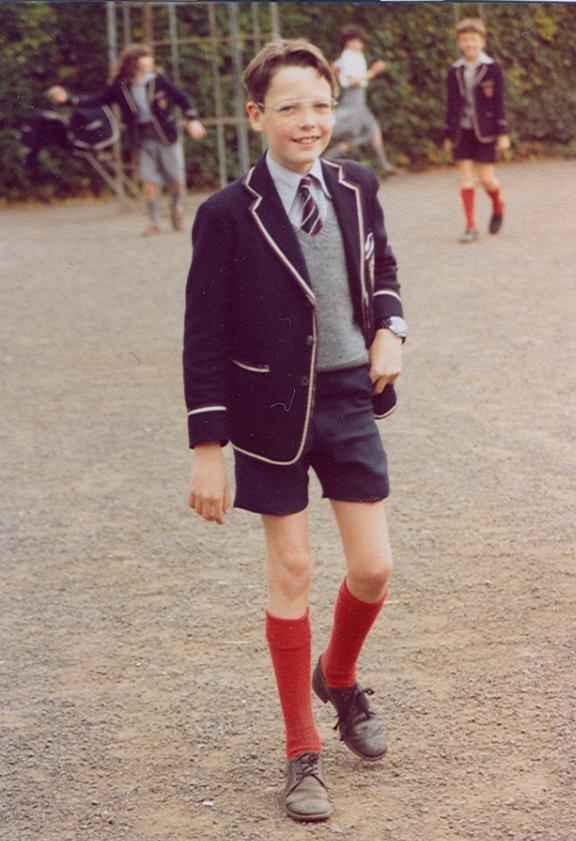
Quite a variety of activities involved costumes, uniforms, or specialized clothing of various types. Some activities involved formal clothes as for social dancing school or informal clothing for sports. Here we have collected information on the clothing worn for these activities over time and in various different countries. Some of the most destinctive uniforms were school and youth groups uniforms in different countries. Many boys, especially in the 19th century had to go to work at an early age, in most cases they simply wore small versions of the clothes their fathers wore. Many countries of Western and Central Europe have a long tradition of church boys' choirs dating back to the medieval era. Boys often at mom's urging have participated in various dance programs. Many American boys somewhere between 10 and 13 take dancing lessons. The European tradition involves teaching music comprehensively. Individual instrumental skill training is combined with history and theory study, solfeggio, and ear training. A popular activity in the 19th and and early 20th century was reciatations, although that is now seldom done. There was no uniform of course for such reciations, but boys often were dressed up in their finest outfits. Some of the most popular clothing worn by boys are sports uniforms. Organized sport for boys is a modern tradition, but sports themselves have a history dating back to the 18th century or in many instances much ealier. Much of HBC deals with middle class and affluent children and the often stylish clothes they wore. These styles are the ones that often reflected the tempor of the times. HBC would be remiss, however without addressing the clothes worn by the children even in the early 20th century which had to work on the farm and in mills, mines and factories in often dreadful conditions.
Boys have been involved in the fine arts from an early age. Here there were great differences. Some artistic disciplines were uniquely suitable for boys at a young age, especially choral inging because of the phusical characteristics of a youthful age. Many countries of Western and Central Europe have a long tradition of church boys' choirs dating back to the medieval era. Boys often at mom's urging have participated in various dance programs. Many American boys
somewhere between 10 and 13 take dancing lessons. The European tradition involves teaching music comprehensively. Individual instrumental skill training is combined with history and theory study, solfeggio, and ear training. Skill in other were acjieved only after years of study and practice. Here we are talking out perforance art such as music and dance. While only a rare number of prodigies were able to achieve competence as children, for many of these desciplines, especially dance, it was important to begin at a youthful age. Another important performance art was drama, but here beginning early seems to have been of little importance. In fact we notice that few child stars are successful as adult actors.
A popular activity in the 19th and and early 20th century was a variety of oratorical competitions. This included both speeches and recitations. The recitations were particularly common for younger boys. These oritorical competitions are now less common, although this varies from country to country. Another oritorical activity is debate. There was no uniform of course for such reciations, but boys often were dressed up in their finest outfits as mother wanted to ensure a good impression. Some boys had especially elaborate oratorical costumes. Most children did these reciations. I think that they were more common for boys than girls who might instead play a piece of music. This requires further research. Oratorical skills are most associated with schools, but schools were not the only places children performed. Some reciataions were also done in school classrooms and chosen children might do them at school asseemblies or presentations for parents. There were also competitions prganized by churches and and civic organizations.
Of course what children want to do is play. And younger children mostly played in the home or around the home. Unfotunately because photography was so complicated, we have relatively few photographic play images from the 19th century. There are drawing and paintings, but few photographs. This changed st the turn-of-the 20th century with the appearance of the Kodak Brownie. Suddenly we have all kinds of snapshots of children playing a good example is American boys Robbie McGregor and Everett Tallmadge playing in Everett's back yard. There is both individual play and group play. Most chilren want to play with other children, but play by one's self has to be considered. And there is play with toys as well as games. Toys could involve both indiviual and group play, but games for the most part involved other children. In the 19th century, sports were not as important as they became in the 20th century. All sorts of games were much more important in the 19th century, especially for the younger children and girls. In the 20th centurysports became much more important and were organized either at school or by clubs/leagues. Here age, chronology, demographics, economics, gender, nationality, and social class are all factors. Games dateback centuries. Sports as we know them, expecially, for children, are primarily a 19th century phenomenon, many emerging from Britain. Rural children often had trouble playing sports, because they lived so far apart and had difficulty making up teams. Poor chidren had less tome for play. And some wellto-do children were raised in isolation from other children outside the family.
The primary activity for children is now school. This was not always the case. For most of man's existence there were no schools. And even within recorded history, few children attended schools of any kind. Indormation on ancient times is sketchy. Even for Rome, the ancient civilization which we know most about, accounts vary. Education in the medieval era was very limited. By the late middle ages education in Europe began to become more widepread. School for much of Western history was reserved for the children of the well-todo. The Protestant Reformation which focused on personal Bible study was a major factor. Modern school systems began to appear in Europe and North America during the late-18th and early-19th century. Authorities by the late-19th century school was seen in most modern countries as the most important activity for children and compulsory education laws were passed and child labor gradually prohibited. These trend varied from country to country Education in the rest of the world varied, but for continued to be very limited until after World War II. School for most children is now the major experience with the world outside the home. About a third of the day is spent at school and about half of a child's waking hours.
Organized sport for boys is a modern tradition, but sports themselves have a history dating back to the 18th century or in many instances much ealier. Organized professional teams attracting spectators and with uniformed players, however, did notappear until the 19th century. This was in part a result of the economic expansion of industrial Europe which generated increasing income and more leisure time. School teams began to be organized by British private schools after the mid-19th century. But organized youth sports for the most part are a 20th century development.
Much of HBC deals with middle class and affluent children and the often stylish clothes they wore. These styles are the ones that often reflected the tempor of the times. HBC would be remiss, however without addressing the clothes worn by the children even in the early 20th century which had to work on the farm and in mills, mines and factories in often dreadful conditions. The styles of clothes were very simple and changed relatively little, but any assessment of boyhood clothes has to address these gutsy children who marched off to work because their families could not afford to feed them and send them to school. The photographic record here played an important role in addressing the pattern of exploitation to which these children were subjected.

Navigate the Boys' Historical Clothing Web Site:
[Return to the Main activities page]
[About Us]
[Introduction]
[Biographies]
[Chronology]
[Clothing styles]
[Countries]
[Photography]
[Bibliographies]
[Contributions]
[FAQs]
[Glossaries]
[Images]
[Links]
[Registration]
[Tools]
[Boys' Clothing Home]