|
The Fourth of July or Independence Day is the quinicensial American holiday. American began celebrating the 4th soon after independence from Britain. It is based on the day that the Declaration of Independence was signed. The Revolutionary War had already begun, but was largely restricted the Boson area-the hot bed of revolution. The Continentl Congress dispsrched George Washington to lead the Continental army. The Continental Congress with rpresentatives of the thirteem colonies in Philadelphi began considering a resolution to formally declare independence from Britain. The vote for independence was taken (July 2). Two days later Cogress adopted the Declaration of Independence, largely drafted by Thomas Jefferson (July 4). Thus from that day, July 4th has been celebrated as the birth of the American nation. Soon after the Revolution Americans became celebrating the 4th informlly. As time went by the celebrations became more and more involved. Even so it only bevame a Federal holiday in 1941, just before World War II. Fireworks were a mjor part of the celebrations. This included both public fireworks in prks and backyard fireworks. Today the festivities include fireworks, parades and concerts, picnics, and barbecues. Since the late-20th cntury, backyard foreworks have been deemphasuzed, ven banned because so mny childen were getting hurt. Set near the beginning of the summer, it is one of the holiday that boys freed of school have traditinally looked forward to. The big attraction were parades, picnics, and of course fire works. It was also an occasion that boys did not have to dress up for, unless of course, they were in the parade.
The Fourth of Julyh is Happy birthday America. Independence Day celebrates the birthday of
the United States of America. It is based on the day that the Declaration of Independence was signed. The Revolutionary War had already begun, but was largely restricted the Boson area-the hot bed of revolution. The Continentl Congress dispsrched George Washington to lead the Continental army. The Continental Congress with rpresentatives of the thirteem colonies in Philadelphi began considering a resolution to formally declare independence from Britain. The vote for independence was taken (July 2). Two days later Cogress adopted the Declaration of Independence, largely drafted by Thomas Jefferson (July 4). Thus from that day, July 4th has been celebrated as the birth of the American nation.
At the time of the signing the US consisted of 13
colonies under the rule of England's
King George III. There
was growing unrest in the colonies concerning the taxes that
had to be paid to England. This was commonly referred to as
"Taxation without Representation" as the colonists did not
have any representation in the English Parliament and had
no say in what went on. As the unrest grew in the colonies,
King George sent extra troops to help control any rebellion.
In 1774 the 13 colonies sent delegates to Philadelphia
Pennsylvania to form the First Continental Congress. The
delegates were unhappy with England, but were not yet
ready to declare war.
In April 1775 as the King's troops advanced on Concord
Massachusetts Paul Revere would sound the alarm tg>The
following day copies of the Declaration were distributed. The first
newspaper to print the Declaration was the Pennsylvania Evening
Post on July 6, 1776. On July 8th the Declaration had it's first
public reading in Philadelphia's Independence Square. Twice that
day the Declaration was read to cheering crowds and pealing
church bells. Even the bell in Independence Hall was rung. The
"Province Bell" would later be renamed "Liberty Bell" after it's
inscription - Proclaim Liberty Throughout All the Land Unto All
the Inhabitants Thereof
And although the signing of the Declaration was not
completed until August, the 4th of July has been accepted as the
official anniversary of United States independence. The first
Independence Day celebration took place the following year - July
4, 1777.
The Declaration of Independence is one of the great historical documents of human history. Drafted by Thomas Jefferson between June 11 and June 28, 1776, the Declaration of Independence is at once the nation's most cherished symbol of liberty and Jefferson's most enduring monument. Here, in exalted and unforgettable phrases, Jefferson expressed the convictions in the minds and hearts of the American people. The political philosophy of the Declaration was not new; its ideals of individual liberty had already been expressed by John Locke and the Continental philosophers. What Jefferson did
was to summarize this philosopy in 'self-evident truths' and set forth a list of grievances against the King in order to justify before the world the breaking of ties between the colonies andthe mother country. We invite you to read a transcription of the complete text of the Declaration. The unanimous Declaration of the thirteen Uited States of America,
The Declaration of Independence of the Thirteen Colonies In CONGRESS, July 4, 1776
The unanimous Declaration of the thirteen United States of America,
When in the Course of human events, it becomes necessary for one people to dissolve the political bands which have connected them with another, and to assume among the powers of the earth, the separate and equal station to which the Laws of Nature and of Nature's God entitle them, a decent respect to the opinions of mankind requires that they should declare the causes which impel them to the separation.
We hold these truths to be self-evident, that all men are created equal, that they are endowed by their Creator with certain unalienable Rights, that among these are Life, Liberty, and the pursuit of Happiness. That to secure these rights, Governments are instituted among Men, deriving their just powers from the consent of the governed. That whenever any Form of Government becomes destructive of these ends, it is the Right of the People to alter or to abolish it, and to institute new Government, laying its foundation on such principles and organizing its powers in such form, as to them shall seem most likely to effect their Safety and Happiness.
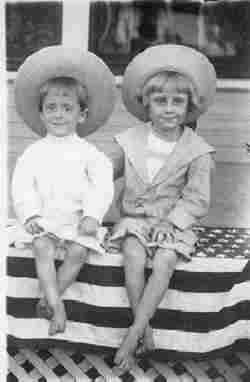
America by the early-19th century was celebrting the 4th of July parades, picnics, and fireworks. It was the first national holiday that was not of a relgious nature (Easter and Christmas). The Declaration was read to the public in Philadelphia at Independence Square. Bells were stringing and military bands played while bonfires were lit. This became the template for marking the 4th and the custom soon appeared in cities and small towns throughout the country. Americans celebrated with processions, long-winded oratory, picnics, contests, games, military displays, and of course fireworks. And these celebrations became more common and elaborate after the War of 1812 a kind of second war for indeprndence from Britain. Former President Jeffersom wrote to Roger C. Weightman, declining an invitation to come to the capital to celebrate the 50th anniversary of the Declaration of Independence (1826). Both Jefferson and Adams, who were gravely ill, died on the 4th, hours apart. It was not a formal holiday, meaning today a Federal holiday. The Federal Governmnt in the early-19th century was very small and not all that large by he end of the century. Thus Federal pronoubcements did not make all that much difference. States began declaring thr 4th a holiday. Congress formally established Independence Day as a holiday (1870). Unfortunately there was no photography to record events in the early-19th century. And even after photography was invented (1839), it was mostly studio photography. At the turn-of-the 20th century we have family snapshots and we begin to see how Americans celebrate the 4th, like the children here (figure 1). Congress reaffirmed it as a paid holiday for federal employees (1938). And President Roosevelt declared it a national holiday, just before America was plunged into World War II. Americans today continue to celebrate the 4th in many of the same ways that they have done for over two centuries. It is a summer holiday with parades, bands, firework, and picnics. And although backyard fireworks have been banned in many places because of the danger to children, most towns and cities usually have big firework displays for everyone to see and enjoy. Paricularly prominent are waving flags and patriotic music like the 'Star-Spangled Banner' and the stiring marches by John Philip Sousa.
The Fourth of July is a time for the Red White and Blue. A time for picnics, parades and marching bands. A time for
beaches, BBQs and "Bombs Bursting in Air." Each year at this time, Americans from the Aleutians to the Keys prepare to celebrate the Fourth of July, the birthday of our great country - the United States of America. On July 4, 1776,
we declared our Independence from England. That day saw the beginning of a journey that's brought us through struggles and adversity to become the proud and strong nation we are today. On the Fourth of July we remember who we are, where we've come from and what we've accomplished as a people. Soon after the Revolution Americans became celebrating the 4th informlly. As time went by the celebrations became more and more involved. Even so it only became a Federal holiday in 1941, just before World War II. Fireworks were a mjor part of the celebrations. This included both public fireworks in prks and backyard fireworks. Today the festivities include fireworks, parades and concerts, picnics, and barbecues. Since the late-20th century, backyard fireworks have been deemphasuzed, even banned because so many childen were getting hurt. Set near the beginning of the summer, it is one of the holiday that boys freed of school have traditionally looked forward to. It offers everything a boy could want like parades, good food, a trip to the pool or beach, waving flags, and of course fire works, although few boys today get to set off their own fireworks.
As the fourth of July is a summer holliday, light comfortable clothing
has been worn. Of course the clothses worn before the 1920s often looked
heavy and dressy to modern eyes.

Navigate the Boys' Historical Clothing Web holiday sites:
[Return to the Main important holiday page]
[Return to the Main holiday page]
[Return to the Main American holiday page]
[New Years]
[Valentine Day]
[St. Patricks Day]
[Easter]
[]
[Haloween]
[Thanksgiving]
[Christmas]
Navigate the Boys' Historical Clothing Web Site:
[About Us]
[Introduction]
[Activities]
[Biographies]
[Chronology]
[Clothing styles]
[Countries]
[Girls]
[Theatricals]
[Topics]
[Bibliographies]
[Contributions]
[FAQs]
[Glossaries]
[Images]
[Links]
[Registration]
[Tools]
[Boys' Clothing Home]