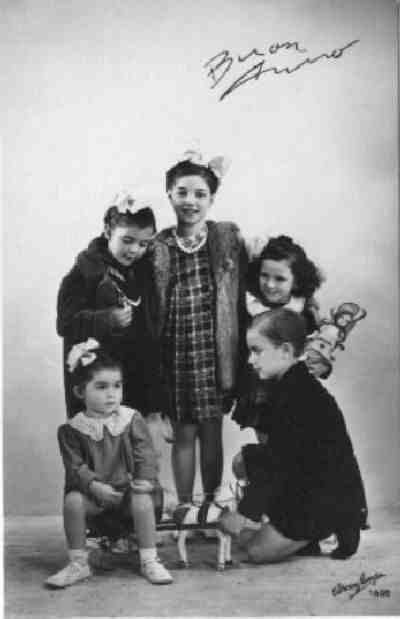
Figure 1.--This French card say "Happy New Year" in Dutch. Greeting card like this were made in many languages and often used children in dressy clothes as subjects. |

|
New Year is the most widely celebrate holiday on earth. New Years is unique among holiday celebrations. It is the only holiday that is celebrated across culture in a great many countries around the world. There are some differences. The major one being the date as to when the new year begins. The Chinese, Islamic, and Jewish new year is different. But most countries celebrate New Years on the same day. Customs and attire vary, but much of the worls celebrate the arrival of the new year. Many celebrate it together others on a different day. Even so, people in all countries around the world celebrate News Year.
Man has probably celebrated the New Year from the dawn of pre-history. The earliest celebrations known to history date to Babylonia in 2500 BC. It was the Roman who began the New Year in January. Julius Ceasar invited an Egyptian astromer to help recalculate the calendar, introducing what became the Julian calendar. After centurirs, however, the seasons were becoming badly coordinaed. Pope Gregory in the 16th century eliminated 10 days, giving us our modern calendar--the Gregorian calendar.
All major civilizations have made astronomical observations and related them to the season. Many cultures developed calendars. Calendars from 10 to 16 months were developed. The concept of beginning a new year varied. The new year might start in either Spring or Fall. The Western concept of beginning the New Year eary in Winter is bit one of the many alternatives that have been practiced.
Unlike many of the holiday discussed here, New Years is not a major one for children. Many enjoy the fire crackers that used to be associated with New Years. The holiday is, however, prinarily an adult holiday in the West, a chance to party. Some families make it family event more than a party event. But for many, New Years is a time to put the children to bed early and step out to dance and sip champaign. As the celebration focuses on 12 midnight, it is not a holiday that is appropriate for children, especially younger children. And of course this is not to mention the alcohol. Children do have a larger role in non-Western New Years celebrations.
New Years is celebrated around the world, although the date varies from country to country. Celebrations in Sub-Saharan Africa, the Americas, and Europe share some similarities. There is more variation in Europe. Customs vary substantially. Generally festivities are focused on the night before the New Year and revelers celebrate the turn of the clock to 12:00 midnight. New Years in America is seen as an adult holiday, following Christmas, which has evolved into a family extranvaganza. Children are more involved in other countries. We do not yet have much information on the various national New Years celebrations. The Chinese of course are especially noted for celebrating New Years. We do have a Dutch New Years page. Germans say, "Ich wünsche Dir einen Guten Rutsch ins neue Jahr!"
This means: I wish you a good slide into the new year!
On December 31 in Germany everybody wishes their neigbors "einen Guten Rutsch". The next day they say "Frohes Neues Jahr" meaning happy new year.
|
New Years cards and decorations commonly pictured the old year as an old man with sythe and the new year as a young boy (never a girl) with the New Year emblazoned on a ribbon he is wearing. I'm not sure of the origins of this imagery. French companies used to make cards for holidays and special occasions. These cards had salutations in many different languages for sale throughout Europe. Often children in dressy clothes were used as subjects on these cards. Photograph cards appeared in number after the turn of the cerntury as photography and printing became less expensive. These cards were particularly popular in the 1910s and inter-war years. The outfits used for the New Years cards were almost always very dressy, sailor suits, tunics, and Fauntleroy suits were common choices.
Many boys' choirs participate in New Year celebrations. As New Years is a secular holiday, often it is the secular, non church choirs that participate in these celebrations. It was of course the year 2000 milennial celebrations that were had especially elaborate festivities.

Navigate the Boys' Historical Clothing Web holiday sites:
[Return to the Main holiday page]
[]
[Valentine Day]
[St. Patrick's Day]
[Easter]
[Haloween]
[Thanksgiving]
[Christmas]
Navigate the Boys' Historical Clothing Web Site:
[Return to Main holiday page]
[Introduction]
[Activities]
[Biographies]
[Chronology]
[Clothing styles]
[Countries]
[Literary]
[Bibliographies]
[Contributions]
[FAQs]
[Glossaries]
[Images]
[Links]
[Registration]
[Tools]
[Boys' Clothing Home]