**
great religious traditions Christian denominations Protestantism Mennonites
Christian Denominations: Protestantism--Mennonites
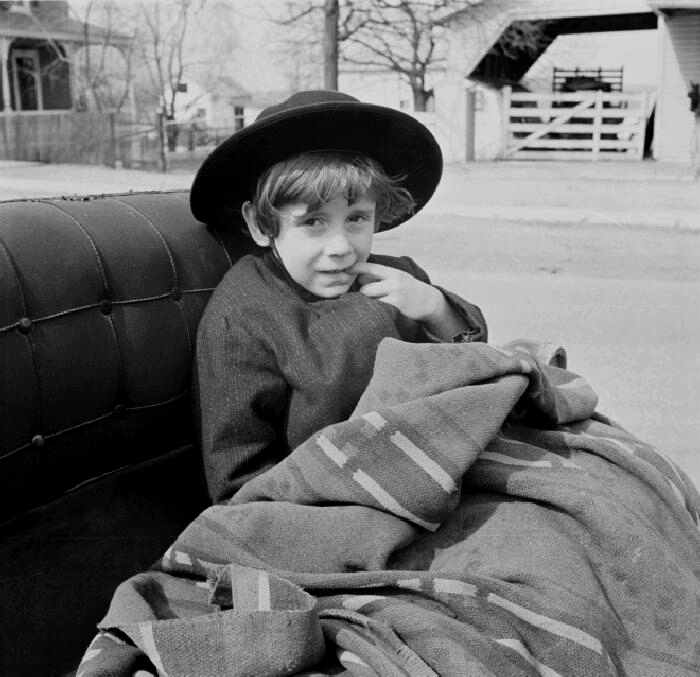
Figure 1.--Here we see a Mennonite boy in Lancaster, Pennsylvania during 1942. The first Mennonites arrived in the area in 1683. This boy was photographed right after Pearl Harbor and America had entered World War II. I believe Mennoites received draft deferals, but I am not real sure.
The Mennonites were an early Protestant sect which developed among Swiss Anabaptists. The Mennonites were moderate Anabaptists. They were initially referred to as the Swiss Bretheren, but were renamed the Mennanites after an earlier leader--Menno Simons (1496?-1561). A Zurrich group seceded from the state church (1523-25). One of the principal issues was infant baptism. The Mennonites were nonresistants (pacifists) and refused to take oaths because of a Biblical interpretation. The Mennites took the Bible as the soul authority in matters of faith and accepted only two sacraments (batism and the Lord's Supper). Mennonites spread to Germany and were an important part of the Volksdeutsche that migrated to Russia. The offer by Tsarina Chatherine the Great was especially attractive to the Mennonites because they were allowed to live as communities under their own laws and were exempted from military service. Other Mennonites established communities in France and the Netherlands. Dutch Mennonites issued the Dordrecht Confession (1632). The Mennonites settled areas of eastern Pennsylvania. The first Pennsylvania colony was at Germantown (1683). The Amish are one of the Mennite groups in Pennsylvania. Other colonies were established in Ohio and other mid-Western states. Mennonite familes also established colonies in western Canada. As Russian policies changed toward the Folksdeutsche in the 19th century, many moved to Canada. Large numbers were killed with Stalin during World War II exiled the Folksdeutsche from their Volga farms to Siberia (1941). A small group of Canadian Mennonites established two Mexican colonies during the 1920s.
Origins
Luther's Protestant Reformatuon soom morphed into many Protestant faiths. The Mennonites were one of those sects. They developedout of the Anabaptist movement in Switzerland and spread largely within the Holy Roman Empire, which at the time of the Reformation included the Netherlands. A Zurrich group seceded from the state church (1523-25). Zwingli and the Zurich City Council reacted to the Anabaptists with intense persecution. [Schrag] The persecution in Zurich and other areas of Switzerland drove many Anabaptists to the neighboring northern and eastern areas (Alsace, the Palatinate, Tyrol, Moravia and the Netherlands) where they found a greater degree of toleratuon, at least temporarily. Anabaptists in Moravia organized along communal lines and took their name from Jacob Hutter who joined the group in 1529. They became known as the Hutterian Brethren. In the Netherlands a Catholic priest, Menno Simons (1496?-1561), was moved by their message, converted, and joined the movement (1536). He emerged as the leader of the Dutch Anabaptists (Doopesgezinde). They were initially referred to as the Swiss Bretheren, but as they became estanlisjed in the Netherlands and Simons; leadership establishd, began to be called 'Menists' and finally 'Mennonites'. The Dutch Anabaptist Movement was strongest in Amsterdam and Leeuwarden and included nearby German cities like Emden (East Friesland) and M�nster. This group alsp spread to Danzig which had an important Dutch community. The Anabastists were violently supressed througout the Empire. Leaders in particular were arrested and executed. There was a strong thread of Pacifism among many, which included even resort to self defene. The Mennonites were moderate Anabaptists. Simons provided thoughful leadership, in sharp contrast to the fanatical Anabaptist Kingdom of M�nster (1534-35). Simons helped to establish a degree of balance to the Anabaptist movement. As a result the Mennontites along with the Amish and Hutterites were the few Anabaptist groups to survive early perecution and the European religious wars.
Doctrine
One of the principal issues of the Annabapitists and in turn the Mennonites was infant baptism. The Mennonites were non-resistants (pacifists) and refused to take oaths because of a Biblical interpretation. They also resisted military consription and figting in wars. They reject a range of activities which they labeled as worldliness. The Mennites took the Bible as the sole authority in matters of faith and accepted only two sacraments (batism and the Lord's Supper). Mennonites pursued strong church discipline among their congregations, perhaps in part because of the civil and religious persecution they faced. They attempted to lived simple, honest, loving lives, attempting to follow their concept of early Christian communities. A major statement of Mennonite theology was the Dordrecht Confession (1632). Mennonite theology center on the direct influence of the Holy Spirit on the heart of the true Christian believer. Like other Protestants, they stressed the centrality of the Bible, with its message of salvation as aesult of the mystical rather than intelectual experience of Christ's presence in the human heart.
The Mennonites and Amish have very similar religious doctrines. One area of disagreement is technology and education. The Mennonites tend to be more accepting of education than the Amish. This is because they are generally more accepting of modern society and the outside world in general than the Amish. The Mennonites in contrast to the Amish pursue higher education beyond the 8 years of local elementary (primary) schools that the Amish pursue. The key factor her seems to be technology. The Mennonites are more open to modern technolog as a ways of improving the productivity of their enterprises, And for this education beyond the ekementary level is often needed. Economic success can they believe can strengthen their religious beliefs. The church in America has a Mennonite Education Agency (MEA). The MEA supports Mennonite Schools Council, both elementary and secondary schools, throughout the United States.
The MEA also supports and leadership to Mennonite colleges, universities, and seminaries.
Religious Persecution
Europe as a result of the Reformation and Catholic Counter Reformation was swept by religious wars (16th century). Much of the fighting was between Catholics and Protestants. But there were also conflict among Protestants as well as between civil authority and religious groups. The Annabaptists and Mennonites often ran afoul of civil authorities. The Mennonites had several articles of faith that brought them in conflict with civil authorities. They refused to take state offices, serve as police or soldiers, or take oaths of loyalty. This led civil authorities to view them as subversive. Thus they were severely persecuted in the many countries where Memmonite communities developed. This led to Mennotites seeking out other coujntries where they wold be tolerated. Ironically one of the areas was Tsarist Russia, one of the most repressive regimes in Rurope. But at the samed time that Mennonites appeared, a new refuge opened up to European emigration--the New World.
The Mennonites because of several tennants of the faith, especially pacifism brought them into conflict with civil authotity. While the Mennonites began in Switzerland, they were driven out of that country into first neigboring European countries and thn Russia and the English colonies in America. Throughout Germany and mamy other European countries there were very strict conscription laws. There were also problems with religious authorities. Thus much of the history of the Mennonites was seeking out countries where they could practice their faith without inteference from civil and religious authorities. A major refuge was Tsarist Russia, but the victory of the Bloshevicks changed this. Eventually America and Canada proved to be the two countries where Mennoites communities could most safely develop and prosper. This became especially true after the Revolution when the new Federal Constitutiion with its Bill of Rights established the principle of religious freedom. Even in America, however, the Mennotites encountered some problems.
Sources
Schrag, Martin. "The European History of the Swiss Mennonites," Volhynia (1956).