|
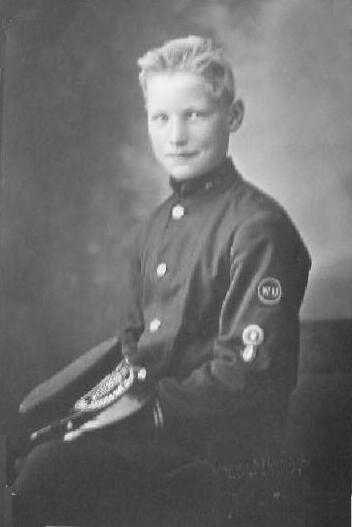
Many of the Founding Fathers led by Jefferson saw America's future as a great agrarian republic based upon the small farmer. It was, however, Hamilton's vision of America as a mercantile economy that proved to the more astute assessment. Some of the worst conditions experienced in Britain during the early 19th century did not occur in America because of the more limited industrial devekpment and the beconing Frontier offered opportunity that made it difficult to oppress labor, except in the slae-holding South. Until the Civil War in fact, large numkbers of American boys labored in slavery, most on southern plantations. After the Civil War (1861-65) as American industry expanded , the Frontier began to close, and immigrants willing to work for low wages poured into America, working conditions became an increasingly severe problem. As in Europe, conditions for children were especially horendous. Only in the late 19th century did child labor begin to become an important national issue. Boys have traditionally learned various crafts. Boys in cities earned money shining shoes. Other sold newspapers and were commonly called "newsies". Many boys even at the turn of the 20th century had to work rather than go to school.
Many of the Founding Fathers led by Jefferson saw America's future as a great agrarian republic based upon the small farmer. It was, however, Hamilton's vision of America as a mercantile economy that proved to the more astute assessment. Some of the worst conditions experienced in Britain during the early-19th century did
not occur in America because of the more limited industrial development and the beconing Frontier offered opportunity that made it difficult to oppress labor, except in the slave-holding South. Until the Civil War large numbers of American boys labored in rural areas. Black boys labored on southern plantations. White boys were also an important part of the rural labor force, although primrily pn family farms. This was not as idealic as is often assumed. None less than Abraham Lincoln became estranged from his father because of the way he would be hired out to neighbors. After the Civil War (1861-65) as American industry rapidly expanded, the Frontier began to close, and immigrants willing to work for low wages poured into America, working conditions became an increasingly severe problem. As in Europe, conditions for children were especially horendous. The fact thst immigrants came in such large numbers means that conditions in America were better for workers. There were more opportunities and living standards were higher. There were, however, no legal protections for children.
Immigrant children in the mid-19th century, especially the Irish often had little opportunity to go to school. Many began working from an early age. This gradually changed. Many states by the late 19th century had mandatory school attendance laws. Only after the Progressive movement promoted chuld labor laws were they enacted in the early 20th century. Some immigrant families encouraged children to study and go the school as much as fmily. Jewish families were especilly concerned with the education of their children. Many immigrant families were so desperate for money that the children had to work. Many children worked by selling newspapers or shining shoes. Some children did piece work with their siblings and prents at home. Other children got jobs in mines and factories. Immigrant children were much more likely to get these jobs than native-born children. Here gender was a factor as was the work found by their parents.
Images of child labor come largely from early-20 century industrial America. This is misleading. Child labor was in fact nothing new as it was common when America was a largely rural country. But America was changing. It was becoming increasingly urban and middle class. Too often ideolofically driven school texbooks present the the late-19th century as a contrast between the very rich and poor immigrant labor. These usually ruchly illustrated books usually make the point with a child laborwr and rich well-dressed people ar a banquent or similar photographs. That of course was part of the story, but it misses the even more important development--the growth of the affluent working and middle class. Very rarely to the textbooks or historical works deal with the huge number of Americans that the industrial revolution lifted from poverty. The industrialization of the United States was generaing enormous wealth that rose millions of Americans from rural poverty to comfortablke middle-class urban lives in one generation. Americans did not live in poverty in the late-19h centtury. Measured in ternms of diet, housing, educational achievement, and other important indicators, Americans were far more prosperous than Europeans. And middle-class status brouht middle-class Victorian sensabilities. There is no accident that the popularity of keeping pets occurred at the same time that attitudes toward children changed. This set up a major debate in American society. Most Victorians believed that women and children should be protected. American had a fine public school system and an increasing number of Americans believed that children should be in school and not working. And many were horrified when photo journaliss exposed the devestating impact on children of being foirced to work. This conflicted with the prevalent attitude of many Amnericans that the Government should not intervene in the economy. Many Victorians were conflicted on this issue. And new forces intervened in the political calculation, the growing influence of women, organized labor, and immigrant groups.
The first tenative steps toward restricting child labor in the United Sttes began in the mid-19th century. Only in the late-19th century, however, did child labor begin to become an important national issue. It was pursued by the Progressive Movement that became increasingly influential after the turn-of-the 20th century. Socially conscious photographers took heart-breaking photographs of children whose childhood was ruined because they had to work, often in horendous conditions. One of the most important of these photographers was Lewis Wickes Hine. Major journals carried the work of muckraking journalists who high-lighted this and other social issues. Two especially important magazines were McClure's Magazine and The American Magazine. Addressing the issue of child labor proved very difficult because of the Federal system. It was considered a responsibility of the states. Here considerble progress was made in the northern states, especially as labor unions gained in strength. The Southern states were more reluctant to move to limit child labor. Finally Congressed passed the Fair Labor Standards Act which included proisions on child labor (1938). This was the last major piece of New Deal legislation. Given the fact that Republicans and conservtive Southern Democrats gained in the 1938 Congressional By-election, this was a major achievement of President Roosevelt. And althouh he failed in his effort to pack the Supreme Court, by 1938 he had made enough appointments to the Court that the Act was not overturned by the Courts.
Boys throughout history have worked. America's history is relatively short, but since the founding of America boys have labored at their father's side and then done apprenticeships. Boys have been involved in a wide range of labor. Boys have traditionally learned various crafts. As American industrialized, children were heavily involved in industry. Many boys even at the turn of the 20th century had to work rather than go to school. Gender differences existedin the jobs open to children. There were also racial differences. Only boys woked in mines, but both boys and girls worked in factories, especially textile mills. Boys in cities earned money shining shoes. Other sold newspapers and were commonly called "newsies". Boys were involved in major industries, both mines and factories. A peculiarly America work area was pin spotting in bowling allies.
Very definite racial patterns can be observed in many of the images of child labor that were taken in the early 20th century. This was the high point of racial decrimination in America. The South was the poorest part of the country. Many children had to work to support the family. State labor codes varied from state to state, but most required a swgregated work force which were designed to keep blacks ad whites separated and reserve the best jobs for whites.
The available images of working children provide a idea as to how lower income children dressed. Many HBC images are portraits taken after the children had been dressed up. These images of working children provide a better idea of how many children normally dressed. Here there are great differences as to where the children worked. Children working in mines and factories were more likely to wear work clothes. Children working as paper boys or delivery boys were more likely to wear their normal clothes. The time frame here is limited, mosly coming from the very late 19th and early 20th century. This was because improvements in film and cameras made such photographs easier to take at the same time that the public became increasingly concerned about the issue. Child labor became one of the primary issues persued by the progressive movement. State and Federal legislation by the time of the Wilson administration (1913-21) began to put an end to the most egregious exploitation of cildren.

Navigate the Children in History Website:
[Return to the Progressive era issues]
[Return to the Main working boys clothing page]
[Return to the Main U.S. activities page]
[About Us]
[Introduction]
[Biographies]
[Chronology]
[Climatology]
[Clothing]
[Disease and Health]
[Economics]
[Freedom]
[Geography]
[History]
[Human Nature]
[Ideology]
[Law]
[Nationalism]
[Presidents]
[Religion]
[Royalty]
[Science]
[Social Class]
[Bibliographies]
[Contributions]
[FAQs]
[Glossaries]
[Images]
[Links]
[Registration]
[Tools]
[Children in History Home]