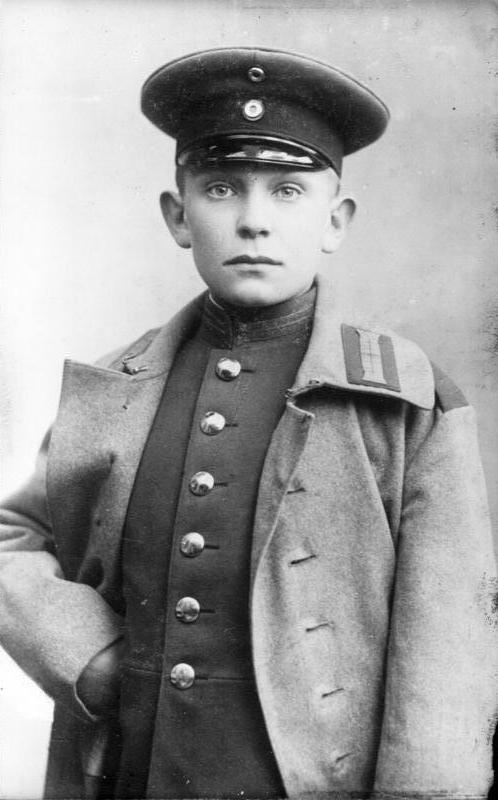
Figure 1.--This is the young Herman Göring in 1907 as a military school cadet. He wold have been about 13 years old. Source: Bundesarchiv. Bild 183-R25668. |

|
Herman Göring Goering was the son of a senior army officer. He himself joined the army (1913). When war broke out the next year, Göring was serving in the infantry. After a few months active duty, he was hospitalized, diagnosed with rheumatoid arthritis of the knees. When released from the hospital he joined the German Army Air Service. His first dury was as an air observer, but he became a fighter pilot, shooting down his first Allied airplane November 16, 1915). When Manfred von Richthofen, the legendary Red Baron, was shot down Göring was appointed to lead the JG 1 squadron--the famed Flying Circus. Göring By the end of the war chalked up 22 victories and was awarded both the Iron Cross and the Pour le Merite (the highly coveted Blue Max) for bravery. Service as fighter pilots was the most dangerous assignment of the war. Most pilots were killed within a few weeks. To fly for 3 years meant that Göring was both very good and very lucky. He received considerable publicity and thus was well known in Germany after the War. He worked for a while in Holand as a pilot for the Fokker company. While in Holand he became acquainted with and married his wife--Baroness Karen von Fock-Kantzow.
Göring returned to Germany (1923) and after attending a NAZI Party rally, became very impressed with Adolf Hitler. He soon became one og Hilter;s cloesest supporters. He was instrumental in Hitler's seizure of power (1933) and in the Night of the Long Knives (1934) which eliminated any threat to Hitler's ;eadership within the NAZI Party. Because of their close assciation and Göring's background as a World War I pilot, Hitler gave him the task of building the new German air force (1935). He was spectacularly successful and the new Lufwaffe played a prominent role in early NAZI successes, most prominetly at Munich (1938). Göring basked in the glory. Hitler made him his deputy and legal heir. Göring became richthrough various activities, including investments in aircraft companies. The Luftwaffe when war broke out (1939) played key roles in the initial NAZI victories: Poland (1939), Norway (1940), and France (1940). His pledge to destroy the British at Dunkirk was his first major failure. This was followed by the Luftwaffee's defeat in the Nattle of Britain (1940). This seriously affected his relationship with Hitler. The Luftwaffe performed brilisntly in the opening phase of Barbarossa (1941), but the Eastern Front was too large to exert the decisive impact that it played in the West. Attempting to regain his lost influence, Göring pledged to supply the Stalingrad pocket without any consulation with his staff (1942). Hitler used this to refuse pleas from Wehrmacht geneals to order a breakout. The Luftwaffe airlift proved a disaster and ednded any creditibility and influence Göring had with Hitler. The expanding Allied stategic bombing campaign even widenened the breach.
Herman Göring was the son of a senior army officer, Heinrich Ernst Göring. He was a former cavalry officer and member of the German consular service. He ended his consulasr service as Consul General in Haiti.
Göring's mother Franziska "Fanny" Tiefenbrunn came from lowly origins--a Bavarian peasant family. Their marriage ws ubusual. German gentleman with status did not commonly marry peasant origins. This probably occurred because was a widower. The Reichmarshal's mother was kept by a half Jewish Austrian nobleman, perhaps he even father Herman.
Hermann W. Goering was born in the Marienbad sanatorium, near Rosenheim, Bavaria (1893). Herman was apparently a cheerfully, unruly boy. which seems consistent with adult personality. He was one of five children. The brothers included: Albert Göring and Karl Ernst Göring. His sisters included: Olga Therese Sophia and Paula Elisabeth Rosa Göring. There were children from both of his father's marriages.
Anti-Semitism was growing in German, but Herman did not grow up in a an anti-Semetic environment. His parents were not anti-Semitic As a boy he spent a great deal of time living in one of two castles alonf the Austrian–Bavarian border owned by his mother’s lover.
He was sent to a military boarding school at the age of 11 where he was punished for choosing his half Jewish godfather as a great German. His school mates found out about it and paraded him around the school with a placard hung around his neck, "Mein Pate ist ein Jude" ("My Godfather is a Jew."). The humiliated Hermann ran off home. Heydrich who organized the Holocaus had a similar experience.
He himself joined the army (1913). When war broke out the next year, Göring was serving in the infantry. After a few months active duty, he was hospitalized, diagnosed with rheumatoid arthritis of the knees. When released from the hospital he joined the German Army Air Service. His first dury was as an air observer, but he became a fighter pilot, shooting down his first Allied airplane November 16, 1915). When Manfred von Richthofen, the legendary Red Baron, was shot down Göring was appointed to lead the JG 1 squadron--the famed Flying Circus. Göring By the end of the war chalked up 22 victories and was awarded both the Iron Cross and the Pour le Merite (the highly coveted Blue Max) for bravery. Service as fighter pilots was the most dangerous assignment of the war. Most pilots were killed within a few weeks. To fly for 3 years meant that Göring was both very good and very lucky. He received considerable publicity and thus was well known and admired in Germany after the War.
Göring tried to remain in aviation aviation after the war which was diffucult because of the Allied restructions. . He did some barnstorming and briefly worked at Fokker, a Dutch aircraft comapmy. He spent much time in Denmark (1919). With nothung but a Fokker demonstration aircraft he entered civil aviation in Denmark. He then moved to Sweden and joined Svensk Lufttrafik--a Swedish airline. He was often hired to pilot private flights.
Göring married twice. As despicable as Göring was, he was unlike many top NAZIs loyal to his wfe. His pilot engagements led him to his first wife. He was hired by Count Eric von Rosen to fly him to his castle from Stockholm where Göring was working (about Jauary 1921). The Count invited him to spend the night. This appears to have been the first time that he saw the swastika emblem. The Count had it set in the mantel piece as a kind of family badge. It is also at this time that Göring first me his future wife--the Count's sister-in-law, Baroness Carin von Kantzow (née Freiin von Fock). She was estranged from her husband of 10 years and had an 8-year-old son. Göring was struck by here and asked to meet with her when he returned to Stockholm. They met at here parent's home. The spent much time together (1921). Göring returned to Germany to study political science at the university in Munich. Meanwhile Carin obtained a divorce after which she reunited with Göring in Munich. They married (February 1922). Their first home was a hunting lodge at Hochkreuth in the Bavarian Alps near Bayrischzell, 80 kilometres from Munich. After Göring met Adolf Hitler and became involved with the NAZI Party, they moved to Obermenzing, a Munich suburb of Munich. Göring was with Hitler during the Beer Hall Putch (November 1923). He was shot in the groin. Carin's helped get to Innsbruck in Austria, taking her son with him. Göring was operated on and given morphine for the severe pain. He remained in hospital until (December 1923). He became an addict. German authorities decalred him a wanted man. The Görings were by now short of funds and relying on help from NAZI sympathizers who helped him to get to Venice in Italy. They visited Rome (May 1924). Kt is at this time that Göring met Mussolini wanted to meet Hitler, still encarcerated. Carin's mother in stockholm was ill (1925). The Görings were basically pennyless, but managed to get to Sweden, akirting Germany (Spring 1925). Göring by this time was a violent morphine addict. Carin's family were shocked by this turn of events. Carin herself was ill, suffering from epilepsy and a weak heart. Doctors took charge of Göring. Her former father took her son. The doctors certified Göring a dangerous drug addict and was placed in Långbro asylum (September 1925). He became increasingly violent and a straitjacket had to be used to restrain him. His psychiatrist was convinced that he was not insane, only addicted to morohine. He was solwly taken off the drug. He returned to Germany when an amnesty was declared and he was no longer wanted (1927). He found employment in the aircraft industry again. Hitler having been ealeased earlier was again active in politucs. Carin died of heart failure (1931). He would name his esate after her -- Carinhall. Göring was met Emmy Sonnemann, an actress, and began spending time with her (early-1930s). They married in Berlin (l935). Tthe wedding was a huge scale Third Reich sicila event. A huge reception was held the night before at the Berlin Opera House. Lifwaffe Fighter aircraft flew overhead on the night of the reception and the day of the ceremony. Hitler was the best man. They had a daughter--Edda (1938).
Göring returned to Germany (1923) and after attending a NAZI Party rally, became very impressed with Adolf Hitler. He soon became one of Hilter's cloesest supporters within the NAZI Party. Göring proved useful to Hitler because of his prominance and social contacts. Some authoirs believe that without Gòring and his social contcts, Hitler would have had great difficulty making the necessary contacts and obtaining the funding needed for his rise to power. Göring also played a major role in helping Hitler achieve such a domninant role in the party.
Because of his close association with Hitler, Göring emerged as one of the most important NAZI leaders around Hitler. Goering was appointed for a time to command the Storm Troopers SA). He proved to be a liaison with business and military circles. He was elected to the Reichstag as a NAZI delegatev (1928).
Klintzsch gave up command of the Sturmabteilungen (May 11, 1923) and returned to the Freikorps Brigade Ehrhardt. Hitler replaced him with Hauptmann Hermann Göring. It was Göring that shaped the SA into the organization that most people are familiar with. He organised the SA along military lines. He set up standarten, sturmbannen and hundertschaften, standard German Army unit organizations. He also form specialized units. He set up the Vehrkehrsabteilung in Munich, composed of men who either had motor vehicles (cars, trucks, or motorcycles), access to them, or knowlege of mechanics. This would later become the NSKK. Göring also formed an elite SA guard--the Stabswache. It subsequently later merged with the Stosstrupp Hitler ehich would eventually evolve into the SS. Hitler was very impressed with Göring's work. He would later say that Göring "was the only one of its heads who ran the SA properly". His control over the SA was, however, very brief. Göring participated in the Munich Beer Hall Putsch.
He was instrumental in Hitler's seizure of power. The NAZIs became the largest party in Germany. Göring was elected president of the Reichstag (1932).
Göring played a key role in establishing the NAZI police state. Hindenburg appointed Hitler Chancellor (1933). Göring became Interior Minister and Prussian Prime Minister. He took over the the Gestapo and began expanding it (1933). He headed the Gestapo until turning it over the Himmler (1936). He played a major role along with Heydrich and Himmler in the Night of the Long Knives (1934) which eliminated any threat to Hitler's leadership within the NAZI Party.
Because of their close assciation and Göring's background as a World War I pilot, Hitler gave him the task of building the new German air force--the Luftwaffe (1935). He or more correctly the commanders he selected were spectacularly successful and the new Lufwaffe played a prominent role in early NAZI successes, beginning with Munich where it cowed the Czechs into submission (1938). Göring basked in the glory. Hitler made him his deputy and legal heir. He emerged as thge second most powerful man in the Third Reich.
Hitler gave him the assignment of overseeing the economy (1937) which he held until Speer assumed control of the economy durng the War (1942). Göring was both inteligent and calculating. He was not, however, diligent or focused. The suv=ccesses of the Luftwaffe came from the the competent officers he chose to lead it and the strength of German science and technology. As regards the ecinomy, he was totally out of his element. And he did little to shift Germany to a war time footing. This proved to be a huge factor in compromising the Germn war effort. Speer's success in expanding war production shows the extent of Göring's failure. Had Germany expanded war production in 1940-41, the outcome in the East may have been very different as well as the strateguc bombing campaign.
Göring became rich through various activities, including investments in aircraft companies to which the Luftwaffe awarded contracts. He ammassed a huge colection of art, largely acquired by threatening Jews before and after the War began and looting art collections in occupied countries. Göring was notably self indulgent. And the wealth he acquired allowed him to indulge what ever inteests and appetites he chose.
Göring rose to be the second most important NAZI. He plsyrdca major role in the NAZI rise to power and establishment of a NAZI dictatorship through establishing a police state. His role in building the Luftwaffe gave Hitler the ability to seize Austria (1938), the Sudetenland (1938), and Czechoslovakia (1939) and played a major role in the successes in Poland and France. Hitler named Göering his official successor and was rewarded with the new title of "Reichsmarschall (1939).
World War was from the beginning Hitler's war. As in other areas, he did not seek advise and guidence. Rather he was basically guided by his own inner voice discussed in detail in Mein Kmpf. Göring did not want to launch another world war. Not because he had moral quams, but he did not think that Germany had the capability to win such a war. He argued for moderation in personal conversations. He soon relized that he could not persist without angering Hitler and thus undermining his position. He knew Hitler well enoufg that he knew that once he made up his mind, he could not be disuaded. The Luftwaffe when war broke out (1939) played key roles in the initial NAZI victories: Poland (1939), Norway (1940), and France (1940). This only increased his prestige in Hitler's eyes. His pledge to destroy the British at Dunkirk was his first major failure. And it was followed by the Luftwaffee's defeat in the Battle of Britain (1940). This seriously affected his relationship with Hitler and was the beginning of his loss of influence and as a result, power. [Overy] As his influence waned, he bagan to focus more on personal pleasures (looting art, eating, wine, and hunting) and resorted to drugs. He essentially became a lazy bafoon, enjoying life while the good times lasted. The Luftwaffe performed briliantly in the opening phase of Barbarossa (1941), largely destroying the Red Air Force. The Eastern Front was, however, too large to exert the decisive impact that it played in the West. Attempting to regain his lost influence, Göring pledged to supply the Stalingrad pocket without any consulation with his staff (November 1942). The Luftwaffe had supported smaller cut off units earlier (December 1941-January 1942). Göring's commitment only reinforced Hitler's inclination to have the 6th Army stay and fight it out. Hitler used this to refuse pleas from Wehrmacht generals to order a breakout. The Luftwaffe airlift proved a disaster. Supporting the 6th Army was far beyond its capacity. The failure ended any creditibility and influence Göring had with Hitler. The expanding Allied stategic bombing campaign and the Luftwaffe's failure even widenened the breach. Actually the Luftwaffe was extremely effective until the P-51 long range escort was introduced (December 1943). Göring tried to succeed Hitler after the Soviets surrounded Berlin (April 1945), precipitated the finakl break with Hitler.
Reichmasrshall Göring played a central role in the Holocaust. This wa not fully understood in the aftermath of the War. We now know he played a far greater role than previously believed. [Overy] His motivation is not fully understood, but like Heydrich probably relates to his correct assessment of Hitler;s priorities and ways in which he could ingratiate himself with the Führer. Göring apparently conveyed Hitler's instruction to Heydrich. He ordered Heydrich to "carry out all preparations with regard to a Final Solution to the Jewish question in those territories of Europe which are under German influence." [Memo to Heydrich, July 31, 1941] By this time large-scale killing was already underway in the Soviet Union in the wake of Barbarossa. This led to the Wannsee Conference (Januasry 1942). There Heydrich and Adolf Eichmann began the coordination of the industrial extermination program aimed at killing 12 million European Jews.
Göring was tried at the International Military Tribunals at the Nuremberg. He was found guilty and sentenced to death. Not wanting to ne hanged which he saw as a criminal execution, he committed suicide (1946).
Göring, Hermann. Memo to Heydrich, July 31, 1941.
Leffland, Ella. The Knight, Death, and the Devil (Morrow, 1989/90). The title is based on a famous Dürer engraving.
Overy, Richard. Goering: Hitler's Iron Knight (2012), 336p.

Navigate the CIH World War II Section:
[Return to the Main World War II biography page]
[Return to the Main biography G-L page]
[Return to the Main NAZI biography page]
[Return to the Main biography page]
[About Us]
[Biographies]
[Campaigns]
[Children]
[Countries]
[Deciding factors]
[Diplomacy]
[Geo-political crisis]
[Economics]
[Home front]
[Intelligence]
[Resistance]
[Race]
[Refugees]
[Technology]
[Bibliographies]
[Contributions]
[FAQs]
[Images]
[Links]
[Registration]
[Tools]
[Return to the Main World War II page]