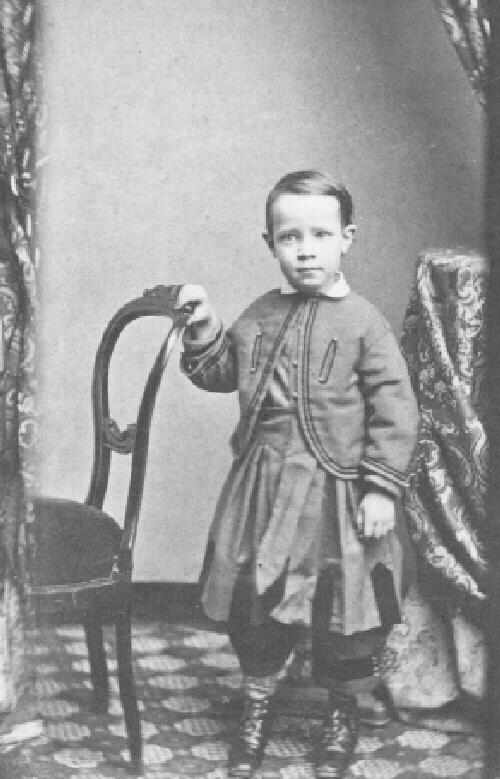
Figure 1.--Here we see an American boy from Chicago. The portrait is undated, but we believe that it was taken in the 1860s. |

|
The two most important countries in terms of fashion were England and France. Fashions in America, especially among fashionable city people, largely cane from Britain abd France. We hope to eventually acquire information on other countries as well. We note that Italy was unified in the 1860s, but it would not be until the 1870s that Germany was unified. Thanks to the popularity of the CDV in the 1860s, for the first time in history, we have a huge number of images allowing us to see fashiontrends. Information available on specific countries include the following.
Little boys wore dresses, but were generally breeched anywhere from 3-5 years of age, sometimes later. Some boys still wore tunics, but the style was much less worn than before. The style seems most common for boys from fashionable families. A good example is the Tenneyson boys. Many boys wore sailor suits. Kilts were worn, but were no common. Boys after about 8 years of age commonly wore adult looking suit jackets with either long pants or shortened-length pants like knee pants or knickers. Knickers were quite common, more common than in America. Some schools used knickers as part of the compulsory uniform that schools were adopting.
We do not yet have a German 1860s page. We do have a German 1860s family page.
The 1860s saw the most cataclysmic event in American history, the Civil War. Civil War battles were major bloodlettings with sometimes more fataloties in a sigle day of battle than whole World War II campaigns. In a country with a still fairly small population, few families were spared. HBC has noted that the impact of wars and social uphevals frequently are reflected in fashion. HBC, however has not yet fully determined the impact of the war on boys' fashions. Some fashions were inspired by the war. The most readily observable trend was before the War American boys generally wore long pants after breeching. After the War kneepants begin to become increasingly popular. This does not, however, seem to be an impact of the War as the same trend is observable in Europe. It may be that American fashion trends were not as affected by the War as they were still largely influenced by European fashions.Boys wore mostly small collars. White collars were popular, but
rather small. Bows were small and often just a stock, looking something like a bowtie. Long pants predominated, but kneepants had begun to appear on younger boys. Some boys wore knickers, but they were much less common than in England. Most boys wore long hair.
Some novelty fashions grew out of the Civil War (1861-65), such as Zouave suits. The war also affected how childhood was seen, changes which are also eventually reflected in fashions.

Navigate the Historic Boys' Clothing Web chronological pages:
[The 1500s]
[The 1600s]
[The 1700s]
[The 1750s]
[The 1770s]
[The 1800s]
[The 1810s]
[The 1820s]
[The 1830s]
[The 1840s]
[The 1850s]
[The 1860s]
[The 1870s]
[The 1880s]
[The 1890s]
[The 1900s]
Navigate the Historic Boys' Clothing Web dress pages:
[Return to the: main dress page]
[Pinafores]
[Sausage curls]
[Smocks]
[Bodice kilts]
[Kilts]
[Fauntleroy dresses]
[Sailor dresses]
[Fancy dresses]
[Dresses: 16th-18th centuries]
[Dresses: Early-Mid-19th century]
[Dresses: Late-19th century]
[Dresses: Early 20th century]
[Difficult images]
[Movie dresses]
Navigate the Boys' Historical Clothing Web Site:
[Introduction]
[Activities]
[Biographies]
[Chronology]
[Clothing styles]
[Countries]
[Bibliographies]
[Contributions]
[Essays]
[FAQs]
[Glossaries]
[Images]
[Links]
[Registration]
[Tools]
[Boys' Clothing Home]