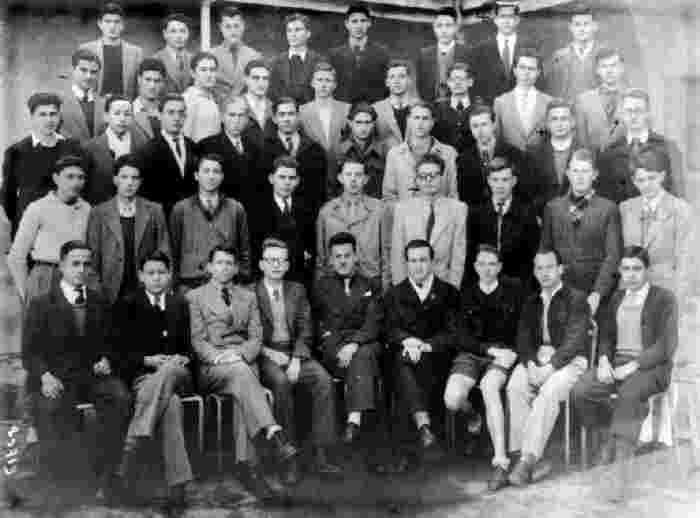
Figure 1.--The students at this lycee were photographed, just after World War, about 1946. As the school did not require a uniform, they are wearing their ordinary dress clothes. |

|
The French began to colonize Algeria in 1830. There was Algerian military resistance until the 1870s. The French presence lasted over 100 years until 1962 ( Accord de Genèvre ). French citizens settled in Algeria, primarily in the cities, and some Algerians adopted French customs and dress, primarily in the cities. In the villages and rural areas, Algerian boys and girls continued to wear Aeab styles. The styles worn by French boys were identical with popular styles in Metropolitan France. The differences between French and Algerian girls was even more striking than those between boys. One popular style did originate in Algeria. Two battalions of troops were formed in 1830 by General Bertrand Clausel as part of the French military occupation of Algeria. The troops were from a tribe of Kabyles dwelling in Algeria. The name of the tribe was Zouaoua, which in France gave rise to the term, "zouave". French Algerian boys wore the same garments as worn in Metropolitan France. HBC is unable to identify any significant differences at this time.
The French began to colonize Algeria in 1830. Quite a number of French settlers moved to Algeria. People of French origin who were born in Algeria were called "pieds-noirs" (black feet). One siurce suggests that this was because the French troops stationed in Algeria wore black boots. A French reader disagrees, he says that in fact the origin of the term " Pieds noirs " was given to the French colonists because they were white people put their feet on the Black Continent. Many of the French emigrants to Algeria were poor. They saw economic opportunities in Algeria. HBC has little information on French colonial fashions in the 19th century, but believes that they were probably quite similar to fashions in metropolitan France, especially southern France. Available images on Algeria during the 20th century show boys wearing the same fashions that they would have in France, although the warmer Algerian climate may have made for some minor differences. All the French children in Algerian had shoes as in France itself. If you see barefooted children in old photographs, they were probably algerian rather than French children. While there was Algerian military resistance until the 1870s, the French presence lasted over 100 years. The War became a major political issue in France duringbthe late 1950s and early 60s. France finally granted Algeria independence in 1962 ( Accord de Genèvre ). After independence, practically all French nationals left the country as well as many Algerians which had cooperated most closely with the French. Algeria by the time of independence in 1962 had modern and clean cities. There were many prosperous farms. Despite the discovery of oil and gas, the country has declined economically.
Algeria did not do well as an independent country. The socialist state managed economy proved an economic disaster, even income from gas and oil. Living standards fell below levels during the colonial period, causing substantial numbers of Algerians to seek work in France. Therecare now about 2 million Algerians in France. The first generation of Algerians were hard workes. The current generation are less willing to accept the low-pauing jobs their parents accepted, but many do not do well enough in school to qualigy for better paying jobs. The Algerians in France have a high crime rate. In Algeria itself there is a vicious civil war between Islamacists and a secular military regime. In France a debate rages over a new law outlawing head scarves in school.
We note French and Algerian boys dressing very differehtly although there was some overlap in the major cities. French citizens settled in Algeria, primarily in the cities, and some Algerians in the cities adopted French customs and dress. The styles worn by French Algerians were little different than those worn in Metropolitan France. This varied chronologically depending on the styles in France. It is very difficult to dirrerentiate between French boys in Algeria and metropolitan France. French children did not adopt Arab styles. Many Algerian children in the cities dressed in French styles, although long pants were more common than was the case for French children. A French reader tells us, "In Algeiers and other big cities, most of the children were dressed in French styles. Algerian children in rural areas were more likely to wear traditional styles. We do not have details at this time on these traditional styles. One Algerian style was adopted by French mothers. A baby garment had an Algerian origin and is called : "Burnou". It was popular with French mothers from the early 20th century through the 1960s. It was a sort of cape with a hood made in wool. This garment waas very practical: quick put on and take off.
A French reader tells us, "The fashion in the 1950s was for the fancy and very short dresses. This was the same style popular in France at the time. The dresses had round collar (Peter Pan) collars, puffed sleeves , and a big bow in the back. The dresses were commonly made in Vichy (gingham) or Boussac Popeline (poplin). These dresses were also worn by Algerian girls, at least in the cities. Similar styles are still worn in Algerian cities, although the hems are longer.
One popular style did originate in Algeria. Two battalions of troops were formed in 1830 by General Bertrand Clausel as part of the French military occupation of Algeria. The troops were from a tribe of Kabyles dwelling in Algeria. The name of the tribe was Zouaoua, which in France gave rise to the term, "zouave". The organization of these tribesmen as part of the French army was designed to establish a bond between them an the French occupation forces. They came to serve as mercinaries in the French army. French officers were put in charge and a certain number of French soldiers incorporated within their ranks. The mingling of French and natives did not prove satisfactory, and after 1839, none of the natives were recruited, although regiments of Algerian tirailleurs were subsequently formed. The Moorish-styled costume originally adopted for the Kabyles recruits was retained even after the resruitment od the natives ernded. The French zouaves were recruited from veterans of exceptional physique and courage. They achieved a notable reputation, serving not only in Africa, but also in the Crimea, Italy, Mexico, Tunis, and Tonking (Indo-China/Vietnam). Zouave units served with destinction through Word War I, although their distinctive uniforms were discarded during the fightening because of its consciousness. Because of the reputation of the Zouaves, some Ameican Civil War (1861-65) volunteer units adopted the colorful costumes and styled themselves "zouaves". They were mostly northern units, but there were also southern zouaves. Boys clothing in the baggy pants Zouave style begame quite popular in the 1840s and 50s. It firs appeared in France, but by the 1840s English and American boys were also wearing it. As with many boys' style, the military is often a powerful inluence. The zouave style was gicen added popularity in Ameica during the 1860s after zouave units were formed. The style gradually declined in popularity as boys' wear during the 1870s.
We see two types of garments worn by boys in French Algeria. French and Algerian boys dressed differently and wore different garments. French Algerian boys wore the same garments as worn in Metropolitan France. We see boys wearing all the same garments worn in France. HBC is unable to identify any major differences. There were some minor differences. The French in Algeria were not as prosperous as those in Metropolitan France. This was reflected in the clothing of the French-Algerian children who ofen do not seem to be as smartly dressed as the children in France itself. Another difference is that we see some of the French children in Algeria going barefoot. That was rarely seen in France itself, except around beach areas. Algerian boys in cities might wear French clothes, but traditional garments were standard in rural areas.
Islam and Roman Catholocism were the two primary religions in French colonial Algeria. The French colonization of Algeria was perhaps the most intimate colision with the West experienced by any Muslim country. It was also the first time since the Crusades that Muslims in thevMiddle-East/North Africa found themselves under Christian rule since the Crusades. Early resistance to France was led by Abd al-Qadir and had a significant Islamic component. Many Islamic cholars during the French colonial period left Algeria, taking up residence in neigbiting Arab countries as well as Egypt, Syria, and the Hijaz. Within Algeria there were many rebellions. Many were led by Sufi orders or other Islamic elements. As a result of the failed rebellions, some Algerian leaders began to promote the idea of cooperatiin with the French to secure concessions for Muslim cultural, political, and economic rights in colonial Algeria.
As military revolts subsided and France entered the Srramble for Africa in Sub-Sahara Africa, the country tended to develop a more tolerant attitude toward Islam. This reflected Frenchefforts to work with Muslims in their new colonies, especially West Africa. French Islamic specialists worked closely with Algerian scholars.
The French helped promote the International Congress of Orientalists at Algiers (1905). Ironically, it was not Catholocism, but France's growing secular traditions that alienated many Muslims. The French parliament passed a law separating religion and state (1905). French Catholics could accept a secular school system. The conceot was alien an unacceotable to even the loyal colonial Algerian Islamic religious establishment. I am not xure how many Algerians converted to Catholocism. We susoect relatively few. Without state sabctions, however, it was more difficult for Islamic authorities to maintain a strict commitment ton Islam. French colonists who cane to Algeria were uniformily Catholic, although varies in their devotion. Virtuallu none of the colonists converted to Islam. They oracticed their Catholic faith as if they were in France. Cathlic churches were built in the various communities where the French settled.
Most of our informaion on Algerian school uniforms at this time comes from the colonial era. France was the colonial powe and Algerians fought a long and brutal war during the 1950s and early 60s, at times looking more like a civil war, to achieve independemce. We have acquired some images from European schools that existed in the country before independence. The school uniform styles reflect the clothing worn by contemporary European boys--there
is little evudence of Algerian clothing styles.. Some schools appear to have restricted the entry of Algerian boys, but we have view details about this. Beginning in the 1870s, French boys wore smocks to school. Older boys would wear their ordinary clothes. Thus an assessment of school wear provides a good indicator of typical boy's clothing at the time. We have begun to collect images from several individual schools.

Navigate the Boys' Historical Clothing Web Site:
[Return to the Main Algerian clothing page]
[Introduction]
[Activities]
[Biographies]
[Chronology]
[Cloth and textiles]
[Clothing styles]
[Countries]
[Topics]
[Bibliographies]
[Contributions]
[FAQs]
[Glossaries]
[Images]
[Links]
[Registration]
[Tools]
[Boys' Clothing Home]
Navigate the Boys' Historical Clothing national pages:
[Return to the Main French regional page]
[Return to the Main Algerian page]
[Return to the Main countries page]
[Australia]
[Belgium]
[England]
[France]
[Germany]
[Ireland]
[Italy]
[Japan]
[Korea]
[Mexico]
[Scotland]
[United States]