|
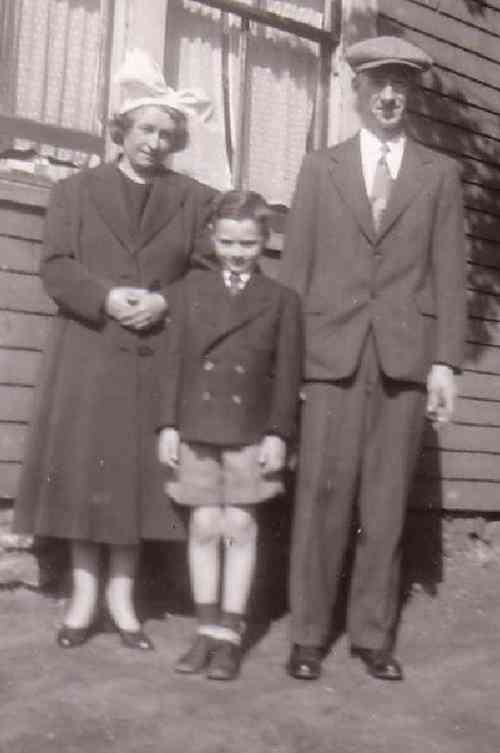
We have begun to acquire some basic information about Canadian suits. We have no information on Canadian suits until the 19th century, HBC has some limited information on Canadian boys' suits in the 19th and 20th centuries. Canadian boys wore English style suits in the 19th century. I'm not sure to what extent French-style suits were worn. ultual contacts with France was limited. The growing American economy and cultural influence had began to exert its influence by the late-19th century. This gradually exerted a cultural pull that exceed the historic ties with Britain. Here social class was a factor wth rhe well-to-do more affected by British fashions than the average family. Trends were not identical to America, at least until after World War I. Fauntleroy suits, for example, were never as popular in Canada as in America. Well to do boys, especially from English families, might wear Eton suits and collars. After World War I, American-styled suits have become more common. HBC has noted Norfolk suits in the early 20th century. By the 1930s modern-looking single-breasted and double-breasted suits. We are not sure how common knee pants suits were in the late-19th century, but Canadian boys do seem to have commonly worn knicker suits as in America through the 1930s. Despite the climate, short pants suits appear to have been more common than in America. This seems to show a continuing British influence.
We have no information on Canadian suits until the 19th century, HBC has some limited information on Canadian boys' suits in the 19th century. We believe that Canadian boys wore English style suits in the 19th century. We are less sure about American influences. This may have varied regionally. We note cut-away jackets in the mid-19th century. And much fabcier suits in the late-19th century, including Fauntleroy suits. Eron suits were popular in the late 19th century for school-age boys. Many boys wore knee pants suits. Our archive of 19th century images, however, is very limited. More information is available on the 20th century. Available images show boys wearing Norfolk knicker suits in the early 20th century. We notice both single- and double-breasted suits in the 20th century. We notice knee pants, knickers, short pants, amd long pants suits during the first half of the century. After World war I (1914-18), boys began wearing short pants suits with single and double breasted styling. Older boys through the 1930s commonly wore knicker suits. Some boys in the 1950s still wore knicker suits, but by the 1960s there seems to have been little difference between Canadian and American suits.
Canada of course has both English and French roots. The French have remained a destinct minority based primarily in Quebec even to this day. We do not know to what extent English and Fench boys wore different style suits. We believe that English styles were the dominate styles. I'm not sure to what extent French-style suits were worn.
We believe that the primary influence on Canadian suits was English. We do not know to what extent French fashions werec important, even among the French population in Quebec. American fashions began to affect Canadian fashions in the 19th century. The impact was proably most important in rural areas where people ordered from Ametrican mail order catalogs. This might have been particularly important in the plains provinces. American-styled suits have become more common after World War I and increasngly so after World War II. By the 1960s there was no significant differences between American And Canadian styles.
The growing American economy and cultural influence had began to exert its influence by the late-19th century. This gradually exerted a cultural pull that exceed the historic ties with Britain. Here social class was a factor wth rhe well-to-do more affected by British fashions than the average family.
HBC is not sure what styles were worn in the 19th century. As far as we can tell, Canadian boys wore basically the same suits styles as American boys. We stillhave relatively little information Well to do boys, especially from English families, might wear Eton suits and collars. HBC has noted Norfolk suits in the early 20th century. This appears to have been as especially popular style. By the 1930s modern looking single breasted and double breasted suits. Blazers were worn, but we're not yet sure when they first appeared.
I'm not sure how common kneepants suits were in the late 19th century. They were common in America, but somewhat less so in England. It is likely that kneepants suits were common, but at this time we have little information. Canadian boys at the turn of the century seem to be commonly wearing knicker suits through the 1930s. The style persisted into the mid-1950s a litter longer than in America. Short pants suits became increasingly popular after World War, showing the influence of English fashions. This occurred Despite the climate. Short pants suits appear to have been more common than in America. Long pants suits became increasingly common in the 1940s and were largely worn by the 1960s.
Canadian boys wore long stockings, knee socks, and short socks with suits. The type of hosiery varied seasonally, and over time, as well as with the age of the boys. Climate was a factor in Canada making kneesocks and long stockings necessary for boys wearing knickers and short pants during the winter. Also long stockings were seen as a dressy, formal style approriate when wearing a suit for formal occasions.
Most suits seem to be done with flar or plain fabric, TYhere is also fabric with patterns. Some of the fabrics masy be muted which is the most common hoicer. Some of the patterns are so muted that they are not discernable in the photographic record. There are also, however, suits made in very loud patterns. They are not very common and seem important in a relatively small chronological period. Loud patterns seen espcially popukar in the mid-19th century. This apears to be similar to the United States, although we are not durev thatb they yet sure if theyy perfectly overlap. Our major source of information is photography and our Canadian archive is still limited, especially of the mid-19th century.

Visit HBC Canadian Pages:
[Return to the Main Canadian garment page]
[Canadian choirs]
[Canadian Scouts]
[Canadian long stockings]
[Canadian First Communions]
Navigate the Boys' Historical Clothing Web Site:
[Return to the Main country page]
[Introduction]
[Activities]
[Biographies]
[Chronology]
[Clothing styles]
[Countries]
[Bibliographies]
[Contributions]
[FAQs]
[Glossaries]
[Images]
[Links]
[Registration]
[Tools]
[Boys' Clothing Home]