|
We are preparing a series of pages on national clothing styles. We now have over 100 countries listed in our country section. Most have a linked page with at least some basic information on clothing in that country. We have developed detailed information for several mostly European counties and the United States. Many of the other country pages, however, are just being sketched out at this time. We have a lot of other pages to do, so it will be a while before we can focus on all the countries on our list. Of corse here we need your assisatnce. HBC does not have the capability to visit or even reserach all of these countries. Do let us know if you have any text or images to contribute about your country. We are interested in adding information about every different countries around the world. The current Euro-centric focus of HBC is because European readers have been the most willing to contribute information. We have tried to create a page for each country, even if only limited information is available. This provides a location for collecting information. We hope that our readers will contribute insights into fashion trends in their own countries. HBC has collected information on more than individual countries. The information on most of these countries still sketchy. The Middle Eastern countries are the arc of Islamic countries from Morocco west to Iran. They encompass both North African and south western Asian countries. We have relatively few pages from these countuies. Interestingly, traditional dress styles persist there more than any other region. In fact traditional styles seem more popular in the 21st century than in the mid-20th century. This is especially true in the Arab countries. This appeas to be a reflection of the strength of Islam and the rejection of Western culture. The Arabs are especially important in the Middle East, although outside Arabia this is more a cultural than an ethic concept.
The Arabs are the dominant people of the Middle East and North Africa. They total avout 0.4 billion people and dominate the population of most countries in the region with only a few exceptions (Iran, Israel, and Turkey). The Arabs are not an ethnic group, but rather a multi- or pan-ethnic cultural group. The primary shared cultural element is the Arab language, a Semitic language originating in Arabian peninsula. It was spread with the Aran outburst (7th century) through a rocess of Arabization and Islamization. The Arabs in the different countries have different hustories and ethnic origina. The ethnic Arabs were a relatively small population origninating from Arabia. The Arabs are of different religious backgrounds althoufg Islam is dominant and in reason years rising Islamic intolerance has reduced the non-Islamic Arab communities. Arab idennties from aPan-Arab counity to a range of tribal, religious, and national identites, Several Western authors complain that the Arabs are poorly understood in the West and discuss revances held toward the West. Part of the grevances are the economic failures of the Arab states not blessed with oil. Islamic extremists maintain that the ecomomic and political failures result from the theWest and the domestic failure to fully embrace Islam and Sharia. Other observers believe the failure of the Arabs is primarily due to the widespread devoltion to medeival cultural institutions and the inability to embrace democracy, decular education, human rights, abd free market capitalism. Traditionjal clothing is worn in many Arab countries, especially the countries of the Arabian Peninsula or close to it. The principal traditional garment is the 'thawb". It is essentially a white shirt, but a very long white shirt extending to the shoes. The head scarf is the 'kaffyeh'. The black cord is the 'igal'. Both white and Red checkered head scarfs are worn in Qatar, Kuwait but mainly checkered in Saudi Arabia.
There are about 20 different countries in the Middle East and North Africa. The exact count depends on how one classifies some of the African countries like Somalia, Sudan, Chad, Niger, Mali, and Mauritania. The dominant ethnic group in most of these countries are the Arabs. But this is primarily a cultural construct involving the Arabic religion and Islam. Much of the North African population is of Berber origins. And the population of the Levant and Mesopotamia is of non-Arab origins. There is also the non-Arab countries, including Israel, Turkey, and Iran. The precise ethnic and cultural mix varies widely from country to country. The culture of the Middle East is of ancient origins, going back to the dawn of civilization. Ancient history was dominanted by the clash between Mesomptamia and Egypt. Three of the great monothesitic religions came out of the Levant, the area between Mesopotamia and Egypt. Persia (modern Iran) for a time dominated the region as did Greece and Rome. The area was conquered by the Arabs ealy in the Islamic period and about a milenia later, the Ottoman Turks. North Africa became a haven for the Barbary pirates, a situation which did not end until France began to colonize the area (19th century). Europeans dominated the Middle East for a short period after World War I. Since World War II the region has had a tulmultuous history. Arabs pursued a mixture of religious extremism and totalitarian ideologies. Prosperity has generally eluded countries unless blessed with oil. Turkey pursued a secular path after World War I with some success, but is increasingly turning to Islamic approaches. Iran has in recent years pursued a theocratic path and even with oil has failed economically. The most successful country in the region in ecomomic terms has been democratic Israel, despite the assault of its aran neighbors.
Islam is one of the great monothestic religions. The religion is set forth in the Koran which teaches that there is but one God and Muhammad is his prophet. The word is also used to descibe the civilization and countries in which the Islamic religion dominates. Islam for several centuries while Christian Europe fell into the dark ages and intolerance prevailed, Islam developed a rich often tolerant society. Scholars pursued science, mathematics, literture, and art. Much of this was based on mjor precepts of the Koran. One of those precepts was tolerance for other civilizations and religions, especially People of the Book. Today many of these basic precepts of Islam are questioned by Fundamentalist Islamic scholars. This leads to the question of whether democracy and Islam are comaptible. This is a topic that we are not very familiar with and welcome reader comments and insights.
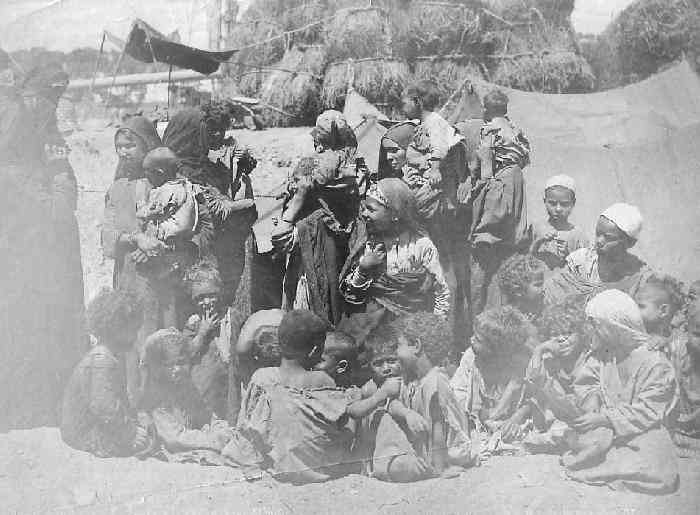
Technology, at least advanced technology, is a unique characteristic of the human species. And thus cultures and societies must be assessed in their ability to generate technology. This is a question many academics imbued with the cultural relativity mantra, do not want to subect cultures to objective tests. It was in the Middle East that the first major technological step out of the stone age was made--the agricultural revolution. The reason was geogeaphic, the location of river valleys, aplace where agriculture could be developed with the least technology. Through much of subsequent history, China was the engine for technological advance. But for not entirely understood reasons, China with all its technological advances never achieved modernity (science, democracy, and capitalism). Other major advances were made in India, but like China never achieved modernity. The Middle East is called the Middle East because it was before the European maritime outburst at the center of human civilization located between the East and West. The Middle East benefitted from dominating the trade routes between East and West. The wealth created in trade led to the Goldren Age of Islam--the Caliphate. The Caliphate's Translation Project was a major effort. Arab scholars mase important advances and were on the cusp of inventing the sientific method, but never made that all important leap. Much of the success was combining classical knowledge when Chinese and Indian technology. Actual creative work was more limited. Indian mathemactics came to be called Arabic numerals, becaue Western scholars learned of it through the Arabs. And then virtually suddently in historic terms with the Renaissance, it is the west that began to become an engine for technology. This leads the historian to several vital questions. Why did tevhnological inquiry suddenly disappear in the Middle East. Notably this began BEFORE the European maritime outreach began to change the economics of the Middle East. And then why when the west began to make technological advances was virtually none of it transferred to the Middle East? The lack of technology transfier to India and China can be explained by distance limiting contact. But the Middle East, especially the Ottomans and Arabs were in contact with the West. They even purchased Western technology. The Ottoman cannons that broke down the walls of Constantinople were forged by European (Hungarian) metalurchists. Here we need to consider not only why the Middle East not only can not only not create new technoloy, but even has trouble adapting already existing technology. The photography which appeared in the mid-19th century exposes a Middle East almost untouched by technology. We see imahes that could have been taken a millenia earlier, a region virtually untouched by time. Another important issue is not only the technological gap between the Middle East and West, but how did the Middle East compare to China, India, and other regions in terms of technology. And finally in our modern age of science. computers, the internet, and much more, why does not only thne Arab world, but the Middle East in general, continue to be a scientific and technologicl black hole. There is more science done in tiny Israel with no oil to finamce it than in all of the Middle East and North Africa combined. This is all the more starteling when one considers the vast wealth poured into the Middle East since World War II--the greatest transfer of wealth in all of history. In turned many Arab countries into exceptional CONSUMERS, but did not generatre any CREATORS of technology or productive activity.
For an economist, the Middle East is a fascinating subject. It was in the Middle East that covilization was born. It was a happy marriage of climate, river valley, and natural flora that made possible the development of low-technology agriculture. And it was the increased production from agriculture that made possible civilization. This was a stunning economic and cultural schievement. Many important civilizations developed in the Middle East, including the Sumerians who in addition to agriculture invented writing. They were followed by the Babylonians, Egyptians, Assyrians, Hittites, Phonecians, Persians, and many others. The Indus River culture was influenced by the achievemrnts in the Middle East. Arab culture rose in the Middle East in the Middle Ages. The Caliphate was a culture with stunning cultural achievements far beyond that of contemprary medieval Europe. The Ottoman Empire achieved considerable economic success. The important question which many economists fail to address, however, is why there was no significant economic achievements in the Arab World since the 12th century. For an area of such stunning economic and cultural achievements, how could time in economic terms virtually stood still for nearly a millenium. Certainly the Mongol Invasion was part of the equation, but wide aereas of Europe were also devestated by the Mongols. And even the Ottoman Empire was eclised by the Europeans beginning in the 17th century. In discussions with Arabs, Iranians, and Pakistanis there is a tendency amounting to virtually a cultural imperative to blame European colonialsim. The only problem here is that Eurooean colonialism was a relatively recent phenomenon. Many Middle Eastern countries until World War II had societies that were vurtually unchanged since the 12th century. And much of the progress that was achieved at the time of decolonialization came during the European colonial experience. Many Arab countries after the War, embarked on socialist planned economic policies which proved to be disasters. Even today, few countries in the area have modern, productive economies. Most people in region live in poverty. Those countries where people do lead prosperous lives, do so primarily by exploiting oil resources. Economists need to answer the question as to why economic success has eluded the Middle East.

Navigate the Boys' Historical Clothing Web Site:
[Return to the Main countries page]
[Introduction]
[Activities]
[Biographies]
[Chronology]
[Clothing styles]
[Bibliographies]
[Contributions]
[FAQs]
[Glossaries]
[Images]
[Links]
[Registration]
[Tools]
[Boys' Clothing Home]