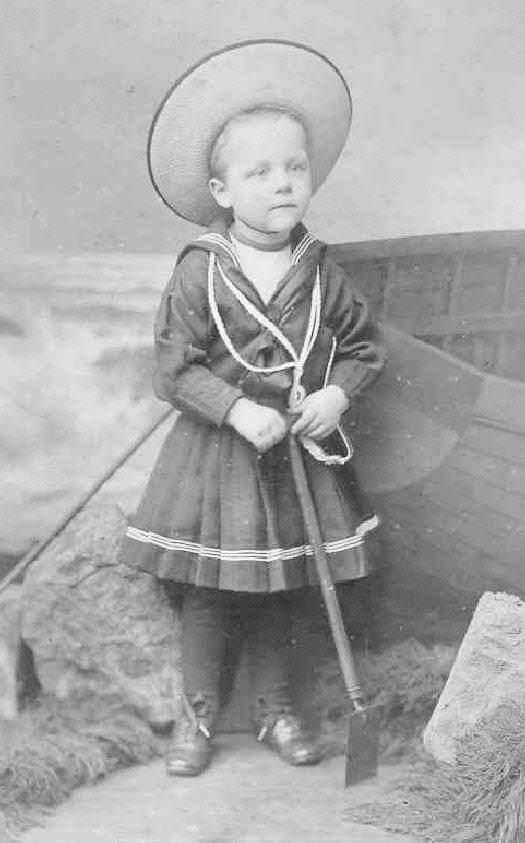
Figure 1.--This unidentified English boy had his portrait taken in Islington, probably in the 1880s. He looks to be about 5 years old. It is not alwats easy to tell if this and similar images is a boy in a sailor dress or a middy blouse and skirt-kilt. We think this is probably a blouse and skirt rather than a dress.
The dresses for boys through much of the 19th century were indestinguisable from those worn by the boys' sisters. The styles were basically the same as those worn by English girls at the time. This did not change until the late 19th century when boy dresses became plainer than those worn by girls. Plaid was a popular pattern for boys' dresses, in part because it related to a boy's garment--the kilt. We do not know of any specifically English styles here. We do not know if the English pattern differed in any way with the general European pattern. HBC has not yet been able to identify chronological trends associated with dresses in England. The boys pictured on the previous page appear much older than was common for English boys to wear dresses. In addition, their matching dresses do not appear to have any of the boyish stylistic details which developed in America. HBC assumes that these boy styled dresses also appeared in England, but can not at this time confirm this. Unfortunately, HBC has no details about the boys pictured in that photograph. We have noted portraits of English boys wearing sailor dresses. Some look rather like middly blouses worn with skirts while others are clearly one-piece dresses. Here it is not always easy to tell the difference.
Gender Conventions
The dresses for boys through much of the 19th century were indestinguisable from those worn by the boys' sisters. The styles were basically the same as those worn by English girls at the time. This did not change until the late 19th century when boy dresses became plainer than those worn by girls.
At the begiining of the 19th century, brothers and sisters appear to have worn identical dress stles with little or no differences. Gradually some detinctive dress styles developed for boys. A basic trend was that boy dresses tended to be simpler. Sailor styled dresses appear to have been very popular for boys, but were not exclusively wor by boys. We also notice girls wearing sailor dresses. We have noted portraits of English boys wearing sailor dresses. Some look rather like middly blouses worn with skirts while others are clearly one-piece dresses. Here it is not always easy to tell the difference. We also notice jacketed dresses. Dress styles are not something we know much about. Hopefully we can develop more information as our English archive expands. Hopefully readers who know more about dresses can help us here.
Detailing
HBC assumes that these boy styled dresses also appeared in England, but can not at this time confirm this as we have realtively few actual images.
Boys wore dresses with a wide range of fabric colors and patterns. Many boys had solid colored dresses. White was popular during certain period, but we notice many colored dresses as well. There were also a wide variety of patterns, including various prints, polkadots and others. Plaid was a popular pattern for boys' dresses, in part because it related to a boy's skirted garment--the kilt.
Fabrics
National Styling
We do not know of any specifically English styles here. We do not know if the English pattern differed in any way with the general European pattern.
Chronolgical Trends
HBC has not yet been able to identify chronological trends associated with dresses in England.
Ages
The boys pictured on the previous page appear much older than was common for English boys to wear dresses. In addition, their matching dresses do not appear to have any of the boyish stylistic details which developed in America. Unfortunately, HBC has no details about the boys pictured in the photograph.