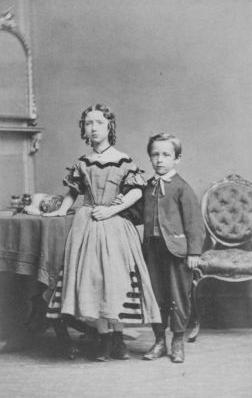
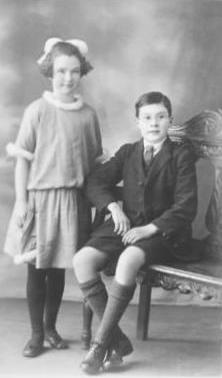
English boys wore suits with several different types of trousers. This varied substantially over time. English boys have worn knee breeches, long pants, kneepants, bloomer knickers, knickers, and short pants suits. We see boys in the 19th century wearing both long pants, bloomer knickers, knee pants and knicker suits. Various factors affected the type of trousers, including chronological fashion trends, age, social class and others. Long trousers were mostly worn at the beginning of the 19th century, but several different types of shortened-length trousrs appeared at mid-century and were worn in the second half of the century. We see many boys wearing knicker suits at school. Knee pants suits were popular in the early-20th century, but not universal. Long trousers were mostly worn by older boys in the early-20th century. Many English boys after World War I wore short pants suits. They were very common during the 1920s-40s. The popularity of short pants suits began to decline after the war, especialluy by the late-1950s. By the 1960s suits except for very little boys were generally made with long pants. Many schools required boys wear short pants suits or shorts with blazers. Generally suits, other than school suits, were made with long pants by the 1960s. They were still available for younger boys in the 70s, but rarely seen since except as part of school uniforms. By the 1960s suits except for very little boys were generally made with long pants.
Knee breeches were the first type of modern trousers. They began to take their classic shapr during the Stuaet era (Ealy 17th century). They were commonly worn by both men and boys in the 17th and 18th centuries. There were no age destinctions once a boy was breeched. Here are principal source of information is art work, principally paintings.
At the time a boy after brreching wore clothes similar to those worn by his father, only in smaller sizes. There were no purpose-made children's clothes. This did not begin to change until the appearance of skeleton suits with long pants in the late 18th century. After the turn-of-the 19th century you rarely see boys weafring knee breeches. It was a decade or two, however, before long pants became standard for adult men.
Long trousers appeared with skeleton suits at the end of the 18th century. At first many were donw with knee breeches, but soon long pabrs beczme standrd. At the time long pabts were just for boys. Men wore knee breeches. English boys mostly wore long pants at the beginning of the 19th century. This included tounger boys after breecging. Men also began wearing long pants in he early-19th century. Long pants were worn almost exclusively until the mid-19th century. Several different types of shortened-length trousers appeared at mid-century for younger boys. Older boys continued to wear long pants suits into the lat-19th century. We notice younger boys wearing bloomer knickers and knee pants suits . Subsequently knickers also appeared. These shortened-length pants gradually became more commonly worn in the second half of the 19th century. At first only younger boys wore these shortened-length trousers, but they gradually not only became more common, but we see older boys wearing them as well. We note teen age boys wearing knickers at boarding school. Still long pants seem more common jn England thn america during the 19th century. Long trouses by the end of the century were less common for boys, except older teenagers. Long trousers were mostly worn by older boys in the early 20th century. We see school age boys wearing first knee pants and then short pants. After Wold War I, short pants suits became standard for boys until their teen years with ome boys wearing them iunto their early- teens. This continued after World War I into the 1950s. Gradually by the late-50s we begin o see more boys wearing long pnts suits. They were standard by the 1970s, although some private schools had boys wearing short pants suits as part of school uniforms.
Knee Breeches
Long Pants
|
We notice shortened-length pants like straight-leg knee pants appearing in England and other countries at the mid-19th century. This included knee pants. In America knee pants became standard. In England we see knee pants, but knickers/bloomer knickers seem more common throughout the second half of the 19th century. We have begun to work out the relative prevalence of these shortened-length pants. We believe English probably began wearing knee pants in the 1850s, but can not yet confirm that. At this time the earliest images we have are from the 1860s when CDVs appeared. They were not all straight-leg knee pants. We notice various cuts. Some were tapered, looking more like knickers. There were both full and tight cuts. Lengths varied from knee length to near ankle length.
Modern knickers were esentially invented by mid-19th Century country squires as they found them more practical country wear than trousers. They were called knickerbockers. Knickers were being worn by English school boys by the late-19th Century. They were extensively worn by older boys in England. The English knickers were close fitting pants that came below the knee. By the 1910s shorts were becoming more important in England, in part because of the inluence of Lord Baden Powell's Scout movement. Knickers in the early 20th century had the meaning of short trousers which I believed continued until after World War II. One reader whose father operatred a mens' wear store tells us that his father used knickers for short trousers into the 1950s. English boys by the 1920s more commonly wore shorts although some older English boys wore knickers. Most English boys, however, when they outgrew short pants wore long pants. Knickers in the 1920s and 30s were not nearly as popular in England as in America. A British reader writes, "I certainly never saw them being worn here and believe they died out even earlier - maybe the 1920s - at which point most boys were wearing short trousers. By the way the word itself - "knickers" today has the meaning of women's underwear here and would cause us to giggle as kids in the 1970s. I'm writing part of my memories based around this fact as there was an expensive ice-cream called a "knickerbocker glory" sold at seaside resorts here and this brought back some amusing memories.I believe knickers is the short form of knickerbockers but I don't know why the ice-cream was so-called,
Many English boys wore knicker-length pants that look different than proper knickers. The seem to be done with a drawstring closure rather than buttons or straps. And some seem to be made from a lighter material than the material commonly used for pants and trousers. we see this in some European countries as well. We believe these b;ppmer knockers appeared in the 1850s, but we have few images to substantiate this. Engish Dags and Ambros are not very common. This changes with the 1860s when large numbers of CDVs become available. It is one way of differentisting between English and american portraits. American boys almost always wore straight-leg knee pants. There wre also bloomer knickers, but unlike England they were not common. This was just the oppisite of the situation in England. The jacket styles were very similar. Commonly the country can not be identifie by the jcket, but there were differences in the pabts or as the Britih would say the trousers. The age conventions over shifting to long pnts were similr, bjut this difference between straight-leg knee pants and bloomer knicjes was very destinctive and continued throughout the scond half of the 19th century.
|
We have no definitive historical information on the origin of short pants for boys worn with knee socks leaving the knee bare. They seem to have first appeared in England before the turn of the century. I believe that they may have originated with the British Army at tropical postings like India. They were given great popularity by Lord Baden Powell and his nascent Boy Scout Movement. I am not sure when the first shorts pants suits for boys appeared, probably the 1900s. The original shorts were generally worn quite long, often faling to the middle of the knee. Many English boys after World War I wore short pants suits. The popularity of short pants suits began to decline in the late 1950s. English boys continued to wear long, relatively baggy cut shorts until the 1960s. The continental cut shorter cut became common in the 1970s. At the same time it became less common for older boys to wear shorts. They were still available for younger boys in the 70s, but rarely seen since except as part of school uniforms. By the 1960s suits except for very little boys were generally made with long pants.
We notice some photographs of boys wearing suit pants that are difficult to classify. Perhaps HBC readers can help us here to figure out the details. Photograpgic evidence is very important, but sometimes it is difficult to assess the clothing with just a photograph. This iswar vintage clothis particularly helpful. We note one 1890s portrait which look like a combination of knee pants and knickers. They are not like any knickers/knee panrs we have ever noted in America. Nor do e know hoiw common this sconstructioin was in England. American knickers tended to have button or clasp closures. This does not seem to be the case here. Hopefully readers will be able to expalin the construction involved here.

Navigate the Boys' Historical Clothing Web Site:
[Return to Main English suit garment page]
[Return to Main English suit page]
[Introduction]
[Activities]
[Biographies]
[Chronology]
[Clothing styles]
[Countries]
[Photography]
[Topics]
[Bibliographies]
[Contributions]
[FAQs]
[Glossaries]
[Images]
[Links]
[Registration]
[Tools]
[Boys' Clothing Home]