|
England's written history began with the Roman invasion of Celtic Britain. The country's history is a fascinating saga of Celts, Romans, Anglo-Saxons, Vikings, and Normans. Throughh all that tumault the major threads of Western civilization bloosomed. Democracy as we know it began to develop with the Viking invasions. It developed in large measure out of the conflict between the monarchy abd nobility with the middle class and Protestant reformation playing a major role. One of the key questions in history is why the Industrial Revolution occurred first in England. There are a variety of factors which played a role, such as the ready supply of iron and coal. But iron and coal occurred close together in many other countries. The unique factor which set Britain apart was its developing democracy and the relative liberty of its people to persue ideas and economic interests. The modern free enterprise system emerged in Britain. There surely were other factors such as the Royal Navy and developing empire, but free minds able to persue economic interests protected by law were key factors which caused this major step in human history occurring in England. England evolved into Britain with the Act of Union. It was Britain that transferred its values and law to North America and the comparison to Hispanic South America is striking. Although Britain and America fought two wars, the ties of culture and values created a Anglo-American alliance never firmalized by treaty that fought three major struggles in the 20th century against authoritarian/totalitarian powers (Imperial Germany, the Axis, and totalitarian Communusm) that had very different values and view of the human spirit.
Very little is known about the early inhabitants of the British Isles, although archeological work has unearthened some fascinating information in recent years. Humans reached what uis now Britain about 900,000 years ago. We know that because of the presence of flint tools. At the time Britain was not an islsnd, it was connectd to the Continent by Doggerland. The earliest actual Human remains have been dated to more than 500,000 years ago. These were Neanderthals. This was before the Last Glacial Period (LGP)/Ice ge (about 115,000-11,700 BP). The LGP would have driven humans from northern Euriope, including Britin, they retreated to southern Europe. The ealiest remaind of modern humns date to about 40,000 years ago as the ice sheets retreated. This was probsbly sporadic hunting trips. The earliest cave art has been found at Creswell Crags in Derbyshire (11,000 BP). Modern humans and continuous occupation would not follow in numbers until the warming period and the ice sheets receeded (10,000 BP). These were hunter vgsher people pursuing gme. This was possible because of the Doggerland land connctuin still existed. The warming trend steadily increased seas and the Doggerland ice bridge was inundated, making Britain an island (4,500 BP). Agriculture gradually developed (about 2,000 BP or 4,000 BC). DNA research has added to the work of archaeologists. Many historians have tended for a variety of reasons to ascribe to the theory that the Anglo-Saxons waged a war of exctinction rather than absorbing the Romano-Celtic population that remained in Britain after the Legions departed. There was no ways to prove this, but the cultural atifacts and lingusistic record tended to confirm this assessment. As the Anglo-Saxon invaders were pre-literate, there is no written evidence. Modern science has provided us a way to test out this theory--DNA genetic sampling. The DNA evidence is striking and surprised many historians. The disappearance of Latin and Celtic had convinced many historiasns thast the Germanic invaders, may not have absorbed the Celts, but rather conducted a war of extinction. The DNA evidence shows that this did not occur. Something like 75 percent of Britons came to Briton long befor the arrival of Celts, Romans, or Anglo Saxons, yet alone the Normans. It was the early hunter-gathers who reached Briton something like 5500-13000 BC who were the ancestors of most modern Britons. This was after the melting of the Ice Age ice caps, but while Britain and Ireland were still connected to the European land mass. Existence as an island people helped to create a relatively homogenous ethnicity and discourage mixing with the many varied contindntal people. One author describes the British people as a kind of 'genetic time capsule' of southwestern Europe at the end of the Ice Age. And the continental group closest to the British is the Basque people. Thus the forst British language was not a Celtic language, but one similar tob the destinctive Basque language. There were many subsequent invasions and migrations which affected culture, language, technology, and other atributes, but no ethnicity. The subsequent groups if they came as invaders may have replaced the ruling elite, but none of these groups have contributed more than 5 percent to the modern British population and ethnic makeup. [Oppenheimer]
The Bronze age in Britain began about 1,000 BC, before the Celtic migrations. There are finds showing undefended villages suggesting periods of relative peace. Much of what we know aboout the period comes from tombs, many of which include rich burial goods.
There are no pre-Roman wtritain records of Briain. Archeology is providing imprtant evidence about the First Melennium BC. We know that dramatic changes swept Britain (about 800 BC). This is when the prople of Britain began to make the transition from the Bronze to the Iron Age. The circumstances, however, are not clear. We begin to see hill forts, including some massive enclosures (700 BC). These masive construction projecrs seem to have occured fir about two centuries. Construction ceased (about 500 BC). THis contriction came And for some reason, with the rise of the hill forts, rich burial sites syddenly disappear. [Powell, p. 56.] This all appears to hve begun just before the arrical of the Celts.
Very little is known about the early inhabitants of the British Isles, although archeological work has unearthened some fascinating informatin in recent years. The Celtic peoples appear to have begun migrating to Britain at about the tme Rome began to emerge in Italy (about 600 BC). There is some evidence that the Celts integrated the existing population. Thus there was about 1,000 yeatrs of Celtic occuption at the time of the Anglo-Saxon occupation. This was punctuated by Roman conquest (1st Century AD), but relatively few Romans moved to Britain. The population remained overwealmingly Celtic. The Roman cuktural influence appears to be largely concentrated in the cities.
England's written history began with the Roman invasion of Celtic Britain. The Roman conquest of Brition ws characterically brutal. It took longer than Caesar's conquest of Gaul. But the impact on Celtic Britain began even while the conquest was underway. Eventually Roman armies subjugated the British Celts and the era of Roman Britain began. The Romans called their new province Britannia. Some of the luxuries of the Roman Empire had reached Britain even before the conquest. There were cultural and economic links with the Celtic tribes in Gaul and these cotavts continued after the Roman conquest. The Romans brought with them many new technologies in agriculture, industry and architecture. One of the most significant imprint on Celtic Britain was urban life--a hallmark of Roman civilization. And with urbanization came a variety of luxuries. These luxuries were coveted by the Britanii. The British army built forts throughout Briton. Some were temporary emplacements. Others forts became the beginning of the major cities of Roman Britain. Almost from the beginning the Romans began constructing roads connecting these forts. The salaries paid the soldiers from an early period began attracting Celts willing to perform services of value to the soldiers and Roman officials. This included artisans, bakers, laborors, launderers, smiths, and many others. These people at first settled outside the Roman forts. The forts and Celtic selllements developed into cities. These Celts over time became Romanized to varying degrees. The Romans established definiticely that Briton was an island when Governor Gnaeus Julius Agricola dispatched a naval expedition to explore the northern reaches of the island (80s AD). Caesar left an account of his expeditions. And there are accounts of the conquest, but unfortunately very few written records of Roman Britannia have been found either in Briton or Rome itself. This probably testifies to the titality of the Anglo-Saxon assault on Roman Briton. Most of what we now know comes from archaeological and epigraphic work. With the withdrawl of the Legions (407 AD), Roman Briton was soon destroyed by Anglo-Saxon invaders. Some of the British retreated west, but the suyrvivors seem for Celtic than Roman.
At the time Saint Augustine arrived, the Anglo Saxons controlled most of southern England and were expanding north and west (late 6th century). The Anglo Saxon invaders had no central organization as Roman Britain had or as the Normans would institute after Hastings. They gradually colonised England northwards and westwards, pushing the native Britons to the western fringes of island. Thus Roman Britain was replaced by Anglo Saxon Britain, The Anglo-Saxon invaders formed several new kingdoms. The Anglii settlements evolved into the kingdoms of East Anglia, Mercia, and Northumbria. The Saxons settlements appeared to have founded the kingdoms of Sussex, Wessex, and Essex. The Jutes apprear to have predominated in Kent and the Isle of Wight. Wars between these kingdoms gradually resulted in the consolidation of three impotant kingdoms into Mercia, Northumbria and Wessex. War cointinued between these kingdoms as well as raids from the west and north, but they were stronger than the Romanized Britons and able to deal with these raiders. This was the England that the Vikings found when they began to raid. The Anglo-Saxon invaders were not-yet Christianized. While they defeated the Christinized Britons, they eventually became Chritinized. The Church became the richest institution in the country and the only centralized institution. The Church also acquired prestige and political influence. Their wealth was in land and gold and silver jewellery, relics, and chalses hkld by the churches and manastaries. The Christianized Anglo-Saxon sttes fought among each other, but generally respected church property.
At the time Saint Augustine arrived, the Anglo Saxons controlled most of southern England and were expanding north and west (late 6th century). The Anglo Saxon invaders had no central organization as Roman Britain had or as the Normans would institute after Hastings. They gradually colonised England northwards and westwards, pushing the native Britons to the western fringes of island. Thus Roman Britain was replaced by Anglo Saxon Britain, The Anglo-Saxon invaders formed several new kingdoms. The Anglii settlements evolved into the kingdoms of East Anglia, Mercia, and Northumbria. The Saxons settlements appeared to have founded the kingdoms of Sussex, Wessex, and Essex. The Jutes apprear to have predominated in Kent and the Isle of Wight. Wars between these kingdoms gradually resulted in the consolidation of three impotant kingdoms into Mercia, Northumbria and Wessex. War cointinued between these kingdoms as well as raids from the west and north, but they were stronger than the Romanized Britons and able to deal with these raiders. This was the England that the Vikings found when they began to raid. When the Viking insursions began, there was not coordinated Anglo-Saxon response. The Viking incursions culminated with a "Great Army" landing in East Anglia (865). It made wide territorial gains, and the kingdoms of Mercia and Northumbria had succumbed (by 875). Only Wessex survived the Viking onslaught. The Vikings while devestating large areas also played a role in the spread of commerce and the evolution of democracy in England.
The Vikings raided the eastern North Sea coast of England for decades when the weather improved every summer. Finally they began establishing permanent settlements. And the struggleforthe lad began. Out of that struugle would come England. The first settlement with the Vikings wintering was on the sle of Sheppery in Kent (854). It was not only raiding that attracted the Vikings. Scandanavia had very limited farmland, especially Mountneous Norway, The land was better in Denmark, but it was a small peinsula. England offered large areas of excelent farm land. And at the time agriculture was the primary source of wealth. The sons of Ragnar - Ivarr the Boneless, Halfdan, and Ubbi led a Great Army to Englnd. They advanced across Mercia and Northumbria. The divide Anglo-Saxon kingdoms weakened by raiding could not effectively oppose them. The Great army next noved south into East Anglia (870). They killed King Edmund and sacked the abbey at Peterborough. This left them in control of mich of the north and east. And they threatend to conquer all of the south and west. Only one English king as the honor of being call great--Alfred the Great. Thanks to Alfred Wessex survived the Viking/Danish incursions. The Great Army terrorized the anglo-Saxonsfor a decade. Guthrum came close to conqueing Wessex. Alfred ammassed a Saxon Army and defeated the Danes at Eddington (878). The Danes were not destroyed but they were forced to make peace with Alfred. Guthrum retreated into East Anglia with an agreement that the England wouuld be divided. The Treaty of Wedmore established the boundary of the Danelaw as, "up the Thames as far as the river Lea, then up the Lea to its source, and then straight to Bedford, and then up the Ouse to Watling Street'. Alfred died with a divided Britain, but with Wessex secure. The Danes were by then also firmly established. All of the kingdoms of East Anglia and Northumbria were partof the Dane Law. ercia appears to have been a ravaged land, with Ealdormen being set up by Wessex only to be undone by the Danes. Alfred's descendents managed to win back large aeas of southern and central England from the Vikings, generally referred to as the Danes. It is at this time that England emerges in European history, although it was a badly divided country between the Anglo-Saxon areas and the Dane Law, not to mention the Romo-Britains (Welsh) in the west and Scotts in the north. This period is of considerable importance becuse much of the country had not yet been feudalized, and the non-Feudal insitutioins of the Saxons and Danes are a factor in England even after the Norman conquest developing differently than more fully feudal Europe. The Saxon monarchy gradually gained in strength and attempted to wipe out the Danes. A Danish dynasty seized control of England at the same time that William Duke of Normandy began to plan to seize the kingdom.
William's claim on England is a matter of historical debate. He claimed that both Edward the Confessor and Harold accepted his claim. This may have been the case. But on Edward's dearh, Harold seized the throne abd refused to acceot William's claim. But Harold faced two invasions. The first was from a Danish force in the north by his half-brither Torig. He rush his forces north and defeated the Danish force at Stabford Bridge near York. It is at this time he learned that Willian had landed in the south. Harold rushed south anf the fate of England was settled at Hastings. William the Conqueror's victory introduced the final element to the groups that xreated modern England--the Normans. The Normans were actually Vikings that conquered what is now called Normandy and suronding areas. By the time of the conquest, however, they had been largely Francified. Thus William not only brought Norman-style political and military feudalism to England, but the French language and culture. He was the most efficent administrator since the departure of the Romans. William used the feudal system to collect detailed information on his new realm and collect taxes. He made use of the church bureaucracy to strengthen the new central government. He also created a more efficent royal justice system. William did not, however, sweep away all Saxon and Norman institutions. Some he found useful.
The country's history is a fascinating saga of Celts, Romans, Anglo-Saxons, Vikings, and Normans. Throughh all that tumault the major threads of Western covilization bloosomed. Democracy as we know it began to develop with the Viking invasions. It developed in large measure out of the conflict between the monarchy abd nobility with the middle class evebntually emerging as the deciding factor. Feudalism developed in Britain much as it did on the continent. The Germanic invaders (Saxons and Jutes) were freeman (ceorl). They were responsible to the tribal chiefs and were not serfs. Over time war and subsistence farming had reduced most freemen into serfdom. William the Conqueror after defeating Harold at Hastings (1066) brought Norman-style political and military feudalism to England. He was the most efficent administrator since the departure of the Romans. William used the feudal system to collect detailed information on his new realm and collect taxes. England as other Medieval kingdoms was faced with a struggle for supremecy between Church and state. This conflict became especially severe during the reign of Henry II. Loyal supporters of the king murdered Arch Bishop Thomas � Becket in Canterbury Cathedral. King Edward I initiated the conquest of both Wales and Scotland. The trading interest of the Danes had brought renewed vigor to towns in England. Norman rule with their concern woith administration further promoted the growth of towns. Another factor was the perpetual need of English kings to borrow money. Many towns were able to in effect purchase royal charters which detailef grants of rights. In all the Feudal kingdoms of Europe, there was an inherent tension between the king and his nobels. This conflict became became increasingly serious under Richard I and reached a crisis under King John. A victory by the barons forced Jpohn to sign the Magna Carta (1215). Thedocument is considered to be one of the modst important constitutional charters in history. While it applied only to the barons, it limited royal power and was a major first step in English democracy. Edward III initiated the Hundred Years War with France (1337). Edward had a claim to the French crown through his mother. Hostilities erupted and cintinued over 100 years. The plague or Black Death devestated Europe. It began in Italy and moved rapidly north. The Channel was no barrier. It soon reched England (1348). Along with the pain and suffering there was a significant economic impact. The huge number of people killed significantly reduced the labor force, altering the relationship beteen the nobility and the peasantry. The plague accelerated a process already underway of breaking down the Feudal System. The Wars of the Roses was a drawn out dynastic civil war pitting the House of Lancaster against the House of York. The English economy centered on the wool trade and the inclosues to increase wool production had profoundconsequences. Almost independent of the German Refomation was the Reformation in England, but this proved to be crucial because of the future imperial role of England. Political rather than religious issues were to drive the Reformation in England. England emerged from the Medieval era during the Tudor era.
The Protestant reformation played its role in the development of moden Britain. John Wyclif raised concerns about the Catholic Church in the 15th century and translated the Bible into English. The Reformation came to England in the 16th century. Almost independent of the German Refomation was the Reformation in England, but this proved to be crucial because of the future imperial role of England. Political rather than religious issues were to drive the Reformation in England. It was a Defender of the Faith, Henry VIII that set the Reformation in motion in England. Henry VIII decided to divorce his wide, the Spanish princess Catherine. He was furious when Pope Clement VII refused to approve the divorce. In response he rejected papal authority over the Church in England. He founded the Anglican Church and set himself up as head of the new church (1534). While sparked by his personal life, the break with Rome had many advantages or Henry. One of the most important was the wealth of the Church was now at his disposal. Much of this he seized by closing the monestarires. Huge quantities of land were in the hands of the monestaries. The first tentative steps toward actual reformation was a liturgy in English and The Book of Common Prayer. There was some opposition to Henry's Reformtion, but his adroit use of Parliament helped to build popular support for his policies and set important precedents for the future of Parliament. Henry's lesser known and very devout Protestant son Edward VI played a major role in the success of the Reformation in England. Mary I or Bloddy Mary as she became known to history maried Phillip II of Spain and tried toturn England back to Catholocism but was childless. It was then the protestant Princess Elizabeth who turned England decideldly back to Protestantism, although she tried to moderate the religious issue.
The first important English explorer was Giovanni Caboto (1450-98), better known as John Cabot. He was Genoese. (Note the importance of the Genoese. As Venice defeated Genoa and limited its maritime commerce, many Genoese like Cabot and Cloumbus sought their fortunes in other countries.) Cabot set up as a merchant in Bristol. Soon accounts of Columbus' voyages reached England. Cabot with his navigational skills was commissioned by King Henry VII to explore the New World and find a passage to the Indies, the famed Northwest Passage. Cabot found Cape Breton Island off modern Nova Scotia and claimed it for England (1497). He explored the coast of Greenland in a second expedition (1498). The English watched in envy while Mary was queen, her husband was Phillip II of Spain. With the accession of Princess Elizabeth, however, this changed. Queen Elizabeth secretly authorized privateers to prey upon Spanish treasure ships and in the process not only seized important quantities of gold and silver, but accumulate increasing information about navigation and ocean seafaring. The English Sea Dogs (Drake, Hawkins, Raleigh, and others) were the bane of Philip's existence. Sir Francis Drake (1545?-96) was the greatest English explorers and one of its preminant naval heroes. Drake received his early training from Sir John Hawkins, a realative and participated in the raids on Spanish shipping. On one f thse fraids, Drake led a small party accross the Istmus of Panama for his forst view of the Pacific Ocean (1572). Queen Elizabeth, depite the fact England was at peace with Soain, approved and helped finance a secret expedition to target Spanish colonies along the Pacific coast of South America (1576). The Pacific at the time a virtual Spanish lake. Drake attacked Spanish cities from Chile north to Mexico and became known as El Drago. Drake and the Golden Hind reached Plymouth having curcumnavigated the globe (1580). The Spanish issued stinging diplomatic protests, but Queen Elizabeth knighted him. Not only were the English plundering his treasure fleets, but they were Protestants and Elizabeth was taking the English church in a decidedly Protestant direction. Philip's response was the Great Armada described above. The defeat of the Armada (1588) opened the way for more intensive English exploration and the founding of colonies. Henry Hudson (?-1611?) made four voyages if discovery primarily aimed at finding the Northwest Passage. On his third voyage (1609) he explored along the coast of North America 150 miles up what is now known as the Hudson River. On his fourth voyage abord the Half Moon (1610) Hudson still searching for the Northwest passage found what is now known as Hudson Bay where his crew mutined and Hudson and his son are believed to have perished.
France
The Great Armada was rooted in the struggle between Philip II of Spain and Elizabeth I of England. Elizabeth first met Philip when he came to England to marry her half-sister Mary. The initial contacts were pleasant enough despite the religious differences. Philip in fact played a role in moderating Mary's treatment of her. Perhaps saving her life. After Elizabeth became queen their relationsjip deteriorated. The primary issue was the Sea Dogs and their depredations on Spanish treasure ships. The situation worsened stll when it became obvious that Elizabeth herself was authorizing thgese attacks and profiting from them. This situation was of course exacerbated by the religious differences. Philip's decession to supress the Protestant Reformation was a major concern to Elizabeth, less from religious reasons, but because of the economic importance of the Low Countries (Spanish Netherlands) to England. France had traditionally been England's enemey, but under Elizabeth it was Philip II and Spain that emerged as her principal foreign foe. Philip after the death of his wife Queen Mary, Elizabeth's half sister, returned to Spain and gradually began to conceive od returning to England with a massive invasion force. Elizabeth's execution of Mary the execution of the Queen of Scots Is reported to added to his determination to dethrone Elizabeth. In fact with Mary gone, the England could be added to his own domains. With the gold and silver flowing in from the Americas, Philip built a huge fleet and hurled it at England and its tiny navy (1588). Advanced in naval engineering, more effective gunnery, and superior tactics and as so often in war fortunate circumstances allowed Elizabeth's small navy to defeat Philip's Great Armada. Weather and oceanography may have been even more important factors. It was a great personal achievement for Queen Elizabeth. It demonstrated that a woman could not only effective govern in time of peace, but also lead a modern nation in time of war.
The Royal Navy was founded by Henry VIII in the 16th century and four the next four centuries has played a central role in modern history. It is no exageration to say that Royal Navy was the critical force in the creation of the modern world. The Royal Navy is common seen as an instrument of British colonialism and the suppression of many Asian and african peoples. This is certainly true. It is also true that the Royal Navy helped establish the modern world trading system. It broke up the closed international system established by Spain and Portugal and replaced it with a much more open system. The Royal Navy impact on the modern world is extensive and pervasive. The Royal Navy chartered sea lanes around the world. There are few ports and sea coasts that have not been touched in some way by the Royal Navy. The Royal Navy played an important role in the Indistrial Revolution. It helped to defeat series of opponents for the most part countries goverened by authoritarian or dictatorial rulers (Philip II, Louis XIV, Napoleon, Kaiser Wilhelm II, and Hitler). Thus the Royal Navy played a key role in establishing parlimentary democracies in the modern world. It was the Royal Navy that ended the slave trade. Although the Royal Navy played a major role in the Revolutionary war, it is also true that for much of the early history, the Royal Navy provided a shield from European interference behind which the American Republic developed. The prestige of the Royal Navy by the 19th century was such that the uniform of the British enlisted sailor became a standard outfit not only for British boys, but also for boys throughout Europe and North America.
The British built the largest colonial empire, but the empire lrgely evolved rather than being created from a central plan. The first British colonies were the modest enterprises along the Atlantic coast of North America. They also acquired Caribbean sugar islands and French Canada. Much of that empire was lost uin the American Revolution. Britain obtained large areas of India from France at the samr time it obtained Canada. Than after the Napoleonic Wars Britain in the 19th century graduallu added colony after colony. Many were acquired in the process of protecting other colonies. The destruction of the Spanish-French fleet at Trafalgur (1805) had left Britain the preminent naval power of the age. The Royal Navy thus played a key role in building the Empire. Two of those colonies were like the early United States and were colonized by people of British stock--building prticularly close ties.
The Tudors did a great deal to strengthen the authority of the monarchy, but were deft politicans and managed Parliament carefully. The Stuarts had a different mindset. They were commited to not only divine-right monarchy, but royal absolutism as well. Rather than attempting to mamage Patliament, the Stuarts were affronted by Parliament's perogatives. The conflict between the Stuart monarchy and Parliament culminated in the English Civil War.
The English played a major role in securing the independence of the Netherlands. And usually the Dutch and English were on the same side of European conflicts. Never-the-less, the English fought three naval wars with the Dutch during the 17th century. The more important ones were conducted by Stuart King Charles II who maintained close relations with England's traditional enemy France. The Dutch Wars are thus somewhat of an anomaly in England's basic policy of resisting foreign domination of the Low Lands, although the Third Dutch War turned into Louis XIV's wars of expansion. The Wars were fought as naval engagements. One important outcome was the English seizure of New Amsterdam which became the English colony of New York,
The Dutch-English relationship was complicated by English religious/dynastic struggles. Protestant monarchs were favorably disposed toward the Dutch. Queen Mary, however, attempted to return England to Catholicism. And the Stuarts while heads of the Church of England were more desposed to France and Catholocism. Charles II converted on his deathbed and James II was openly Catholic. This eventually led to invasion by a Dutch Protestant army led by William of Orange which the English celebate as the Glorious Revolution (1688). Parliament forced King William to accept a constitutional monarcy--in esence the first modern monarchy. In return it financed what he wanted, a war with Louis XIV's France to oreserve Dutch independence--King William's War. This began a series of wars with France that did not end until Waterloo (1815).
England becamne involved with a series of wars wih France as King Louis XIV attempted to expand France's borders. The War of Devolution was the first war launched by French King Louis XIV. France at the time was the most powerful country in Europe. Louis XIV and France beginning with the War of Devolution would be at war with much of Europe for 40 years. Louis' campaigns were waged to exand France's bordrs, but the territory won was very modest in comparison to the costs. And they were achieved at enomous costs, virtully bankrupting the country. The impact was to weaken France and the monarchy and would eventually lead to the Revolution. [Lynn] France was opposed by the now independent United Provinces (Netherlands), Spain, England, and Sweden. Louis had no allies. The War was ended by the Treaty of Aix-la-Chapelle (1668).
Louis XIV revoked the Edict of Nantes, in part due to Madame de Maintenon's influence (1685). The Edict had provided for religious toleration in France. French Protestants had the right to worship as they chose. The revokation was followed by the brutal supression of French Protestants. Thousands were killed and many more fled the country. Louis saw a divided kinghdom as a weakness. In fact the loss of the Protestants weakened the French economy. Louis XIV again attempted to enlarge France's birders in the War of the League of Augsburg . Louis was resisted by England, United Provinces (Netherlands), Spain, the Holy Roman Empire, Sweden, Brandenburg-Prussia, Saxony, Bavaria, and Savoy. Europe's protestant rulers formed the the League of Augsburg to resist Louis. The War was ended by the Treaty of Ryswick (1697).
The War of the Spanish Succession was the second war of the 18th century. It was another war resulting from Louis XIV's desire to expand French territory and influence. The immediate objective was Spain. The War was fought in Europe from 1702-14. The War was primarily fought on land and was the first major engagement of English forces on the European continent beyond French coastal areas. It was the last of the wars launched by Louis XIV in his drive to expand French power and territory. Two great military leaders emerged, the Duke of Marlborough and Prince Eug�ne who secured major victories over the French. The War eventually statemated and the English withdrew. The Treaty of Utrech (1713) left the crown in Bourbon hands, but with the stipulation that the French and Spanish crowns never be unified. England gained important territories including Gibralter and areas of Canada.
England evolved into Britain with the Act of Union. The histories of the other countries of the British Isles (Ireland, Scotland, and Wales) are all intertwined with that of England.
King Louis XV concluded an alliance with Austria in 1756, and the two went to war with Great Britain and Prussia in the fateful Seven Years' War (1756-63), one of the most disatrous in French history. The War was actually precipitated with a young colonel in the Virginia militia, George Washington, chanced accross a French military force in the disputed territory west of the Apalachens. Louis' commitments to the Austrians prevented him from concentrating on the colonial struggle with Britain and as a result, by 1763, France had lost to Britain almost all her colonial possessions in North America and India. Later, the failure of his secret diplomacy resulted in the near elimination of French influence in central Europe. The French defeat was so crushing that it stirred a desire for revenge, a major factor in Louis XV's grandson, Louis XVI's decission to support the colonists in the American Revolution.
One of the key questions in history is why the Industrial Revolution occurred first in England. There are a variety of factors which played a role, such as the ready supply of iron and coal. But iron and coal occurred close together in many other countries. The unique factor which set Britain apart was its developing democracy and the relative liberty of its people to persue ideas and economic interests. The modern free enterprise system emerged in Britain. There surely were other factors such as the Royal Navy and developing empire, but free minds able to persue economic interests protected by law were key factors which caused this major step in human history occurring in England.
The history of the American Revolution and Revolutionary War is the history of America;'s separation from Britain. It a wider historical view, howevr, Britain had triumphed. It was Britain that transferred its values and law to North America and the comparison to Hispanic South America is striking. Although Britain and America fought two wars, the ties of culture and values created an Anglo-American relationship of enormous strategic consequences. Chncellor Bismrck understood this in a way that Kaiser Wilhelm did not. The Anglo-American alliance, never formalized by treaty, fought three major struggles in the 20th century against authoritarian/totalitarian powers (Imperial Germany, the Axis, and totalitarian Communusm) that had very different values and view of the human spirit. And in the end it was the English values of democracy, individual rights, and free enterprise that prevailed.
The French Revolution was one of the turning ponts f European history. The French Revolution was a dramatic break with Europe's feudal past. As such it is the most important event in modern European history. The rise of the bourgeoisie in France signaled the deathnell for Ancien Regime, the old aristocracy. Unlike Britain and the new United States, the economically important bourgeoisie was denied any political role and support of the increasingly frivolous aristocracy imposed a great economic cost on France. Not only was the bourgeoisie denied any real political role, but the lower classess lived in increasingly deprived conditions, a situation intensified by the bankruptsy of the royal government. The increasing oposition to France's virtually feudal government suddenly ignited during a 1789 riot that exploded into open revolt. The Revolution was opposed by the other counties of Europe--all monarchies. A new Republic toppled the monarchy. A series of sporadically violent and radical civilian administrations rued France. The height of violence was reached in the "The Great Terror." King Louis XVI and Queen Marie Antointte to the horror of Europe were guiotined. The execution of the King and Queen made any accomodaton with the Republic impossible. Foreign armies coverged on Paris again, but were defeated by Rpublican forces under the new tri-color flag. Eventually a remarkably capable and carismatic genneral seized control of the Revolutionary armies and the Republic merged into the new French Empire. The Revolution had repercussions throughout Europe and Britain joined the coalition fighting the Republic.
The French Revolution and Napoleonic Wars did more to foster nationalist sentiment than any other events during the late 18th century and early 19th century. Fashions were largely pan-European before the Napoleonic Wars. After Waterloo (1815) and the Congress of Versailles (1814-15), individual nation satates coalessed and developed theie own values and fashions. One factor was the increasing nationalization of European monarchies. Before the Napoleomioc Wars, there were many royal families which ruled provinces that that spoke different languages and had culturres different than the monarch. Even a large country like England had a series of Dutch and German kings. After the Naopoleonic Wars, nation states began to colaese, Finally Germany and Italy emerged. The monarchs in 19th centurty Europe (although not necesarily therir wives) were identified with the national culturel The English monarch (Victoria), the Czar, the Kaiser, the Italian king. the French kings and emperors were the embodiment of the national image--it would be unimaginable that such monarchs woulod be foreign. At the same time, destinctive national fashionsd became increasingly important. No longer would Europeans accept pan-Europran fashions like the skeleton suit. The impact on Germany and Central Europe after wars of the French Revolution and the Napoleonic wars need to be examined as much focus is usually on England and France.
It was the Royal Navy that eventually ended the slave trade. The slave trade had been a lynch pin in thr triangular trade that has been a key element of the British economy and helped bring great wealth to Britain. It had in part helped to finance the growth of the Royal Navy. The expansion of the British merchant fleet under the protection of the Royal Navy resulted in Britain dominating the slave trade by the 18th century. British ships beginning about 1650 are believed to have transported as many as 4 million Africans to the New Wiorld and slavery. The British Parliament during the Napoleonic Wars banned the slave trade (1807). This was a decession made on moral grounds after a long campaign in Britain against slavery at considerable cost at a time of War. After Trafalgur (1805) the powerful British Royal Navy could intercept suspected slave ships under belligerent rights. After the cesation of hostilities this became more complicated. The only internationally recognized reason for boarding foreign ships was suspected piracy. Thus Britain had to persue a major diplomatic effort to convince other countries to sign anti-slavery treaties which permitted the Royal Navy to board their vessels if suspected of transporting slaves. Nearly 30 countries eventually signed these treaties. The anti-slavery effort required a substantial effort on the part of the Royal Navy. The major effort was carried out by the West Coast of Africa Station which the Admiralty referred to as the �preventive squadron�. The Royal Navy from this station for 50 years conducted operations to intercept slavers. At the peak of these operartions abour 25 ships and 2,000 officers and men were deployed. There were about 1,000 Kroomen, African sailors, operating West African Station. The Royal Navy deployed smaller, shallow draft vessels so that slavers could be persued in shallow waters. Britain also targeted African leaders who engaged in the slave trade. A British forced in one operation deposed the King of Lagos (1851). The climate and exposure to filthy diseased laden slave ships made the West African station dangerous. The officers and men were rewarded with Prize money for both freeing slaves and capturing the ships. The Royal Navy's task in East Africa and the Indian Ocean was even more difficult. This was in part because of the support for slavery among Islamic powers (both Arabian and Persian). The slave trade persisted into the 1860s, in part because of the continued existence of slavery in the United states. Eventhough the slave trade was outlawed in America, the American Navy was not used to aggresively interdict the slave trade. This did not change until President Lincoln signed the Right of Search Treaty (1862), a year before the Emancipation Proclamation. The Cuban trade ended (1866).
Trafalgur had left Britain the only important naval power of the age. Thus while Britain had only a small volunteer army, it had coniderable prestige in the consel halls of Europe. Britain actively participated as one of the great powers in arange of diplomatic issues. This began at the Congress of Vienna where it worked to ensure that Portugal and Spain would not restablish their empires in the Americas. This at the time was more important than the A,erican Monroe Doctrine. A major question in the 19th century was the future of the IOttoman Empire--the Old Man of Europe. The British assisted with Greek independene. The main question was no so much the Ottomans, but how the Ottoman Empirewas to be divided. This was the underlying cause of the Crimean War. The British later intervened to protect Christians in Lebanon.
The final defeat of Napoleon at Waterloo (1815) left Europe in the hands of concervative monarhies who through the Congress of Vienna returned Europe to conservative monarchies. These monarchies repealed many of the reforms spread by the French Revolution. Britaian thanks to years of tradition culmninating in the Glorious Revolution (1688) had a limited monarchy and well-established parlimentary system. This provided the basis for the protection of both property rights and civil rights which enabled the rise of capitalism. Britain could, however, hardly be called a democracy. It was only after the Napoleonic Wars and especially with the aecession of Princess Victoria that Britain instituted a series of reforms which converted the country's parlimentary system into true democracy. Here Britain and Victoria had the emense gift of a young German aristocrat--Prince Albert. A major issue proved to be the the Corn Laws. The principal turning point was the Reform Act which finally did away with the rotton boroughs. It was at the same time that Britain abolished slavery in the Empire. One of the major political movements in Victorian Brirain was the Chartists. They failed, but had a huge impact in promoting reform. As a result of these moderate conservative reforms, Britain largely escaped the chaotic Revolutions of 1848 which swept Europe. And having learned from the American Revolution, the reform movement was allowed to develop in the Dominions as well.
Revolution swept Europe in 1848. In Britain the Revolution of 1848 took the shape of the Chartist Movement. It looked fo a time like the Chartists might succeed in England. The struggle was conducted throughout the 1840s. But even before 1848 support for Chartism was declining. As Marx saw the differing interest of the middle class and working class would create differences that would make common action possible. The 10 Hour Act placated many. For the mass gathering on Kenington Green only 20,000 assembled. The Government preparing for the worst has assemed a security force of nearly 100,000. Even so the royl family decided it was prudent to leave London. Why did Britain prove less succetable to Revolution? Some have argued the Victorian penchant for constructive self criticism. [Wilson, pp. 113-120.] The Revolutions of 1848 did overturn some regimes, although most were soon restored. Onlt the French monarchy was permanretly overturned. The revolutions did demonstrate that that popular unrest could overthrow monarchial government.
The Opium War was a war between the United Kingdom and Imperial China. The British objected to China's attempt to limit British shipments of Indian opium to China. The Chinese were reacting to ikncreasingly levels of addition among the Chinese people. It is notable that as late as 1840 that British traders were having difficulty supplying goods that were of interest to the Chinese in exchange for the many Chinese products (especially porcelin and silks) that were in demand in the West. One of the few British products that was in great demand was Indian opium. The War was the British effort to force the Imperial Government to cease its efforts to prevent opium importation. The War ended in 1842 with the Treaty of Nanking which opened specified Chinese ports to foreign trade and the cession by China of the island of Hong Kong to the British. The Opium War was a critical turning point in Chinese history. In the West it is a conflict virtually unknown except to historians. In China every schoolboy knows about it.
The Crimean War was a belicose interlude in a uncharacteristically long period of peace under which Europe flourished and prospered. The war is one of the least studies of the wars between the main European powers. Russian efforts to expand south brought it into conflict with the two great European powers, England and France. The fact that Russia again fought France, headed by a Bonaparte Emperor, Napoleon III is perhaps not to surprising, although this time it was more of a defensive policy on France's part. More srprising is the fact that Prussia abstained from involvement. This was due to Bismark's efforts to separate the Russians and French which was later to lead to German unificatuion. This policy was later was abandoned by Wilhelm II, leading to diisaster in World War I. The Crimean War proved to be the first step in changing Prussia (soon to be Germany) from an English ally to an enemy. The Crimea was the only time the British and Russian's fought--although there was tension growing out of the Great Game in Afganistan and northern India. There was great suffering on both sides. In Russia, war with the European powers brought great strains. Taxes were needed to finance the War. The huge casualties required forced levies. Both mean increased hardship for the already exploited Russian serfs. There were serf uprisings everywhere. Intelectual ferment is oftn stimulated by war and social upheaval. Fashion and art are often affected. It is at this time that Russian blouse styles begin to appear in Europe. Many styles such as baraclavas (ski mask), cardigan sweaters, and raglan sweaters coats later appeared. Russia was also affected. The conditions of Russian serfs worsened from their already exploited condition. The aftermath of war and rebelion appears to have enlived the previously rather static artistic life of Russia. It is in this period that the new school of critical realism is founded. The founder of critical realism is Vasily Perov.
The British learned their lesson in the American Revolution. They persued different policies in the other colonies with inplanted majority British populations (Australia, Canada, and New Zealandal . They persued policies to recognize and promote the developing local governmental institutions. Britain also persued free trade policies that dd not discourage local economic development or trade with other countries. Each of the three Dominions developing seeing Britin as the mother country and loyally followed Britain into two terrible world wars. Each of the Dominions played important roles and made great sacrfices in both wars.
The British effort in the Scramble for Africa was rather a chaotic affair. The Royal Navy gave the British the ability to essentially estblished colonies whereever they pleased. There was, however, considerable debate in Britiasin over the colonian enterprise. Colonies were created in both West and East Africa. In South Africa, the British not only faced the Bohrs, but also th Zulus. Cecil Rhodes dreamed of railroad connecting British colonies from Captown to Cairo. Ironically the greatest debate in Europe over adding colonies occurred in Britain the world's greatest imperial power. Control of the British Government fell back and forth between Benjamin Disraeli who was an apostle of empire and Willam Gladstone who question imperialism. Disreali managed to capture Queen Victoria's imagination, in part by dreaming up the idea of making her Emperess of India.
The Boer War, or South African War as it is sometimes called, is today an obscure footnote in history. At the time it was a major turning point in history. Not only did it occur at the transition from the Victorian to the Edwardian era, but it helped to confirm the growing opinion in England that it was the rising power of Germany under the mecurial Kaiser Wilhelm II that posed a danger to Britain rather than the traditional English enemy--France. This was a major transition in English thinking that had enormous repersusions in the 20th century. The War also convinced many that major reforms were needed to modernize the Army. The Boer War brought the term concentration camp" to the 20th century. A more happy impact was indirectly the War was involved in the founding of the Scouting movement. The British casualties were much higher than anticipated and the civilian casualties were even higher. European public opinion was incensed and the British began to see their Empire in a new light.
The 20th century opened with great hope and a new monarch. The Edwardian Era is precisely defined as the reign of King Edward VII (1901-10). In more generalized terms it probably makes more sense to think of the Edwardian era as the period from the turn-of-the 20-century to the outbreak of World War I (1914). The new century began with enormous optimism, an unprecendented era of human progress. H.G. Wells addressed this spirit in utopian writings and became a virtual spokesman for material progress and the future. The public watched scienists slove one industrial and medical problem .after another. Electricity began to revolutionize the ecomomy and social life. The wireless began another leap firward in communications. The automobile appeared, although the average Briton could not affiord one, in contrast to America where the Model-T and mass production brought the car within the range of working-class budgets. With all the new inventions people began to see anything as possible and an increasingly bright future. Building an unsiknable ocean liner, RMS Titanic, was symbolic of popular attitudes. There had been no general European war since the Napoleonic Wars. People also began to see war as an ancrinism which was no longer possible, in part because the European economnies were increasingly tied together. The Edwardian era had anique ethos, reflected in
architecture, clothing fashions, and life styles. Continental Europe fashion had an importat impacrt, especially French fashion. Art Nouveau was the characteristic style. The class system remained deeply intrenched. Economic and social changes were have major impacts, increased social mobility to an unprecendented extent. The English working-class until the Edwardian era had been largely excluded from national politics. As a result of public education and the trade union movement, the working class was becoming increasingly politicized. This lead to aeriod of increased industrial unrest. Women also intensified their push for political rights. The 1906 General Election was a narrow Liberal victory achieved throuhh promises of reform. The Bohr War which began during Queen Victoria's reign was concluded during the beginning of Edwar's reign. The Brirish political system had changed dramatically during Victoria's reign. When she became Queen the monarchy still was a major force in Government, but by the end of her reign the monarchy had become increasingly a ceemonial office in a Government administered by a primen minister and an increasingly representative Parliament. Edward was the first monarch to reign in this new enviroment. He was generally thought as a light-weight, in part because his mother the Queen prevented him from playing any important role in Government. The Bohr War had badly damaged Britain's international reputation because of wide-spread European sympthy for the Bohrs. King Edward helped repair that reputation. Despite his poor reputation and filandering ways, he proved to be a politicaly adroit leader. He also helped steer a steady path through the increasingly difficult European situation. Many of the difficulties were created by Germany's eratic and bompastic Kaiser. Wilhelm II was a nephew who by Edward's accession had largely estrained himself from the British side of his family. Thanks to Wilhelm's aggressive behavior, attitudes toward Germant had dramar\tucally changed in Britain. The Kaiser's decesion to begn a naval arms race with Britain was the final sraw. This was the turning point ending centuries long alliancs with Germans and seeking a new relationship with France, Britain's traditional European foe. The British public became increasing concern over the decline of the country's naval power as well as commercial dominance led to rising tensions with Germany. This was part of a massive European arms race.
In the long histoy of the development of democracy, perhaps the most under covered story is that of woman's sufferage. Given that voting only became widespread in the 19th century (even in America and Britin), this rather narrows the historical record. The Sufragette Movement, the struggle for women's voting rights, in America and Britain as the two most poweful democracies were at the heart of the struggle. France lagged far behind. The Sufragette Movement became a national movement in Britain during the Victorian era. One might think that the young Queen was behind it, but in fact Queen Victoria did not support the idea of women voting. Women were not banned from voting by any statute until the Reform Act (1832) and the Municipal Corporations Act (1835). Ironically this was the same decade that a very young Victoria rose to the throne (1837). The teenage queen may not have been as sure of herself as would be needed for such a huge cgange in British democracy, but nothing about her upbrining or very limited education would have even raised the idea in her head, clouded as it was with romantic mysticism. And at the time even most men could not bote in Britain. The struggle for the vote in Britain lagged somewhat behind that in America, although in historical terms the timeline is remarably similar. Most men had the vote by the Jacksonian Era (1830s) and states began granting women the right to vote (1860s). The suffeagette Movement began in England with the organizatiom of the National Society for Women's Suffrage (1872). The subsequent National Union of Women's Suffrage Societies (NUWSS) prived even more influential. The Suffragette Movements was organized in Wales and other parts of the United Kingdom. It does seem strange given the prestige earned by Queen Viuctoria that most peoplke opposed women's sufferage , including many women. After theturn-of-the century and the opassing of Queen Victoria public opinion began to shift in the women's favor. And with this came greater militancy on the part of young women. The Women's Social and Political Union (WSPU) was founded (1906) and launched a high profile militant campaign. World War I (1914-18) was the turning point in both Britain and America. Politics was susspended for the duration. And the Suffragettes ended their militant actions. Women's grouops did continue to quitely press their demands quitely in the back corridors of Parliment. Given the hash men had made of affairs leading to the War and the contribution women made to the war effirt, there was no longer any major resistance to women voting. Lloyd George's coalition government passed the Representation of the People Act (1918). This enfranchised all men and all women over the age of 30 years who met minimum property qualifications. This Act was notable not only for the inclusion of women. It was also the first to give nearly all men the right to vote. It extended voting rights to 5.6 million men and 8.4 million women. The women who helped neogiate the Act were criticised by young militants for the limited commitment to women's viting. But in fact once the principle was established, there would be no turning back. A Conservative government passed the Representation of the People (Equal Franchise) Act (1928). The Act gave women over the age of 21 years the right to vote on equal terms with men.
Britain was the key country in the Great War. Germany was without doubt the most powerful continental power. Germany indutry combined with the professionalism of the Germany Army meant that it could defeat either France and Russia and even the two countries combined. But defeating an alliance including Britain proved to be too much for Germany. Had Germany prevailed in their initial offensive and defeated France, the War would have probably ended quickly. A protravted war of attrition, however, swung the advantage to the Allies because the powerful Royal Navy gave the Allies access to the resources of the Empire as well as neutrals like America. And it enabled the Allies the ability to blokade Germany, cutting it off from raw materials and food. The key conflict in World War I was the conflict between France and Germany which had historic roots but in modern terms began with Franco-Prussian War and the unification of Germany. Britain at times had sided with the German states when France was the dominant European power. Many historians believe that the British alliance with France (the Entant Cordial) was a foregone conclusion given the rise of Germany and the threat of German dominantion of the continent. This was of course intensified by Kaiser Wilhelm's decession to build a highseas fleet that could challenge the Royal Navy. British policy at the turn of the 20th century, however, seems curiously crafted to oppose German hegenomy. Certain the British were firmly committed to maintaining naval speriority which was demonstrated by the contruction of HMS Dreadnought and the even more powerfull battleships that followed. While the fleet could be used to protect the Empire, it could not be used to oppose the Germany Army. For this Britain needed a large conscript army. Probably for political and financial reasons this was not possible. As a result, when Germany invaded Belgium and France, the BEF which was rushed across the Channel was such a small force that the Germans almost reached Paris and won the War.
World War I ended with an Allied victory, largely because of American entry into the WAr. President Wilson was trying to arrange a negotiated peace, but Kaiser Wilhelm decided on a military sollution. He gambled, but lost (1918). neither Britain and France fully understood the monentious shift is world power. The Bolsheviks were left in control of Russia and America had become the most powerful country on earth. Tragicvally, America woukld refused to become part of the European settlement. The War had been long and costly. Briatin was essentially bankrup with huge losses of maen and material. The Government faced staggering problems as part of an adjustment to a peace-time ecomomy. Liberal Prime-Minister David Lloyd George ('the Welsh Wizard') would prove to be a talented war-time leader. The Conservative majority left him in office. He continued to opetrate as he had during the War making hdecisions with only a small number of his cloest advisers, largely in secret with little transparency. The Paris Peace Conference was widely acceptable to the British people (1919). It is roundly criticizd today, but its critics fail to explain who should pay for the enormpos damage caysed by the Germsn Army. Gradually the problens of adjusting began to piole up. Demobilization and finmding jobs for the veteans was not an easy problem to solve. This was addressed by the Ministry of Reconstruction. At first the MOR recalled the men judged most need at home, often meaning the men most recently cinscripted. Thus caused enormous disconent. After demonstrations bordering on mutinu, the MOR adopted the 'first in, first out' policy. Another problenm was more difficult to solve. Workers in key industries began demanding wage hikes which had been limited during the War. The also wanted imprived working conditions and shorter hours. Workers in the mining (primarily coal) and railway industries were increasiongly milkitant. Strikes broke out and work place violence. The Army had to be called in on several occassions. The British Labour Movement had a strong socialist ethos. The Goverment resisted nationzalixation leading to further discontent. In fasctories war factories that had been taken over by the Government were largely sold off. Unlike tiday when we know that socilist state owned companies are kargely inefficient. this was not known at gthe time. The Government believed that free market laissez-faire economics as being implemented in Americawould jump-start Britain's post-War economy. It did not. Britains economy was not as productive or efficient as the American economy and wages could not match worker demands. Britains were willing to largely drfer to the Goverment in the War emergernmcy. After the War, less so. Meaning Lloyd George was uanable to achieve politicval stability and had the resign (1922). A coalition withnhim atbthe head fragmented. This led to a period of poliytical insdtsbility. The Conservative did its best to prevent the Labour Party, a socialist part, from taking power. Labour briefly came to popwer, but sas unable to imstitute major reforms(1924). Conservatives regasined popwer (1925-29). Britain was still powered by coal, bu gthere were major problems in the inmdustry. The Samuel Commission advocated wage reductions. The coal miners were not having it. This set off strikes in collaries al over the country. Oyher unions went out in sympathy. What became known as the Triple Alliance (miners, rail workers, and other transport workers) launchrd the General Strike. There was widespread resistance to the strike and the government held out. Sfter as few months, the miners went back to work oy of nercesity. The resulting Trade Disputes Act (1927) prohibuted sympathetic strikes. This was followed by a Labour victory at the polls (1929). Lasbour made a more deterrmkined effort at reform, but the onset of the Great Depfression left the Giovernment and Labour unsure as to neeed policies.
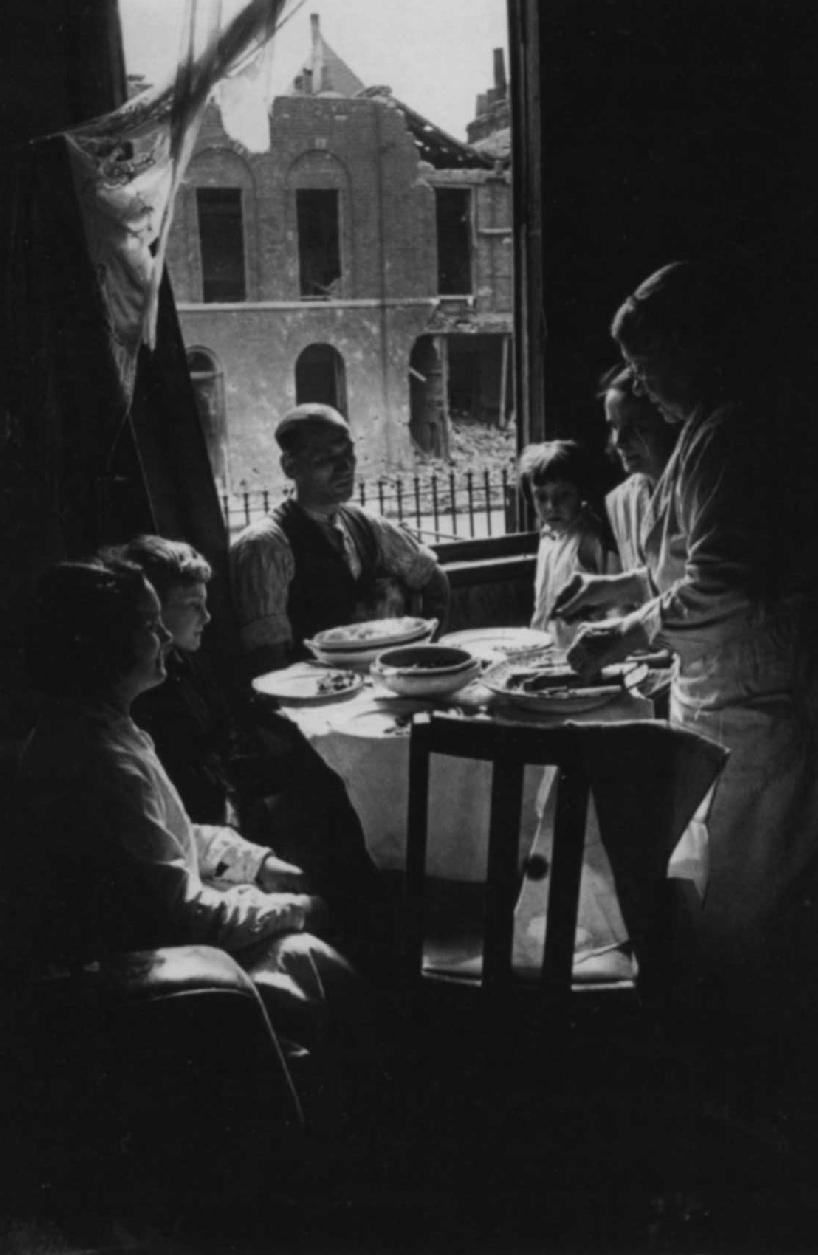
Britain played a key role in World War II. Unlike World War I, it was unable to prevent the German defeat of France. This irrevocably changed the world ballance of power. Britain did manage to resist NAZI aggression, the first county to do so. Many felt Britain could not hold out after the fall of France. Hitler was willing to make a deal. He would have allowed Britain to keep the Empire in exchange for a free hand in Europe. It might have made sence after the spectacular German victories, Many did not believe Britain could resist the Germans. The deciding factor after the Royal Navy sucessfully got the Army home from Dunkirk almost certainly was Munich. The whole British people remembered how Prime-minister Chamberlain had brought back Herr Hitler's signature pledging peace. It was clear than German guarantees were worthless. The British had no real choice, but to fight it out. And the Royal Air Force managed to pull it off. Britain despite the odds refused to be beaten. The Luftwaffe got not gain control of the skies over the Channel. And without aerial supremecy there coukd be no invasion. The RAF victory in the Battle of Britain had an even larger meaning. Hitler when he launched the War faced great odds. But he calculated that German technology and military skills would provide they key to victory. The Luftwaffe defeat in the Battle of Britain was in part a failure of German technology and tactics. This meant that less than a year after he started the War, Hitler's basic strategy was failing. It was not so apparent at the time with France firmly in the NAZI grasp. The following year America through Lend Lease pledged to underwrite the British war effort. This made Britain unassailable by Hitler. Many World War II accounts under estimate the importance of the Royal Navy and the strength of the British scientific estanlishment. Hitler when he launched World War II was determined not to make the mistake of World War I and fight a two-front war. Frustrated by the British and Ameruican support for Britain and seeing himself as the greatest military commander in history, Hitler decided to fight the two-front war he had always opposed. From the beginning it was the Soviet Union and Lebebnsraum in the East that was Hitler's principal war aim. Incredibly within the space of just a few months, with Britain undefeated, he invaded the Soviet Union (June 1941) and declared war on the United States (December 1941). Britain became an unsinkable air craft carrier off NAZI dominated Europe. Britain allowed America to enter the war in Europe, first from the air and then on the ground. Britain never won a major land battle without American support, but the importance of the British Army while the American Army was still poorly trained and without battle experience can not be overstated. Huge quanities of American war material and military personnel flowed into Britain. From Britain a strategic bombing campaign against Germany was launched (1942). America joined in an arround-the-clock bombing campaign. And then the Anglo-American cross-Channel invasion cracked Hitler's Fortress Europe wide open (June 1944). The Allies 9-months later were
Britain played an important role in the Cold War. Britain at the onset of World War II was one of the great powers. The NAZI victories over the British and French radically changed the world power balance. The D-Day invasion (June 1944) was the last time Britain participated in world events on an equal footing with the United States. With the defeat of the Germans and Japanese, it was clear that it would be the two super-powers, the United States and the Soviet Union with their massive industrial and scientific capabilities that would determine the future direction of Europe and other countries. Britain's role in the Cold War should not be underestimated. It was former Prime Minister Winston Chutchill that first articulated the developing struggle in a speech delivered at President Truman's invitaion at Fulton College in Independence, Missouri. Churchill's electoral defeat after VE Day meant that Britain's initial Cold war policy would be led by the Labour Party--a Socialist party. While it was Americxan power that shielded Western Europe from Soviet domination, the British contribution was important if not vital. From the beginning the cornerstone of NATO was Anglo-Military military cooperation. Here Primeminister Bevin played a critical role in the creation of NATO. One author maintains East-West tension, was often conditioned, and in its early stages accelerated, by Britain's continuing world-wide interests and influence. [Greenwood] The leading political figures in post-War Britain's postwar history (Churchill, Bevin, Eden, Macmillan and Thatcher) played important roles in the Cold War.
Britain which had the world's largest colonial empire was deeply involved in the Decolinization process that followed World war II. This was largely accomplished with out wars, in part because of the socialist outlook of the Labour Government which replaced Churchill and the Conservatives. The mahor step was granting independence to India (1947). Britain did fight a guerilla war in Malaya, but this was more a matter of denying the colony to the Communists. There was also the bloody Mau-Mau inserection in Kenya which the British brutally put down. But for the most part the transition to independence was peaceful.
Britain elected a Labour Government at the end of World War II. The welfare state has a long history dating back to the Middle Ages, but the full implementation only began after Britain's victory over NAZI Germany ending World War II in Europe. The General election of 1945 rejected Winston Churchill who had led the country through World War II and put in place a Labour Government which set about building the modern welfare state. Firmly believing in Socialism and hostile to capitalism, the Labour Party thought that they would bring prosperity and affluence to Britain. The reforms included nationalization of a significant part of British industry, founding a national health system, expanding educational opportunity, sharply increasing taxes, empowering the Trade Unions, subsiding public services, and a wide range of other measures. Some of the reforms like expanding secondary education was a needed and beneficial step. Other measures like the National Health system were popular, but had mixed impact. And some measures proved to be economic disasters. The overall impact was not mixed. Britain went from being the most affluent country in Europe before the War to the poorest industrial country in Western Europe. In only a few years Britain was eclipsed by not only the occupied countries of Western Europe (Belgium, Denmark, France, and the Netherlands) as well as defeated Germany which was absolutely leveled during the War. And British living standards would be passed not only by other European countries, by Japan in Asia. Britain before the War was a technological leader, one factor it its ability to survive the NAZI Blitz. Not only did the technical invitations slow, but it was American not British industry took advantage of all the technical advances to create new products gaining great economic success and affluence or the wider public. None of this occurred in Britain which had to continue war time rationing into the 1950s. By the 1960s areas of Britain had economic levels more in line with the depression era than modern vibrant Western Europe. In short the welfare state instituted with all the best intentions, brought genteel poverty to the British people. Mrs. Thatcher summarized it succinctly, "... the problem with socialism is that you eventually run out of other people's money to give away ...." And the Western democracies are rapidly running out of money.
Britain has sometimes been described as a 'nation of shop keepers'. Some attribute this to a derisive comment of Emperor Napoleon, although that attribution has never been confirmed. Nothing can better describe Mrs. Thatcher's origins and her foundation, although she was the first induividual from a shop keeper to lead the country. She grew up in a modest apartment over the family grocery store in Grantham, Lincolnshire. She helped in the grocery acquainting her with hard work and thrift and the non-academic basis of capitalism.
In the run up to World War II, her family provided sanctuary to a teenage Jewish girl who had escaped NAZI Germany (1938). She and her older sister Muriel saved their pocket money to help the teenager reach Britain. 【Campbell, p. 38–39.】
She was an excellent and diligent student. And benefiting from post-War shifts in the British class system, she was propelled by a sound grammar school education to Oxford University where she excelled. She married a wealthy businessman, giving her financial independence. Notably she made him breakfast every morning, even in Downing Street. She entered politics at the grassroots level and emerged as the darling of the right-wing of the Conservative Party because of her fierce championship of capitalism. She overcame the resistance of the established Conservative Party and its accommodation with socialism. was chosen as prime-minister (1979), becoming Britain's first woman's prime-minister (1979). Ronald Reagan was elected president in America a year later (1980). The two would become allies in confronting the Soviet Union. A sovit journalist dubbed her, the 'Iron Lady'. An appelage that stuck. She and Regan would play a major role in the eventual destruction of Communism (1991). Mrs. Thatcher would dominate British policies for a decade (1980s). She benefited from the British public's increasing frustration with the Labor Union's lock on economic policy using strikes and other disruptive labor stoppages. While the National Health System was untouchable, increasing numbers of British voters were beginning to see the vast and growing welfare system as a major impediment to economic growth. She was particularly fortunate as North Sea oil provided an important stimulus to the economy. Because she took on the Unions and curtailed the growth of the welfare system and championed capitalism, she was viciously attacked by the Labour (Socialist) Party. No Brutish prime minister was subjected to the same degree of absolute loathing backed by the left-leaning media. As a result, she might not have lasted long, had not of all things the generals in Argentina decided to invade sparsely populated, wind-swept islands in the South Atlantic (1982). Few Brits had even realized that the Falkland Islands were a part of Britain's once huge Empire. Mrs. Thatcher's forceful response resulted in a swelling of patriotic feeling that would help keep her in office for the rest of the decade (1980s). Her first target was inflatiion, persistently high under Labour. She had an intuitive belief in free markets and launched into major reforms: cut government and social spending, reduced taxes, backed business friendly legislation, and tapped people with business backgrounds into Government. She provided a robust answer to her critics that they were not used to have to deal with. Question Time was unusually entertaining. Her probing responses were not well received, especially by the militant trade unions and Labour Party tied to them. The Unions never fully understood that wages and personal income was not based on welfare, but the success of British business. And she gave as good as she got in the political debates with the unions and opposition Labour Party--which only increased the intensity of their hatred for her. She faced resistance from the Tory Grandees who she derided as the 'Wets'. Despite some resistance from her Party, she defeated Labour in three successive Labour challenges. She has been criticized for resolutely keeping Britain out of the European Union. She would never be defeated by Labour, but inevitably replaced by her own party (1990). A biographer incisively summarizes her genius. "What [Thatcher] managed to do, more effectively than any other politician in history --including Ronald Reagan -- was to convey a very particular message about socialism. It was not only that socialism was an economically inefficient way to organize human societies. It was not only that Communism regimes had in the 20th century drenched the world in blood. It was that socialism itself --in all its incarnations, wherever and however it was applied --was morally corrupting. Socialism turns good citizens into bad ones ... even when it did not lead directly to the Gulags, It transformed formerly hard-working and self reliant men and women into wining, weak and flabby loafers ...." 【Berlinski】 One of her substantial, but often unhealed achievement was after handily defeating labor boss Arthur Scargill and Labour leader Michael Foot, she forced the Labour Party to reform itself into a more modern socialist party.
Berlinski, Cklaire. There Is No Alternative (2011).
Campbell, John. Margaret Thatcher: The Iron Lady. Vol. 2. (Random House: 2011)..
Greenwood, Sean. Britain and the Cold War, 1945-91.
Lynn, John A. The Wars of Louis XIV, 1664-1714.
Oppenheimer, Stephen. The Origins of the British: A Genetic Detective Story.
Powell, Eric A. "Hillforts of the Iroin Age," Archgeology (November-December 2015), pp. 54-63.
Wells, H.G. Anticipations of the Reaction of Mechanical and Scientific Progress upon Human Life and Thought (1901).
Wilson, A.N. The Victorians (W.W. Norton: New York, 2003), 724p.

Navigate the Children in History Website:
[Return to the Main English page]
[Return to the Main European history page]
[Introduction]
[Biographies]
[Chronology]
[Climatology]
[Clothing]
[Disease and Health]
[Economics]
[Geography]
[History]
[Human Nature]
[Law]
[Nationalism]
[Presidents]
[Religion]
[Royalty]
[Science]
[Social Class]
[Bibliographies]
[Contributions]
[FAQs]
[Glossaries]
[Images]
[Links]
[Registration]
[Tools]
[Children in History Home]