
Belarus
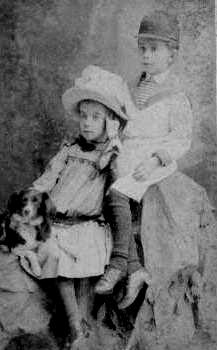
Figure 1.--The children in this CDV are unidentified. The photographer was Alexandrov. The studio was located in Mogilev on the river Dnieper. At the time Mogilev was part of the Tsarist Empire. The CDV is undated, but was probabky taken in the 1870s. Mogilev was the part of eastren Belarus that was seized by the Soviets after the Resolution. Western Belarus was seized by the the new Polish Republic in the Soviet-Polish War (1919-21).
|
|
Belarus is a landlocked nation in th middle of Eastern Europe. It is wedged between Russia to the northeast, the Ukraine to the south, Poland to the west, and Lithuania and Latvia to the northwest.
Belarus is part of the vast Eastern European plain, but includes both uplands and lowlands. The Belarusian uplands were created during the Ice Age. The limit of the final advance of the ice-sheet reached midway into what is now Belarus leaving a line of terminal moraines. This is known as the Belarusian Ridge (Belaruskaya Grada). North and south of the Ridge there are extensive lowlands. Tmost important lowland lies to the south--Paliessie which is drained by the Prypiac river and its tributaries. The Prypiac river flows eastward to join the Dnieper river which crosses the eastern part of Paliessie from north to south.
The countey includes some of the historic cities of Eastern Europe, including Brest, Minsk, and Pinsk. The population is ethnically mixed, but now primarily Belarusian. Before World War II it was much more mixed, but the Germans killed the Jews and Stalin deported Poles and Ukranians. Belarus is now one of the new countries created with the disolution of the Soviet Union (1992). Of course the history of Belarus is as old as that of neigboring countries. Only it has been ruled by the surrounding countries. It was for many years ruled by the Poles and Lituanian-Polish Commnwealth. As Russian power expanded east, Belarus became part of the Tsarist Empire. Belarus existed for several years as part of the Tsarist Empire and became increasingly Russified. World War I led to the Russian Revolution and Russian Civil War. The Bolshevicks attempted to regain lost Tsarist territory. This led to the Polish-Soviet War (1919-21). Belarus was split. Eastern Belarus became a constituent republic of the Soviet Union and western Belarus became part of Poland. The Soviets in alliance with the NAZIs invaded and dismembered Poland (1939). In the process Belarus was united under Soviet control until the NAZIs invaded the Soviet Union and occupied Belarus. The NAZIs treated Belarus savagely, killing most of the large Jewish population ans severely suppressing the othrs. Large numbrs of people were seized as forced labor in the Reich. The Red Army drove the Germans out (1944). Belarus with the disolution of the Soviet Union achieved its independence (1992). It has, however, with a largely Russified population retained close political and economic ties with Russia, more so than any other former Soviet Republic most of which have moved to diasassociate themselves from the Russians.
The primary religion of Belarus was Orthodoxy with some Catholics. The religious climate was more tolerant than in the West with Islam and Judaism existing for more than 500 years. The Soviets supressed all regions and the German obliterated the Jewish population.
Geography
Belarus is a landlocked nation in th middle of Eastern Europe. It is wedged between Russia to the northeast, the Ukraine to the south, Poland to the west, and Lithuania and Latvia to the northwest.
Belarus is part of the vast Eastern European plain, but includes both uplands and lowlands. The Belarusian uplands were created during the Ice Age. The limit of the final advance of the ice-sheet reached midway into what is now Belarus leaving a line of terminal moraines. This is known as the Belarusian Ridge (Belaruskaya Grada). North and south of the Ridge there are extensive lowlands. Tmost important lowland lies to the south--Paliessie which is drained by the Prypiac river and its tributaries. The Prypiac river flows eastward to join the Dnieper river which crosses the eastern part of Paliessie from north to south.
Belarus is now one of the new countries created with the disolution of the Soviet Union (1992). Of course the history of Belarus is as old as that of neigboring countries. Only it has been ruled by the surrounding countries. It was for many years ruled by the Poles and Lituanian-Polish Commnwealth. As Russian power expanded east, Belarus became part of the Tsarist Empire. Belarus existed for several years as part of the Tsarist Empire and became increasingly Russified. World War I led to the Russian Revolution and Russian Civil War. The Bolshevicks attempted to regain lost Tsarist territory. This led to the Polish-Soviet War (1919-21). Belarus was split. Eastern Belarus became a constituent republic of the Soviet Union and western Belarus became part of Poland. The Soviets in alliance with the NAZIs invaded and dismembered Poland (1939). In the process Belarus was united under Soviet control and the NKVD began targeting Poles and various groups seen as anti-Soviet. The NAZIs invaded the Soviet Union and quickly occupied Belarus (1941). The Germans targeted much of the population for destruction under Generalplan Ost. The NAZIs treated Belarus savagely, killing most of the large Jewish population ans severely suppressing the othres. Large numbrs of people were seized as forced labor in the Reich are murdered as part of anti-partisan campaigns. . The Red Army drove the Germans out (1944). Belarus with the disolution of the Soviet Union achieved its independence (1992). It has, however, with a largely Russified population retained close political and economic ties with Russia, more so than any other former Soviet Republic most of which have moved to disassociate themselves from the Russians.
Belarus was part of the Soviet Union, but most of the country. like the Baltics was not annexed until the World War II era. The country like moist of the western Soviet Union and Poland ws devestated by the War. The country was traditionally agricultural with an industrial sector developed during the Soviet era. The country was futher damaged by Soviet agricultural policy. The industrial base was developed during the Soviet era. The Soviet enterorises were, however, extremely inefficent and not comprtitive after the collapse of the Soviet Union and the end of subsidies and low-priced raw materials. Thus the country was left with an industrial base that was
outdated as well as energy and raw material input inefficient. The country's industry was hus highly dependent
on subsidized Russian energy and preferential access to Russian markets. The Soviet education system, however, created aan educated labor force that was potenially capable of operating at European levels. Belarus is the only European country in with a higher education system that has not move to accept he Bologna Process promoting common European standards. While areas of the country have potentially rich agricultural land, the agricultural sector is also inefficent thanls to Soviet era policies. Despite the failure of Soviet era economic policies, the Belarus Government of has shown little inclination in moving toward a free-market economic policies, largely because the state would then relenquish a major level of social control. As a result, living standards in Belarus are far below European standards, even the other areas of Soviet control in Eastern Europe.areas
Our Belarus archive of clothing and fashions is very limited at this time. We thus have no chronological infomation worked up on Belarus boys clothing. As far as we know, Belarus clothing was similar to the larger states in wghich it ws a part. In modern times this has included the Polish-Lituanian Commonwealth, Tsarist Russia, the PolishRepublic, and the Soviet Union, As far as we know, there was no destinctive Belarus garments. We do note decorative trim that appeared on folk garments like boys' tunics and girls/women dresses. This seems similar to the Ukraine, but presumably with different designs. This unlike some European countries, it is not possible to tell that a photograph was taken in Belarus by looking at the style of clothing a child is wearing, with the eccepion of folk costumes. Agter World War II, Western fashions like jeans graduallypermeated the Iron Curtain. Modern Belarus boys wear the same styles that have become popular throughout Europe, although rhre are some diffrences. The styles and conventions are virtually identical to those in Russia such a younger boys wearing tights.
Cities
Belarus includes some of the major historic cities of Eastern Europe, including Brest, Minsk, and Pinsk.
Ethnicity
The population is historically ethnically mixed, but now primarily Belarusian. Before World War II it was much more mixed, but the Germans killed most of the Jews the Jews as part of theHolocaust. and Stalin deported Poles and Ukranians in an action of overt ethnic cleanings not extensively reported in the West. The Soviets began deporting Poles after joinung the Germans in invading Poland (1939). This pocess was continued after the War. The ethnic composition is today Belarusian (80 percent), Russian (10 percent), and others (mostly Polish and Ukrainian). Belarus has two official languages languages: Belarusian and Russian. Over 60 percent of the people speak Russian as a result of Russification efforts by both the Tsarit and Soviet authorities. As a result, Belarus is today one of the few countries where the national language is spoken by a minority of the population.
Religion
The primary religion of Belarus was Orthodoxy with some Catholics. The religious climate was more tolerant than in the West with Islam and Judaism existing for more than 500 years. The Soviets supressed all regions and the German obliterated the Jewish population.
Institutions
We do not yet have much information on Belarus institutions, either during the Soviet era or since independence. We do note large number of children being cared for in Soviet-era orphanages due to the tumultuous history beginning with World War I (1914) and ending with the implopsion of the Soviet Union (1991). The children were generally not well cared for, but this varied over time depending on the varios circumstannces associate with various crises in Soviet history. The Chernobyl disaster occurred at the end of The radiation released spread over a wide area of Western Europe. Belarus and Ukraine were especially affected. The accident released radiation 200 times greater than that released by both American atomic bombs dropped on the Japanese cities of Hiroshima and Nagasaki. Notice how much discussion of those World War II incidents continues, but how little we hear about Chernobyl today. The children of Ukraine and Belarus are paying a terrible price. This is espcially the case pf the children born with birth defects and the lack of care they receive. A tragic example is Belarus boy Igor Pavlovets. Few of these children receive prosthetics in the Russian/Ukranian/Belarus institutions caring for them. .
HBC

Navigate the Boys' Historical Clothing Web Site:
[Return to the Main European country page]
[Introduction]
[Activities]
[Biographies]
[Chronology]
[Clothing styles]
[Countries]
[Topics]
[Bibliographies]
[Contributions]
[FAQs]
[Glossaries]
[Images]
[Links]
[Registration]
[Tools]
[Boys' Clothing Home]
Created: 12:21 AM 11/6/2010
Last updated: 5:53 PM 4/29/2013