|
One factor that has to be considered in assessing French cultural trends, including clothing and fashoion, are regional differences. Americans tend to view European nations as centralized nations with homogeneous popultions. In fact there are very substantial regional differences. And for a long time in French history, these regional issies were very powerful, impeding the creation of a unified nation state. Of great importance were Aquitanie, Burgundy, Languedoc/Occitania (Provence), and Normandy. Occitan spoke in Provance was the language of Catalonia in Spain. The spiritual beliefs of soutern Frace (Languedoc/Occitania) were condemned by the Papacy and and supressed by gthe Albigensian Crusade, (13th century). This brought the areas under the control of the French crown. Other provinces resist the French monarchy abd supported the English in the Hundreds Years War (14th-15th century). There were also regional resistance t the Revolution (18th century) resistabce Modern French, for example, was the language of Paris and had to be imposed on the provinces. These differences significantly weakened in the 20th century as a result of mass media, but until that time they were very significant. Mass curculation publications, movies, radio, and finally televidion were powerful forces. And in particular they drove Parisan dilaect and cultural norms which were already dominany into the privinces which through the 19th century that had maintained destinctive features. We do not yet fully understand these differences or their imapact on fashion, but we have begun to collect information on regional trends as well as Paris.
We have ome limited inflormation on specific French regions. There is some overlap here as we are not going province by province, but rather a mix of historical regiions and sime particularly imprtant provinces. The French make this a liittle complicated for us that they keep changing the names pf their regions. Occitania was not under firm French controlm until thev high middle afges. They shared linguistic afinities with Spain (Catalonia) (Catalinia) more than Frence. Certain regions rivaled if not exceeded the power of the monarchy. The English in particular were a threat as sime oprivinces like Burgundy allied with them to help breal away from the French monarchy. Niormandy was also a lowerful priovince. When William, Duke of Nomandy sized the engkish criwn, he created conditiions that almost permitted the Ebglish monarchy to seizee the French crown. Northeasrernb France had cionectiins to the Germans. If the NAZIs had won Workd warII, itv wiud hace been incirporated into the Reich.
We wonder especially if the German annexation of Alsace-Loraine (1870-1919 and 1940-44) might have resulted in some differences. Many people in northern France, especially Alsace speak German. A French reader, however, reports, that Alsatians since the 18th century have never considered themself to be German. They speak a distinct dialect. Many Alsatians probably rejected German fashions even during the German ocupation (1870-1918). Nowadays the young people are more likely to speak standard French and can't speak the parents' dialect. One HBC reader reports that his granparents came from Alsace, but moved to Paris in 1870 rather than live under German control. Another important regional difference is the warmer climate of southern France which has affected clothing trends there.
The origins of the Basque people is little knowm. The Basques appear to pre-date the Indo-European settlements of Europe. The Basque language is still spolen, but by only bloy 20 percent of the population. The Basque language is different from thsat of the Celts which dominated muchh of Europe, including Iberia and France.
The Pays Basque Euskal-herri was the medieval Kingdom of Navarre. The Vascones, Basques and Gascons inhabited the area of what is now southern France and northwest Spain. These independent-minded people proved difficult for invaders to conquer. Visigothic military expeditions forced these peoples, especilly the Baaques into the mounaneous Pyrenees, especially the Basques. At the same time, the Franks were not yet in full control of the south (Gascony/Aquantania). This allowed the Basques to remain an independent people, although under Charlemage the Franks established the Spanish marches. The Moors conquered Spain, but never fully controlled the north, both Asurias and Navarre. Navarre played an important role in the Reconquista. Pamplona (now a Spanish city) was the capital. The Kingdom of Navarre consisted of seven provinces. Four were on whast is now the Spanish side of the Pyrenees and three on the French side (Soule, Basse-Navarre and Labourde). Navarre was invaded by the Spoanish (16th century). The Spanish sized the provinces south of the Pyranees. Navarre was thus depoarated. Navarre Basse (Low) to the North begame the French Basque country. Navarre Haute (High) to the South was gradually absorbed into the Spanish kingdom. Navarre Basse remasined independent for several decades, but thriugh marriage developed a close associatioin with France. Navarre played an importsnt rolke in the Frech religious wars (16th century). aint-Palais became the Capital of the Basse-Navarre. Unfer the Bourbons, Navarre was absorbed into the French Kingdom.
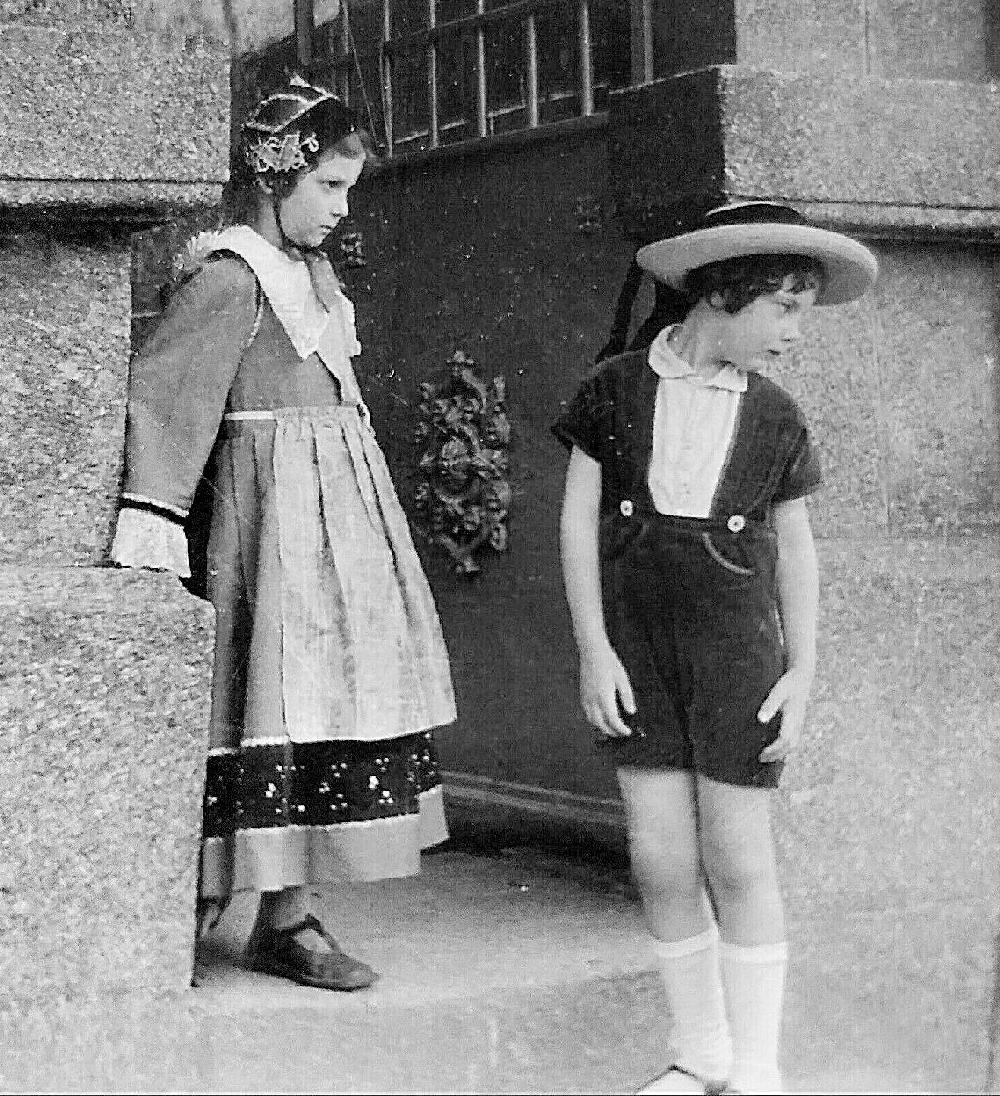
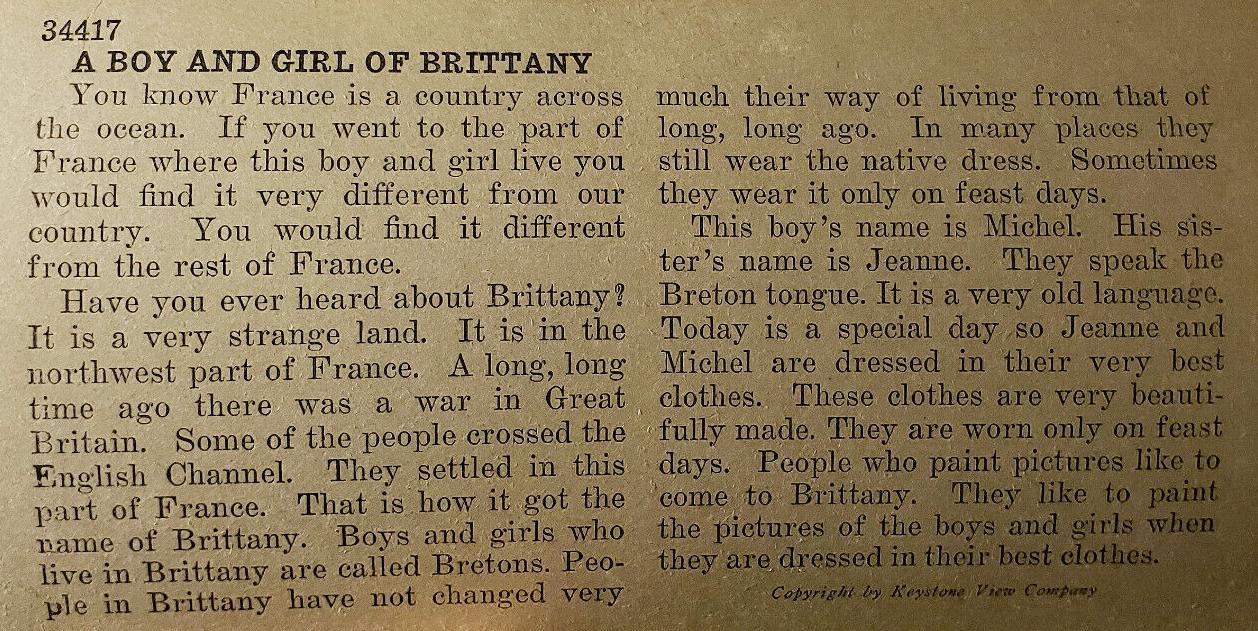
Brittany (Bretagne/Breiz) is surely the best known of the various French regions. It is located along France's northwestern coast. Brittany is a peninsula with rugged coastline that jutts out into the Atlantic. The approaches to the English Channel is located to the north and Bay of Biscay is found to the south. This is a geographic circumstance that has shaped the economy and people of the region. It is a region where like Ireland and Wales, Celtic culture survived into the 20th century. The destinctive Celtic culture has been the most important factir seoating Brittainty from the rest of France. After Ceasar's conquest of Gaul, the Celtic population was gradually Romanized laying the foundation for modern France. The name of the region derives from the fugitive Britons that sought refuge there from the Anglo-Saxon invaders (5th century). It continued as a Celtic duchy for more than 1,000 years. Breton history is a ongoing effort to achieve independence from the Franks (5th-9th centuries), Normans/Anjou (10th-12th centuries), and England/France (13th-18th centuries). The extentinction of the direct line of Breton dukes led to the War of the Breton Succession. The marrige of Anne of Breton led to a personal union with France (1491) .> Brittany was formally incorporated in to France (1532). The French Government granted a measure of autonomy (19th century). The history of the region can be found in the more than 4,000 chateaux, manors and medieval homes. We note a Breton boy photographed with his family for his first communion in the 1950s. A particularly important artist noted for his genre works on Britatany was William-Adolphe Bouguereau.
Burgundy is one of the important regionsnin French history. It was the second duchy, created as an appanage of the French Royal family in 1363. It soon expanded its territories beyond France and into the more Germanic Holy Roman Empire, acquiring by various means lands in Alsace and the Low Countries. The lands were not held of fiefdoms of the French Crown thus giving the poweful Dukes of Burgundy greater status. The Burgundian Court became a brilliant cultural center, as successive dukes attempted to recreate the ancient Kingdom of Lotharingia--which ecolved from Charlemeign's Empire. The Dukes of Burgundy desired to build an independent kingdom independent of both France and the Holy Roman Empire. Duke Philip the Good was offered regal status as "King of Belgia", within the Empire, but he rejected the offer because it was not large or autonomous enough. The Burgundian aspirations, however, ended suddenly when Duke Charles the Rash fell in battle against Swiss forces and his only child Mary heiress married the Habsburg Emperor, Maximilian I. Their son wed the Spanish heiress, Juana the Mad. Burgundy thus was inherited by the Hapsburg rulers of Austrai and Spain. Spain retained the title even after losing the territory in 1713 to Louis XIV's forces. So did Austria after losing all the territories to Revolutionary French forces in 1795.
Corsica is a Mediterranean island department of metropolitan France located north of Sardinia. It was in ancient times a Carteginia colony taken invaded by Rome. It was seized by the Vandals, but was laster ruled by a secession of Italiazn regimes. Corsica is perhaps best known as the birthplace of Napoleon Bonaparte. France seized the island a decade before the French Revolution (1768). As a result the young Corscican, Napoleon, became a French subject. The island is very wild and mountenous. Corsica until the 20th century was quite poor and dominated by banditry and family blood feuds. Local and Italian traditions resisted French culture and a nationalist movement has resisted French authority.
The French call southern France the Midi. It includes the regions of France south of the Marais Poitevin (is a large area of marshland in western France. Of course when Amerticans hear souther France, ghey immediateky think of the Rivierra. Much there is much more to sothern France than the Rivierra. It includes: southern Nouvelle-Aquitaine in the west, Occitanie in the centre, the southern parts of Auvergne-Rhône-Alpes in the northeast, Provence-Alpes-Côte d'Azur in the southeast. Southern France roughly coresponds to most of Occitania (Occitanie), the historical and cultural region in which Occitan (langue d'oc) was sookn abd wsas distinct from the anguages of northern Frnce (langues d'oïl) was spoken. The largest cities were Bordeaux, Nice, Marseille, Montpellier, and Toulouse. In addition to the Rivierra there were mouintauns--actually two ranges--the Pyrenees and French Alps. And not only is there a Mediterrean coast, there is also an Atlantic coast. Southern France has a fascunatiung history. It was the route that Hanibal took to invade Rome. It was also where Rome began the conquest of Gaul--playingthe vasrious tribes off each other. After Rome fell, the Visigoths began to settle in southern France, but were forced by the Franks into Spain. Southern France played an important role in the Crusades. The focus of French history grafually shifted north, but having Mediterranean port was important in the gradual recival the French economy during medieval era when the Europe was still heavily focused on the Meditrraean basin.
Normandy is the northwesternmost of the 18 regions of France, basically the historical Duchy of Normandy. The historical region of Normandy include the present-day region of Normandy, as well as small areas now part of the departments of Mayenne and Sarthe. The Channel Islands are also historically part of Normandy. They include two bailiwicks: Guernsey and Jersey. Both are British Crown dependencies over which Queen Elizabeth II reigns as Duke of Normandy. Normandy's name originates when Danish and Norwegian Vikings (Northmen) after raiding settled down (9th century). Viking jarl Rollo forced King Charles III to recognize his posseession of thevarea as Duke of Normandy (10th century). For centuries following the William the Conquerer's conquest of England (1066), Normandy and England were linked by having the same person reign as both Duke of Normandy and King of England. This would only be ended with the Hundreds Year War (1337-1453). Of course the western prominance of Normandy would lead to its being chosen by the Allies for the site of the World War II landings to liberate France.
Paris of course is a city, but one of the most famous and beloved world cities. And in many ways, the history of France is the history of Paris. And give its populaton and cultural imoact, Paris takes on the characteristics of a region. Before Paris even excuisted, a major conflict of history began between the Celts and Romans when the Celts sacked Rome (387 BC). Nearly a century later, Paris was founded. As with all cities, it had humble beginings. A major struggle began betwen The modern city appears to have been founded on L’Ile de la Cité by Celtic fisherrmen (about 259 BC). They were part of the Parisii tribe who bequeth their name to the city. Although they called their settlemnt Lutetia. They found productive fishing grounds in the Seine River. And the Seine region was an extremely rich agricultural area which would contributed to the growth of the city. Modern France became a major Celtic region, although divided by countless often waring tribes. The Celtic era was ended by Julius Ceaser with the conquest of Gaul. He seized Paris, not yet a major urban area (52 BC). Gaul became one of the Roman Empire's most productive provinces. Saint-Denis briought Christianity toFrabnce, becinmingthe firstBishop of Paris. Given the importance of religion at the time, this gave great prestige to the city. Given Gaul's rich agriculture, Paris grew with the Roman Empire and the population gradually became Romanized. As the Roman Empire imploded, Lutetia Paris was attacked by the Franks (5th century). Clovis I, King of the Franks, conquered the city (508 AD). Hev made Pais his capital and can be sseen as Frabnce's first king. Then the Norsemen/Vikings (9th century). The Vikings sailed up the Seine to asttack Paris and beyond. The Count of Paris bravely defended the city raising its prestige. The Bugundisns, Normans, and English became major threats. Given France's rich agriculture. hrough it all fed by Frnce's rich griculture, Paris grew. Cities at the time because of all the threats, needed walls. Paris dis not begin building a major wall and fortifications until the high middle ages (early-13th century). This was when the Louve was built. Paris along with other Euo[ean cities was devestated by Plague, called at the time the Black Death (late-13th century). Nearly half the city's population perished. The future of Paris in many ways was assured when France's most iconic figure, Joan of Arc leading the French army, defeated the English at Orléans (1449). The Norman-English threat was finally ended (1453). The Renaissance reached France (late-15th century). Paris played an important role, becoming a major center of science, art, and architectureand the focal point if French culture, largely creating the French language, in much the same way that London created modern English. French kings were crowned in Reims where Charlemagnec was crowned, but they ruled from Paris. France was not a player in the Portuguese abd Spanish conqyest og thec Ameruca, but the intriduction of the potato to Europe was a major fasctor in the growth of cities. France was tramautized by the European religious wars (17th century). Paris became the epicenter with the St. Bartholomew's Day Massacre (1572). Over 3,000 Protestand Huguenots were slaughtered in a single day. A century later, the young Louis XIV, only 5 years old, was crowned and despite a rocky start became the most splendid and long reiging monarch in Europe, all from Paris and the palce of Versailles outside of Paris. After a period of disorder and domestic strife, once Louis was in power, he wanted to restore order and tranquility. He ordered Lieutenant-General of pOolice Gabriel Nicolas de ka Reynie to make Paris secure. As part of that process , he installed street lights, the first major city to do so (1667). Paris became known as the 'City of Lights' (La Ville Lumièr) and Louis became known as the Sun King. France was important before Louis in setting European fasions. With Louis it becanme Europe's fashion arbitor. The Parisian salon was at the heart of one of Europe's great cultural movements--the Enligtenment. The Enligtenment was at the heart of the American Revolution. Louis XVI was crowned (1774). He married the daughter of the otherv major continental dynasty-- the Hapsburg Austrian Empress Maria Theresa. Louis and Marie Antoinette as wll as Vesailles became synomamous for profligate spending, increasing seen as decadent by the long suffering people of Paris. This led directly to the French Revolutiion led by the French mob (1789). Paris is know to this day for its strikes and demonstrations. Paris’s Bastille prison became a symbol of tyranny. It was stormed by the Parusiam mob burned to the ground. Louis and Marie were guillotined in Revolution Square", formerly Place Louis XV, and later renamed Place de la Concorde (1793). The First French Republic was founded. Chaos ensued as the Revolutionaries pursued the Reign of Terror, primarily but not only in Paris. Thousands were executed. Outsuide of Paris there were others methods oif execution. The chos ended with a new leader emerged-- the Revolutionary General Napoleon Bonaparte. Unlike French kings, Napoleion was crowned at Notre-Dame de Paris in Paris (1804). Napoleon was a genius and not just in a military sence. The Code Napoleon eminatingfrom Paris became a major foundatiion of European and Latin American law. His reign was finally ended at Waterloo (1815) northeast of Paris. Napoleon;s empire was followed by monarchy and the short-lived Second Republic. Napoleon III's reign was ended by the Franhco-Prussian War. The Prussians laid seige to Paris and shelled it causing enormous danage to the city. The Third Republic was declared (1870). After the supression of the French Commune, the institutions of democracy began to taske hild. The following years became known as the Belle Époque. The era was a French term and Paris olayed a huge eole. It was a time of enormous creative artistic and cultural achievement. Movements, especilly impressionism, influenced the western world. The modern landscaspe of Pasris was created by the building prograns repairung the dannecresulting from the Prussian bombardment shelling and the supressuion of the Commune. All of this created the reputation of Paris as a cultural and artistic capital. With electrifcation, including the Eifel Tower, Paris' image ass the 'City of Lights' (La Ville Lumièr) was confirmed. Paris at the onset of World War I was saved from the Germans by the Miracle on the Marne, in part by the rickety Paris taxis (1914). Paris was the location of the much critucizedc Versailles Treaty ending the War. When Charles Lindberg flew across the Atlantic, it was to Paris that he headed (1926). Tragically, the Germans seized Paris and all of France (1940). The capital was moved to Vichy which shamefully colaborated with the NAZIs in the Holocaust and other tragedies. he NAZIs publically showed what was in store for the Jews at Paris Vélodrome d'Hiver (1942). The liberation of Paris by the Western Allies was one of the major events of the War (1944). France with the Fourth Republic rapidly recovered after the immediate post-War era, but serious divisions in French society led to political instability, often expressed in Paris streets. France was no longer a major power, but Paris continued to be cultural powerhouse. World War II leader Charles DeGualle rturned to power abd created the Fifth Republic (1958). One side effect was a face lift for the city. De Gaulle’s Minister of Culture, André Malraux, orchestrated the revitalization of the historic neighborhoods in the Paris center, particularly Le Marais. There was construction projects, but building facades which were covered with centuruies of soot and grime. Marais ordeed the scrubbingb of facades. Nortre Dame was transfirned from black to white. De Gaulle's remakin of Paris was cut short by the Paris Student Riots (1968)
Savoy is a a French province located on the border between France, Italy, and Switzerland. It has a fascinating history. The major continuity has been the House of Savoy. It was King Rudolph III of Burgundy officially insalled the House of Savoy (1003), Burgundy at the time before the develooment of the modern European nation states was a major power, for a time challenging the French monarchy. The House of Savoy became the longest surviving royal house in Europe. It reigned over the County of Savoy (through 1416). The House of Sovoy then reigned over the Duchy of Savoy (1416 to 1860). The modern situation began with the French Revolution (1789). As a result of the military victories of the French Revolutionary armies, the new Frencg Republic annexed Savoy (1792) and remained French territory until Napoleon was finally defeated. The Congress of Vienna returned it to the House of Savoy. Emperor Napoleon II oversaw the annexation of Savoy and the adjoining county of Nice to France (1860). There was a plebiscite, but it was run by the French Army and rigged. Savoyards at the time somewhat like Alsatians on the French-German border were not clearly French or Italians. An Italian reader explains, "In Savoy the historical traditional language was the Franco-Provençal dialect as in many Piedmont and Val d'Aosta Alps villages. Since the transfer to France, French was mandated as the official language and was the only language used in the public schools. The situation in neighboring Italy is different in Val d'Aosta (Italy) where the children are taught both in Italian and in French. The transfer of Savoy to France was part of the Treaty of Turin negotiated by French Emperor Napoleon III and King Victor Emmanuel II who was the reigning monarch of the House of Savoy, at the time ruling the Kingdom of Sardinia which inckuded Piedmont (northern Italy). (Piedmont was the more important part of the Kingdom, but for historical reasons it was known as the Kingdom of Sardinia.) This was a step in the process of Italian unification. Victor Emmanuel ratained his Italian lands of Piedmont and Liguria and became the ruling dynasty of the new Kingdom of Italy. For a time savoy was a militarily neutral zone and a free trade zone. Savoy became permanently part of France, except for the brief World War II Italian occupation (1940-44). Still debated today is the desire of the Savoyards to become French.
HBC readers have provided us some background information on French names. This is useful in our discussion of French regional differences.
The French began to colonize Algeria in 1830. There was Algerian military resistance until the 1870s. The French presence lasted over 100 years until 1962 ( Accord de Genève ). This was the beginning of the second French colonial empire. But Algeria was not just one of France's many colonies. The French set out to make Algeria not a colony, but an actual expanded part of French territiry. French citizens settled in Algeria, primarily in the cities, and some Algerians adopted French customs and dress, primarily in the cities. In the villages and rural areas, Algerian boys and girls continued to wear Aeab styles. The styles worn by French boys were identical with popular styles in Metropolitan France. The differences between French and Algerian girls was even more striking than those between boys. One popular style did originate in Algeria. Two battalions of troops were formed in 1830 by General Bertrand Clausel as part of the French military occupation of Algeria. The troops were from a tribe of Kabyles dwelling in Algeria. The name of the tribe was Zouaoua, which in France gave rise to the term, "zouave". French Algerian boys wore the same garments as worn in Metropolitan France. HBC is unable to identify any significant differences at this time.
France began to build a vast colonial empire in the 17th century. It established colonies in North America, the Caribbean, and India. It could have been France that settled North America and that would have had enormous geo-political implications for the 20th century. In the end, not very many Frenchmen wanted to leave the comforts of France and settle in the North America wilderness. In sharp contrast, quite a number of British people decided to cross the Atlantic for a mix of ecoonomic and religious reasons. The larger English population, the Royal Navy, and Britain's superior political and financial system proved decisive. France lost North America in the French and Indian War (1754-63), the North American segment of the Seven Years War (1756-1763). Most Europeans at the time thought it was a minor colonial conflict, it turned out to be perhaps the most significant war of the 18th century. France also lost India to the British. Napoleon after obtaining Louisana from the Spansh, for a time toyed with the idea of restablishing a North American empire. In the end, largely because of the destruction of the French army in Haiti, he abandoned the idea and sold Louisiana to the United States (1803). After the Napoleonic Wars in the 19th century, Fance set about building a new empire. The first step was seizing Algeria (1830). Tunisia and Morocco followed later. France was also a major player in the late-19th century Scramble for Africa. France had two colonial regions in Africa. Afrique Occidentale française (French West Africa--AOF) consisted of eight colonies: Mauritania, Senegal, French Sudan (today Mali), French Guinea, Ivory Coast, Niger, High-Volta (Burkina Faso) and Dahomey ( Benin). Afrique Équatoriale française (French Equitorial Afric--AEF) included four colonies: Gabon, Middle Congo (Republic of Congo), Oubangui-Chari (Central African Republic) and Chad. The AEF had less infrastructures than AOF because of the equatorial forest, but especially because there are less raw materials. France also acquired Indo-China and Pacific island colonies. One of these was New Caledonia (1853). After World War I, France acquired two Lague of Nations mandates in the Middle East--Lebanon and Syria. After World War II, France attempted to piece together its empire, but fought two disasterous colonial wars (Viet Nam and Algeria).

Navigate the Boys' Historical Clothing Web Site:
[Introduction]
[Activities]
[Biographies]
[Chronology]
[Countries]
[Clothing styles]
[Theatricals]
[Bibliographies]
[Contributions]
[FAQs]
[French glossary]
[Images]
[Links]
[Registration]
[Tools]
[Boys' Clothing Home]
Navigate the Boys' Historical Clothing French pages:
[Return to the Main French page]
[French choirs]
[French school uniforms]
[French school smocks]
[French royalty]
[French sailor suits]
[French youth groups]
[Difficult French images]
[French art]
[French Movies]
[French ethnics]