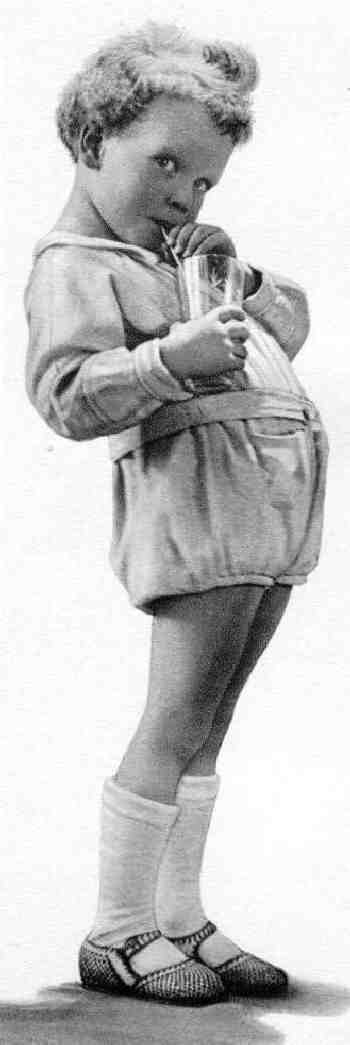
Figure 1.--This German boy wears rompers. The photograph is undated, but HBC would estimate that it was taken about 1930. It looks to be from some sort of advertisement. Note the white kneesocks. |

|
HBC has noted some photographs of German boys wearing rompers. HBC has, however, virtually no information on German rompers. We have no writen sources converning German rompers. We have noted photographs of German boys wearing rompers hich is our primary source of information. We are also not sure just in which country they originally appeared. We note American boys wearing them in he early 20th century. Most of our German images come from snapshots taken in the 20s and 30s. The image here, however, looks like it might be a 1930s image--but that is only a guess. Rompers were worn by younger boys up to about 4-5 years of age, perhaps even 6 years of age. As far as I know it was always a style for pre-school children. HBC is unclear as to the chronology of rompers in Germany. They seem to first appear in the 1920s and were worn through the 1960s. We noted a NAZI propaganda film made by Goebels at the Lake Wanderssee resort near Berlin in 1944 to try to prove how undisturned life in Berlin was by the war. One boy about 4 years old wears yellowish-colored rompers. This shows that rompers were worn in the 1940s. We still see them in the 1960s, although by the 1960s the age range probably decined to 3-4 years. Rompers appear to have been more popular in France and Italy, but some German boys did wear them. The colors and material involved have varied widely. They seem to have been primarily a play garment, but some dressier versions have also been noted alhough they are relatively rare. HBC has noted some photographs of German boys wearing rompers. HBC has, however, virtually no information on German rompers. They were worn by younger boys up to about 5-6 years of age. HBC is unclear as to the chronology of rompers in Germany. They seem to first appear in the 1920s and were worn through the 1960s. We are also not sure just in which country they originally appeared.
HBC has noted some photographs of German boys wearing rompers. HBC has, however, virtually no information on German rompers. We have no writen sources converning German rompers.
The German and Austrian term for romper or barboteuse seems to be Spielhöschen . It is the specific term used for a children's play suit with puff pants. The general term for a small's child's play suit is Spielanzug, but this included many play outfits in addition to rompers. Not all our German readers agree that Spielhöschen means rompers. As in the United States there were differences in usage. Rompers in America was not used exclusively for juvenile outfits with puff pants. A reader explains, "Concerning rompers in German, there is no real translation. All the little garment alike pants with buttons; bib, very short pants for baby, the mothers say "Spielhöschen". HBC has noted the use of "Spielanzug". A reader reports that the most commonly used word for rompers in German is "Spielhöschen". He indicates that it is much more used in the popular language than "Spielanzug," (written allways with the upper case S and not the lowercase s). We have also noted the term "Mädchenstrampler" meaning girls rompers. The term for rompers in general would be Strampler. I'm not sure how commonly used this was.
HBC is unclear as to the chronology of rompers in Germany. We have begun to buld a basic chronology based on the snapshots we have archived. They seem to first appear in the 1920s and were worn through the 1960s. I do not yet know how common they were in the 1920s and 30s. Many were not very fashionable. The image here, however, looks like it might be a 1930s image--but that is only a guess (figure 1). We have noted photographs of German boys wearing rompers. We noted a NAZI propaganda film made by Goebels at the Lake Wanderssee resort near Berlin in 1944 to try to prove how undisturned life in Berlin was by the war. The rompers we note in Germany during the World War II years seem more stylish tghan before the War, perhps reflecting shipments of clothes made in France to Germany. Part of repratiions France was forced to pay to Germany. One boy about 4 years old wears yellowish-colored rompers. This shows that rompers were worn in the 1940s. We still see them in the 1960s, although the age range decined.
We do not have precise age information as our archives of German boys wearing rompes islimited. Rompers were worn by pre-school boys up to about 4-5 years of age. As far as I know it was always a style for pre-school children. Perhaps a slightly older boy might have worn them to the beach. The ages of boys wearing them have changed over time. They were still worn in the 1950s. They were still being worn by German boys in the 1960s, but the age seems to have decined to 3-4 years.
We note various styles of German German rompers. These include some rompers rather like American rompers. We also notice French styles. The first rompers we note are one-piece outfits with very long extending down to the knee. Gradually rompers became shorter. This basic trend followed the trend in short pants as well. We also notice belts on many early rompers. We also notice rompers being styled similarly to the top of smocks, although smocks were not very common in Germany. We have also seen suspender rompers worn with fancy blouses although these were not very common. These seem similar to French styles. The French influence may be due to the fact that during the World war II occupation of France, large quantities of French clothibg were shipped to Germamy.
The clohing worn with rompers varied. We have no idea about headwear because almost all of the images we have acquired show boys wearing rompers without any headwear. Except for headwear we note quite a range of different garments. This dependended somewhat on the type of rompers worn. Romper suits covered up everything except the hosiery and shoes. There were, however, bibfront rompers which were mostly worn with blouses. During tge summer the child might not wear a blouse. Wearing a dressy blouse gave the romper a dressy look. We notice some boys wearing long stockings with rompers, probably when the weather was cold or chilly, but we mostly notice socks. The socks included knee socks, three-quarter, and ankle socks. The footwear was mostly strap shoes or sandals.
We are also not sure just in which country they originally appeared. We note American boys wearing them in he early 20th century. Rompers appear to have been more popular in France and Italy, but some German boys did wear them. We note occassional images through the 1950s and even the 60s.
The colors and material involved have varied widely. Wevnote whire rompers. Blue may have been common. This is difficult to assess because of the black and white photograph of the day. We have noted yellow rompers in the early 1940s. Other bright colors may have been worn.
We notice some boys wearing patterned romper suits. This is interesting, because patterned garments for boys, either shirts or pants, were not worn. Girls wore patterned dresses, but boys did not wear patterned shiers or other garments until after World War II when we begin to see checked shirts. A rare exception was rompers. The first rompers we see in the 1920s were white and rather lumpy garments. We see more stylish garments in the 1930s, including bright florid patterns. We think this is a French fashion influence, but can not confirm it yet. Solid-colored rompers were more common, but we see a number of boys wearing rompers done in bold patterns, rather like girls' dresses which were a summer fashion staple. We think rompers in Germany were primarilt a summer fashion. We at first thought these bright patterns were more of a 1940s development, but we ahve found some snaphots that seem to date to the early-30s.
Rompers were a simple, flexible one-piece style for boys. They seem to have been primarily a play garment, an easy way for mothers to dress little boys for play or casual wear. The romper play suits tend to be plain and practical. We see many different styles of play rompers. This mean primarily outdoor play during the summer. Thus included both roper suits and rompers with bib fronts. Play rompers were made in practical fabric, either durable or inexpensive fabrics. Some boys just wore the romper pants. We also note boys wearing rompers for dress up occassions as well. These rompers might be made in expensive, plushy materials. They often had fancy touches such as large or ruffled clcollars and front smocking. The vast majority of the German images we have found show children wearng rompers as play garments. The dressier rompers we have found in France seem much less common in Germany. They do not seem to have been nearly as popular as a dressy garment. We have found a few dressy rompers, but not many in Germany. Here age was a factor, many of the dressy rompers we see were for younger boys.
We note some of the basic romper types in Germany that we notice in France and other European countries. There were different types of rompers done in a wide range of styles. So far we have noted German boys wearing the two major types of romper outfits. We see a variety of one-piece suits in Germany. These seem to be voluminous suits mostly in the 1920s. We rarely see the fashionable French Barboteuse suits popular in France for several decades. The German romper suits seem to have been a kind of low-maintenance play sut for younger boys. We also note romper pants with varied suspension: suspenders, h-bar, and bib-front. These seem to have been particularly common in Germany as a type of summer sun suit. We have not yet noted German boys wearing just the romper pants, but this was not common in France either. We also notice them being worn as a kind of dressy outfit in formal portraits. Sometimes they were done as coordinasted outfits with sisters, usuall big sisters weraring skirts.
Most of the images we have noted with German children wearing rompers depict boys wearing them, although it is often difficult to tell with younger children. We are unsure to what extent German girls also wore them. Here conventions varied from country to country. We note both boys and girls wearing them in America, but only boys in France. We have noted a few images of German girls wearing rompers, but we are not sure how common this was. The little girl here was photographed in her romper suit in 1927. We have noted German boys in similar outfits, but in the late 1930s. We do not yet have any images of German boys in such short puffed pants outfits at such an early date. The same is true of France. We had thought that the rompers we note German boys wearing in the late 1930s was a style imported from France. This image suggests that German children may have been wearing rompers in the 1920s before the style was popular in France. Our information on rompers in Germany during the 1920s, however, is still quite limited. Also note that there is no back bow as was common with a French romper suit ( barboteuse ). We do not note where in Germany this little girl lived, but it was likely Bavaria. We di not a French fashion influence in Bavaria. We do not know what age girls wore romer suits. This girl was 5 years old, but as we have few other images or other information, we do not know if rompers were worn by older girls.
We note German boys wearing rompers with both long stockings and different length socks. We don't see rompers with long stockings, probably for practical and seaonal reasons. We do notice both abkle and knee sicks being worn with rompers.

Navigate the Boys' Historical Clothing German pages:
[Return to the Main German garments page]
[Return to the Msain national romper page]
[German art]
[German choirs]
[German movies]
[German royalty]
[German school uniforms]
[German youth groups]
[German sailor suits]
[Lederhosen]
[Ethnic]
[Tights]
[Long stockings]
Navigate the Boys' Historical Clothing Web Site:
[About Us]
[Introduction]
[Activities]
[Biographies]
[Chronology]
[Clothing styles]
[Countries]
[Bibliographies]
[Contributions]
[Essays]
[FAQs]
[Glossaries]
[Images]
[Links]
[Registration]
[Tools]
[Boys' Clothing Home]