|
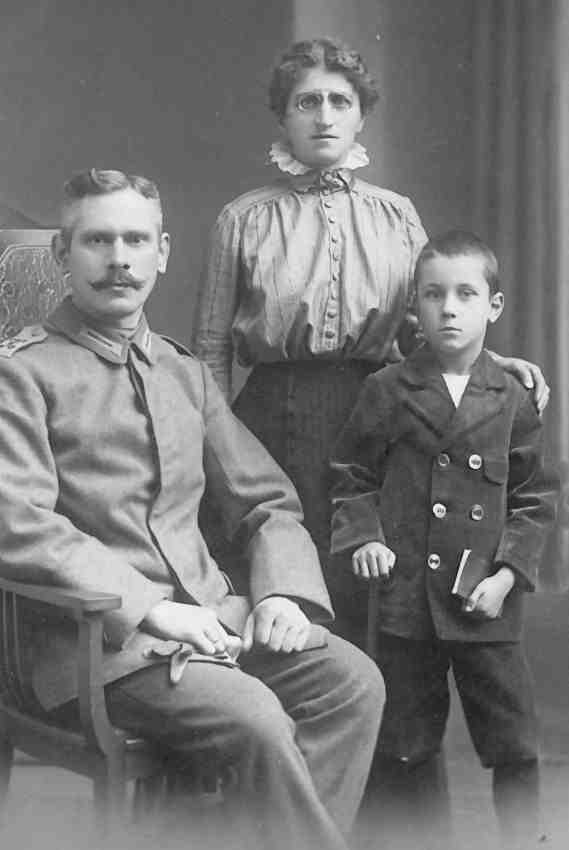
HBC is just beginning to archive inforamtion on the suits worn by German boys. Unlike American suits where we have some early catalogs, we do not yet have any information on German suits, other than available images. German boys at the turn of the 20th century commonly wore kneepants suits. After World War I (1914-18), short pants suits became increasingly common, although older noys might wear knicker suits. By the 1960s, boys were increasingly wearing long pants suits. We have little information on the style of suits, but we have noted double breasted suits at the turn of the century. Single breasted suits, however were more common. More specific details on jacket styles are not yet available.
HBC is just beginning to archive inforamtion on the suits worn by German boys. Unlike American suits where we have some early catalogs, we do not yet have any information on German suits, other than available images.
The German word for suit is der Anzug. The plural die Anzüge. This is the term for the standard boys' or men's suits. There are of course many types specialized suits like sailor suits. These specialized suits are also called anzug with an added adjetive.
We do not yet have sufficent information to develop a reasonable chronology of German suit styles. We have noted both single and double breasted suits. Some boys wore Bavarian styled jackets instead of suit coats, but we aew not sure about the chronology yet. Boys in the lare 19th century and early 20th century commonly wore kneepants. After World War I, shortpants became increasingly common. Older boys might wear knicker and then long pants suits. We note that by the 1930s that some boys had begin to wear casual jackets rather than suit coats. Also boys common wore open necked shirts rather than ties with their suits, except for formal occassions. After World War II (1939-45), short pants suits were still common, but by the 1960s many boys began wearing long pants suits, but suits were becoming less common--reserved parimarily for special occassions.
Suits are outfits with matching tops and bottoms meaning jackets and pants. There were several different types of jackets, both single abnd double breasted jackets. Younger boys in the 19th century might wear cut-sawy jackets in the 19th century. Older boys might wear Norfolk jackets. Eton syits were less common than in England. We also notice collar buttoning jackets. Styles became more standardized in the 20th century, especially after World War I. We notice several different types of pants, including short pajts, knee pants, knickers, and long pants. The choice here involved age conventions as well as fashion changes over time. There were also three-piece suits which had vests/waiscoats. That usually meant a matching vest. A suit also might have a matching cap, but they were not very common. We rarely see mstching caps in Germany. we do not see that in Germany.
HBC is not sure just what kind of shirts and neckwear German boys wore with their suits. The lace collars and fancy bows popular in America and France do not appear to be nearly as popular in Germany. Some boys appear to have worn their suits without any neckwear.
We do not know much about German suit material yet. The material often affected seasonal wear. Also because the material was a major factor in cost, it had social class connotations. Flannel was very important in Britain. We are less sure about Germany. In the late-19th and early-20th century corduroy was an imporant matwrial for inexpensive suits worn by working-class boys. Younger children from afflient families might have velvet suit. Serge was used for heavy winter suits.
Our information about suit colors is very limiited. This because until about the 1970s most of the photographs we have collected or black and white images. We have a few catalog pages with some color information. Unfortunately our German catalog section is very limited. We can only guess about the color of the suits. Even the suits that look black may actually be some other dark color. We believe that the most common suit colors were black, blue, brown, grey and bluish grey. We can guess that sailor suits were generally shades of blue, but even here this was not always the case. We can not, however, be sure about the various suits in the vintage portraits archived on HBC.
We do not notice many boys wearing patterned suits in the 19th century. They seem much more common in America than in Germany and other Eruropean countries. Our 19th century archive is limited, but growing. And so far we see very few German boys wearing suits with patterns, especially bold patterns in the 19th century. We do see some German boys with patterned suits, but a rather small percentage of the portaits we have found so far. The few images that we have found are from the mid-19th century. We have next to no informtion about the first half of the 19th century. We do begin to dind images when the CDV format appared (1860s. Most of the patterned suits we note come from the 60s and 70s. We do not know about the earlier period, but in the 80s nd 90s we have found few patterned suits. We have a much mote detailed 20th century archive and here we see relatively little evidence that Germany boys wearing patterned suits. Again we do see a few examples, bit a relative small prortion. We note even fewer than the propotrtion of pattened suits we found in the 19th century. And this is what we observe beginning at the turn-of-the century.
German boys have worn a variety of hosiery with suits. We are less sure what boys wore with long pants which were widely worn throughout the 19th century. As younger boys began to wear shirtened-length pants at mid-century, avaialble photographic images show German boys wearing a range of socks and long stockings. We mostly see boys wearing long stockings with kneepants in the 19th century. We aldo see bloomer knickers and they were akso worn with long stockings. By the 1890s an increasing number of boys and older boys were wearing kneepants. This trend continued into the 20th century. We begin to see short pants suits in the 1910s. After World War II, this trend continued, although at first short pants were very long. . Kneesocks were always worn with knickers and usually with short pants suits. We have not noted German boys commonly wearing short pants suits with short socks until the 1960s. Some younger boys wore short pants suits with long stockings. This was most common during the winter in cold weather. A good example is an unidentified German boy, probably in the 1930s. While German boys most commonly wore long stockings for warmth, they were also wore long stockings for dress occasions such as First Communions or Confirmations. We note that black long stockings and white knee socks were sometimes worn with suits for formality. After the 1960s, long pants suits became increasingly common making it difficult to determine the hosiery type. As best we can tell, tights were not commonly worn with suits. This is in part because as tights were becoming popular, shoert pants suits were becoming less popular. Another factor us that German boys by the 1970s were not wearing suyits as commonly as they did earlier.

Navigate the Boys' Historical Clothing German pages:
[Return to the Main German garment page]
[German choirs]
[German scouts]
[Hitler Youth]
[German school uniforms]
[German royalty]
[German sailor suits]
[Lederhosen]
[Ethnic]
[Tights]
[Long stockings]
Navigate the Boys' Historical Clothing Web Site:
[Introduction]
[Activities]
[Biographies]
[Chronology]
[Clothing styles]
[Countries]
[Topics]
[Bibliographies]
[Contributions]
[FAQs]
[German glossaries]
[Images]
[Links]
[Registration]
[Tools]
[Boys' Clothing Home]