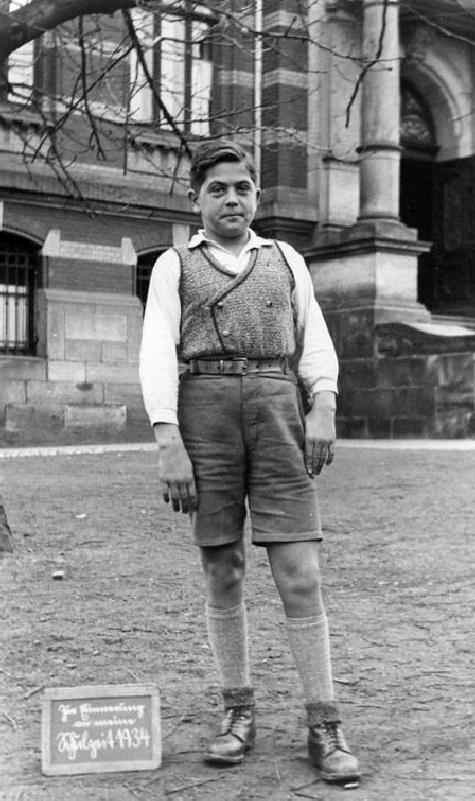
Figure 1.--This boy in 1934 wore a vest to school. Actually it looks more like a cross between a vest and sweater. The board says "in memory of my school time 1934" Notice the boys wears ankle socks with kneesocks. I do not think this sweater-vest is part of a matching suit. It seems to be an independent garment that could be worn with or without a jacket. A couple of things are interesting about the garment. Click on the image for a fuller discussion.
We note three different types of vests in Germany: suit vests, sweater vests, and separate vests. The most common were suit vests. Standard suits were composed of jackets and pants. Many suits came with vests, but they were an optional item. We first notice them being worn with cut-away jackets in the mid-19th century. They were worn with many oter types of suits. We note many images of German voys wearing vests in the 19th centuy. As they were worn with jackets, it is frquently difficult to make out much detail. Almost always they were worn with suits. Vess with suits seem to become less common after World War I (1914-18). Boys might wear vests without jackets, but this was more of a mid-20th century style. We do not notice boys wearing vests without jackets during the 19th century or even the early 20th century. The earliest example we note is from the 1930s and even this was more of a sweater. We do note boys wearing vests as kind of a formal outfit in the 1970s.
Suit Vests
Standard suits were composed of jackets and pants. Many suits came with vests, but they were an optional item. We first notice them in the mid-19th century. The were worn by younger boys with cut-away jackets in the mid-19th century. A good example is a Bremen boy in 1873. Older boys wore hem with more mature styled jackets. A good example is an unidentified boy in the 1860s. They were worn with many oter types of suits. We note many images of German boys wearing vests in the 19th centuy. As they were worn with jackets, it is frquently difficult to make out much detail. Almost always they were worn with suits. Vested suits seem to become less common after World War I (1914-18). We still see them, but not very many. A few bous wore their suit vests without the jackets, but this also was not very common.
Sweater Vests
We note some sweater vests, but not very many. They were not worn as suit vests. Here we seem to have an example (figure 1). We do not think the sweater-vest worn by the unidentified 1934 schoolboy here is part of a matching suit, although there is no way of being sure about that. It seems to be an independent garment that could be worn with or without a jacket. A couple of things are interesting about the sweater vest that he is wearing. The boy seems tonhave tucked it inro his waustline--unusuakl for a b=vest. It seems to have been done with dounle button styling--although a button is mu=issimng. Also unusual fior a vest.
Separate Vests
Boys might wear suit vests without jackets, but this was more of a mid-20th century style. We do not notice boys wearing vests without jackets during the 19th century or even the early 20th century. The earliest example we note is from the 1930s and even this was more of a sweater. Except for swater vests, we do not notice vests done as seoparate items until after World War II. They mnay have existed, but we do not see them in the photographic record and we have a fairly sizeable German archive. We do note boys wearing vests as kind of a formal outfit in the 1970s. These were not suit vests worn without the jacket, but garments pourchased seoartely to be wirn without bsuit jackets.
The standard vest was made with a "V" front. This matched the "V" front of a lapel, sack suit. Most of the vests we have found were designed like this. These vests were commonly worn in thw 19th cetury as part of three-piece suits. They were more common for men than boys, but we see boys wearing them. They continued to be woirn in the 20th century, both with suits and by themselves without a suit jacket. This was doine so that the collar, shirt, and neckties showed. It should be remembered, however, that many boys in the late 19th and early 20th century wore collar buttoning suits without lapels. We habe found some examples of vests that did not have "V" fronts, but rather went all te way to the neck eather like a shirt waist. We are not yet sure just how common these vests werre. They would have been a useful garment in cold weather. We do not know if they were worn with collarbuttning jackets because they would not show up in a photographic portrait. The examples we have have found are suits with high-cut lapels. I am not sure when they originated, but we do not notice them after the early 30s.