|
Germany until relatively recently was divided into a number of destinct states with sibstantial social, cultural, political, and religious differences. Only in 1870 was a unified German Empire formed and even then substantial differences remained among member states. It was not until the Weimar Republic and even more so the Third Reich that the destinct legal and cultural differences of the German states began to breakdown. HBC at this time has only limited information on the extent to which these differences were reflected in clothing. Much of the information that we do have concerns areas that are no longer part of Germany (Alsace-Loraine and the Sudetenland). We have developed some information on the various German states for the Royalty satellote site. Hopefully our German readers will provide us more details about regional clothing differences in Germany.
Germany as a unified country only dates from the 1870s. Even after unification there were considerable differences in clothing style among different German states. Since the Werimar-NAZI era (1919-1945), these differences have gradually disappeared. In today's modern Germany, while there are differences in folk costume among different regions, there is virtually no difference in the ordinary clothes worn by German boys.
The worldwide German population totals about 170 million people in 2000. It rivals the Russians in terms of the largest Euopean national group. Interestingly only about half of the people of German ancestry live in Germany or neigboring Austria and Switzerland. The rest of the German populstion is scattered asround the world. The most important single country outside of Germany and it European neigbors is the United Atates. There are almost as many people of German ancestry in America as in Germany itself. A brief population survey gives us a break-down of where people of German ancestry live throughout the world.
HBC has only begun to collect information on German boy's clothing in different regions. This is a little complicated because the borders of the various regions have changed over time. Some principalities/regions have grown in area and even absorbed other regions. Saxony was once a powerful state. Bavaria at one time was an important German state. These changes reflected the results of wars, dynastic marriages, and other events. In recent years there have been chnges for a variety of dynastic regions. Of course clothing styles in these various regions varied over time. .
We know that clothing styles in Alscae-Loraine differed from France, but we do not know how common German styles were. Alscae-Lorraine is now part of France, but in 1871-1919 and 1940-44 were annexed by Germany. HBC is unsure to what extent boys' clothing differed in Alsace-Loraine with the rest of France, especially to what extent smocks were worn in Alsace-Loraine. These two border provinces in northeastern France were an issue of dispute between Germanic and French rulers since the division of Charlemange's Empire in the 9th century. German control from 1871-1919 presumably meant that smocks were not commonly worn, but HBC has few details at this time. The northern situation of both Alsace and Loraine may have also been a factor affecting clothing.
Baden was a Grand Duchy in the German Empire. It is located in the west along the Rhine River facing Alscace. It is bownded on the north by Bavaria and Hesse; on the west by the Rhine which separates it from the Palatine and France; on the south by Switzerland; and the east by Wurtenburg. HBC has some information on the royal family. Baden is best known for the Black forest. Some information is available on folk costumes.
Bavaria is the dominant state of southern Germany. The German Alps are located in Bavaria and there are many cultural similarities with Austria. We know that Lederhosen were more common in Bavaria than other areas of Germany.
A number of small German islands are located close to the coast along the country's North Sea coast. An exception is is the small Heligoland Archipelago. Heligoland only recently was acquired by Germany, a reflection of the country's relatively weak naval power. The Heligoland Archipelago is the only German North Sea islands not in the immediate vicinity of the coast. Thet are located in the Heligoland Bight about a 2 hours' sail from Cuxhaven at the mouth of the River Elbe. Heligoland was for centuries a Danish possession and then acquired by Britain during the Napoleonic Wars.
Prussia is today seen as the genesis of Imperial Germany and the modern German state. The original Prussians were, however, not Germans at all, but rather a Baltic tribe, the Prussi. The Prussi were eventually conquered and Christinized by the Germna Teutonic Knights and the Germans became the ruling class in Prussia. The principality was eventually obtained by the Hohenzollern dynasty which in combination with Brandeberg became the Kingdom of Prussia. Germany was later unified under the leadership of the Hohenzollerns and Chancellor Bismarck around the Prussian state (1871). The Prussian King became the German Kaisser (Emperor). As part of the World War I peace settlement, a Polish corridor was cut accross Prussia, separating Pomerania from East Prussia. Danzig (Gadansk) was made a Free City. As part of the World War II settlement, East Prussia was divided between Poland and the Soviet Union. The Sovirt portion is today known as Kaliningrad. The German population either fled or was deported.
Pomerania was obtained by Prussia in the Polish Partitions (18th century). It along with the rest of Prussia was incorporated into the German Empire (1871). This brought large numbers of ethnic Poles into the German Empire. There were already many Poles in East Prussia. The Polish question thuds became an important issue in German politics during the late-19th and early 20th century. The Polish poplation and Polish land ownership increased and the German poplation througout eastern Germany declined despite efforts by the German government to favor German land holding. After World War I, the Allies divided Pomerania between Germany and the new Polish state. They carved the Polish Corridor through Pomerania to give the newly created nation of Poland access to a sea port. We note a Polish village school at Łąg / Long in 1930. The Germans after invading Poland and launching World War II annexed all of Polish Pomperania to the Reich (1939). The SS deported the Jewish population to the Goverment General and eventually murdered. The SS also took severe ations taken agsainst the Poles. Many Poles were deported to the General Government. The NAZIs attempted to settle Baltic Germans in the area. This was only constrained by the need for Polish labor. This ethnic cleansing program had to be curtailed because it was disrupting plans for Barbarossa. After World War II, the Soviet Union essentially moved Poland west. The Soviets annexed what was eastern Poland. East Prusssia, Pomerania, and Silesia was turned over to Poland. The Poles, victims of NAZI racial policies did not want to live with Germans. Germans who had not already fled these provinces with the retreating Wehrmacht were expelled.
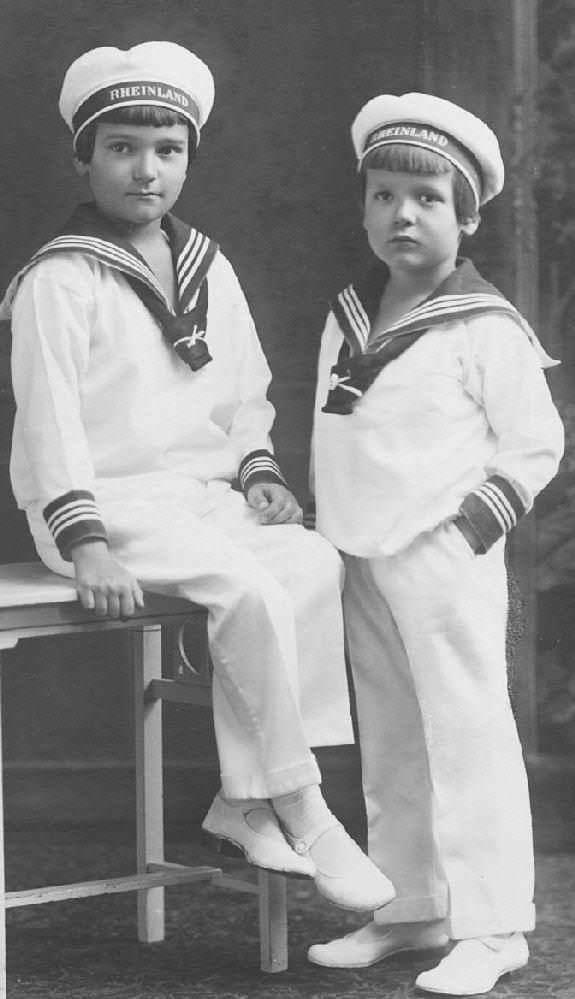
The Rhineland (Rheinland) is the area of German west of the Rhine bordering on France. The primary objective of Louis XIV's wars was the seize the Rhineland for France. The Rhineland became a controversy after World War. The Versailles Treaty required Germany to demilitarize it. Hitler's remilitarization of the Rhineland (1936) was one of the steps to World War II.
Silesia is a historical region of eastern Europe. Silesia has been disputed for centuries by Prussia, Austria, Germany, and Poland. It was a rich prise for dtnasties able to seize it. Interestngly, as European ,oarchs squabeled over provinces like Silesia, Russia expading east and America expanding west would become world powers. Silesia emerged in history as a Polish provinceand and was largely populated by ethnic Poles. It became a possessiom of the Bohemian crown (1335). The Austrian Habsburgs inherited that crown (1526). Prussia King Frederick the Great launched the War of the Austrian Secession and seized most of Silesia (1742). It was rich prize becaiuse of its minral resources. Shortly after Prussia acquired more of Poland as part of the Polish Partitions. The province as part of a Germiization policy aquired a German minority, primarily in the cities. It was largely incorporated in the German Empire upon unification (1871). The Polish question became an important issue in German politics (late-19th and early 20th centur)y. The Polish poplation increased and the German poplation througout eastern Germany declined despite efforts by the German government to favor German land holding. After World War I, the nationality of the province was settled by a Lague of Natiins plebecite cad a series of Polish risings in the orovunce. Most went with Germany, byt the more vlkuable norther oarnt went to Popland. The Germans annexed all of Polish Silesia after invading Poland (1939). The NAZIs murdered the Jewish population and severe actions taken agsainst the Poles. This was only constrained by the need for Polish labor. After World War II, the Soviet Union essentially moved Poland west. The Soviets annexed what was eastern Poland. Part of East Prusssia, Pomerania, and Silesia was turned over to Poland. The Poles, victims of NAZI racial policies, expelled the Germans who had not already fled these provinces.
Although little little known today, the small Danish-German Duchies of Schleswig-Holstein at the base of the Jutland Peninsula once figured prominently in the history of northern Europe. The Duchies were contested by the Danish Crown and various German monarchs. That might seen as a uneven conflict, but Denmark until the 18th century was a major European power and Germany was not united until the 19th century. The eventual resolution of that conflict in the 19th centuries had major consequences in the 20th century. The German obtained cotol of both duchies as aesult of two wars (1860s) and adopted policies to Germsanize them. This was only partially successful in Schleswig.
The Sudetenland is German term for a frontier region of German-speaking people, meaning the "southern lands" in German. The Sudetenland is the area Sudetes Mountains on the north the Erzgebirge Mountains on the northwest and the Bohemian Forest to the west. The Sudetenland was part of the Austro-Hungarian Empire until 1919 when it was awarded to a news Czecheslovakian nation by the Versailles Peace Treaty. The ppulation before World War II largely consisted of Sudeten Germans. NAZI agitators in the 1930s brought about the Munich crisis in which the Sudetenland was awarded to the Germans. This was important because the Sudetenland constituted a natural frontier without which the defense of Czecheslovakia was impoosible. The NAZIs proceeded to dismember the rest of Czecheslovakia in 1939 during the months leading up to World War II. The region was restored to a revived Czecheslovakia in 1945 after World War II and the Sudeten Germans forcibly relocated to Germany.
The Volksdeutsche are German people who emmigrated to East and South Europe, but kept their language and customs. German minorities used to live throughout Eastern Europe and Russia. They were incouraged to emmigrate by Austrian emperors to help secure their control over lands liberated from the Ottoman Turks. Some Russian Tsars incouraged German German immigration to help develop and modernize their vast country. These German minorities lived in these countries for centuries, dut many did not assimilate or drop the German language. Often they even mainatin separate schools. While the Austrian-Hungarian Empire existed many lived in the political structure of a German-speaking Austrian monarchy, but this changed in 1918-19 with the collapse of the Austrian Empire as well as the loss of German territory. Many Germans found themselves under th control of newly independent countries. When the NAZIs came to power in 1933, the Volksdeutsche proved a useful political issue and a way of justifying German territorial claims. The history and situation of the Volksdeutsche varied idely from country to country.
In addition to the Volksdeutsche which were whole communities of Germans living in eastern and southern Europe, were Germans who as individuals moved to neighboring countries. The numbers of Germans were the largest in Belgium, Denmark, the Netherland and Switzerland. The situation here varied substantially from country to country. These Germans had varying attitudes toward the NAZIs and World War II. These were generally no communities of Germans like the Volksdeutsche, although there were some in Denmark and Switzerland. The Germans in these counties were not there as part of a government sponsored settlement program. Many Germans in these countries (except Switzerland) returned to Germany in 1945 because of hostility of the local population. We know there were many Germans in Belgium before World War I. We are not sure about what happened to them after the War. Prussia had seized most of the German speaking areas of Denmark in the Prusso-Danish war (1864). Large numbers of Germans lived and worked in the Netherlands as did the Dutch in Germany. German is one of the two main Swiss linguistic groups.
The royal lines of the huge multiplicity of German states is very complicated. The two major roual lines are the Hapsburgs (Austria) and the Hohenzollerns (Prussia). There are many other German states of course, some of which have played a major role in European history. A Hannovarian, for example, assumed the English throne as George I. Many other German lines have married into royal families and served as Czarinas, Kings, Queens, and Emperors throughout Europe, not to mention and illfated attempt to establish a Mexican monarchy. These families participated in the ruling of Germany and Europe as a whole into modern days. It should not be forgotten that as late as the 1910s, almost the entire world was ruled by monarchy. While some constitutional monarchies had evolved in Western Europe, many monarchies in the 1910s were still absolutists (Russia) or yielded power that approached absolutism (Austria and Germany). The number of republics of any significance could be counted on one hand (primarily France and the United States).
Germany as a modern nation was created in 1871 after the Prussian victory in the Franco Prussian War. As a result unlike the other major European countries, Germany did not have the opportunity to carve out a large colonian empire. The Germans did join the grab for Africa, seizing Camaroons, German East Africa (modern Tanzania), Southwest Africa (modern Namibia) (1884) and Togo. The Germans also seized a large also seized a large area of the South Pacicic, including northeastern New Guinea, the Bismarck Archipelago, and island groups to the northeast, the Carolines, Marianas, Marshalls, and Samoa as well as Nauru (1885-99). The Germans in addition seized a Chinese port city--Tsingtau (1898). This was one of the so clled treaty ports. Germany lost these colonies in World War I, mostly to the British and Japanese. We have very limited information, but as far as I know there is no significan German population or influence remaining in any of these colonies. Namimbia may be a minor exception.
Germany is one of the most modern and highly urbaized countries in the world. Demographics is the study of the characteristics of the population. This includes elements like population density, urbanization, ethnicity, education, health, economics, religion, and other imprtant factors. The population tital;s about 82 million (2005). This makes it the world's 14th most populous country and the largest country in Europe with the exception of Russia. And like most of Europe, it is an aging population with zero population growth. This means that there is a relatively small cohort of youth. About 16 million people living in Germany are of non-German descent. About 9 million of these people with foreign ancestry have become German citizens. The largest non-German grroup is Turks, the descdents of immogrant workers recruited to meet labor needs of the German Economic Miracle following World War II. Germany also attracted refugees from variouus developing countries. The German cconstitution long had a clause guaranteeing a 'right' to political asylum, but becuse of the number of refugees, the government has had to institute restrictions. Germany is a highly urbanized country. About ?? percent of the population lives in cities and towns. The country begn a rapid period of industrialization in the mid-19th century. This left the country dependent on imports to feed the expanding urban population. Germany industry developed in the West, espcially the Ruhr basin whre there were iron and coal deposit. This set in motion an internal migrration from the rural east to the urban west which the Germans in the 19th century referred ti as the Ostflucht. This continued after World war II when Germans from Eastern Europe were expelled. Most wanted to go to the Allied rather than the Soviet (eastern) occupation zone. This continued during the Cold War with Germans in the DDR (East Germany) trying to reach the West. Since unification this trend has continued because of the inefficent economic system left by the DDR. German states were among the first to introduce public education. Germany developed perhaps the fies educational system in the world and today hs one of the best educated populations.
Cotati, Rudi. E-mail, February 5 and July 23, 2002.
Mueller, Reinhard. E-mail, July 20, 2002.
Williams, Kent. Santa Rosa California German Club, monthly newsletter, date unknown.

Navigate the Boys' Historical Clothing German pages:
[Return to the Main German page]
[German choirs]
[German movies]
[German school uniforms]
[German royalty]
[German youth groups]
[German sailor suits]
[Lederhosen]
[Ethnic]
[Tights]
[Long stockings]
Navigate the Boys' Historical Clothing Web Site:
[Introduction]
[Activities]
[Biographies]
[Chronology]
[Clothing styles]
[Countries]
[Bibliographies]
[Contributions]
[FAQs]
[German glossaries]
[Images]
[Links]
[Registration]
[Tools]
[Boys' Clothing Home]