|
The Philippine Islands is a huge archepeligo in the western Pacific north of the Equator.
The Philippines was one of the big trading centers in Asia because of geographical location before the colonization by Spain. These were important outposts both for spices and the China trade. Since the Spanish conquistadors came, it became a Spanish colony. Three centuries of Spsanish rule made the Philippines “The Most Numbered Christian Country in Asia”. Roman Catholic became a majority. Spain ceded the Philippines tothe United States as a result of the Spanish American War (1898). Spain also ceded Cuba, Guam and Puerto Rico. After a short period of American rule, the United States in the 1930s began to prepare the Philippines for independence which while delayed by World War II was granted (1948). Of all Asian countries, the Philippines has the most Western influences when it comes to arts and culture which includes clothing due to the colonization of two Western countries. There are also some Eastern influences as a result of traders from neighboring countries during pre-colonial times. Clothing styles have varied substantially over time. A Filipina (this is the Tagalog spelling and there's no English one) reader tells us that clothing styles have been affected by the Spanish which ruled the islands for three centuries. Traditional clothing for boys was baro and for girls saya. America which seized the Philippines from Spain (1898) also influenced fashion. The Japanese which occupied the country (1942-45) during World war II had less influence. The Philippines became independent after the War (1948). Our Filipina reader writes, "Currently we wear what Americans wear. But I have to admit I believe that we are more modest than the Americans because we are more concious about how much skin we show, due to our religion. Also the climate is very warm and sometimes very rainy, we wear what suits the climate.
The Philippine Islands is a huge archepeligo in the western Pacific north of the Equator, between 5°-22°N lattitude. As a result the country has a tropical environment. From north to south, the archipelago extends almost 1,850 kilometers. The islands are of mostly volcanic origin. The Philippines are located on the Pacific Arc of Fire. There are still 20 active volcanoes. The Philippines is composed of some 7,000 islands, most of which are quite small. Most Filipinos live on the eleven principal islands that make up about 90 percent of the country's total landmass. The two largest islands are Luzon in the north, and Mindanao in the south. Manila, the capital, is located on Luzon which is the largest and most populous of the islands.
The Philippines was one of the big trading centers in Asia because of geographical location before the colonization by Spain. These were important outposts both for spices and the China trade. Since the Spanish conquistadors came, it became a Spanish colony. Charles I (better known as Charles V, commissioned Magellan to find a passage through the Americas to the Spice Islands. Magellan sailed from Seville (1519) and explored the Plate estuary (1520) before crossing into the Pacific through the straits at the tip of South America now named for him. He claimed the Philippines for Spain, but was killed there (1521). One of his ships managed to return to Seville, completing the first circimnavigation of the world (1522). A series of Spanish expeditions followed. The exploers named the Islands the Filipinas, in honor of Philip II, Spain's agressively Catholic monarch.. Spain's colonial empire included the Philippine Islands and the East Indies (the Moluccas and Malaca). Three centuries of Spsanish rule made the Philippines “The Most Numbered Christian Country in Asia”. Roman Catholic became a majority. Spain ceded the Philippines tothe United States as a result of the Spanish American War (1898). Spain also ceded Cuba, Guam and Puerto Rico. After a short period of American rule, the United States in the 1930s began to prepare the Philippines for independence. The Philippines played an important role in World War II. Independence was postponed by the the Japanese attack on Pearl Harbor and subsequent invasion of the Philippines (December 1941). Capture of the Philippine Islands was esential to Japan's effort to control the resources of southeast Asia and Oceania--particularly the oil of the Dutch East Indies. The carrier assault on Pearl Harbor which incaopaciated the American Pacific fleet made possible simultaneous attacks on Malaya, Thailand, Guam and Wake Islands Hong Kong, Singapore, and the Philippines. After nearly 3 years of Japanese occupation, the United Sttes began the liberation of the Ohilippines with the invasion at Leyte Gulf (October 1944). After the World War II, the United States granted the Philippines independence and a republic took power (1948). Developments since independence have proven volitile, including dictatorship, corruption, terrorist attacks and economic problems. The Philippines has not shared the economic suuccess of some of its neighbors such as Singapore, Malaya, and Taiwan.
The Philippine Islands when acquired by the United States in the Spanish American War was a backwater of the decaying Spanish Empire and almost totally agricultural (1898). The United States oversaw a development effort. The United States built new public schools, transportation infrastructure, boutiques, offices and civic buildings. There was as a resulkt a raid growth of the economy. Agriculture remained the heart of the economy, but tourism and industry developed. Major crops included rice, corn, hemp, tobacco, coconuts, and abaca (a species of banana). Many other crops were grown in garden plots for family consumption. Coconuts were important for oil production. Forestry was also important. The Philippines had one of the world's great strands of commercial timber. The economy grew despite difficulties with various agrarian uprisings. The robust coconut industry was a major factor in the growing economy and taxes helped fund infrastructure and other development projects. The Philipino benefitted from a developing economy. The American Commonwealth unlike many countries and colonies was not terribly affected by the Great Depression. The Japanese World War II invasion and occupation (Decemnber 1941), however, did result in a serious recession. As in most Axis occupied countrues, productiion declined sharply. The Philippines before the War was laregely self sufficent in food, some foods were imported but were paid for by mostly agriculturl expots. Unlike sveral other areas of Southeast Asia/Ocenia, the Phillipines was not a major rice producer. Rice was an important crop, but even before the War, rice had to be imported. The economy was devestated by the War. Recovery was slow. Despite the Smerican connection. the Philippines was not one of the Asian Tigers thar began to report rapid economic growth in the post-War era by turning awayv from socilism and adopting market reforms, meaning capitalism.. A major expoort has been lavor with Filipino workers active in several foreign countries. Some major improvements have been reported in recent years. The Philippines economy is the world's 34th largest economy by nominal GDP according in 2017 (IMF), the 13th largest economy in Asia, and the 3rd largest economy in the ASEAN after Indonesia and Thailand. The Philippines is an important emerging markets and is the sixth richest in Southeast Asia by GDP per capita values, after the regional countries of Singapore, Brunei, Malaysia, Thailand and Indonesia.
Clothing styles have varied substantially over time. A Filipina (this is the Tagalog spelling and there's no English one) reader tells us that clothing styles have been affected by the Spanish which ruled the islands for three centuries. Traditional clothing for boys was baro and for girls saya. America which seized the Philippines from Spain (1898) also influenced fashion. The Japanese which occupied the country (1942-45) during World War II had less influence. The Philippines became independent after the War (1948). Our Filipina reader writes, "Currently we wear what Americans wear. But I have to admit I believe that we are more modest than the Americans because we are more concious about how much skin we show, due to our religion. Also the climate is very warm and sometimes very rainy, we wear what suits the climate.
Regional differences can be particularly pronounced in archepeligo countries like the Philippines and Indonesia. And we do see pronounced regional differences among the Philippines many islands. This has gradually declined since World war II as a result of improved transportation and mass media. The term region has a specific meaning in the Philippines. The country currently has 81 provinces (lalawigan) organized into 11 regions (rehiyon). The regions are organized geographically around three major islands (Luzon in the north, Visayas in the cThe divisions and provinces change somewhat over time. entral region, and Minanao in the south). The smaller islands are grouped into one of the 11 large-island based regions. Mindoro is grouped with the Luzon regions. Visayas includes and numbder od islands including Cebu and Leyte. There are important ehnic, cultural, economic, and relgion differences between the various provinces. Manila on Luzon is a very modern city. Some of the other provinces are much less developed. This is particularly the case on Mindanao which is much less densly populated than Luzon. The Philippines is a largely Catholic country. There is the Autonomous Region in Muslim Mindanao (ARMM) located on the western side of the island. This is the region of the Philippines that is predominantly Muslim and is made up of several provinces (Basilan, Lanao del Sur, Maguindanao, Shariff Kabunsuan, Sulu and Tawi-Tawi). It also includes the Philippines' only predominantly Muslim city--Marawi.
Climate is a major factor affecting clothing, especially in cold sether and tropical countries. The Philippines has a tropical climate, specifically as an archepeligo a tropical marine climate. The country's climate is dominated by a rainy and a dry season. The major annual weather phenomenon is the summer monsoon which brings with it heavy precipitation throughout the islands (May to October). There is also a winter monsoon, but it is cooler and the rains more moderate (December to February). The capital, Manila, as well as most of the lowland areas on the major islands are hot and dusty (March to May). The marine enviroment modersates the temperature to some extent and temperatures above 37° C are unusual. Beginning in May the rains begin. As aresult of the tropical climate, boys wear light, comfortable clothing. Short pants are common, although older boys now tend to prefer long pants as a more grown up look.
The population of the Philippines is one of the ethnically most diverse in the world. The country's ethnic history is a mater of considerable debate. Filipinos have a mixture of Negrito, Polynesian, and Mongoloid racial elements, with some admixture of Chinese, American Indian, Arab, Spanish and American elements. The Spanish term "indio" is used to describe the indigenous people of the Philippines and "mestizo" is used to describe anyone of mixed blood. There are many tribal Filipinos who are called lumad. They live in mostly mountain areas of the country like Igorot, Aeta, Mangyan, Manobo, Bagobo, Tausug, Maranaw, Badjao, Maguindanao, Samal, Yakan, Subanon, T’boli, Talaandig, Mandaya, B’laan, Tiruray, Tasaday. Despite the ethnic diversity, the Philippines have suceeded in creating a relativively harmonious, homgenous national culture. The principal group which has not assismilated into Filipino national life is not an ethnic minority, a religious minority--the Muslims on the southern islands.
Ethnicity is a facgtor in how Filipino boys dress. The boys in urban areas wear largely Western styles adjucted for the Philippines climate. Boys in rural areas, especially the more remote tribal areas still wear traditional clothes.
Boys in urban areas for formal occassions wear Barong Tagalog, an embroidered formal men’s wear made of hand woven piña from the fiber of pineapple leaves or jusi from silk organza. This wear is based on the design of India’s kurta. In attending a Holy Mass and simple occasions, they may wear a casual dress with shirts with sleeves, shorts, pants or jeans, socks and shoes or sneakers. When going to school, they wearing polo shirts, shorts or long pants, white socks and black leather shoes as a requirement. The Philippines enjoys a tropical climate. Thus boys at home commonly wear shirts, with sleeves or sleeveless, shorts and slippers. Such comfortable clothes helps to avoid feeling hot and sweat.
Many tribal groups because they withdrew to or lived in remote montneous areas. As a result, they were an element of the Philippines population that were not much influenced by the Spanish. This continued to be the case during the brief American period. Thus Tribal boys continued to wear traditional clothes. This included loincloths, some times with a vest. Some indigenous groups wear clothes with their own design as their identity of their group. Since Independence, most tribal Filipino boys have begun to wear what the common Filipino boys are wearing.
We do not yet have much information on Flipino families. We note one
unidentified family which appears to be a marriage, probbly between an American presumably with Scottish ancestors and a Filipina. The marriage must have taken place only a few years after the United States seized the Philippines from Spain (1898). They had three children. And they appear to be well to do because they could afford to dress the children up in elaborate cosumes. The only thing else welnow about the famoly was that they lived jn Manila.
The Spanish first reached the Philippines under Magellan who was killed there (1521). The islands were named Spain's aggressively Catholic monsarch, Phillip II. Spanish rule was over the following century gradually spread over the Philippines and a major aspect of Spanish rule was saving souls. Spain proceeded to colonize and Christiasnize most of the various islands. The Muslims inhabitants in the south, especially Mindanao resisted Christianity. The Spanish faced insurgent efforts throughout the colonial period, but Christianity was widely accepted and is today the principal religion, mostly Roman Catholics. Many Filipino children do a First Communion. The Philippines is thus the only Christian country in Asia. An estimsated 90 percent of the population are Christians. Other religions include: Muslims (5 percent), Buddhists, and other religions. Today there is some desire for independence among Muslims in the south.
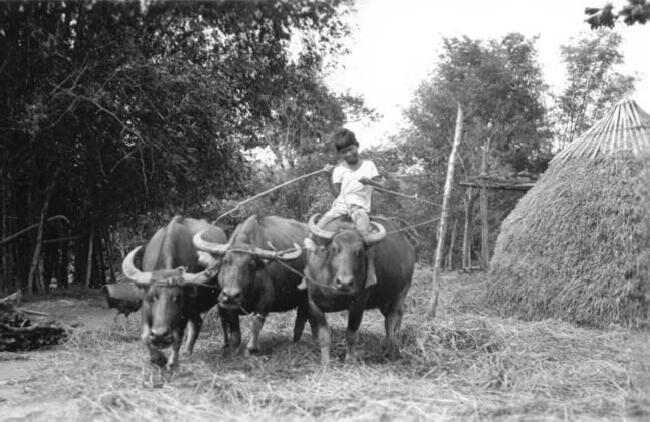
We have limited information Filipino boys' activities at this time. The Philippines is a huge archepeligo. Thus boys have always had many opportunities for activities like swimming and fishing. This continues to be the case today. Religion is an important activity, although not as important as it once was. The country was still very primitive when the Spanish arrived (16th century) and other than implanting Catholocism, the Spanish influence was limited. Islam persisted in the southern islands which were never fully controlled by Spain. The Spanish did very little to develop the economy. Outside the major cities, the Spanish influence was limited. One major activity for boys was was work. Most Filipino boys worked frim an early age. Most Filipinos lived in rural areas and practiced subsistence agriculture. In the more remote islands, life was still largely tribal. As a result, most boys from an early age were involved in agricultural labor. The Spanish opened schools in the cities, but few Filipinp boys attended school in rural areas. It was not until the Amjericans arrived (1898) that the Philippines began to develop a more modern economomy. One impact of American rule was the beginning of an extensive public school system. We have pages on Filipino school uniforms. With the arrival of the Americans, the Philippines began to develop and this meant among other cultural trends, an interet in sports. The Americans brought baseball, but since independence, an interest in football (soccer) has grown. There was a traditional interest in martial arts. The only youth groupo we know of are the Filipino Scouts.

Navigate the Boys' Historical Clothing Web Site:
[Return to the Main Oceania page]
[Return to the Main countries page]
[Introduction]
[Activities]
[Biographies]
[Chronology]
[Cloth and textiles]
[Clothing styles]
[Countries]
[Topics]
[Bibliographies]
[Contributions]
[FAQs]
[Glossaries]
[Images]
[Links]
[Registration]
[Tools]
[Boys' Clothing Home]