|
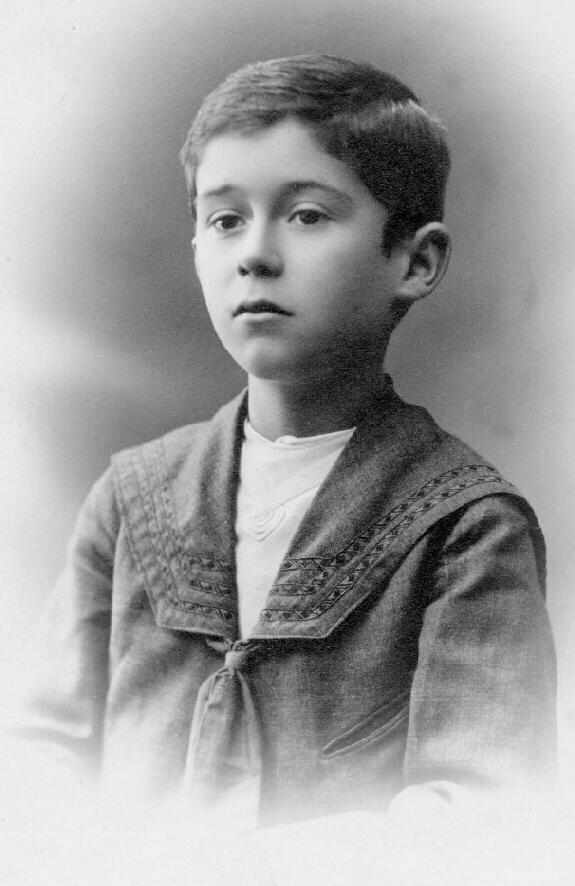
We have little information on Bulgarian garments at this time. We have, howevr, begun to build an archive we can use to expand this setion. We have noted children and adults boys wearing what might be called folk or peasant garments, especilly in rural areas. Bulgaria as still a largely agrarian country with a still largely rural population. Folk styles in the the 19th and early 20th century ws still widely worn by the peasantry and in rural areas. We still have, however, few detils. Bulgria is located in the southern Balkan Peninsula, and except for the Albanians was the last part of the Ottoman European dominions to become independent. This affected the adoption of Western clothing and fashion conventions. Bulgarian boys in urban areas also wore Western European fashions by the late-19th century. We notice what seems to be some French influence here. And the large German clothing industry as well as a German monarchy were also influnces. European fashions in the 19th century seem primarily worn in the cities and by the upper and middle class. We note many of the same basic garments such as tunics and sailor suits. Some of the detailing on tunics and other garments seems destinctly Bulgarian. Most European boys had stripes on their sailor suits for detailing as were worn by actual sailors. Many Bulagrain boys wore sailor suits with more elaborate embroidery, although our information is still very limited.
We have noted boys wearing folk garments, but have few details. Bulgaria has some destinctive folk fashions, similar in many ways to neighboring Greece. I am not positive about the influenes here, but several centuries of Ottoman rule must have been a factor. European fashions in the 19th century seem primarily worn in the cities and by the upper and middle class. Folk styles in the the 19th and early-20th century ws still widely worn by the peasantry and in rural areas.
Bulagarian boys also wore Western European fashions by the late 19th century. We notice some French influence here. We note images of boys waring berets. Here we have little information. We do not think that Bugarian boys commonly wore berets. As far as we know, berets were commonly used by mothers to dress boys in stylish outfits to look fashionable. We note American boys dressed this way as well in the 1930s.
We do not have much information on Bulgarian skirted garments yet. Bulgaria achieved its independence at a time that it was still fairly common to dress younger boys in dresses and other skirted garments. It took some time for Western garments to become well-established in Bulgaria along with Western fashion conventions. It began with the sli ad wealthy and gradually sread to the middle- and finally working classes. All of this of course began in the cities. And by the time Weestern fashions were well-estblished, the convention of dressing tounger boys in skirted garments was declining. Thus we are unsure to what extent it was prevalent in Bulgaria. Our small archive provides only limited information. We do see some boys in wealthy families wearing fashonable skirted garments in the late-19th century. We are not yet sure about middle-class families. W hope to deal with this topic more adequately as HBC's archive grws.
We note many of the same basic garments such as tunics and sailor suits. Sailor suits were mostly worn in the cities by the elite and middle-class boys. They were not as common in the villages and country side. Here the German origins of the country's monarchy must have been a significant factor. Some of the detailing seems destinctly Bulgarian. Note the sailor suit here (figure 1). Most European boys had the traditional stripes on their sailor suits for detailing as were worn by actual sailors. We see these sailor suits with these stripes. Many Bulagrain boys wore sailor suits with more elaborate embroidery or even lace trim. Our information is still very limited so we do not yet know how common the various styles were in Bulgaria.
We know very little about suits in the 19th century. After the Napoleonic Wars, the Balkans gradually shifted from Otoman provinces to independent Christian kingdoms. This began with Greece (1820s) and then reahed Romania and Serbia, but grdually reached Bulgarian in the southern Balkans as well. Russia stronglysupportedthe process because of both strategic abnd ethbic ties. We note bouys by the late 19th century beginnng to dress like boys in other Eurioean countrie, espeually Bulgarian boys in Sofia and other Bugarian cities. We notice boys in Bulgarian cities aftr World War I (1914-18) dressed much like boys in other European countries. It is virtually impossible to idntify Bulgarian boys and suits just from availablr photographs unless they are identified. We see various styles of jackets as well as the short pants, knickers, and long pants wesee in other countries. This was less common in rural areas, but fairly standard in the cities. The same age conventins seem to have governed the selection of pants as was the case inother European countries, but again varied from family to family. Knicker suits seem the least common, but we see a few teenagers wearing them. Short pants suits seem standard for school age boys and the long pants become common as boys reach the teen years, espcially after the early teen years. Economic conditions were extremelydifficicult after the Communists seized control following World War II. We do not have much infor,mation on suitsduing this period. After World War I, we begin to see most boys waring long pants suits by the 1960s.
We do not yet have enough information on Bulgaria to understand much about popular styles of pants and trousers in Bulgaria. We believe like other Balkan countries that styles of pants were different than in the rest of Europe because if the long era of Ottomon control. Located ar the vase of the Balkan Peninsula, Ottoman influence was especially pronounced in Europe. This was a factor in the substantial difference between urban and rural areas. European styles first appeared in the citis and only gradually becme adopted in the rural areas. Traditional clothing was still common in rural areas up to World War I. After the War we see European styles becoming widely adopted throughout the country. We note many Bulgarian boys wearing short pants in the inter-War era, especially city boys from affluent families. The styles seem fairly standard, styles widely worn in Europe at the time. Long pants see more common among the working class and rural population.
A HBC reader has noted twin-bar sandals referred to in catalogs as Bulgarian sandals. We are not sure why this style of sandal was referred to as Bulgarian sandals, but it suggests Bulgarian origins to the style. These references to Bulgaria disaapear after the 1920s. We are not sure about the origins of the twin-bar sandals. Nor or we sure about the origins of other styles of sandals such as the "T"-strap sandal so commonly worn by British boys. We had thought that the two were essentially connedcted and being of primarily British origins. A HBC reader writes of the origins of of the twin-bar sandal with a center strap. He writes, "My hypothesis is that the style came to North Anmerica with immigrants about 1900, probably from people who lived in the area of the old Roman province of Dacia or modern Bulgaria. I am centering my research on Bulgaria. where the style is currently shown as part of peasants' costume. It is also referred to as "tsurvouli" and was also used by Bulgarian soldiers. I'm going to try to attach a picture and a Bulglarian history writeup. I am assuming the tsurvouli came from a Roman style, but maybe it's Slavic in origin."

Navigate the Boys' Historical Clothing Web Site:
[Introduction]
[Activities]
[Biographies]
[Chronology]
[Clothing styles]
[Countries]
[Bibliographies]
[Contributions]
[FAQs]
[Glossary]
[Images]
[Links]
[Registration]
[Tools]
[Boys' Clothing Home]
Navigate the Boys' Historical Clothing national pages:
[Return to the Main countries page]
[Australia]
[Belgium]
[England]
[France]
[Germany]
[Ireland]
[Italy]
[Japan]
[Korea]
[Mexico]
[Scotland]
[Spain]
[United States]
Navigate the Boys' Historical Clothing Bulgarian pages:
[Return to the Main Bulgarian page]
[Bulgarian choirs]
[Bulgarian royalty]
[Bulgarian youth groups]