
Taiwan History
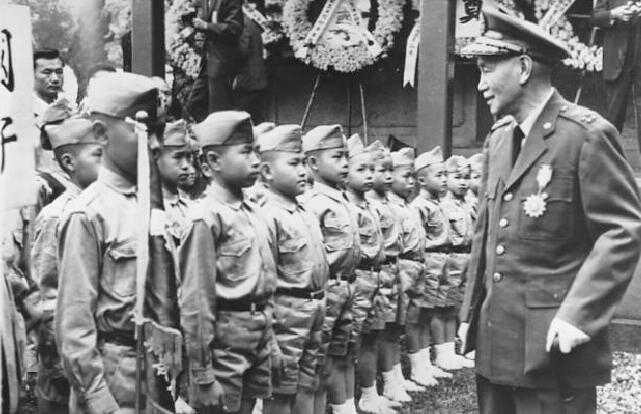
Figure 1.--President Chiang Kai Shek here reviews Boy Scouts (perhaps Cubs). They are at the Martyr's Shrine in Taipei durung a Youth Day celebration (March 29, 1960). Youth Day is a national celebration on Taiwan which honors 27 revolutionaries who died in a 1911 uprising agaunst the Manchus in Canton.
|
|
Since the spectacular voyages of Admiral Cheng Ho (Zheng He) in the 15th century, China showed little interest in the sea. This extended even to Taiwan which became know as Formosa during the Portuguese period. The Chinese made no effort to interfere with the piracy that developed from the island in the 19th century. Mariners from many countries (American, Btitain, French, Japanese, and others) complained to the Imperial government they received no satisfaction (1870s). The Manchu Emperor told them that "Taiwan is beyond our territory." The French launched an expedition to attack the pirates and occupied much of the northern part of the island (1884-85). Only with the rise of Japanese power did the Imperial Government begin to take an interest. The Emperor declared Taiwan to be a "province" of the Empire (1887). The First Sino-Japanese War was fought in part over Taiwan (1895). The Imperial Government in the Treaty of Shimonoseki, ceded Taiwan to Japan in perpetuity. The Taiwanese with some Manchu support declared independence (May 25, 1895). The Japanese landed 12,000 soldiers in the north (May 29). The Taiwanese firces were crushed and and Japan quickly seized control of their new possession. Japanese forces entered Tainan in the south (October 21). The Japanese occupation regime was was harsh. Unlike the Manchus, however, they were not corrupt. They supressed piracy. They founded a modern educational system. Classes were taught in Japanese. The Japanese made important investments in infrastructure, communications, trains, roads, and industry. [Kerr] The Japanese remained firmly in control of Taiwan throughout World war II. The Allies at the Cairo Conference accepted Chiang Kai-shek's request that Taiwan be 'returned to China'. American planners considered an invasion of the island, but the Philippines and Okinawa were selected instead. The Allies agreed to allow that Chiang's troops to "temporarily occupy Taiwan, on behalf of the Allied forces." The Taiwanese welcomed the Chinese troops, glad to be finally rid of the Japanese. The Taiwanese whole finding the Chinese at first to be less brutal than the Japanese, found the Chinese to be repressive and corrupt. A series of incidents occurred. An incident in Taipei led to a massive demonstration (February 28, 1947). Chinese authorities were surprised and brought in additional troops from China. Taiwanese leaders, students, professionals, and community leades were arrested. Large numbers were executed. Some reports suggest that about 28,000 people were killed. Scholars describe what follows as the White Terror and thousands more were arrested and tortured and many executed by the Taiwan Garrison Command. The Kuomintang (KMT) was defeated by the Communists in the Civil War on the Mainland (1949). Chiang Kai-shek withdrew to Taiwan where he declared martial Law. This was necessary in part because the Chinese population that escaped to Taiwan was only about 15 percent of the population. There he was protected by the American 6th Fleet. Taiwan thus became a flash point in the Cold War. Martial Law and dictatorial KMT rule continued for four decades. The islands of Quemoy and Matsu were an issue in the 1960 presidential election. The KMT maintained the fiction that Nationalist China was the legitimate government of China and some day they would recover the Mainland. . The Allies and Japan signed the San Francisco Peace Treaty ending World War II. Japan ceded Taiwan in the Treaty, but the future od the island was left up to the United Nations. While the KNT tightly controlled Taiwan politically, the island made considrable economic progress, becoming one of the Asian Tigers. Here the educated population and infrastructure left by the Japanese were an importnt factor. Nixon and Kissinger made their "opening" to China (1971). Beijing was awarded Taiwan's seat in the United Nations. The United States and China agreed to the Shanghai Communiqué (1972). The Communique is the basis for the United States "One China" policy.
China and the Sea
Since the spectacular voyages of Admiral Cheng Ho (Zheng He) in the 15th century, China showed little interest in the sea. This extended even to Taiwan which became know as Formosa during the Portuguese period.
Piracy
The Chinese made no effort to interfere with the piracy that developed from the island in the 19th century. Mariners from many countries (American, Btitain, French, Japanese, and others) complained to the Imperial government they received no satisfaction (1870s). The Manchu Emperor told them that "Taiwan is beyond our territory." The French launched an expedition to attack the pirates and occupied much of the northern part of the island (1884-85).
Only with the rise of Japanese power did the Imperial Government begin to take an interest. The Emperor declared Taiwan to be a "province" of the Empire (1887). The First Sino-Japanese War was fought in part over Taiwan (1895). The Imperial Government in the Treaty of Shimonoseki, ceded Taiwan to Japan in perpetuity. The Taiwanese with some Manchu support declared independence (May 25, 1895). The Japanese landed 12,000 soldiers in the north (May 29). The Taiwanese firces were crushed and and Japan quickly seized control of their new possession. Japanese forces entered Tainan in the south (October 21).
Japanese Colonial Rule (1895-1945)
The Japanese saw Formos as an extension of the Ryukyu island chain, which it is.The Japanese occupation regime was was brutal. They slaughtered thousands of Taiwanese. Unlike the Manchus, however, they were not corrupt. They supressed piracy. They founded a modern educational system. Classes in the schools were conducted by Japanese teachers in the Japanese language. The Japanese made important investments in infrastructure, communications, trains, roads, and industry. [Kerr] Despite the cost to the Taiwanese natives, they brought order, schools and made Taiwan a productive agricultural colony. Ironically, unlike other countries occupied by the Japanese, some native Taiwanese rember the Jaoanese with some sympathy. All the survivors of the initial slaughter are of course dead. And when the KMT came to Taiwan they also slaughtered thousands of Taiwanese. Thy also took over the government and businesses, mostly concerns operated by the Japanese. Many survivors of this era and their children are still alive. There was a common saying in Taiwan during the 1950s, "The Japanese were dogs. The KMT are pigs. You still have to feed a dog, but it protects you. The pig just eats." So it is largely an issue of memory and that Japan was a model for their economic growth, at the same time they were cut off from interaction with China for many years. There are still some older people fluent in Japanese in Taiwan that they were taught in the Japanese run schools. Some remember the 30s and early 40s as ones of order and peace. and productivity. This of course varies, but there is not the virtually universal condemnation tht you see in many countries aqs in Korea.
Taiwan thus remains the only Japanese colony with any affection for their colonial masters.
World War II
The Japanese remained firmly in control of Taiwan throughout World war II. The Allies at the Cairo Conference accepted Chiang Kai-shek's request that Taiwan be 'returned to China'. As the U.S Navy submarine campaign gained strength (1943), the maritime route through the Taiwan Straits became one of the few routes that mmarus laden wuth raw ,matetials could get through to the Home Islands. American planners considered an invasion of the island, but the Philippines and Okinawa were selected instead. The U.S. Pacific Fleet carriers stuck at Japoanese insa;lations on Taiwan. The Allies agreed to allow that Chiang's troops to "temporarily occupy Taiwan, on behalf of the Allied forces." The Allies and Japan signed the San Francisco Peace Treaty ending World War II. Japan ceded Taiwan in the Treaty, but the future of the island was left up to the United Nations.
Post-War Occupation
The Taiwanese welcomed the Chinese troops, glad to be finally rid of the Japanese. The Taiwanese whole finding the Chinese at first to be less brutal than the Japanese, found the Chinese to be repressive and corrupt. A series of incidents occurred. An incident in Taipei led to a massive demonstration (February 28, 1947). Chinese authorities were surprised and brought in additional troops from China. Taiwanese leaders, students, professionals, and community leades were arrested. Large numbers were executed. Some reports suggest that about 28,000 people were killed. Scholars describe what follows as the White Terror and thousands more were arrested and tortured and many executed by the Taiwan Garrison Command.
Chinese Civil War
The Kuomintang (KMT) was defeated by the Communists in the Civil War on the Mainland (1949). Chiang Kai-shek withdrew to Taiwan where he declared martial Law. This was necessary in part because the Chinese population that escaped to Taiwan was only about 15 percent of the population. There Chiang anf the KMT after China entered the Korean War was protected by the American 6th Fleet.
The victory of Mao Tse-tung and the Communists in the Chinese Civil War caused Taiwan to become a frontline country in the developing Cold War (1949). Chiang Kai-shek and the surviving Nationalist units withdrew to Taiwan where the Communists without a Navy could not follow. The Communists demanded that Taiwan be turned over to them and it became a focus of their foreign policy, a Cold War flah point. This and the Korean War resulted in Communist China become a vitrolic foe of the United States in the Cold War. American provided economic and military support to Chiang and the Nationslists. The American 6th Fleet made it impossible for the Communisdts to cross the Taiwan Straits and invade Taiwan. Chaing and the Nationalistrs maintained the hope of one day returnuing to China. The islands of Quemoy and Matsu were an issue in the 1960 presidential election. The KMT maintained the fiction that Nationalist China was the legitimate government of China and some day they would recover the Mainland.Ironically both the Communists and Nationalists maintained the One China Principle. Much of the Taiwan population was not Han Chinese, a factor in the modern Taiwan independence movement. The Natiionalists also held the off-shore islands of Quemoy (Jinmen) and Matsu which the Communists intermitently shelled. This became an issue in the American 1960 presidential election. While the military confrontation between the Communists and Nationalists made the headlinrs, a more quite development quietkly changed Taiwan. While Communist rule and edconomic brought economic failure and one of the worsrt famines in Chinese history, the free market capitalist economics of the Nationalists and association with the United States created an economic powerhouse in Taiwan. The economy geww developing modern new industries. Taiwan became one of the Pacific Tigers while Communist China languished in poverty and economic failure.
KMT Rule
Martial Law and dictatorial KMT rule continued for four decades. While the KNT tightly controlled Taiwan politically, the island made considrable economic progress, becoming one of the Asian Tigers. Here the educated population and infrastructure left by the Japanese were an importnt factor.
American Opening to China
Nixon and Kissinger made their "opening" to China (1971). Beijing was awarded Taiwan's seat in the United Nations. The United States and China agreed to the Shanghai Communiqué (1972). The Communique is the basis for the United States "One China" policy.
Democracy and Economic Expansion
Sources
Kerr, George. Formosan Home Rule Movement.
CIH

Related Chronolgy Pages in the Boys' Historical Web Site
[The 1880s]
[The 1890s]
[The 1900s]
[The 1910s]
[The 1920s]
[The 1930s]
[The 1940s]
[The 1950s]
[The 1960s]
[The 1970s]
[The 1980s]
[The 1990s]
[The 2000s]
Navigate the Cildren in History Website
[Return to the Main 20th century conflict page]
[Return to the Main Taiwan page]
[Return to the Main Chinese history page]
[Return to the Main Asian historypage]
[Introduction]
[Animals]
[Biographies]
[Chronology]
[Climatology]
[Clothing]
[Disease and Health]
[Economics]
[Geography]
[History]
[Human Nature]
[Law]
[Nationalism]
[Presidents]
[Religion]
[Royalty]
[Science]
[Social Class]
[Bibliographies]
[Contributions]
[FAQs]
[Glossaries]
[Images]
[Links]
[Registration]
[Tools]
[Children in History Home]
Created: 6:17 AM 10/14/2007
Last updated: 3:24 AM 9/25/2014