
Sri Lanka Boy Dancers
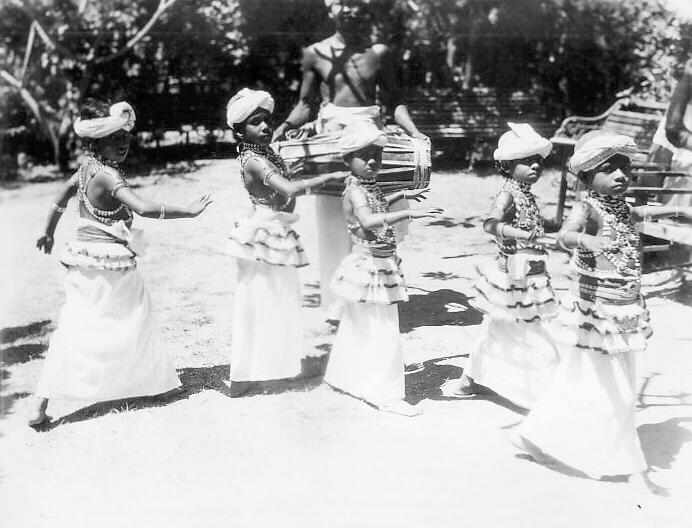
Figure 1.-- Here are photographs of Sri Lanka boy dancers taken in the 1930s. The photographs were taken by a passenger aboard the "S.S. Resolute" (Hamburg-American Line) on a world cruise in 1935. The boys are elaborately costumed for a Kandyan dance which is is the most popular traditional dance in Sri Lanka.
|
|
Sri Lankan traditional dances have ancient animist origins and jave been influenced by Buddhist and Hindu culture influences. Dancing patterns are varying from region to region of Sri Lanka and they are known as Kandyan dances, Sabaragamuwa dances, low-country dances, devil dances etc. and some of these dances can be sub-categorized further. Since there is an influence of Hindu culture, some parts of dances are restricted to boys/men because according to some Hindu
beliefs, some activities should not be performed by girls/women. This quality can be seen in the festival of the “Temple of Tooth” in Kandy. But nowadays girls also perform some parts in their schools as a part of their education.
The costumes vary based on the type of the dance, but there cannot be identified major differences among Kandyan and Sabaragamuwa dances.
The image here is a Kandyan dance and it is the most popular traditional dance in Sri Lanka (figure 1). In devil dances, the dances are performed by the artists by putting different kind of masks and it also used as a treatment for diseases caused by “Unseen Hands”. When talking about costumes in Kandyan dances, the main part is the head-dress. The chest is covered by only decorative beaded net. For bottom part they using an elaborative piece of white
cloth and this is known as “Ves” costume. Addition to that they wear different kinds of jewelery. The head-dress is only worn by qualified artists and the others only wear a cowl made by a cloth as illustrated here (figure 1). Currently traditional dancing is a very interesting subject among school children, especially
among boys from ages 8-10 years of age and above. In Kandyan dances, boys are qualified to wear head-dress after they develop their skills to the satidfaction of their masters. Girls are also learning some parts of dances and they perform in some festivals for entertainment purposes.
Origins
People in Sri Lanka from ancient times regarded dance as aay to pleasure or perhaps apease the nature gods. People at tge time were xanimists, worshiping the spirits they saw in nature. They danced to imprive hunts and harvests and to seek rescue from natural disasters. There is evidence of dance rituals from very early times (4th century BC).
This is particularly interesting because dance is a particularly efemerable art form. We know a great deal about art in ancient civilizations because of the physical evidence. Dance like music, however, is largely lost over time. Sri Lanka traditional dance is one of the few surviving dance forms from ancient times. Of course the modern forms are heavilyvinfluenced by more modern influences.
Influences
When Buddhism arrived in Sri Lanka from India , Buddhist influences were incorporated into the native animist dances. The same was true with Hinduism. South Indian cultural influence became notable (15 centyry).
Thus the traditional dances of Sri Lanka today are a mixture of dances with Animist origins influenced by Buddhist and Hindu cultures.
Regional Differences
Dancing patterns vary from region to region of Sri Lanka. The popularity of the different dance types vary across Sri Lanka.
There are several different types of traditional dance. These include Kandyan dances, Sabaragamuwa dances, low-country dances, devil dances, and several others. Some of these different dances can be sub-categorized further.
Kandyan dances are probably the most important of the various Sri Lankan traditional dances. It is generally regarded as the national dance form. Kandyan dances evolved in the Kandy Kingdom. This was the kingdom in the interior of Sri Lanka that proved most resiliat against the Europeans. Many of the dances depict stories associated with the Kandy kings, queens, princes and heroes. The dance style probably is a good representation of dances in Kandy. The image here is a Kandyan dance and it is the most popular traditional dance in Sri Lanka (figure 1). Kandy costumes can be very impressive. Male dance costumes can include spectacular headwear. Bare chests are decorated with intricte silver regalia. There are also silver bangles on arms and anklets. The dances are set to drum rhythms. Sabaragamuwa dance is particularly popular in Ratnapura. The dance is performed as devotions to Saman. Low country dance are an effort to appease the evil spirits which can bring diseases. Low country dancers often use masks. These masks resemble birds, demons, reptiles etc. showing animest origins. The dance itself is highly ritualistic. In devil dances, the dances are performed by the artists who wear different kind of masks and it also used as a treatment for diseases caused by “Unseen Hands”. Many of these dances are performed in solo and also group performances.
Gender
Since there is an influence of Hindu culture, some parts of dances are restricted to boys/men because according to some Hindu beliefs, some activities should not be performed by girls/women. This quality can be seen in the festival of the “Temple of Tooth” in Kandy. But nowadays girls also perform some parts in their schools as a part of their education.
Costumes
The costumes vary based on the type of the dance, but there cannot be identified major differences among Kandyan and Sabaragamuwa dances.
When talking about costumes in Kandyan dances, the main part is the head-dress. The chest is covered by only decorative beaded net. For bottom part they using an elaborative piece of white cloth and this is known as “Ves” costume. Addition to that they wear different kinds of jewelery. The head-dress is only worn by qualified artists and the others only wear a cowl made by a cloth as illustrated here (figure 1). A reader writes, "I have a comment, although I have never been to Sri Lanka. It was still called Ceylon in the late-1950s when I was in graduate school. We had a student from Ceylon who wore a similar "skirt" for casual wear in our dorm. I never saw him wear it outside. It was blue in color, more narrow than those in your picture, and had no ornamentation. We found it strange at first, but one got used to it.
School Children
We do note some photographs of boy dancers taken in the 1930s. The photograph here were taken by a passenger aboard the S.S. Resolute (Hamburg-American Line) on a world cruise in 1935 (figure 1). The boys are elaborately costumed.
Currently traditional dancing is a very interesting subject among school children, especially among boys from ages 8-10 years of age and above. In Kandyan dances, boys are qualified to wear head-dress after they develop their skills to the satidfaction of their masters. Girls are also learning some parts of dances and they perform in some festivals for entertainment purposes.
HBC

Navigate the Boys' Historical Clothing Web Site:
[Introduction]
[Activities]
[Biographies]
[Chronology]
[Clothing styles]
[Countries]
[Bibliographies]
[Contributions]
[Essays]
[FAQs]
[Glossaries]
[Images]
[Links]
[Registration]
[Tools]
[Boys' Clothing Home]
Navigate the Boys' Historical Clothing national pages:
[Return to the Main Sri Lankan page]
[Return to the Main country dance page]
[Return to the Main countries page]
[Afghanistan]
[Armenia]
[China]
[India]
[Japan]
[Korea]
[Malaysia]
[Pakistan]
[Taiwan]
[Tajikistan]
[Uzbeckistan]
Created: 8:50 PM 4/16/2006
Last updated: 5:20 PM 9/1/2008