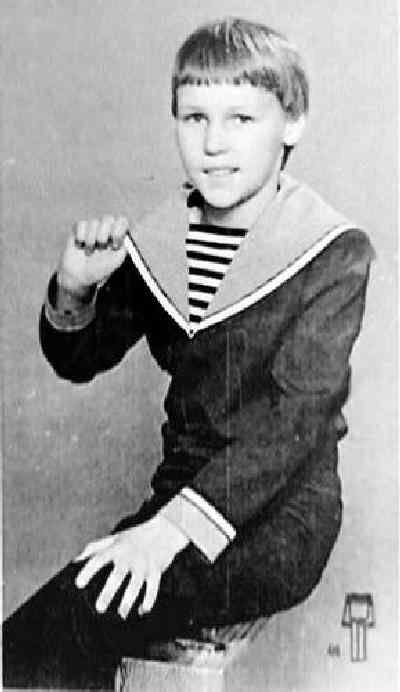
Figure 1.--The Russian fashion magazine "The Children Clothes Fashions" showed two sailor suits. I do not think, however, they they were were a style that was commonly being worn at the time ot a style that could be purchased in yhe stores. . Note the school book bag. This was clearly a style being suggested for schoolwear. Click on the image to see another style.
We have very little information on Russian sailor suits at this time. We know they were worn in Russia, but our information at this time is primarily from available images from the royal family. They show that sailor suits were being worn by Russian boys in the late 19th century. We do not know, however, to what extent that sailor suits were worn by other Russian boys, including aristocrratic and upper and middle-class boys. I assume that made them very popular in Russia, at least among wealthy and middle-class boys in the larger cities. We have, however, no real information on this. The royal family's penchant for sailor suits is well known. The Tasarevitch Alexis was probably the most famous boy ever to wear sailor suits. He was more famous than Edward VII, who Queen Victoria dressed in an enlisted sailor suit starting the sailor suit's phenomenal fashion success. Alexis before World War I (1914-18) almost always wore sailor suits. We note that sailor caps, middy blouses, with knee pants and long stockings were common. The Tsarevitch's sailor suits must have helped make the style very popular, although except as a very young boy he mostly wore long pants sailor suirts. We note some boys wearing sailor suits after the Revolution. We have no idea how common this was. The last image that we have of a Russian boy wearing sailor suits is from the 1930s. We do note, however, a Soviet fashion magazine from the 1970s showing boys modeling sailor suits. Suits carefully followed the style of the Russian Navy which wore dickeys with horizontal stripes.
We have very little information on Russian sailor suits at this time. We know they were worn in Russia, but our information at this time is primarily from available images from the royal family. They show that sailor suits were being worn by Russian boys in the late 19th and early 20th centuries. We do not know, however, to what extent that sailor suits were worn by other Russian boys, including aristocrratic and upper and middle-class boys. I assume that made them very popular in Russia, at least among wealthy and middle-class boys in the larger cities. We believe tht as in Germany, the sailor suit was widely worn by middle-class noys. We have, however, no real information on this. We note that the NAZIs after they seized power in 1933 discouraged boys from wearing sailor suits, seeing itas a middle-class style. We wonder what the Communist atitude was toward the sailor suit, especially as it was so associated with the Tsarevitch and the middle class--bith anathema to the Communists.
The Royal Family
The royal family's penchant for sailor suits is well known. The Tasarevitch Alexis was probably the most famous boy ever to wear sailor suits. He was more famous than Edward VII, who Queen Victoria dressed in an enlisted sailor suit starting the sailor suit's phenomenal fashion success. Alexis before World War I (1914-18) almost always wore sailor suits. We note that sailor caps, middy blouses, with kneepants and long stockings were common. The Tsarevitch's sailor suits must have helped make the style very popular, although except as a very young boy he mostly wore long pants sailor suirts.
We note some boys wearing sailor suits after the Revolution. We have no idea how common this was. The last image that we have of a Russian boy wearing sailor suits is from the 1930s. We do note, however, a Soviet fashion magazine from the 1970s showing boys modeling sailor suits. Suits carefully followed the style of the Russian Navy which wore dickeys with horizontal stripes. We note boys in the early Soviet era (1920s and 30s). We are not sure how common the sailor suit was at this time. A best we can tell the silor suit was worn by boys from properous families that were abe to afford better clothes. We also note soime children whoseem to be dressed up for formal occassions. The Russian fashion magazine "The Children Clothes Fashions" showed two sailor suits. I do not think, however, they they were were a style that was commonly being worn at the time. Note the school book bag. This was clearly a style being suggested for schoolwear (figure 1). It was not, however, actually adopted or widely won.
We note Russian boys wrarin a bariety of sailor styles. They were mosty variations on tradiditionall styled suits with the V-collar and back flap. Of couese every country with a navy copies the basic British Royal Navy uniform. In the case of Russia, German styles were important because of the German nobility marrying into the Russian royal family. While the stles was basically set by the Royal Navy, the detailing was different. we do not notice any destinctive Russan styles are detailing. Striped collars were the ost common, but as in Bother countries some of the V-collars were done with solid collars without stipes. We do notice that many Russian boys had the horizontal striped dickeys. We see these in other countries as well, but not as commonly as in Russia. We do not see many of the more imaginative departures from the traditional style that we see in America. We see a few, but not very many.
Sailor suits included headwear, jackets or middy blouses, and matching pants. There were also coats such as reefer coats. There were a range of accessories, including dickeys, lanyards, buttons and other items. One destinctive feature of many Russian sailor suits was the hrizontally stripped dickey. I'm not sure what kind of garment this was, but I think it was lkike a "T"-shirt. Not all Russian boys had these stripped dickeys, but they were very common, in part because this was a common feature of the sailor suits chosen by the royal family.
The sailor suit was very popular before the Revolution. The Royal family was an important factor here, but German fashions were another factor. As a result, it is very common to see upper- and middle-class family portrits with children wearing sailor suits. This was mostly younger boys until they began attending schools with uniforms. This varied chronologically. We see some teenage boys in aristocratic families wearung sailor suits, but not many middle-class families. Girls tended to wear sailor outfits to an older age. We see all of this in family portraits. We see quite a few images were multiple children in families wearing sailor suits. This changed with the Revolutioin. Sailor suits comtinued to be popular at least during the inter-war era (1920s-30s), despite the middle-class image of the sailor suit. Mddke-class irigins could affect educatiinal opportunities anbd careers. While we continue to see individual boys wearing sailor suitrs, we see fewer families where multiples were done up in sailor suits. A factor here was that that there were fewer families with karge numbers of children.