|
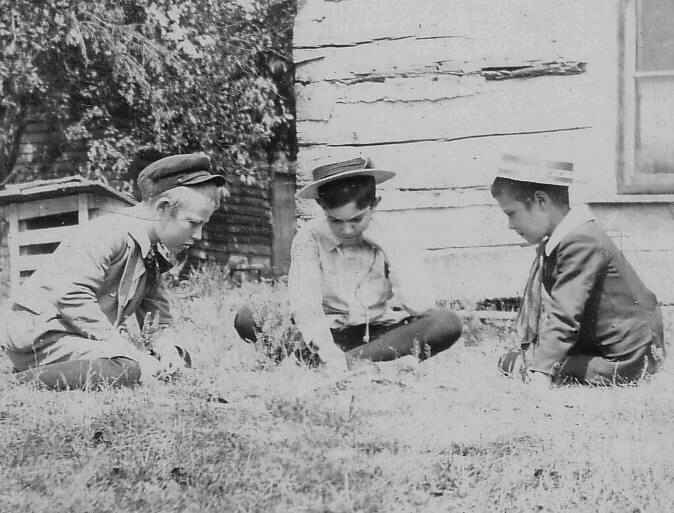
We note American boys wearing many different styles of caps and hats. Caps were more common for boys than hats, but we see boys wearing both. The basic difference is the bbrim. A hat has a full brim while a cap has only a partial brim. There were also a range of other headwear such as berets, hetmets, and knit caps. These items are commonly referred to as caps as well even though they did not have brims. We do not have much information on 18th century styles, but we have a good bit of information about 19th and 20th century styles. We notice boys wearing sailor hats, but no other hat style was especially common for boys, although seceral were worn. Hats seem some what more common for upper clas families, but this destinction does not seem as prominant as is the case for adults. we have not noted any new styles in the 21st century. Some cap styles like sailor caps, flat caps, and baseball caps were particularly common for boys, but there are many other styles worn as well.
There are two basic types of headwear worn in America, caps and hats. The basic differences is that hats have brims all around the crown. Caps only have bills/peaks, a partial brim at the front. Actually we have simplified the actual diversity of headwear by grouping a number of headwear types in the cap section thast are not really vaps, such as berets and stockuing caps, essentially creating a non-hat category. We fo this because several styles like sticking caps are called caps even though they are not true caps. Both caps and hats are made in many different styles giving the impression of more than two different types. The popularity of both types have varied significantly over time. There are variations in gender and age conventions as to wether hats or caps are worn. Utility and seasonality are other factors in determining whar boys wear.
Men and boys both wore caps and hats, especially in the 19th century. Generally speaking men wore hats rather than caps. The two major exceptions are soldiers and workers. Here there were social class factors involved. Boys likewise wore caps and hats. Boys commonly, however, were more likely to wear caps. We see younger boys wearing hats, primarily sailor hats. We also see older boys wearing various styles of hats such as boaters at the turn-of-the 20th century. But the great bulk of the photographic record shows boys wearing caps. American boys in the 19th century wore military caps and sailor caps. There were also various styles of cold weather caps. We note peaked caps and flat caps in the early 20th century. Headwear became less common after Wotld War II. ment wearher wear. The one major exception is baseball caps which eventually became fashion statements that had nothing to do with game of baseball.
Headwear styles worn by American boys have varied widely over time. The choice of a cap or hat was significantly affected by the time frame. Caps and hats were widely worn in both the 19th and 20th centuries, Hats seem to have dominated in the 19th century. Thge rounded crown hat seems especially common, particularly in rural areas. We notice peaked caps with Napoleonic War styling in the early-19th century. Caps became increasingly important in the late-19th century as sailor caps began to appear. Caps became the dominant type in the 20th century. The flat cap became an iconic style. We continue to see some boys wearing hats in the 20th century through about the 1950s, but caps were more common. By the 1960s, we almost never see boys wearing hats. all headwear declined in popularity, but we do notice caps. By the 21st century it is rare to see American boys wearing hats otherthan baseball caps. The only exceotion is cold weather caps.

Navigate the Boys' Historical Clothing Web Site:
[Return to the Main U.S. country garment page]
[Return to the Main U.S. country garment page]
[Introduction]
[Activities]
[Biographies]
[Chronology]
[Clothing styles]
[Countries]
[Bibliographies]
[Contributions]
[FAQs]
[Glossary]
[Images]
[Links]
[Registration]
[Tools]
[Boys' Clothing Home]