|
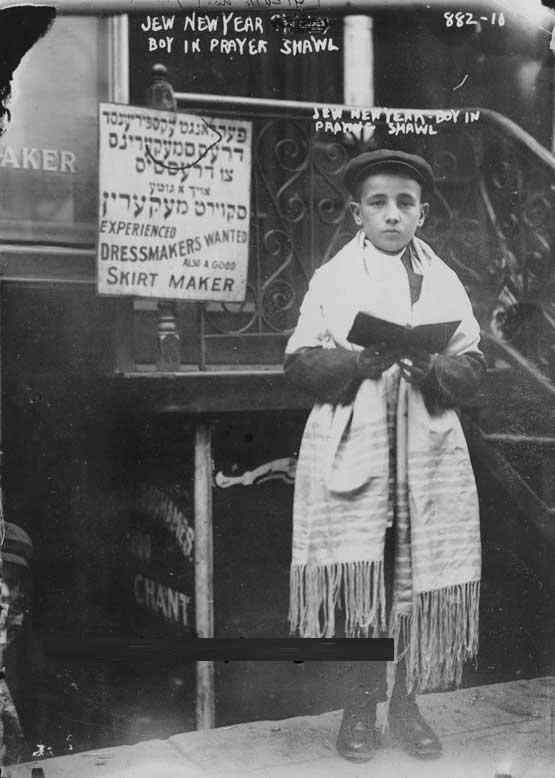
The Jews were not a national group and came from many countries. The economic and social impact of Jews on America varied coincerning their origins, but my far the most important wre the Russian and other Eastern European Jews. The vast oproportion of Jews who emmigrated to America came from Russia and eastern Europe, but primarily Russia. (Large areas of Poland at the time were part of Tsarist Russia.) The reason of course was the terrible oppression visited upon the Jews by the Tsarist regime and the Cossacks. Not only were there legal restrictions, but vicisious programs massacred Jews in the thousands. The primary impetus for Russian immigration to America was the pogroms directed at Jew in the wake of the assaination of Tsar Alexander II (1881). A substantial proprtion of the Russian immigrants were Jews. This was the largest group of European Jews to come to America. Earlier Jewish immigrants had been primarily German, but they were realtively small in number compared to the numbers of Russian Jews that began to arrive in America during the 1880s. This same oppression drove Jews into Western Europe, especially Germany which under Bismarck had emancipated the Jews. The Jews are notable for several reasons. Notably the Jews were most likely to stay in America. Few returned to Europe. The Jews were also the immigrant most willing to aid new arrivals. They actively support relief agencies for the new arrivals. The most important impacts of the Jews is surely the impact on American intellectual and political thought.
The Jews were not a national group and came from many countries. The vast oproportion of Jews who emmigrated to America came from Russia and eastern Europe, but primarily Russia. (Large areas of Poland at the time were part of Tsarist Russia.) substantial proprtion of the Russian immigrants were Jews. This was the largest group of European Jews to come to America. Earlier Jewish immigrants had been primarily German, but they were realtively small in number compared to the numbers of Russian Jews that began to arrive in America during the 1880s.
Jews came to America in small numbers, in the 17th century mostly Sephardic Jews fleeing the Inquisition. The Inquisition dates to medieval Europe. The Spanish and Portuguese expelled the Jews to "purify" their countries (1492). This dispersed the Jewish community when became known as Sephardic Jews. Many Jewsstayed in Spain and either converted or claimed to have converted. The Inquisition devoted considerable attention in the 16th and 17th century to ferreting out these Jews. The first Jews to arrive in America came from from Portuguese Brazil where the Inquisition was targeting Jews. A group of 23 Spanish-Portuguese Jews arrived in New Amsterdam (1654). Many Sephardic Jews sought refuge in the Netherlands. These were the few Jews to arrive in the Dutch colony. The Dutch restricted Jewish worship, but wre willing to accept the Jews. More Jews arrived, this time from the Neherlands (1655). The British subsequently seized New Amsterdam, remaming it New York (1664). The British proved more tolerant than the Dutch. Throughout the colonial perod, small numbers of Jews came to America. Mostly they came as individuals and quitely worshiped in their homes. It should be remembered that in the early colonies there was no freedom of worship even for other Protestant denominations. This only developed slowly. One of the most important centers for a more open attitude toward religion was Roger Williams' Rhode Island. And it was here that the first permanent Jewish community was tolerated. That community was in Newport. Jews there under the leadership of Judah Touro built the Touro Synagogue (1773) and it still stands as a memorial to the patriot and philanthropist. There were other early Sephardic (Spanish-Portuguese) Jewish communities scattered throughout the colonies (Charleston, Savannah, and Philadelphia-1745). Another community was organized in Richmond after the Revolution.
The next group of Jews to arrive in America were a very different group, mostly from Germany. While the Sephardic Jews were likely to identify themselves as Jews, the German Jews that came to America in the early and mid-19th century were largely assimilated Jews likely to identify themselves as Germans. Germany at the time was in the process of emancipating the Jews. This was a process began in earest by the French Revolution. Germany was not yet unified and thus this process varied among the different German states. German Jewish emmigration was not largely motivated by religious opression, although this was a factor. Important motivations were scarcity of land, poverty, and restrictions on marriage, domicile and employment. The desire for political freedom was also important, especially after the failure of the 1848 Revolutions. Germany like America in the 1880s was to be affected by the oppression of Russian Jews. Large numbers not only came to America, but also to Western Europe, especially Germany which under Bismarck had emancipated the Jews.
German Jews were present in America before the Revolution, but they became the dominany Jewish cultural group in the early 19th Century. Immigration at the time was virtually wide open. There was no effort made to restrict immigrants for religious reasons. America was a wide open country at the time. The frotier was rapidly being wrestled from Native Americans and pushed west. Like other German groups, Jews spread out throughout the United States. Jews primarily moved into the North and Northwest and to a lesser extent the South. I do not yet fully understandcthis regional divergence. Like other immigrants they traveled west via the Erie Canal. Jewish Communities were founded in Chicago, Cincinnati, Indianapolis and St. Paul. The early European (mostly German) Jews were primarily young, unmarried men. They formed informal, scattered networks of relatives and neighbors, often from the same European communities. Often they encouraged relatives to follow them to America. A second wave of German Jews came after the failed 1848 Revolutions. This second group tended to be slightly older and better educated. They were frustrated by the failure of the republican 1848 Revolutions and often were motivated by a desire for political demokcracy. Economic opportunity was also very important. Many of these Jewing immigrants persued peddling and petty trade requiring only small capital outlays. From these foundations came important depatment stores and other businesses. Perhaps the best known of these immigranys is Levi Strauss, famous of course for his blue jeans. These German immigrants rapidly entered the American middle class. The commitment of these German Jewish immigrants can be seen in their commitment to communal life. They founded a variety of religious, philanthropic and fraternal organizations. They were center of the early Reform Movement in American Judiasm. Reform Judaism was founded by assimilated Jews in Hamburg, Germany and worked to achieve civic equality and social acceptance for Jews.
America with its European origins was noy exempt from anti-Semitism. This was moderated at first because most American Jews until after the Civil War were German Jews and for many it was the German aspect of their appearance that was the most apparent. But still European attitudes persisted, Most Jews went into business opening shops and various commercial undertakings. Unlike Europe, the anti-Semitism practiced in Ametica was almost entirely personal or private organizations (like universities abd clubs) and not reinorced or scantioned by government or legal action. There was, however, one glaring exception and came from an unexpected source. General Ulysses S. Grant was a staunchly anti-slavery individual. But like mostAmericans he harbored anti-Semeriv views, normally unexpressed. He was dealing with aerious black market problem. An issued an order expelling all Jews 'as a class' (December 17, 1862). General Orders No. 11, issued during the war on Dec. 17, 1862, which expelled all Jews from areas then under Grant�s jurisdiction. [Sarna] The order caused a firestorm of newspaper headlines. America's 150,000 Jews were stunned, fearing the beginning of European-style government restrictions. The order with no precedent in law was immediated rescined by President Lincoln, Grant's greatest supporter in Washington. Grant appolgized for his action. The issue would surface in Grant's presidential campaign (1868). He went on to redeem himself by ground-breaking appointments of Jews. He also became the first president to receive a Palistinian envoy--Rabbi Hayim Tzvi Sneersohn, a great-grandson of Rabbi Shneur Zalman of Liadi, the 'Alter Rebbe' of Chabad Hasidim (1969). The Washington National Intelligencer described the reception of Rabbi Sneersohn, wearing traditional Palestinian Yerushalmi costume. President Grant spoke out against anti-Jewish persecution in Eastern Europe, primarily directed at the Tsarist Pogroms. He was the first president to attend a synagogue dedication (1876). After after his term of office, he became the the first president to visit the Holy Land (1878).
Russia had the largest Jewish population in Europe. Russia in the 18th century aquired large numbers of Jews through the Polish partitions. Actually the term Russian Jews is a misnomer. They mightbbe more acurately called Polish Jews. The Russian Jewish population was fairly limited and Russia when in conquuered areas like the Ukraine expelled or murdered the Jewish population. This only changed with the Polish Partitions of the 18th century. The Jews we now refer to as Russian Jews in America often came from areas Russia acquired in the Polish Partitions. While Jewish immigrants that came tobAmerica commonly came from the Russian Empire, the aeeas that they cane from was commonly the area of the Polish-Lithuanian Commonwealth which became the heart of the Pale established by Catherine the Great (1791). Some Jews assimulated in Russia but most Jews did not. Even assimilated Jews faced wide-spread anti-Semitism even before the accession of Alexander III. Shaken by the assasination of his father, Alexander enflamed sentiment against Jews, in part to distract the growing political opposition to ansolute rule. The pogroms and growing anti-Semitism drove Jews from Russia in large numbers. Some went to Germany and other European countries. Even more came to America. At the time there were no limitations on immigration. The Russian Jews came in such mumbers that they overwealmed the existing Jewish communities with mostly German roots. Most Ameucan Jews todays arecdescended from Russian Jews.
Alexander was the second son of Alexander II. He was born in St. Petersburg on February 26, 1845. Alexander III became official heir to the throne after the death
of his elder brother, Nicholas, in 1865. He came to the throne on March 1, 1881, at the age 36 after the assassination of his father and was crowned in the
Dormition Cathedral of the Moscow Kremlin on May 15, 1883. Alexander III's reign coincided with an industrial revolution in Russia and the strengthening of
capitalism. His domestic policy was particularly harsh, directed not only against revolutionaries but other liberal movements. Fearing an attempt on his life, he refused to live in the Winter Palace; instead, he lived away from St. Petersburg in Gatchina, the palace of his great-grandfather, Paul I, which was designed like a medieval fortress surrounded by ditches and watchtowers. He married the Danish Princess Dagmar (Maria Feodorovna) and had six children. Alexander was a mountain of a man and renowed throughout Russia for his strength and vigor. Alexander III died on October 20, 1894, in Livadia, Crimea, and was buried in the Cathedral of the St. Peter and St. Paul Fortress in St. Petersburg. I have no information yet on his childhood or how he was dressed as a boy, but am attempting to obtain some.
Alexander III was a rabid anti-Semite. Not only were there legal restrictions, but vicisious programs massacred Jews in the thousands. Progroms began in Russia following the assasination of his father, the "Tsar liberator" Alexander II. It is difficult to say whther the pogoms were more a reflection of Alexander anti-Semitic or a mater of political expediency. He soughht to use 'folk anti-Semitism', to his political advantage. The clergy delivered hate-filled sermons in which Jews were portrayed as 'Christ-killers' and the oppressors of the Slavic, Christian people. Mobs attacked Jewish communities, ransaking homes and shops, beating and killing people. These progroms were especially common in the Ukraine. There were countless progroms of varying size and distructiveness. The Cossaks were particularly brutal. The worst was the Kishinov Pogrom (1881). There were many ways in which progroms were inspired. The Tsarist Government did little to prevent them and many officials even instigated them. We believe these were mostly local officials such as the police, but have few details. One historian wrires, "Expulsions, deportations, arrests, and beatings became the daily lot of the Jews, not only of their lower class, but even of the middle class and the Jewish intelligentsia. The government of Alexander III waged a campaign of war against its Jewish inhabitants ... The Jews were driven and hounded, and emigration appeared to be the only escape from the terrible tyranny of the Romanovs." [Wein, p. 173.] . The result was an explossion of emmigration to Western Europe, especially to Germany in Europe, but even more imoprtntly the United States. The primary impetus for Russian immigration to America was the pogroms directed at Jew in the wake of the assaination of Tsar Alexander II (1881). The Russians condicted pogroms (1881-84 and 1903-06) in which Jewish communities were ravished. Large numbers of Jews dispairing of life in Russia emigration to Western Europe and the United States. Pogroms continued under Alexander sons, Nicholas II.
The wave of Russian and Eastern European Jews entering America begiining in the 1880s was the third and by far the largest wave of Jewish immigrants.
They were fleeling Tsarist persecution in Russia and Poland (largely conrolled by Russia). The Russian nd Polish Jews coming to America becausevof repression and pogroms were very different than the German Jews that had come before them. German Jews had come mostly as single men. The Russian Jews came as whole families. The Russian Jews were much less assimilate than the German Jews. As part of the Russian and Polish immigration were the Hasidic Jews. The Hasidim for the most part believed in a strict, orthodox way of life. The Russian and Polish Jews did not move west like the German Jews. Rather they settled in New York City and other large northeaster cities. They became part of the industrial proletariat of late 19th and early 20th century America. Many of the girls and young women killed in the New York Triange Shirt Waist Factory Fire, for example, were these Russian and Eastern European Jewish immigrants.
Gradually many of the Russian Jews raised small amounts of capital and went in to busiess, gradually entering the middle class. Many of these Jews spoke Yiddish as their primary language. This was the vehicle for a rich cultural expression which found an outlet in journalism, fiction, poetry and the theater.
The original Sephardim looked on the the middle class German Jews in the early 19th century as upstarts. The well established, assimilated German Jews in the late 19th century as very foreign looking and sounding aliens. The German Jews felt more "American" than the working class Jews pouring in from Rusdsia and Eastern Europe. Their Reform Judiasm also conflicted with the more orthodox Judiasm of the new immigrants. The Russian Jews had been forced into a more insular way of life than the assimilated Grman Jews were accustomed to in America. Russian Jews tended to form formed cohesive communities of their own within the cities where they settled. They fervently maintained an intense sense of religiosity which permeated their daily lives. Reform and Orthodox communities worshiped separately. In particular the maintenance of a Yiddish culture tended to separate the Russian and German Jewish communities.
Few immigrant groups have had a greater impact on America than the Jews. And this despite they were an immigrabt group tht was not Chrustian and idely abused and disparaged throigout European history. The Jews are notable for several reasons. Notably the Jews were most likely to stay in America. Few returned to Europe. The Jews were also the immigrant most willing to aid new arrivals. They actively support relief agencies for the new arrivals. The most important impacts of the Jews is surely the impact on American intellectual and political thought. The Jews not only suceeded as an individuals, but had a huge impct on american political and social thought as well as culture.
Of all the European groups, Jews seem to have had a particularly important impact on American music. They acted as both a conduit for tghe German classical traditionnas well as their own vibrant cultural contriubution. The first Ameeican Jews were small numbers of Sephardic Jews. For most of the 19th century, most American Jews came from Germany and carried with them a strong German classical tradition. This changed after the Civil War when Tsarist pograms drove much larger numbers of Eastern European Jews to America. They brought with them both the classical German tradition (German music proundly affected music throughout central and Eastern Europe), but also destinctly Jewish rabinical and cultural music. Jews made a major contribution to American music. Until the arrival of the Eastern European Jews in the late-19th century, classical music was the reserve of the American cultural elite. But among Jewish families, even the poorest had a desire for their children, especially the boys, to learn musical instruments and perform in the classical tradition. Many of these children pursued popular music. Jewish performers and composers are some of the best known figures in American music. Much of this was within the Jewish community, but after World War I, a generation of second generation mussicians burt upon the popular stage. Broadway singer Al Jolson was one of the most popular performers of the 1920s. The Jewish music tradition of Eastern Europe was fed into the American popular tradition with compsers like Irving Berlin. He made "America the Beautiful" a gift to the American people. George Gershwin trained as a classical composer and was one of the most important early American composers. He wrote classical pieces and with his brother Ira wrote some of the most beloved Broadway music. Some of his pieces like 'Rhpsody in Blue' and 'An American in Paris' bridge the cap between classical and popular idiom. Jerome Kern wrote 'Showboat' (1927), a musical that continues to be popular after nearly a century. One observer writes, "Amricans of all backgrounds adopted it as a nationally defining story, one that dealt with the ever-intensifying issues of race relations and the search for a common American identity." Benny Goodman, Ziggy Elman, and Artie Shaw helped to bring jazz to a wider American audience. Simon and Garfunkel played a role in popularization folk music. Barbra Streisand and Mel Brooks are other artists that have helped shape music and the modern theater. Jewish composers, most strongly influenced by the German tradition, have also played a major role in clasical music. Perhaps the most important American clasical composer is Aaron Copland. For his compositions he drew from American folk music, but maintained the symphonic textures of classical music. Conductor an composer Leonard Bernstein is another towering Jewish figure in American music. He fused religious and secular music forms with compsitions like 'Chichester Psalms,' which include both Latin and Hebrew sacred texts.
Jews have has an enormous impact on science, including the many disciplines. This was not the case at the dawn of
science when Europeans like Galileo invented the scientific method. This was because there were very few Jews in Western Europe where science took hold. The Western Europeans had either killed or expelled Jews and they had migrated mostly to Eastern Europe, especially Poland. And the few Jews that survived in the West were forced to live in ghettos or experienced many other restrictions on their lives, including education. But with the Enlightenment and the emancipation after the Napoleonic Wars, Jews enthusiastically embraced European modern Western European life, began to assimilate, and to take advantages of opportunities offered such as education. Jews from ancient times had embraced education and placed a high value on it. And Jews proved extraordinarily successful once given the opportunity to compete and acquire advanced education. One of the many areas in which they succeeded was science. Even in the Medieval era, this had been the case when Jews were given an opportunity, both in Christian Europe (before the expulsions and killing campaigns) and in the Ottoman Empire. Science was not yet invented, but medicine was a field in which Jews were highly regarded. A good measure of this in modern Europe. The Nobel Prize is an annual, international prize first awarded in 1901 for achievements in Physics, Chemistry, Physiology or Medicine, Literature, and Peace. An associated prize in Economics has been awarded since 1969. Thus early-20th century was about the same time that a new generation of Jews emerged and had grown up in an emancipated world, having access to higher education. The result was stunning. Nobel Prizes as of 2013 have been awarded to over 850 individuals of whom at least 170 individuals (20 percent were Jews, despite the fact that Jews comprise less than 0.2 percent of the world's population. Overall, Jews have won an amazing proportion of the Nobel prizes: economics (41 percent), medicine (28
percent), physics (26 percent), chemistry (19 percent), literature (13 percent), and peace (9 percent). and actully these statistics understate jewish talent. Before world war II, many universities had Jewish quotas. These were not quotas to ensure diversity, but to limit Jewish university admissions. This was very common in Europe and America. In addition there were steps to limit awards to Jews. The most obvious Jew who was denied a Nobel award because of anti-Semitism was Lise Meitner. And tragically, about half of the world's Jews were murdered in the Holocaust.
The question of why Jews have won so many Nobel awards immediatedly syurfaces. We suspect that the reason is not race/genetic becuse Jews are cloest in racial terms to Arabs
-- fellow semites who have won vurtully no Nobel prize awards. Rather the reasons must be cultural, especially respect for learning. One author writes, "Of course, reading secular books by itself will not make one a Nobel Laureate. The point is that the Torah was not the only book in the world for Jews. The tolerance for all ideas, the freedom to argue and question, the value placed on living in this world rather than on accumulating points in the next, these are some of things that have helped Jews excel in many fields other than the study of the Torah." [Planck] American science has been a double beneficiary of the remarkable Jewish talent. The United States created one of the finest public education systems in the world providing a free public eduction that benefited low income children. (As a result of Tsarist pogroms, large numbers of desperately poor Russian Jews emigrated to America.) Another benefit accrued when Hitler targeted German and other European Jews. Large numbers of talented Jewish scientists sought refuge abroad, especially America. The impact on American science is incalculable.
The politics of American Jews was affected by the wave of tidal wave of Jewish immigration which swamped merica in the late-19th and early-20th century. Until that time, American Jews were small in number and thorougly assimilated. Many came from Germany. A good example was Henry Morgenthau Jr, President Roosevelt's Secretary of the Treasury, who as a little boy was asked about his religion. His mother told him simply to say, "I am an American." This generation of Jews was primarily interested in assimilation. Many suceeded as shop owners or in the orofessions, but rarely in banking or growing corporate America because of anti-Semitism. This all changed as the Russian Tsar Alexander III launched his Russification and related often violent anti-Semetic campaign. The small, confortanle American Jewish community of Western European (Sephardic) origins to a large and growing community of Eastern European (Ashkenazic) origins. To the existing Jewish communities, these Eastern European Jewish arrivals seem as strange and unsettling as to other Americans. It also radically changed the politics of Americn Jewery. The new immigrants came with little or nothing. They thus joined the ranks of the urban working class. Few had agricultural experience because land ownership was prohibited as part of anti-Semitic laws. Thus when after ariving in America they mostly stayed in the cities and were affected by the same influences as the rest of the growing urban working class. Therewas, hiwever, an importnt difference. Other immigrant groups arrived with a range of nationlist feelings, which in many cases were being supressed by the imperial regimes that dominted much of Europe (Austro-Hungarian, German, Otoman, and Tsarist). This was not the case of the Jews. They had little nationalist sentiment and a hatred for the Tsar and his empire. Zionism was of little or no importance. And they brought with them from Europe, or soon acquired, an interest in socialist and other left-wing political issues. This orientation was stronger among Jews than other immigrants because the nationalist compnent of other groups was lacking. In Europe it was nationlist groups that were often the most anti-Semitic as would be seen during World War II and the Holocaust. Therewere also threads in Jewish theology which supported this orientation, especially humnitarianism. Other elements supportung a capitalist orienttion were suppressed by the poverty and working class experience of the immigrants.
This all became more pronounced when the second generation with more American experiences began to emerge after the turn-of the 20th century. The first gneration understood how much better conditions were than in the Tsarist Empire. The second generation without the Tsarist experience were more willing to criticize the conditions they were experiencing. Thus many rejected capitalism and turned to socialist variants (including liberalism, Communism, and Anarchism) which seemed a panacea for correcting America as they found it. Thus of all the immigrant groups, Jews had the most liberal or left-wing orientation. Jews were among the most willing to speak out about the inequities of the day. These ideas were dicussed and reinforced by editorials in the Yiddish newspapers. The first major effort was the Kosher Meat Boycott (1902). Many Jewish women in New York women were enfuriated when the price of kosher meat increased from 12 to 18 cents per pound. The Triangle Shirtwaist Fire was major turning point (1911). any of the victims were teenagers and young Jewish women. Jews even before this were drawn to the progressive movement, although progressives were not always comfortable with their Jewish allies like the progressive failure to address African-American issues. Better working conditions for garment industry workers became a major issue amomg Jews. Jews adopted other issues asociated with demands for social and political justice. The Civil Rights Movement gripped the Jewish American community sooner than much of the rest of America. Jews more than many others grasped the need for equal rights for all citizens.
The Russian Revolution had a powerful affect on American Jews. Suddenly the country thy most despised (Russia) became the center of international socialist thought. Many Jews came to believe that the Soviets were building a workers and peasant paradise. Soviet propaganda was very effective in blocking the terrible truth of Stalinist totalitarian crimes. Since World War II, many American Jews have had some of their stongly held political beliefs shattered. while there is still a left wing-orientation and adhernce to the Democratic Party, there is a political shift underway. Jews found that despite their support for civil rights, there is a stong under current of anti-Semitism among Afro-Americans. Than they began to beccome aware not only of the terrible atrocities of Soviet Comminism, but the underlying anti-Semitism of the Soviet state. Saving Soviet Jews became a major issue for American Jewery. And gradually Jews who had transferred their allegiance from Jehova to socialism began to find a new anti-Semitism being championed within the world socialist community. Here a factor hs been the relative success of Jews in our post-Woe=rld war II which has lead to some questioning the ethics of wealth distribution. And the Democratic Party which since the New Deal they champoined begn to promote ideas they fundamentlly opposed such as quotas. This mirrored trends in sraels where socialism failed as an economic system and in sharp contrast, free market reforms fundamentally changed the economy.
It is difficult to say where Jewish intelectual thought goes in terms of economics. We note one interesting assessment which discusses participation in the creative process, protection of of private property, accumilation of wealth, caring for the needy, and limited government. It is interesting that of all dields, Jew have won more Nobel prices in economics than any other field--an amazing 40 percent. So Jewish economic thought is not only signoificant, but has had a major impact on economic thought. [Sauer and Sauer] This suggests to us an economic orientationn akin to capitalism, somewhat similar to Protestantism. But of course religion and theology is only part of the Jewish experience. Anti-Semetic laws and regulations over time had turned Jews into an urbn population. Laws typical forbid or limited Jewish land onerhip. Thus Jews survivd as merchants, shop owners, and craftsmen, often at low income levels. Thus with emancipation and the industrial revolition, Jews were divided. Some became part of the industrial working class. Other became part of the middle class. Others rose in society through the professions, but often from families with low income origins. As a result yiu have a range of economic orientations. Some Jews had the same orientation as the wider wirking class, many a range of left-wing movements (socialism, communism, anarchism, ect.). Others have middle-classs orientations with a more caoitalist orientation. You can see tht dichotomy in modern Israel.
Many of the most established and successful American Jews at the turn of the 20th century were highly assimilated Germann Jews. Many retained ties with Germany. There was little interest in Zionism. The American Jewish comminity was, however, changing. Large numbers of mostly Eastern European began emigrating to America in the 1870s and many although they did not want to go to Palestine, were favorably disposed toward Zionism. Concerns that American Jews would encourage the United States to support Germany was a factor in the British government's decision to issue the Balfour Declaration (1917). There was considerable anti-Semitism in America, but Jews and other minorities also had basic legal protections, although this varied regionally and by minority because of the importance of state governments. Most Jewish immigrants found the freedom of opportunity in America that enabled them to build sucessful, prosperous lives here in America. As a result, Zionism developed as a laregely European movement, albeit with some financial support from American Jews. Few American Jews emigranted to Palestine. A rare exception was Golda Meir, a future Israeli primeminister. The issue of Zionism became more intensely debated by American Jews after the NAZI take over in Germany. American Jews were bitterly divided as to how to respond which had the unfortunate effect of preventing the emergence of a common front as the crisis developed in Europe. There was strong support among the now majority Eastern Europe Jewish population for Zionism. Not that they desired to emigrate, but that German and other European Jews should emigrate. This focus on a homeland in Plestine diverting attention from the developing sutuatuiin in NAZI Germany. German Jews focused on the NAZIs were disappointed at the lack of response from Eastern European Jews and were gendrally dismissive of the prospect for Zionism. Religion was a factor here. German Jews were generally more assimilated than Eastern European Jews. The immigrant from Eastern Europe included some with very traditional, fervent Jewish beliefs. All had terrible family experiences at the hand of anti-Semetic oppresors. Proponents of Zionism with a Jewish state and Jewish army argued their point of view, but many leaders (primarily from the esablished German Jews) were fearful of an anti-Semitic backlash in America. They wanted American Jews keep a low public profile. This began to change at the end of the War when reports on the Holocaust became widely known in America. American Jews began to coalese in support of Zionism and a Jewish state. Many German Jews joined in support for Zionism. [Feingold, pp 225�65.] At the same time, reports on the Holocaust as the end result of racial prejudice largely led to the disappearance of overt anti-Semitism among polite society in America. The increasing support for Zionism and a Jewish state let to pressure on the U.S. Government and in particular helped convince President Truman to support partition of Palestine debing considered by the United Nations. It also meant that American Jews began sending substantial funds to Zionist organizations and after the creation of Israel to Israeli groups.
Feingold, Henry L. A Time for Searching: Entering the Mainstream, 1920�1945 (1992).
Plamck, Bernie. "Why Jews Win So Many Nobel Prizes and Muslims Do Not," Planck's constant Blog (April 24, 2013).
Sarna, Jonathan D. When General Grant Expelled the Jews (2012), 224p.
Sauer, corinne and Robert M. "Jewish theology and economic theory" Religion & Liberty (Action Intitute) Vol. 17, No. 1
Wein, Berel. Triumph of Survival.

Navigate the Childrn in History Website:
[Return to the Main U.S. immigration: National origins page]
[Return to the Main U.S. immigration page]
[Return to the Main Jewish Diaspora country page]
[About Us]
[Introduction]
[Biographies]
[Chronology]
[Climatology]
[Clothing]
[Disease and Health]
[Economics]
[Freedom]
[Geography]
[History]
[Human Nature]
[Law]
[Nationalism]
[Presidents]
[Religion]
[Royalty]
[Science]
[Social Class]
[Bibliographies]
[Contributions]
[FAQs]
[Glossaries]
[Images]
[Links]
[Registration]
[Tools]
[Children in History Home]