
United States Boys' Clothes: Immigration--Causes
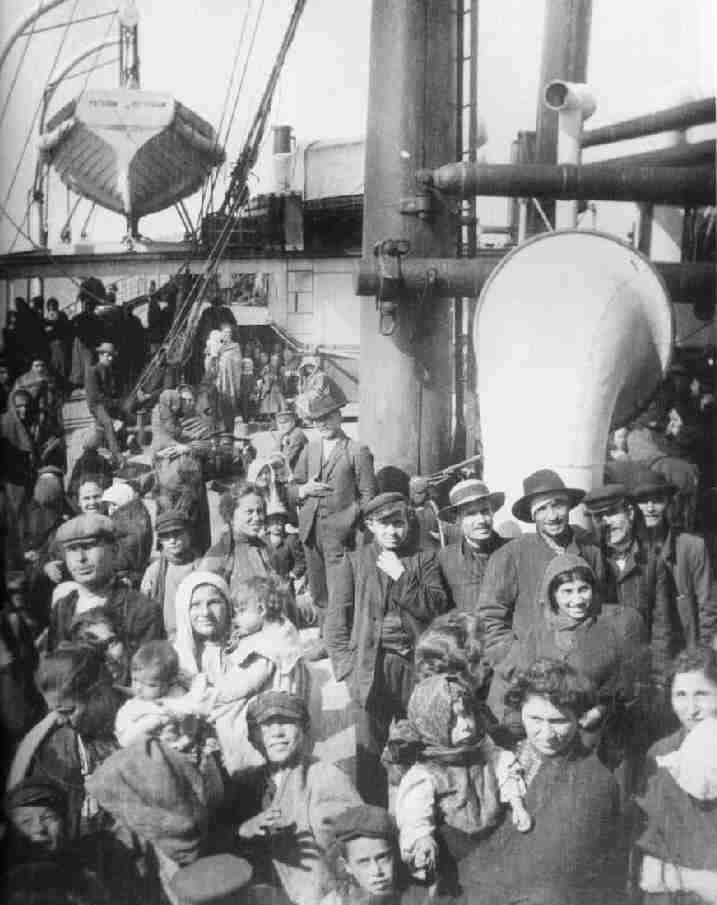
Figure 1.-- Technological developments revolutionized oceanic travel, reducing the cost of reaching America. The steel steamship service after the Civil War could be a very rough passage in steerage, but it was faster and safter than had been the wooden sailship crossings before the Civil War. Both American indusrial corporations, railroads, and steamship companies promoted emigration. Many of these factors came together in the late 19th century explaining the sharp surege in emigration from Europe. Here the "SS Potdam" is arriving in New York harbor. Source: Culver Pictures
|
|
The reasons that people came to America were quite varied. Various factors affected different ethnic and the factors varied over time. Religion was an important factor. Many of the early English settlers were religious disidents. Religion tended to restrict emigration from southern Europe for many years. Tsarist pgroms frove many Russian and Polish Jews to America. Political supression was a factor. The failure of the liberal 1848 revolutions caused some to dispair of political reform in Europe. Even more important, especially after the Civil war was the supression of minority ethnic groups was another cause of emigration. The first such group was the Scotts-Irish, but other ethnic groups supressed by Russians and Austro-Hungarians followed in their wake. For many subject people, avoiding compulsory military conscription was a strong motivating factor. Economic opportunity was another strong factor. The discovery of gold attracted some, but most emigrants came for more prosaic reasons. The American frontier offered land and after the Civil War, America's expanding industrry offered jobs. Famines and declining ecomomic conditions were another factor. Technological developments revolutionized oceanic travel, reducing the cost of reaching America. The steel steamship service after the Civil War could be a very rough passage in steerage, but it was faster and safer than had been the wooden sailship crossings before the Civil War. Both American indusrial corporations, railroads, and steamship companies promoted emigration. Many of these factors came together in the late 19th century explaining the sharp surege in emigration from Europe.
Religion
Religion was an important factor. The colonization of America began during the European religious wars and terrible acts of persecution. Many of the early English settlers were religious disidents. The French, Portuguese, and Spanish banded disidents from the colonies. There were event attemots to ban conversos. Here the Inquisition played a major role. The Fremch banned Hugenoughts. The English Pilgrims sailed suretiously to avoid any attempt by King James to stop them. Once established the Crown accepted them and then with the Civil War, the colonists were basically on their own for an extended period. The Pilgrims and other desidents werte not advocates of religious freedom. They wanted to replace the estanlished Church of England with their "pure" form of Christianity. A characteristic of Protestantism was the generation of multiple chirches. This was the an almost inevitable result of doing away with priests and incouraging individuals to study the Bible. Thus religious freedom was the ebd result. And this gradually was extended to Catholics and Jews. Maryland was founded in part for Catholics. And more Catholics were added to the American religious mic when the United States purchased Louisiana (1803). New Orleans was an important city and largely Catholic. The first Catholics to arrive in large numbers were the Irish, but they were fleeing destitition and famine and not religious persecution which all existed in British controlled Ireland (1840s). Religion sentiment elsewhere in Europe tended to restrict emigration from southern Europe for many years. Catholics were at first hesitant about Protestant America. Southern Europeans did eventually join the emigrant flow, but not for religious reasons. Small numbers of Jews arrived in America during the 19th and 19th centuries. This changed in the late-19th century. Horific Tsarist pogroms and others forms of persevution drove many Russian and Polish Jews to America.
Political Repression
Political supression was a factor. The failure of the liberal 1848 revolutions caused many to dispair of political reform in monarchial Europe. Germans in particular fled to America. Europe would continue to be dominated by the great imperial powers (Austria, Germany, Ottomon, and Russian). This is what President Lincoln was reffering when he raised the question of if a semocratic republic "so conceived and so dedicated, can long endure" in the Gettsburg Address (1863).. America was at the time the only significant republic. Political developments varied greatly in these empires. Russian was an absolutist state, but even in the Austrian and German empires there were limitations on political expression. It is no accudent that Karl Marx wrote Das Kapital in London nd not in Germany. The press was controlled to varying degrees. Political repression was especially pronounced for individuals associated with ethnic minorities.
Supression of Ethnic Groups
Even more important, especially after the Civil war was the supression of minority ethnic groups was another cause of emigration. The first such group was the Scotts-Irish, but other ethnic groups supressed by Russians and Austro-Hungarians followed in their wake. It is difficult to sort out the motivations in many cases. Much of it came from the Russian and Austro-Hunagrian Empire. Certainly economic conditions were a factor in both empires. Yet rlatively few Russians came from Russia and relatively few Austrians and Hungarians cme from Austro-Hungary. The great bulk of the immigrants were the subject people in the empires. Here a good example is Serbia. Most of the Serbs who emigrated were from Austria-Hungary and not Serbia itself. This of couese is not to say that economic conditons were not very important. They clearly were. The immigrant group which came in the larget mumbers were the Italians and this camed fter unification (1861).
Military Conscription
For many subject people, avoiding compulsory military conscription was a strong motivating factor. This vried from country to country. Firced conscription into the Tsar's Army might be for 30 years. This was essentilly a death sentence as a conscripted youth might never see his family again. And after 30 years, many conscripted soldiers did not return home.
Economic Opportunity
Economic opportunity was another strong factor. The discovery of gold attracted some, but most emigrants came for more prosaic reasons. The American frontier offered land and after the Civil War, America's expanding industrry offered jobs. This was drove mny immigrants in the late-19th and early-20 centuries. It is what drives many immigrants today.
Economic Conditions
Famines and declining ecomomic conditions were another factor. There were in many European countries high birth rates and rising populations. A factor here was advances in health care. Agriculture productions was not keeping up with the expanding populations. Periodic crop failures often acted to increase emigration.
Tecnological Advances
Technological developments revolutionized oceanic travel, reducing the cost of reaching America. The steel steamship service after the Civil War could be a very rough passage in steerage, but it was faster and safer than had been the wooden sailship crossings before the Civil War. Prospective emigrants could purchase passage in the late 19th century for as little as $25-35 per person. The passage could be 8-20 days, deending on the route and vessel.
Promotion
Emigration was being strongly promoted by the late 19th century. Here the U.S. Government was not involved. But industrial America was very much involved. American indusrial corporations, railroads, and steamship companies strongly promoted emigration. Agents were dispatched to Europe to recruit new migrants. Many of these factors came together in the late 19th century explaining the sharp surege in emigration from Europe.
HBC

Navigate the Boys' Historical Clothing Web Site:
[Return to the Main U.S. immigration page]
[Return to the Main U.S. country page]
[Introduction]
[Activities]
[Biographies]
[Chronology]
[Clothing styles]
[Countries]
[Economics]
[Essays]
[Bibliographies]
[Contributions]
[FAQs]
[Glossaries]
[Images]
[Links]
[Registration]
[Tools]
[ Boys' Clothing Home]
Created: 5:20 AM 9/5/2006
Last updated: 5:25 PM 10/6/2009