NAZI-Soviet Non-Agression Pact: Stalin's Calculations
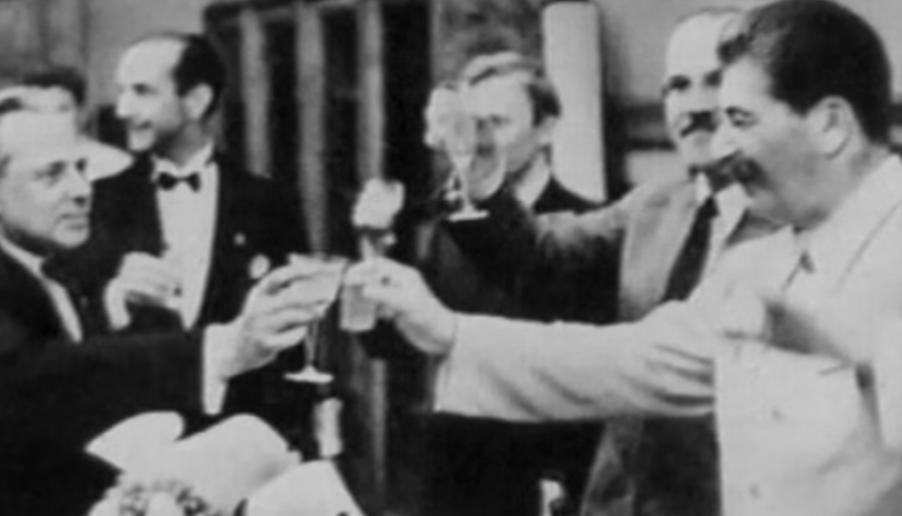
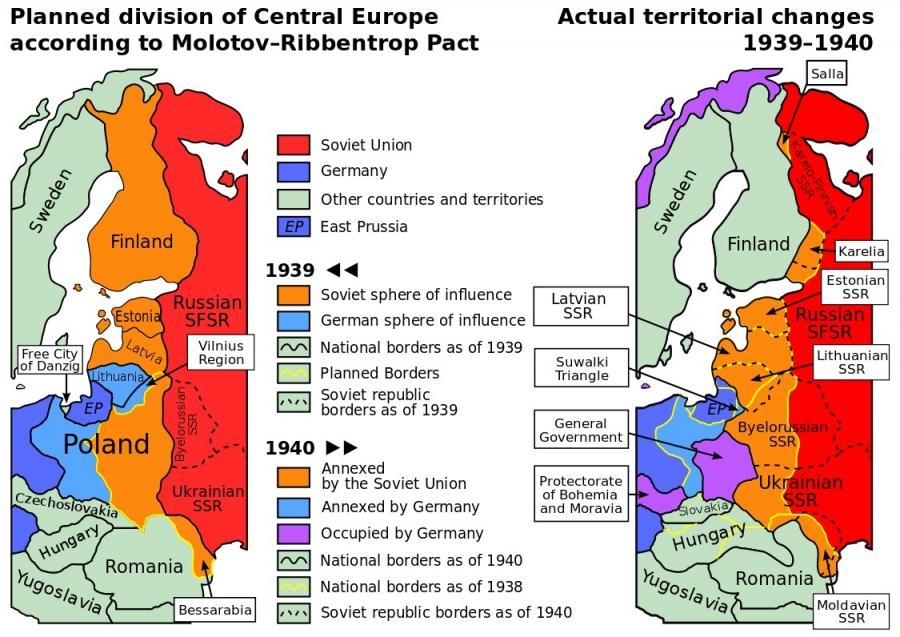
Figure 1.-- Stalin and Molotov were very pleased with the Molotov-Ribbentrop Pact that they negotiated which partioned Europe with the NAZIs. Days after their Pact was sihned, NAZI and Spviet armies began invading neigboring countries. Stalin was so pleased with the Pact and the territory it enabled him to conquer that he susequently decided that the alliance should be expanded and deepened so that they could partitiin areas outside of just Europe. And he wanted to join the Axis. Hitler was opposed, but he did not want Stalin to know he was opposed, so he simply delayed a response. | |
Western historians constantly refer to the affect of Munich on Stalin's psyche. This is undoubtedly true, although there is no way of knowing just what went through Stalin's mind. Even his cloest associates were often not sure and of course there is no memoir, not that they would have been very revealing had they been written. In fairness, however, we often do not know what the calculations Roosevelt was making. We can only guess at Stalin's calculations. Munich was undoubtedly a factor. Another factor was Stalin's suscpicious nature. He not only believed that the Allies were unreliable, but their purpose was to push im in a war with Germany. Thus an arrangement with Hitler would deflect the German armies west. In effect, Stalin was doing to the Allies what he thought the Allies were trying to do to him. Now as President Roosevelt pointed out, a German defea of France would be disastrous for the Soviet Union. Stalin's calculation was, however, that war in the West would not end in a few days. Most at the time credited the French army as a powerful force. Stalin would not have imagined that the French would collapse within only 5 weeks. Rather he reasoned that war in the West would significantly weaken the Germans. Also Stalin had no idea how much his purges had weakened the Soviet military. He had spent vast sums in building the largest army and air force in the world. And as a result of the agreement with Hitler, he was able to push the Soviet bounfaries west, providing a buffer around the Russian heartland of the Soviet Union. In fact even though the NAZIs in Barbrossa penetrated to Lenningrad and Moscow, most of the fighting in the East was in the Balics, White Russia, Poland, and the Ukraine and not in Russia itself.
The next target was Czecheslovakia which had beeen created by the Versailles Peace Treaty. After the Anchluss, Hitler began to escalate his tirades against Czecheslovakia, claiming that the erhnic Germans in the Sudetenland were being mistreated. The NAZI rearmament program, the remilitarization of the Rhineland and the Anchluss with Austria came as a shock to Czecheslovakia. Even more so, the lack of response from Britain and France. The Czechs who had defensive alliance with France were prepared to fight. Even with the Anchluss, many Europeans chose to see the NAZI actions as domestic German matters. This changed with Hitler's next target--Czecheslovakia. Hitler in 1938 demanded the Sudetenland in Czecheslovakia which had a minority German population. Neville Chamberlin, the British Prime Miniister mused how terrible it was that war should be threatened by a "... quarel in a far away country by people of which we know little." A prominent member of the British parliament displayed even more ignoramce when he told the press, "Why should we bother with those gypsies in the Balkans?", meaning the Czechs who were of course not located in the Balkans. In the end, The British and French gave in at talks held in Munich. Chamberlain flew back to London and stepping off the plane waved the agreement signed ny Herr Hitler which he assured the waiting repoters guaranteed "Peace in our time." Churchill was apauled. Most British anf French people were releaved. One European leader, Soviet Marshall Stalin, who was not at the conference drew the conclusion that the British and French could not be trusted as potential allies against Hitler and that they were trying to engineer a conflict between Germany and the Soviet Union.
Impact of Munich on Stalin
Western historians constantly refer to the affect of Munich on Stalin's psyche. This is undoubtedly true, although there is no way of knowing just what went through Stalin's mind. Even his cloest associates were often not sure and of course there is no memoir, not that they would have been very revealing had they been written. In fairness, however, we often do not know what the calculations Roosevelt was making. We can only guess at Stalin's calculations. Munich was undoubtedly a factor. And as the Allies proved when the NAZIs attacked Poland (September 1939), they were not reliable Allies. The French were unwilling to attack east outside the protection of the Maginot Line. The French reaction in World war II was very different to the Russian reaction in World War I when the Germans attacked France.
Suspicious Nature
Another factor was Stalin's suscpicious nature. He not only believed that the Allies were unreliable, but their purpose was to push im in a war with Germany. Thus an arrangement with Hitler would deflect the German armies west. In effect, Stalin was doing to the Allies what he thought the Allies were trying to do to him.
Anticipation of a Lengthy War in the West
Now as President Roosevelt pointed out, a German defea of France would be disastrous for the Soviet Union. Stalin's calculation was, however, that war in the West would not end in a few days. Most at the time credited the French army as a powerful force. Stalin would not have imagined that the French would collapse within only 5 weeks. Rather he reasoned that war in the West would wage for months if not years and significantly weaken the Germans.
The Purges
Also Stalin had no idea how much his purges had weakened the Soviet military. He had spent vast sums in building the largest army and air force in the world and equipping it with modern weaponry. But then he murdered or commited many of the best minds in the military to a slow death in the Gulag. Stalin's Terror purges desvestated the Red Army, Air Force, and Navy. He did not think that there was an immediate danger of a German invasion in 1941 He anticipated the Red Army and Air Force, however, performing much better if the NAZIs invaded then they at first would when the Germans struck.
Western Buffer
As a result of the agreement with Hitler, Stalin was able to push the Soviet bounfaries west, providing a buffer around the Russian heartland of the Soviet Union. In fact even though the NAZIs in Barbrossa penetrated to Lenningrad and Moscow, most of the fighting in the East was in the Balics, White Russia, Poland, and the Ukraine and not in Russia itself. The benefits of this buffer have been debated by military historians. Some argue that by pushing the Soviet boundaries west that Stalin bought more land and space in which to dekay the NAZIs. Other military experts argue that the Red Army had well prepared defensive positions along the old Soviet border and that Stalin by moving the Red Army west out of these well prepared positions exposed the Red Army and made it vulnerable to the NAZI Blitzkreieg.
No one knows with any certainty what was Stalin's thinking. Hitler's thinking seems more clearly apparent and his options more limited. It seems to us that that from Stalin's point of view that the Molotic-Ribbentrop Pact was a great success. Where he wanted to go after the War began and the German success in the West (whch he helped with) is an open question. We believe that he was shocked with the German success. A range of authors sugget a range of options that were available to him, ranging from expanded coopearion to war. Some believe he was preparing an invasion. We see no evidence of this. And Stalin appears to have been convinced that Hitler would never attack as long as Britain still continued the War. He was aware that Hitler had over and over again maintained that the Kaiser's great mistake in World War I was waging a two-front war. There were many alteratives available to Stalin. Hitler sappear to have already made up his mind. Stalin had a range op options as he was convinced that a German attack was not eminent.
A Russian reader has provided his assessment of the NAZI-Soviet Non-Agression Pact. He discusses many of the same issues that we present here. It is interesting to view a Russian view of the Pact. Our reader makes many valid points, although we take issue with some of his assessment.
CIH -- WW II

Navigate the Boys' Historical Clothing Web Site Baltic Pages:
[Estonia][Latvia][Lithuania][Prussia]
Navigate the CIH World War II Section:
[Return to Main NAZI-Soviet Non-Aggression Pact page]
[Return to Main Soviet communism page]
[About Us]
[Aftermath][Biographies][Campaigns][Children][Countries][Deciding factors][Diplomacy][Geo-political crisis][Economics][Home front][Intelligence]
[POWs][Resistance][Race][Refugees][Technology][Totalitarian powers]
[Bibliographies][Contributions][FAQs][Images][Links][Registration][Tools]
[Return to Main World War II page]
[Return to Main war essay page]
[Return to CIH Home page]
Created: 7:41 AM 12/12/2005
Last updated: 5:42 AM 9/12/2008