
The Stalinist Era: The Ukranian Famine (1932-33)
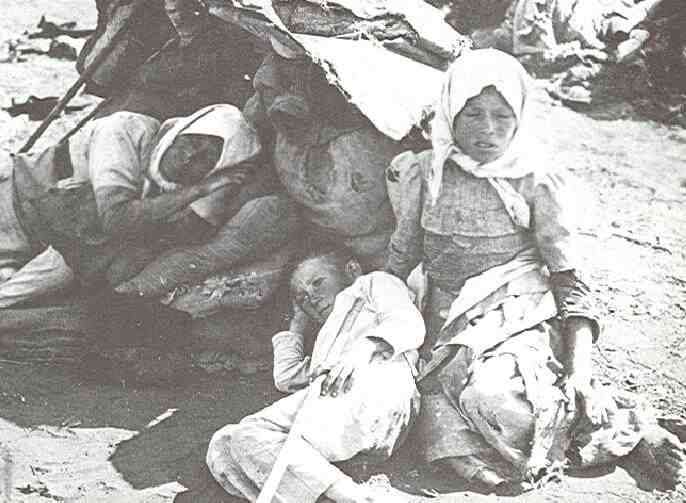
Figure 1.--Millions died of starvation during the Civil War which disrupted agriculture. The situation got much worse in 1921 when a drought further reduced harvests. Millions of Russians were saved when the Blosheviks after winning the Civil War allowed relief supplies to reach stseving peasants. Most of the relief supplies came from America. A decade later Stalin engineered a famine in the Ukraine in which millions died. Soviet officials attempted to keep the famine from the Western press and no relief effort was permitted.
|
|
One of the greatest crimes of the Stalinist era was horific famine in the Ukraine. The famine area included both the Ukraine and the Soviet northern Caucasus, as well as Russian areas in the lower Volga River basin. Famines are historically primarily the results of natural events such as drought, heat, diseases, insect infestations, and other natural causes. The Ukranian famine was primarily caused by Stalin's program of collectiving Soviet agriculture, especially the forced collectivization of the Ukraine. The Ukraine had been the bread basket of Russia. It was the prize sought by the Germans in two world wars. The rich, well watered soil made the Ukraine the most productive agrivcultural area of the Soviet Union. Two issues merged which resulted in dissaster for the Ukranian people. Not only did the Ukranian peasantry resist collectivization, but there was a strong Ukranian national spirit, especially in the western Ukraine. Stalin was determined to both bring agicultural under central control, but to crush Ukrainian nationalism at the same time. Stalin not only used the famine to crush the spirit of the Ukranian peole, but he also purged the Ukrainian intelligentsia. Stalin even purged the Ukrainian Communist party. At the cost of millions of lives, many of them children, the famine succeedded in breaking any organized redsistance on the part of the peasantry to collectivization. Stalin's purges also succeeded in smashing the Ukranian national movement. Stalin's actions in the Ukraine were not without costs beyond the deaths of Ukranians. Agricultural production plummeted. Soviet agricultural became one of the most inefficent agricultural operations in the world. Stalin bought Ukranian agricultural under his control through collectivization, he also signicantly reduced the output of Soviet agriculture.
Bread Basket
The Ukraine had been the bread basket of Russia. The Ukraine dominated the the Russian Empire/Soviet black soil region. The rich, well watered soil made the Ukraine the most productive agricultural area of the Soviet Union. The Ukraine is drained by the Bug, Dnipper, and Donets Rivers. The fertile steppe of the southern Ukraine is one of the most important wheat and other grain producing areas in the world. Before the Revolution, Ukranian harvests not only helped feed the Russians, but generated huge foreign currency earnings through export shipmebnts.
The Ukraine was the prize sought by the Germans in two world wars. In both wars the Germans temporaily achieved control of the Ukraine. The Bldheviks pledged peace as part of their program. After seizing power (October 1917) they approached the Germans seeking terms. They were horrified with the German demands, one of which was the separation of the Ukraine from Russuia and the creation of a German protecorate. The deteriorating military situation forced the Bolshevivks to accept the humilisting treaty. Only German defeat on the Western Front forced the Germans out of the Ukraine. The Armistice forced the Germans to abrogate the Treaty (November 11, 1918).
Ukranian nationalidsts following the outbreak of the Russian Revolution declared independence. German defeat on the Western Front, hoever, meant that the Germans were no longer a major foirce. The Civil War in the Ukrsain was a sometimes confused struggle between Ukranian nsationalists, the Red Srmy, the White Srmy under Deniken, and the Poles. This was also complicated by Germnan and French intervention. The Red Army eventually emerged victorious, although some of the Western Urkraine was annexed by the Poles. Millions died of starvation during the Civil War which disrupted agriculture. The situation got much worse in 1921 when a drought further reduced harvests. Millions of Russians were saved when the Blosheviks after winning the Civil War allowed relief supplies to reach stseving peasants. Most of the relief supplies came from America.
Soviet Agriculture
Agricultural production after impressive gains durng the NEP of the 1920s declined in the 1930s. This was in sharp contrast to rising industrial production and wholly the result of Stalin's decession to end individual peasant propretorship (1929-31). Some authors mauintain that all-out collectivization was instituted to finance industrialization. If this was the primary goal, it was one of thee buggest failures in Soviet history. Production plummeted meaning less income was available to finance industrislization. We do not fully understand Stalin's thought processes here. Perhsps he thought that collectivization would increase production. There may have been an element of idelogical purity involved. The organization of the collective proved useful in fighting the NAZI invasion. The principal reason, however, appears to be that private proprietors were an independent interest group outside his control and he wanted total control of not only the Sovet state, but of Soviet society as well.
Agricultural production after impressive gains durng the NEP of the 1920s declined in the 1930s. This was in sharp contrast to rising industrial production and wholly the result of Stalin's decession to end individual peasant propretorship (1929-31). We do not fully understand Stalin's thought processes here. There may have been an element of idelogical purity involved. The organization of the collective proved useful in fighting the NAZI invasion. The principal reason, however, appears to be that private proprietors were an independent interest group outside his control and he wanted total control of not only the Sovet state, but of Soviet society as well. The mechanisms used were brutal. Successful peasants were vilified as Kulaks. Most were forced into collectives others were deported to Siberia where many died. Resistance flared. Many peeasants slaughtered their livestock rather than turn it over to the collectives. [Wells, pp. 960-961] The Soviet livestock industry did not recover until well after World War II. Resistance was espcially pronounced in the. and was brutally supressed by the NKVD. The center of resistance was the Ukraine. There a terrible famine not only resulted, but was enginered by Stalin.
Brutal Methods
The mechanisms used were brutal. Successful peasants were vilified as Kulaks. Most were forced into collectives others were deported to Siberia where many died.
Resisistance
Resistance flared. Many peeasants slaughtered their livestock rather than turn it over to the collectives. [Wells, pp. 960-961] The Soviet livestock industry did not recover until well after World War II.
Ukranian Resistance
Resistance was espcially pronounced in the Ukraine. and was brutally supressed by the NKVD. The center of resistance was the Ukraine.
Depression in the West
Stalin's Great Famine by an accident of history coincided with the peak of the Great Depression in the West. While Stalin set out to destroy the Ukranian peasantry, Western countries reacted differently to the Depression which also caused widespread destitution and hunger. Americanns elected New York Govenor Franklin D. Roosevelt (November 1932). President-elect Roosevelt began assembling hiscBrain Trust and planning what would become the New Deal. He would not actually become president for four months and during this period the situation rapidly deteriorated and the country's financial system tetered on the verge of collapse would have caused even greater misery for the American people, about a third of wehich were already hungary and unemployed. Meanwhile in Germany, the people turned to a very different type of leader. Germany had been particularly impacted by gthe Depression because the economy had been so dependent on exports as well as American financing. While Roosevelt and the American people waited for the new administration, President Hindenberg in Berlin appointed NAZI leader Adolf Hitler Chancellor (January 1933). The NAZIs were not a majority party, but many unemployed Germans turned to the NAZIs and the Communists, losing faith in the democratic parties. A British diplomat and journalist, Garenth Jones. chronicled these developments. He wrote, "I saw hundreds and hundreds of poor fellows in single file, some of them in clothes which once were good, all wating to be handed out two sanwiches, a doughnut, a cup of coffeee and a cigarette." [Colley, p. 161.] He saw the same in Germany. There were many reporters obseving and reporting on the same bleak situtation in these abd other Western countries. What made Jones different was he then went east to the Soviet Union (March 1933). There the Soviet Government was elated with the economic crisis in the West, it seem to presage the collapse of capitalism which Marxists believed was inevitable. And it was not just the Soviets who promoted this idea. Many in West were attracted by Marxist ideology and believed it. Many believed that in cotrast to the dispair in their countries, the Soviet Union was full of well-fed workers and happy peasants. Soviet officals very effectively prevented reports from the Soviet breadbasket from leaking out to the West. And reports that did surface were often dismissed by Wesrernn Markists abnd even liberals. Jones proved to be a rare Western journalist who reported on the Great Famine.
Soviet Agricultural Quotas (1932)
Stalin's policy of all-out collectivization was design to gain control over the agricultural sector to finance industrialization (1929). Stalin achieved much of the cintrol he sought, bu the resuklt wwas a disastrous decline in agricultural productivity. This was not what was susposed to happen. Collectivizatuon was susposed to increase production. Both Marxist ideology and steps toward mechanjization made possible by colldctivization was expected to increase productivity. As neither Marxist ideologyb orc Stalin's policies could be questioned, blame had to be found elsewhere. And the blame was placed on the peasant, especially the Ukranian peasants. They were a convient target because they were already seen as a susoectv population. Despite the harvest short falls, Stalin raised Ukraine's grain procurement quotas by an astonishing 44 percentv (1932). his meant that there would not be enough grain to feed the peasants, since Soviet law required that no grain from a collective farm could be allocated to the collective members the offical quota was fully met. Stalin's quota decision and the methods he used to implement it condemned millions of Ukranian and other peasants to death by starvation.
One of the greatest crimes of the Stalinist era was horific famine in the Ukraine. The famine area included both the Ukraine and the Soviet northern Caucasus, as well as Russian areas in the lower Volga River basin. Famines are historically primarily the results of natural events such as drought, heat, diseases, insect infestations, and other natural causes. The Ukranian famine was primarily caused by Stalin's program of collectiving Soviet agriulture, especially the forced collectivization of the Ukraine. Stalin decided to raise the Ukraine's grain procurement quotas by 45 percent (1932). Here we do not know precisely why. Perhaps he thought the Ukranian Kulaks were attempting to sabatoge collevtivization. Perhaps he wanted to destroy a center of resistance to his authority. What ever the reasons, raising quotas so significantly at a time when production was declining meant thsat the Ukraine despite its productive agriculture woukd not be able to feed its own population. Soviet law required that a collective's production first be provided to the state to meet the quota set before any grain was provided to the collective workers. Here Party officils led by Lazar Kaganovich, the NKVD, as well as Red Army troops as well as Comosol youth were deployed to ensure the harvested grain was delivered to the state and no grain was held back. This meant that millions of peasant workers were thus condemned to starve. Collectives who duid not deliver their quota, which meant virtually all, were visited by the security forces. The grain was consfiscated. Home and other possible hiding plces were searched. The farmers were not even allowed to keep seed grain. Any one found taking grain, even small amounts, were executed or deported. Authorites often arrested those who did not appearing to be starving, assuming that they were stealing and hording grain. Peasants from villages without food were not allowed to leave. The NKVD and a system of internal passports prevented starning peasants from seeking food elsewhere. As people starved they often became insane or delusional before finally sucuming. Nor were there any efforts on the part of the Soviet Government to said those affected by the famine. Millions of Ukranians, many of them children, died in the famine. No one knows how many died. Historians estimate the death toll during 1932-33 at 6-7 million people. Some estimtes are as high as 10 million. The range of the estimates here are very large. There is no real way of knowuing. The only source of statistics is the Soviet Government, the very same Government which engineered the famine in the first place. It would be like asking the NAZIs to publically reveal how many Jews they killed.
Stalin's Goals
Two issues merged which resulted in dissaster for the Ukranian people. Not only did the Ukranian peasantry resist collectivization, but there was a strong Ukranian national spirit, especially in the western Ukraine. Stalin was determined to both bring agicultural under central control, but to crush Ukrainian nationalism at the same time.
Ukranian Intelligentsia
Stalin not only used the famine to crush the spirit of the Ukranisn peole, but he also purged the Ukrainian intelligentsia. Stalin even purged the Ukrainian Communist party.
Success of Colectivization
The famine engineered by Stalin succeedded in breaking both organized as well as passive resistance on the part of the peasantry to collectivization.
Ukranian Nationalism
Stalin was determined to crush all vestiges of Ukrainian nationalism which was not only strongly Catholic, but fundamentallu anti-Soviet. This was pursued not only by the devestating famine killing millions of peasahts,
a through purge of the Ukrainian intelligentsia, including the Ukrainian Communist party. he famine broke the peasants' will to resist collectivization and killing millions in thevprocess. Stalin's purges also succeeded in smashing the Ukranian national movement, leaving the Ukraine politically, socially, and psychologically traumatized.
Agricultural Production
Stalin's actions in the Ukraine were not without costs beyond the deaths of Ukranians. Agricultural production plummeted. Soviet agricultural became one of the most inefficent agricultural operations in the world. Stalin bought Ukranian agricultural under his control through collectivization, he also signicantly reduced the output of Soviet agriculture. This was mnot only a costly economic shift. The Soviets aldo had diffuivulty explaining the falling production. Communism was susposed to be a more efficent economic system. The Sovierts maintained that Communism was a more scientific economic system. The fact that agrivcultural production plumeted was difficult to explain.
The Soviet press of course was completely controlled by Stalin and the NKVD. They consistently under reported the extent of the famine. And the blame the poor harvests on sabatoge by the reputed Kulaks. The increase in grain quotas were not mentioned. Subsequent Soviet coverage tended to deny the Ukranian focus. The Soviet reporting is of course thus easily understood, an effort to minimize the tragedy and to disaasociate Stalin from any responsibility. This is of course understanable. What is not understandabke is reporting in the western media. Of course the Soviet authorities could limit access by the Westrn media. Given the dimensions of the suffering and killing, hiwever, they could not entirely prevent reports of the tragedy from leaking out to the West. What is difficult to understand is why the Western media, with only a few exceptions, seems to have cooperated with Soviet authorities in supressing news of the famine. Abnd this included many of the jost respected newspaper like the New York Times. One historian writes, "The failure of Western newspapers to do all that they could to inform their readers about conditions in Russia was never more apparent than during the Holodomor [starvations]. Although the home [Western] newspapers were aware of the travel restrictions placed on their correspondents at the start of 1933, there was no outcry from them. Moreover, while there were clues enough even before the travel ban that conditions were not satisfactory in the countryside and that there might be a food shortage, only the most conservative newspapers in the West gave the early reports of famine the attention they deserved. It was
almost as if the Western press itself was willing to accept a role in the (genocide) famine cover-up. The role of the New York Times in the dismal press coverage of the Soviet Union seems to have been especially onerous.
While the Times was (and is) widely regarded as one of the world's best newspapers, its reputation for accuracy and fairness was clearly not deserved in the case of its coverage of the Soviet Union between 1917 and
1933." [Crowl, p. 198.] A rare exception was Britih diplomat and journalist Gareth Jones.
Sources
Colley, Margaret Siriol. More than a Grain of Truth: The Biography of Gareth Richard Vaughan Jones (Newark, self published, 2006).
Crowl, James William. Anqels in Stalin's Paradise: Western Reporters in Soviet Russia, 1917 to
1937: A Case Study of Louis Fischer and Walter Duranty (Washington, DC: University Press of
America, 1982).
Wells, H.G. The Outline of History: The Whole Story of Man (Doubleday & Company: Ne York, 1971), 1103p.
CIH

Navigate the Children in History Website:
[Return to Main Soviet Stalinist era page]
[Return to Main mass killing page]
[Return to Main Communism page]
[Return to Main Ukranian history page]
[Return to Main specific war and crisis page]
[About Us]
[Introduction]
[Biographies]
[Chronology]
[Climatology]
[Clothing]
[Disease and Health]
[Economics]
[Freedom]
[Geography]
[History]
[Human Nature]
[Law]
[Nationalism]
[Presidents]
[Religion]
[Royalty]
[Science]
[Social Class]
[Bibliographies]
[Contributions]
[FAQs]
[Glossaries]
[Images]
[Links]
[Registration]
[Tools]
[Children in History Home]
Created: 5:47 PM 7/20/2004
Last updated: 12:27 AM 7/14/2013