
Greco-Turkish War (1919-22)
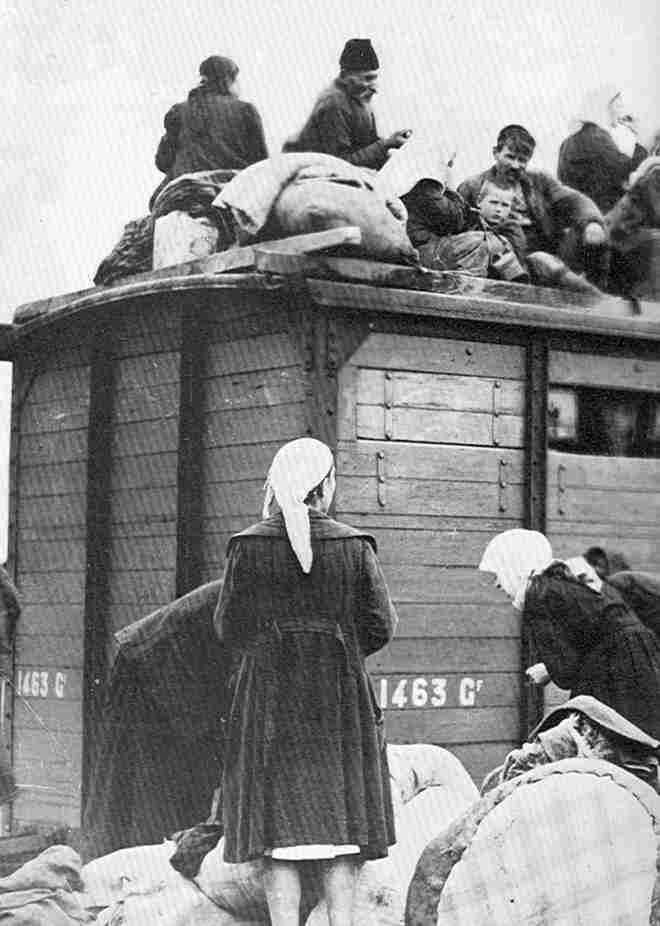
Figure 1.--The Greeks are being expelled from Turkish controlled areas. Some Greeks authors refer to this a genocide and claim large numbers of Greeks were massacred. Most historians believe tht the vast majority of Anatolian Greeks reached Greece safely, if impovetished.
|
|
The Ottoman Empire was made up of many nationalities. Even in the central Ottomon territory of Anatolia there were other natiinalities (Armenians, Greeks, and Kurds). Greece had reluntayly joined the Allies in World War I. Like Italy, they were offerred territorial rewards in exchange for their participation. King George?? had opposed war, but with Allied assustance a new government seized power and declared war. The Allies promised Greece eastern Thrace, the islands of Imbros and Tenedos, and parts of western Anatolia around the city of Smyrna. These were all areas with sizeable Greek populations. The Treaty of Sèvres end the war between the Allies and the Ottomon Empire. Provisions of the Treaty alloted all of these territories to Greece. Greek troops had after World War I occupied Smyrna (May 1919). Following the War, Ottoman general Mustafa Kemal (Kemal Atatürk) with other Young Turks in Ankara formed a new Turkish nationalist government and repudiated the Treaty of Sèvres. Atatürk organized an army to confront the Greeks. the Greek army moved into Anatolia to engage the Turkish Army before they attaked the Greeks at Smyrna (October 1920). The Greeks had the support of British Prime Minister Lloyd George. The Greek offensive was organized by Liberal government of Eleftherios Venizelos, but the Venizelos goverment lost power. Dimitrios Gounaris organized a government more favorably disposed to the monarchy. The British distrusted the King who had opposed Greece's entry into the War. Gounaris appointed monarchist officers to important commands, primarily because of their political sympathies. Many were inexperienced. King Constantine himself took personal command of the Greek forces at Smyrna. The Greeks advanced to the River Sakarya. They were only about 100km from Ankara (June 1921). Atatürk counter-attacked and drove the Greeks back at the at the Battle of Sakarya (August 23-September 13, 1921). The Greeks retreated to Smyrna. They requested aid from the Allies. The British refused to help the Greeks. Subsequently the Allies (Britain, France and Italy) agreed that the Treaty of Sèvres could not be enforced without military intervention which they were not willing to do and expressed a willingness to revise th Treaty. The Allies attempted to negotiate a ceasfire between the Greeks and Turks (March 1922). Atatürk was unwilling, insisting that the Greeks had to withdraw from Anatolia. He planned an offendive against the Greeks. The Turks defeated the Greeks at the Battle of Dumlupinar near Afyon (August 30, 1922). This opened the way to Smyrna. The Turks destroyed the city and massacred any Greek who was not evacuated, including civilians. News of the massacre at Smyrna caused a general exodus of Greeks from Anatolia, communities that had been established in ancient times.
Ottomam Empire
The Ottoman Empire was made up of many nationalities. Even in the central Ottomon territory of Anatolia there were other nationalities (Armenians, Greeks, and Kurds). The Ottomans from the mid-19th cebntury were no longer a major power. They were increasingly pressed by the Russians. Only differences among the great powers as to how to divide the Ottoman Empire kept it alive. The Crimea War (1854-56) was fought to prevent Russian advances toward thec Dardanalles.) After the Russo-Turkish War (1877-78), Germany and the Ottomans developed increasingly close economic and military cooperation. The Ottomans joined Hermany in World War I, seeing it as an opportunity to regain territory lost to the Russians.
Anatolia or modern Turkey is often referred to as Asia Minor by the Greeks. It is one of the most contested areas in human history. It has been at times controlled and influenced by the Greeks. The Greek siege of Troy occurred at the dawn of recorded history. The Persians threatened Greece when they conquered Asian Minor. Alexander later Helenized the region after defeating the Persians. The Ottomans completed the conquest of Asian Minor when Constaninople fell in 1452, but large numbers of Greeks continued to live in Asia Minor, especially in coastal areas until the 1920s. A war between Greece and Turkey following World War I resulted in a Greek defeat. Much of the Greek population left with the retreating Greek Army or in the repressions conducted by the Turks after the war. A treaty signed in 1923 reguarized forced excahnges of Greeks and Turks between the two countries.
King George was assasinated (1913) just before the outbreak of World War I. King Constantine suceeded his father. When World War I (1914-18) broke out, Constantine was inclined toward the Germans, but refused to commit himself publically. The King, despite his personal feelings, did not want his country to enter the War. He especially resisted joining the Allied side. He had family tie to both sides. He was the Kaiser's brother-in-law. He was also a nephew of the English Queen Mother Alexandra. He fully expected the Central Powers to win the War. The British considered him a pro-German weakling and nicknamed him "tino". Prime Minister Venizelos felt differently. Venizelos had led the Greeks in the Balkan Wars which preceeded World War I. He thought that the Allies would win the war, and that Greek participation would yield benefits against Bulgaria and Turkey. Greeks in 1914 were divided about what they should do. When Bulgraia and Turkey joined the Central Powers, the potential stakes rose for Greece. It was likely that the end of the war would bring major border changes. If the Central Powers won, Bulgaria might claim land in Macedonia and Thrace, at the expense of Greece. On the other hand, if the Allies won, Bulgaria and especially Turkey would lose territory. There was thus considerable support for the Allies in Greece, especially after the Turks joined the Central Powers in the War. An oposition government was formed which was recognized by Britain and France. King Constantine was forced to abdicate in favor of his second son, Prince Alexander.
The Allies and Central Powers offered enducements for the Balkan countries to enter the War on their side. The Balkan countries had fought wars just before World War I. The principal targets were Turkey and Bulgaria. Thus when those two countries joined the Central Powers it helped build support for the Allies in Serbia and Romania. Serbia of course had already been attacked by Austria. This World War I in the Balkans was a continuation of the wars begun earlier, but on a wider scale. Greece which had participated in the Balkan Wars, was more reluctant to enter World War I. This was primarily because of King Constantine. King Alexander with the support of Greek nationalists joined the Allies in the War. Like Italy, they were offerred territorial rewards in exchange for their participation. The Allies promised Greece eastern Thrace, the islands of Imbros and Tenedos, and parts of western Anatolia around the city of Smyrna. These were all areas with sizeable Greek populations.
Allied Landings
Greek forces with the authorization of the Supreme Allied War Council occupied Adrianople (Edirne), Bursa, and Smyrna (Izmir). The Greeks landed with the support of an Allied flotilla (summer and fall of 1919). The Turks did not resist and the Greek forces advanced to Usak, 175 kilometers inland from Izmir. There was a substantial Greek population in western Anatolia.
Treaty of Sèvres (August 10, 1920)
The first attempt to formally end World War I for the Ottoman Empire was the Treaty of Sèvres (August 10, 1920). This was the peace treaty between the Entente (Allies) and Associated Powers and the Ottoman Empire. As at Versaiiles, the Allies dictated the terms, dismembering the Empire. The Allies used the same approach as with the Austro-Hungarian Empire, dividing up the Empire into ethnically based nation states. The Ottoman Empire had already lost a great deal of territory as the result of largely British offensives, one through Paledstine and Syria and the other through Iraq. The Hejaz (Saudi rabia) was lost through the Arab Revolt supported by the British. An outline for the treaty had been reached at Sanremo Conference (April 1920). Several new states were to be created under the terms of the Sèvres Treaty. The Hejaz (Saudi Arabia) and Armenia were to become independent countries. Kurdistan was also to become independent and would include Mosul. The British and French during the War had reached the Sykes-Picot Agreement (February 1916). This was incorporated into the Treaty. The territories involved were made League of Nation Mandates. Mesopotamia (Iraq) and Palestine were assigned to the British. Lebanon and Syria were assigned to the French. The Dodecanese Islands and Rhodes which had been occupied by Italy in an earlier war with the Ottomans (1911) and small areas of southern Anatolia were to become Italian territory. Thrace and Western Anatoliaincluding İzmir/Smyrna would become Greek territory. The critical Bosphorus, Dardanelles and Sea of Marmara connecting the Black Sea and Mediterranean were to be demilitarized and internationalized. The Ottoman Army was restricted to a maximum 50,000 men. The Ottoman Navy was restricted to 7 sloops and 6 torpedo boats. The Ottomans were prohibited from creating an air force. Sèvres was near Paris and where the Treaty was signed. At the time the Allies occupied the Ottoman capital (İstanbul) and other areas of Turkey. The Ottoman Parliament had been forced to close earlier (April 1920) and thus could not ratify the Treaty. Sultan Mehmed VI Vahdeddin did not ratify it, but he was a figurehead. The Turkish republican movement refused to ratify the Treaty. The republican movement was led by Mustafa Kemal Pasha who was the president of the Turkish Grand National Assembly based in Ankara which was not occupied by the Allies. The republican victory in the Turkish War of Independence made the Ankara republicans Tyurkey's real government. The Allies offered to adjust the Treaty, but the Ankara Government rejected it entirely.
Megali Idea
Some Greek nationalists persued the dream of the Megali Idea. This was an expanded Greek state which would include western Anatolia, Constantinople, and the Dardanelles. Constantinope of course was the capitalm of the Byzantibe Empire and thus a city of great historical importance to the Greeks. Greek troops had after World War I occupied Smyrna (May 1919) and Thrace, the last remaining European territory of the Otooman Empire.
Young Turks
Following the War, Ottoman general Mustafa Kemal (Kemal Atatürk) with other Young Turks in Ankara formed a new Turkish nationalist government and repudiated the Treaty of Sèvres. Atatürk organized an army to confront the Greeks.
1920 Fighting
The Turks did resist the Greek advance into Anatolia. The initial fighting was inconclusive (1920).
King Constantine Returns
King Alexander died as a result, of all things, a monkey bite (1920). His younger brother Paul refused the throne. A national plebecite returned Constantine I to the throne by a huge margin, although the Allies disapproved because the King had opposed Greece entering World War I.King Constinine had opposed Greece's entry into World War I. He was esentially deposed by the British to get Greece into the war. The Allies objected to Greece's reinstatement of King Constantine. Prince Andrew, the father of Britain's Prince Philip, was almost shot by the Greek Government in the recriminations that followed the War.
Greek Offensive
the Greek army moved into Anatolia to engage the Turkish Army before they attaked the Greeks at Smyrna (October 1920). The Greeks had the support of British Prime Minister Lloyd George. The Greek offensive was organized by Liberal government of Eleftherios Venizelos, but the Venizelos goverment lost power.
Dimitrios Gounaris
Dimitrios Gounaris organized a government more favorably disposed to King Constantine. The British distrusted the King who had opposed Greece's entry into the War. Gounaris appointed monarchist officers to important commands, primarily because of their political sympathies. Many were inexperienced. King Constantine himself took personal command of the Greek forces at Smyrna. The Greeks advanced to the River Sakarya. They were only about 100km from Ankara (June 1921).
1921 Fighting
The military situation changed in 1921. Turkish forces commanded by Ismet Pasha stopped Greek offensives twice at Inönü (January and April 1921). This prevented any further Greek advances. A third Greek offensive drive the Turks back to Sakarya Nehri, only 80 km from Ankara (July 1921). Here Atatürk took personal command. Atatürk counter-attacked and drove the Greeks back at the at the Battle of Sakarya (August 23-September 13, 1921). The Turks decisively defeated the Greek Army in a bruising 20-day battle. The Greeks retreated to Smyrna. Greek political developments alienated the British. The French and Italians withdrew from Anatolia (October 1921).
1922 Fighgting
The Turks launched an offensive against the Greeks (August 1922). The Turks call it the Battle of the Commander in Chief. The Turks soon reached Izmir, trapping retreating Greek soldiers. Many were evacuated by Allied ships. The Turks then turned to eastern Thrace. Here to get to the Greeks, the Turks faced Allied troops defending the Ottoman Government in Constantinople/Istambul and the Bosphorus/Dardanelles The French Government decided to withdraw its forces. The British prepared to defend their positions. The British did not, however, want a war with Turkey and suggested a compromise. Atatürk accepted the British-proposed truce.
The Allies
The Greeks y requested aid from the Allies. The British refused to help the Greeks. Subsequently the Allies (Britain, France and Italy) agreed that the Treaty of Sèvres could not be enforced without military intervention which they were not willing to do and expressed a willingness to revise th Treaty. The Allies attempted to negotiate a ceasfire between the Greeks and Turks (March 1922). Atatürk was unwilling, insisting that the Greeks had to withdraw from Anatolia.
Turkish Offensive
He planned an offendive against the Greeks. The Turks defeated the Greeks at the Battle of Dumlupinar near Afyon (August 30, 1922). This opened the way to Smyrna. The Turks destroyed the city and massacred any Greek who was not evacuated, including civilians. News of the massacre at Smyrna caused a general exodus of Greeks from Anatolia, communities that had been established in ancient times.
The Dardanelles
Atatürk after routing the Greek Army had the only sizeable military force in Anatolia. The British had a small military force in Constantinople and the
Dardanelles. A major military effort would be needed to maintain possession of the
Dardanelles and enforce the terms of the Treaty of Sèvres. Prime Minister Lloyd George was unwilling to mount a military effort to oppse the Turks. There was no appetite in Btitain for even a small war.
Treaty of Mudanya
The Armistice of Mudanya (near Bursa) ended the fighting between Greece and Turkey (October 1922). The Greek troops withdrew beyond the Maritsa River. The Turks occupied eatern Thracee. The Turks as part of the Armistice accepted a continued Allied presence on the straits and in Istanbul until a comprehensive peace settlement could be negotiated.
Treaty of Lausanne (1923)
Turkey's new republican goverment refused to accept the Sèvres Treaty the Allies attempted to impose (1920). The Turks demanded that the Greeks evacuate east Thrace, Imbros and Tenedos as well as Anatolia. Most of the ethnic Greeks in Anatolia had already fled or had been expelled by the Turks. The Greeks in the Treaty of Lausanne (July 1923) were forced to accept Turkish possesion of Anatolia and east Thrace. The Italians kept the Dodecanese Islands, which they had seized from the Ottomans before World War I (1912). The Turks accepted Greek possessionnof western Thrace. There was a substantial Turkish opulation in western Thrace, but Ataturk wanted to establish a homogenous Turkish state and western Thrace had a majority Greek population. The Treaty of Lausanne provided for the exchange of populations between Greece and Turkey. More than 1 million Greeks were expelled from Anatolia and about 0.5 million Turks were expelled from Greece. The Greeks in Constantinople and the Turks of western Thrace were exempted from the forced transfers.
Population Exchange
This was complicated by 500 years of living together and the high level of mixing of people and culture as well as the abscence of destinct ethnic differences between Greeks and Turks. The two countries decided to only consider religion in determining the people that were to be exchanged. Other matters such as language and ethnicity were decided to be irrelevant. Even religion was complicated. Not only Christians were excanged with all Muslims. Only the Greek-Orthodox Christians were exchanged with the Sunnite Muslims. Catholic and Protestant Greeks were not deported, but Turkish speaking Scilician Orthodox Christains were exchanged. There wre other exceptions, Turkish speaking Karamanlides were sent to Greece while Greek speaking Cretan Muslims were deported to Turkey. Substantial numbers of people were involved. Records released through 1928 indicate that Turkey deported nearly 1.2 million Greeks, most from Asia Minor. Greece deported about 0.4 million Turks. The Greeks deported 0.4 million Turks. After the excahnages, about 0.2 million Greeks remained in Turkey, mostly in Istambul. The Greeks of Istanbul and the Turks of Western Thrace had been exempted from the forced repatriations. Even as late as the 1940s, there were 0.14 million Greeks living in Istanbul.
The Greek-Turkish War followed World War I. The Greeks believed that they could defeat the Turkish Army. They could not. After several defeats the Greeks agrreed to exchange populations. The Armistice of Mudanya (near Bursa) ended the fighting between Greece and Turkey (October 1922). The Greek troops withdrew beyond the Maritsa River. The Turks occupied eatern Thracee. The Turks as part of the Armistice accepted a continued Allied presence on the straits and in Istanbul until a comprehensive peace settlement could be negotiated. Large areas of western Turkey were cleated of Greeks. Much of the Greek population of Anatolia left with the retreating Greek Army or in the repressions and forced resettlements conducted by the Turks after the war. The process created a huge refugee problem, especially in Greece which received the largest number of refugees. Thepopulation exchanges created a huge refugee problem--more than a million reople that had to be cared for and resettled. This would have been a problem for any country--but Greece was a very small country of less than 6 million. Thereare few instances un history where sucha small oubtry have had to care for so many refugees.
Republic (1924)
An attempt to demobalize the Army resulted in a miltary dictatorship. King Constantine was deposed again and forced into exile. Five commanders of the failed Anatolian expedition were arrested, found guilty of treason, and executed. Constantine's younger brother was crowned King George II in 1922, but was a pupet ruler under the military government. The refugees from Anatolia as well as the army were strongly anti-royalist and in 1924 a republic was proclaimed. King George had to leave the country. The Royal Navy helped the Greek royal family leave. It is at this time the young Prince Philip, Queen Elizabrth's husband, became a refugee. A Republic was proclaimed in 1924 and a democratic constition approved in 1927. Political instability followed, however, especially after the onset of the Great Depressiion in 1929.
CIH

Navigate the Children in History Website:
[Return to Main fall of empires page ]
[Return to Main Greek history page]
[Return to Main Turkish history page]
[Return to Main refugee page]
[Return to Main World War I page]
[About Us]
[Introduction]
[Biographies]
[Chronology]
[Climatology]
[Clothing]
[Disease and Health]
[Economics]
[Freedom]
[Geography]
[History]
[Human Nature]
[Law]
[Nationalism]
[Presidents]
[Religion]
[Royalty]
[Science]
[Social Class]
[Bibliographies]
[Contributions]
[FAQs]
[Glossaries]
[Images]
[Links]
[Registration]
[Tools]
[Children in History Home]
Created: 1:56 AM 7/22/2004
Last updated: 6:30 PM 10/31/2015