**
war and social upheaval: World War I Brest-Litovsk Peace Treaty
World War I: Brest-Litovsk Peace Treaty (1918)
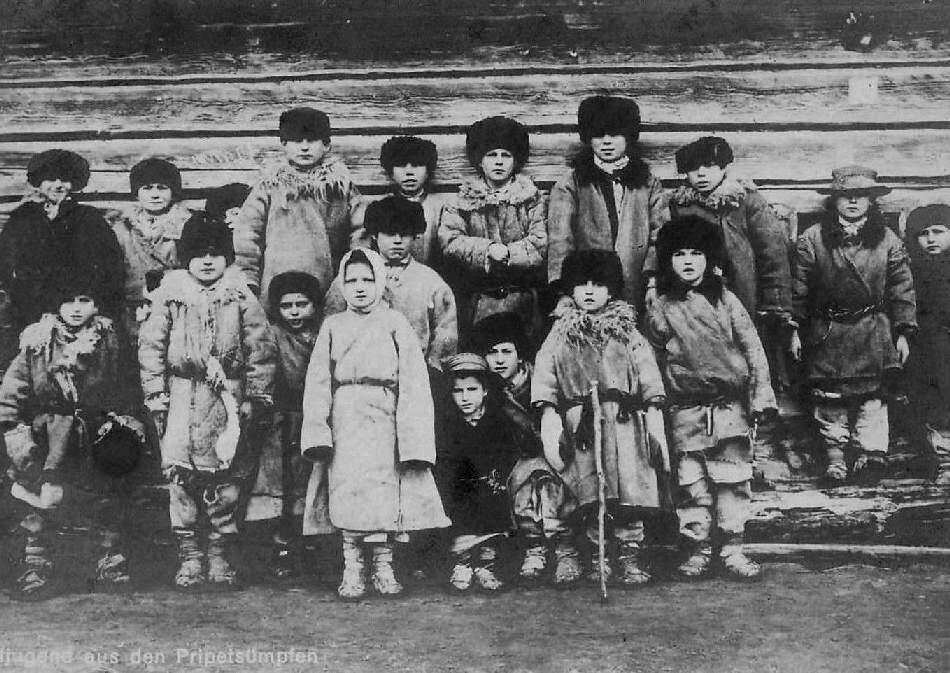
Figure 1.--German Armies penetrated deep into the Tsarist Empire (the Baltics, Poland, Belarus, and the Ukraine). With the collapse of Tsarist Armies, the forced the humiliating Treaty Of Brest-Litovsk on the Bolsheviks (March 1918). The Germans at Versailles were shocked when they were presented with terms the Allies demanded (July 1919). Allies negotiators reminded them of the much harsher terms that they had forced on the Russians at Brest-Litovsk--the harshest of all the World War I treaties. The Brest-Litovsk Treaty stripped the new Soviet state of all the western provinces of the old Tsarist Empire which meant both the most advanced areas (the Baltics) and the richest farm land (the Ukraine).
This photograph is the children in a German ethnic village, Pripetsumpfen. We think that it was located in what is now Belarus. It was printed as a postcard and sent home by a German soldier in the 82nd Reserve Division during 1916. The Division was part of the second large wave of new divisions formed by the Germans at the outset of the War. It ws first deployed in the Wet, but then shifted to the Eastern Front (April 1915). It fought in the Gorlice-Tarnów Offensive, crossing the San River and fighting around Przemyśl. They fought Battle of Lemberg (June 1915). The Divisiom continued to push east across the pre-War border between Austro-Hungarian Galicia (poland) and Russian Poland. They fought in the battles driving east that led to the German seizure of Brest-Litovsk (August) and Pinsk (September). They then set up trenchs near the Pripyat Marshes where it remained (until December 1917). After the armistice on the Eastern Front it was sent back to the Western Front where it faced the finl Allied push ending the War.
The poorly organized and led Russian Army suffered enormous losses. The Russian tied down large German armies in the Eastern Front, making it impossible for the
Germans to concentrate their strength against the French and British on the Western Front. The Russians finally cracked in 1917. Revolution broke out in Russia. The Bolsheviks seized control of the Russian government in November 1917. The Russian Army had collapsed in front of the Germans. The Russian people were starving as deperate. The Bolsheviks who had pledged bread and peace had no alternative but to seek terms. The Germans were thus able to force a humiliating peace on the Bolsheviks. The Bolsheviks had to ceede the Ukraine, its Polish territories, the Baltics (Latvia, Lithuania, and Estonia), and Finland. The Treaty of Brest-Litovsk was signed in 1918 between the new Soviet government and the Central Powers. Russia gave up land for peace. This thus allowed the Russians to withdraw from the war, although at enormous cost. The German public ws led to believe that victory in the West would soon follow. The Germans were able to withdraw substantail forces from the Eastern Front to reiforce the Western Front. The Germans rushed to attack before the America which entered the War in April 1917 could equip and train substantial forces which could come to the aid of the British and French. The Germans amassed their forces in 1918, hoping that they could break the Allies on the Western Front before the Americans who were arriving in France in force would be ready to fight. The Breast-Litovsk Treaty was after the collapse of the Western Front was annulled by the Armistice between Germany and he Western Allies.
German War Policy
The German people subjectd to theosses and injury of loved ones at te front and increaing privatin at home, began to lose faith in the War effort. There was increasing public support for a 'status quo' peace. This was not what Fueld Marshal Hindenburg wanted He was still intent on achieving the 'fruits of victory'. Hindenburg approved a plan to send Bolshevik rebolutionary, Vladamir Leninand ampel funds, in a sealed train from Switzerland to Russia. The Revolution ovrthrew the Tsarist Government. Months later the Bolsheviks seized control with Lenin at their head (November 7-8, 1917). He had szed power with a promise of bread and peace. He needed peace with Germany so that the Bolsheviks could use their forces to cement their cntrol ovr Russia and defeat the White armies that had begun to organize.
Collapse of the Eastern Front
The poorly organized and led Russian Army suffered enormous losses. The Russian tied down large German armies in the Eastern Front, making it impossible for the
Germans to concentrate their strength against the French and British on the Western Front. The Russians finally cracked in 1917.
Revolution broke out in Russia. The Bolsheviks seized control of the Russian Government in November 1917 from the Kerensky Government which attempted to honor Russia's war-time arrangements with the Allies and keep Russia in the War. The Russian Army, however, had collapsed in front of the Germans. The Russian people were starving as deperate. The Bolsheviks who had pledged 'bread and peace' had no alternative but to seek terms. Leon Trotsky, the Peoples Komissar for International Affairs on December 12, 1917 prepared to inform the Allies that Russia was withdrawing from the war. The Bolsheviks had proposed a peace formula to the Germans. It provided for peace with no annexations or monetary repriations as well as self determination for all nationalities. Trotsky demanded that the Allies join in the negotiations or face the consequences of continuing the war without Russia. For a brief period Trotsky thought ythat he had gained a great success. The first priority of the Bolsheviks after seizing power was to end the War. The Bolsheviks signed an Armistace ending the fighting on December 17, 1917
Negotiations (December 1917)
The Bolsheviks Soviets and representives of Germany and the other Central Powers opened at Peace Conference at Brest-Litovsk (December 22, 1917). The Bolshevik negotiator at the peace talks in Brest Litovsk, however, soon learned what the Germans had in mind. German General Hoffman explained how the Germans interpreted self determination. He maintained that Poland and other territories (occupied by German troops) desired to suceed from the Russian Empire. He further explained that some or all of these territories may decide to 'choose' union with Germany. The Germans were clearly thinking about annexing large areas of the former Russian Empire or setting up German-contoled puppet states. As a result, the talks soon reached an empase. The Bolshevik Goverment in Petrograd was shocked with the German demands. It was a situation of course they had helped created by undermining military discipline in the Tsarist Army. TheBolsheviks were incertain how to respons. The Left SRs and Bukharin's left Bolshevik faction wanted to launch a 'revolutionary' war. Lenin had, however, a realitic picture of the military situation. Reports from the front indicated that if the Bolsheviks decided to renew the War that the best that could be expected was an orderly retreat and a disaterous route was more likely. Lenin was thus in favor of acceeung to the German demands. His asessment was that only an immediate peace would enable the Bolshevik government to consolidate its power. He was, however, alone with this on the Central Committee. [Fischer, pp. 32-36.] Lenin's view was that if the Army could not fight then the only alternative was peace - and at any price. Trotsky offered a middle course - no war, but also no peace. He calculated that the Germans wanted auick peace so they could move forces weest. He rejected the idea of signing a shameful peace and would just withdraw from the war--esentially a permanent cease fire. Lenin seeing that most of the CentralCommittee were determined to wage a revolutionary war, decided to support Trotsky's no war no peace scheme as the best he could achieve. Lenin unlike his colleagues understood that if the Bolsheviks expended their limited military resources in a futile fight with the Germans, there would be little left to fight the Whites.
Renewed German Attacks (February 1918)
The Bolsheviks announced that they could not agree to the German terms, but would not renew the War (January 1918). The Germans were not having it. The Central Powers, however, renewed hostilities, focusing on the Baltics. The Germans essentially forced the Bolsheviks to agree to their draconian terms.
The Treaty (March 1918)
The Germans were thus able to force a humiliating peace on the Bolsheviks. The Treaty of Brest-Litovsk was signed by the the new Soviet government and the Central Powers (Austria-Hungary, Bulgaria, Germany, and Turkey) (March 3, 1918) Russia gave up land for peace. This thus allowed the Russians to withdraw from the war, although at enormous cost. The Bolsheviks had to ceede all of the wesrern provinces of the Tsarist Empire. These were the most advanced trritories wuth much of the industry (the Baltics) and the richest farmland (the Ukraine). The Russins lost the Ukraine, its Polish territories, the Baltics (Estonia, Livonia, Courland, Lithuania), Finland, and Bessarabia. While not immediately annex by the Central Powers, these regions came undr their control and were economically exploited in the continuing fighting on the Western Front. Russia was also forced to cede Ardahan, Kars, and Batum to Turkey. Ruusia lost some 1 million square miles of Russia’s former territory; a third of its population (55 million people), most of its coal, oil, and iron resources. It also lost much of its industry. stores; and much of its industry. Lenin bitterly lamebted that the settlement was the 'abyss of defeat, dismemberment, enslavement and humiliation'. The Russians had to pay six billion German gold marks in reparations. The Russians also had to pay reprations. Although the German were subsequently to complain about the severity of the Versailles Treaty, the Brest-Litovsk was by far the most onerous of all the treaties ending World War I.
Diktat
After the war the Germansould refere to the Versailles Peace Treaty as the Versailles Diktat, mening the termsere diktated by the allies and their only role was to sign on the ditted lines. They were not wrong about that. Only while complainng about this, they did not mention that this was precisely how they treated their defeated enenies, Romania and Russia. It is not that Germany objected to dictated peace treaties, it is just that they wanted to be doing the dictating.
German Public Opinion
The great German victory in the East cheered the German public. Nowit was a one-front War. Many Germans believed that now victory in the west would soon follow.
The Germans were thus able to withdraw substantial forces from the Eastern Front to reiforce the Western Front. The Germans rushed to attack before the Americans which entered the War in April 1917 could equip and train substantial forces which could come to the aid of the British and French. The Germans amassed their forces in 1918, hoping that they could break the Allies on he Western Front before the Americans who were arriving in France in force would be ready to fight.
The Germans as a result of the Treaty were able to shift forces West for what Hindeburg saw as the war winning stroke. Again the German came very close to cracking the Western Front wide open. Te llies, howeer, began to commit the American infantry and the front held. The Germans might have succeded had they shifted most of their troops in the East to the Western Front, but they kept very substantial forces in the East.
German Actions in the East
The Germans in addition to Brest-Litovsk, negotiated a treaty with the Ukraine. The Germans as the Brest Litovsk Treaty was about to be signed, entered Kiev (March 1). and despite the Brest Litovsk Treaty, marched into Russia itself. The Germans crossed the Volga and reached the Caspian Sea (September 1918). Yje Germans signed another peacty treaty with te Bolsheviks which recognized their additinal gains (August 27, 1918). The German government decided that they had enough land in the East. The Bolsheviks had essentially surrenddered. The German focus shifted West as the Allies launched a massive offesive. Germany signed an alliance with Finland and garisoned 150,000 men there that could have been much beter used to hold the Western Front. .
Bolshevik Ambassador (March 1918)
The Bresst-Litovsk Treaty was accepted by Trotsky (March 3, 1918). Only a few weeks later Adolf Joffe arrived in Berlin as the forst Soviet Ambassador.He caused quite a stir in a capital that still had hopes of cracking the Western front open and achieve victory in the West. He reused the normal diplomatic conventions of presenting his credentials to the Kaiser in person. He then invited the two preeminent Communist leaders (Rosa Luxemburg and Karl Liebknecht) to his maiden dinner party. They could not attend because they were serving prison terms for treason. Joffe energetically and with diplomatic protection began promoting Communism and revolution in the capital. He helped organize a revolutionary apparatus. It would be guided by Karl Radek--a close friend of Bolshevik leader Vladamir Lenin himself. Clandestine preparations were made for a Communist revolution when Germany would follow Russia into the Communist fold. His preparations would play an important role with the Communists rose up in Berlin after the war.
Western Front Armistace (November1918)
It was the Allies that launched the war-winnng offensive in the West--the 100 Day Camaign conducted primaril by the Bitish and newly arived Americans (August 1918). The Breast-Litovsk Treaty was after the collapse of the Western Front was annulled by the Armistice between Germany and he Western Allies. One of the conditions of the Armistace (Novermber 11, 1918) was the anulling of the Brest-Litovsk Treaty. The Bolsevik Government quickly followed suit (November 13).
Sources
Ruth Fischer, Stalin and German Communism: A Study in the Origins of the State Party (New Brunswick, New Jersey: Transition Books, 1982).