|
While vast battles were fought on both the Eastern and Western Front, it was at sea as Winston Churchil explained that the War could be won or lost in a single day. The German surface fleet, the pride of the Kaiser, which had played such an important role in turning the British against the Germans played only a minor role in the War. There were a number of small engagements including German shelling of fishing villages. The only major engagement was Jutland (1916). The German fleet performed well, but unable to overcome the numerical superiority of the Royal Navy's Grand Fleet. The small U-boat fleet, however, proved a major challenge to the British. Early in the War, U-boats sunk three British cruisers, astounding the public both in England and Germany. The Germans backed down unconditional submarine warfare when America protested the sinking of the Lusitania. The sinking of the Lusitania combined with the invasion of neurtal Belgium helped create the image of Germans in the American mind as modern day Huns. Making another effort to win the War, Germany in 1917 reimplemented unrestricted submarine warfare (March 1917), bringing America into the War (April 1917). The U-boat fleet succeeded in sinking 5,000 ships. That was an amazing 25 percent of the Allied merchant fleet. The Allies attempted to determine how to sink U-boats and developed the depth charge. It was, however, the introduction of the convoy system that defeated the U-boat. The World War I U-boat was really a surfacre vessel that could sumbmerge. Against esorted convoys, it had little chance of success. In the end the German Navy only served to bring Britain and America into the War, ensuring Germany's defeat. An embittered German naval office, Karl Donnietz, confined in a British POW camp in 1918 was already planning Germany's strategy in the next war. Under the terms of the Versailles Treaty, the Germans could had to surrender their fleet. The German High Seas Fleet sailed for Scappa Flow in 1919, but many of the officers scuteled their vessels rather than handing them over to the British.
Prince Wilhelm when brought to England to visit with his Grandmother Queen Victoria and cousins as a small boy was greatly impressed by the Royal Navy. He envied the English their navy and played a major role in promoting the construction of a German Highseas Fleet. [Massie] The German Navy was the pride of the Kaiser. It played an important role in turning the British and Americans against the Germans, but played only a minor role in the War.
Naval vessels incorporated major improvements in gunnery, armor, and propulsion. The battleship was the most technologically sophisticated weapon of the day. The Japanese demonstrated at the Battle ofcTashima (1905) that it was the big guns that would determine naval battles. This led to HMS Dreadnought--the first all big gun battleship. While the British introduced this innovation, it actually proved to be an advantage for the Germans. Dreadnought essentially rendered all existing battleships obsolete. This meant that the Royal Navy's advantage in ships was not as great after Dreadnought and that a German building program could begin to narrow the gap with the British. Other important ship types included bttle cruisers, cruisers, destoyers, and motor launches. Merchant vessels were modified andcdeployed as Q Ships.
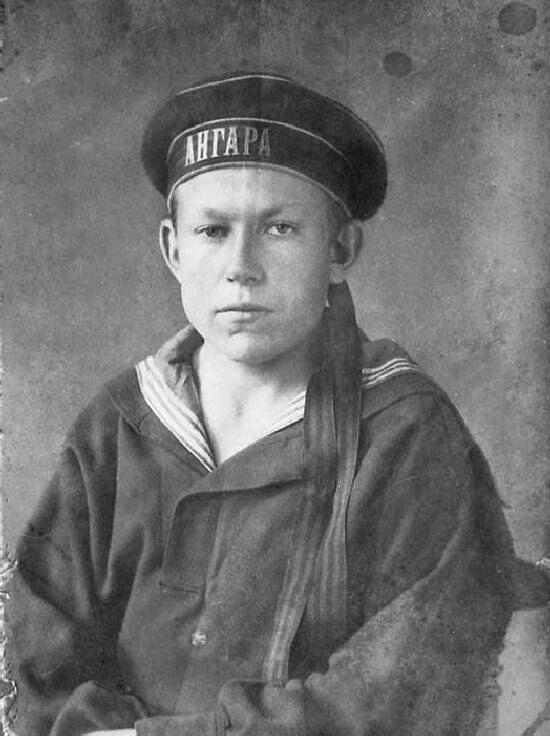
Life aboard these vessels for World war I sailors was little changed from the Napoleonic era. British sailors still received their rum ration and boys as young as 12 years old still comprised the crews. [Massie]
The British Royal Navy was still the dominant naval force of the day. The Royal Navy outnumbered the Germans in all important classes of surface vessls. The Royall Navy's numerical superority in capital ships made its control of the Sea virtually unassaiable. Britain's long navl tradition was also an important advantage. TheGerman High Seas fleet was the only force capable of mouning a serious challenge to the British. The German built the second most important highseas fleet with ships every bit as good if not marginally better than the British ships. The German Navy included mostly modern ships because their construction prgram was reltively recent. The German crews despite the lack of a naval tradition were well trained and highly motivated. The geography of Germany with coasts located on the Baltic and North Sea met that invariably the British and Germans would confront each ther in the North Sea. The Russian Navy was bottkled up in the Baltic. The French Navy was largely deployed in the Mediterranean. The Austrians had only a small navy which saw little action outside the adriaric. The Japanese Navy aided the Royal Navy in eliminating the German Pacific squadron and in seizng Grman colonies in the Far East and Pacific. The obly important navy that was not engaged in the War from an early stage was the United States Navy.
While the naval war is usually given little attention in World war I histories, the Royal Navy's blockade of Germany played a critical role in the War. It slowly sapped Germny's industrial power and civilan morale. And Brirain had a huge advantage, not only because of the much larger fleet, but because Britain’s geographic position provide a near perfect potion to use its larger fleet and control trade routes. One author writes, "England found herself simply in a brilliant strategic position at the outbreak of the war. The arteries of her commerce lay in the Atlantic, unreachable by the German fleet from the Elbe. The German trade routes[...] could easily be severed in the Channel and off Scotland. The North Sea, through which no trade route any longer went, became a dead sea. The strategic position was so perfect that England never once felt the need to improve her position throughout the entire course of the war [...]the primary mission of the English fleet consisted of defense of England’s strategic position, from which she controlled the important commercial arteries in the Atlantic ... ." [Wegener, p.14-15.]
The German strategy was to wittle way at tthe British hpoing to even the oodds. First Sea Lord Jackie Fisher pulled the Royal Navy back from cooastal patrols off German so that U-boats and other small boats could not sink a capital ship. Heligoland in the German Bight (southeastern corner of the North Sea) was the U-boat forward base. When the Germans found the Briutish had pulled back they began shelling Briiush North Sea ports to foirced the Royl Nzvy out. The only major fleet action was Jutlaznd, but it proved indecisive (1916). The German stragey if reducing th Btritih advantage faled.
Germany also attempted a commerce war using U-boats anbd Unrestructed Submarine Warfare, but after sinking Luisitania, the United Sates firced them to hinor cruiser rules (May 1915). When they resumeded Unrestructed Submarine Warfare (Fdebruary 1917), it broiught the United Sttes into the war.
The U.S. Navy joining with the Royal Navy played an important role in defeating the German U-boats -- the only serious threat to the Royal Navy. Thw Americans prvideding badly needed convoy escorts. The Germany Navy while technically effective disasatously impaired the German war effort. Germany's building of a High Seas Fleet was one of the reasons that public opinion on Bitain turned against Germany and that Britain entered the War. The U-boat campaign was a major reason that public opinion in America turned against Germany and that America entered the War. Despite the huge investment, the German Navy achieved nothing in return to counter balance the financial and foreign policy costs.
World War I was primarily fought in Europe and the important naval engagements were fought in European waters (the North Sea, North Atlantic, and Mrediterranean). Despite all the attention given to U-boats, the principal naval action was the Allied blockade of Germany and Austria-Hungary. And it was in the Northsea that the powerful British Home Fleet faced the Kaiser's Highseas Fleet. It was the greatest challenge to Britain since Trafalgur (1805). There was, however some naval actions in the Pacific. The British and Germans were unwilling to launch major attacks at the beginning of the War, but the Pacific actions came immediately after the declaration of war. The German East Asia Squadron sailed from its its base at Tsingtao so as not to be hemmed in by the Allied forces. Admiral Maximilian von Spee's goal was to get his ships home to Germany and he chose a Pacific route. He concentrated his squadron of two armored and three light cruisers at Pagan Island, part of the Marianas chain which were at the time a German possesion. Spee's squadron raided Allied islands as it made its east way southest across the Pacific. At the time Spee and many islands did not have wireless connections with the outside world. This complicated British efforts to engage the Germans. Spee detached cruisers to raid the cable station at Fanning Atol (near Tarawa in the Gilberts, now Kirabati). The next victim was Papeete on Tahiti (Fench Polynesia). Here they sank a French gunboat and a freighter before bombarding Papeete's shore batteries. There was no doubt here they were headed and the first engsgement between the Rioyal Navy abnd Adm. Spee's squadron occured oiff Chile--the Battle of Coronel (November 1, 1914). Admiral Spee's reltively modern ships defeated the British squadron of basically obsolete ships. The British lost two armored cruisers. A light cruiser and auxiliary cruiser had to withdraw. Some 1,500 British sailors (all hands aboard both cruisers) were lost. Only three German sailor were wounded. Superior German use of radio intercepts was a major factor in the German victory. The Admiral's Spee's odessy ended a month later at the Battle of the Falklands (December 1914). The Royal Navy destoyed Spee's squadorn. Sppe went down with his flagship SMS Scharnhorst, a name that would reappear in World War II. As off Coronel, there were no survivoirs iun the frigid waters. Only the light cruiser SMS Dresden and the auxiliary SMS Seydlitz surviuved the engagement, neither of which would make it back to Germany. The crew of SMS Dresden survived, among them the future Adm. Canaris. Britain had forged a naval alliance with Japan in the years before World War I, primarily as an ally against the expanding Tsarist Empire. Assistance provided by the British was an important factor in the Japanese victory in the Russo-Japanese war (1904-05). When World War I broke out the Japanese oportunistically joined with the British to attack German possessions in China and the Pacific. This gained Japan strategic islands in the south Pacific. Actually the Japanese had more in common with the authoritarian Germans than the democratic British, but it was the German possessions they coveted and they did not feel ready to challenge the powerful Royal Navy. After the German squadron in the Pacific was destroyed and the German possessions seized, the Japanese would eventually dispstch a destroyer force to aid the Allies in the Mediterranean. The Japanese obtained German concessions in China as well as German South Seas posseessions which were turned into naval bases that beacame major World War II battlefields. The ideological proclivities toward Germany would come into play in World War II and the opportunity to taken on not only the British and Dutch, but the Royal Navy as well. All three possessed valuable colonial possessions in the Southern Resource Zone (SRZ).
The real naval war in the Mediterranean was a Allies struggle against German and Austrian submarines. The German had no way bof getting surface ships to the Mediterranean and atbany rate their priomary objective was brealing the Bruitush North Sea blockade with a modern, but much smaller fleet than the British. Austria had onlky a small Adriatic floilla. Thus there were no classic fleet actions involving major warships. The Allied forces involved major British , French, and a few Itkalian warships. A Japanese destroyer force brought in to assist with patrols against the U-boats, but theunlearned none of the lessibs needed for Woeld war II.. Some fleet actions were anticipated because before the War Austraia nd Italy were allies and their combined fleet was somewhat of a threat because of Bruitain's need to have an niover-ppwering Hime Fkeet in the North Sea. Italy decided, however, to join the Allies leaving the Austrains unavle to mmatch Allied fire power and the Germans only able to send U-boats. For the Briish, the Mediterranean was important because of Suez wich was the their Imoerial life-line to India and the Far East as well as Middle Eastern oil. There was also the possibility of opening up the Dardenelles to help supply embattled Russia. This failed disastorously at Gallipoli (1915).
Unlike World War II the German effort to cut Briutain off from the food, nunitioins, and supplies it needed during Wkorld War I , was largely fought off the Western coast of Ireland. Ireland was at the time still part of the United Kingdom. And the naval command was at first called the Royal Navy's Coast of Ireland Command, omly later becoming the more familiar Western Approaches Command. But Western Aopopriaches it meant the the waters close to Brutish ports from North America and other overseas overseas posts. It was fought here instead of further out into the Atlantuc because if the limited range of German U-boats at the time. The shios were headed to Liverpool or the Channel ports and London. The U-boats posed a mortal threat because industrail Britain was dependenty on imkprts of food and raw materials. The Royal Navy was based in Queenstown on the southern Irish coast. It was a long and arduous battle. The United States forced the Germans to suspend unrestructed submarune ward=fare after the sinking of Lusitania (May 1915). This rendered the U-boats largely ineffective. Nut in a despertrate attempt to knock Brutain out if the War, the Germans resumed unrestructed submarune warfare. This brought America inti the War, but turned the U-boats into a mortal threat and the siunkings in the Westrern Aporiaxhes reached dangerousd levels. Fortunately for the Brtitish, the U.S. Navy was immediately available to join in the Western Approaches campaign. [Dunn]
America's entry into World War I was the deciding factor in the War. Here it was the American infantry that brike the dead lock on the Western Front. The Royal Navy and French blockade of Germany played a major role in undermining the German and Autrian economies and civilian morale. This was largely accomplished before America entered the War. America had the third largest navy in the world, second only to the British and German navies. The 300 warships of the American Navy only added to the effectiveness of the Allied blockade, but were primarily deployed in the North Atlantic to guard the sea lanes between America and the Britain and France. Especially important was guarding the troopships that delivered the American Expeditionary Force (AEF) to France. A few Navy vessels were deployed in the Mediterranean, but the bulk of the Navy was deploted in the North Atlantics. Only a few Navy vessels were sunk during the War. The cruiser San Diego sunk by mines set by a German U-boat off New York. Two Navy destroyers protecting convoys were sunk by U-boats. It was German U-boats and the German decesion to resume unrestricted sunmarine warfare that brought America into the War. The German U-boat campaign proved unsuccessful because of the convoy system imnplemented by the Royal Navy and the invention of ASDAC (SONAR). The United States had a small sunmarine force of 30 ships. The U.S. Navy established its Submarine School at the main Submarine Base in New London, Connecticut (January 19, 1917). The American submarines would play little role in World War I, but the force would play a major role in World War II.
Histories of World War I generally focus on the epic battles on the Western Front. The war at sea was, however, critical. A defeat of the Grand Fleet was the one way the British could have lost the War in a single day. Ameica's ability to aid the Allies required command of the sea. There were a number of small engagements including German shelling of fishing villages. One notable engagement was the Battle of the Falklands (December 1914). German Admiral Graf von Spee leaned that the British base on the Falklnd Islands in the South Atlantic was defended by only a single Royal Navy ship. He attcked but in the interim a large Royal Navy force arrived. The British sank four German ships, killing Spee and 2,000 German sailors. [Keegan] The major engagement at sea was Jutland (1916). The German fleet performed well, but unable to overcome the numerical superiority of the Royal Navy's Grand Fleet. There were smaller engagements in the South Atlantic (Falklands), Indian Ocean, and South Pacific. The most cotroversial Naval action was the attempt to open the Dardenelles so the supplies could reach the Russians (1915). Had it succeeded the Russians might have been kept in the War and the Russian Revolution prevented. The offensive was promoted by First Lord of the Admiralty Winston Churchill and he had to resign from government when it failed. One history contends that had not te British Commander Admiral de Robeck lost his nerve, the campaign may well have succeeded. [Massie] Churchill wrote, "... searching my hear, I cannot regret the effort. It was good to go as far as we did. Not to preservere--that was the crime."
The German Navy was very new, but very effective. In fact the newness meant there were many relatively young, officers with innovaive ideas. There ships were alow newer and more modern than many Royal Navy ships. Besides the numerical superiority of the Royal Navy, one advantage throughout the War was a supeior intelligence effort. The British during the War benefitted from Royal Navys interception and cryptologic service known as 40-OB which was more effective that the German effort. The Royal Navy inteligence effort was located in room 40 of the Old Admiralty Building and thus called 40-OB . The Royal Navy's 40OB was not only more effective, but also very lucky. The Russians retrieved the code book from the German light cruiser Magdeburg which had grounded in their waters. 40-OB also got the merchant code from a German steamer interned in Australia. And a British fishing trawler retried a German code book for admirals that had been throen overboard by the crew of a sinking German destoyer. The German Naval High Command preceived that the British were learning of naval movements. They concluded that it was not because of signal insecurity, but that Dutch and British fishing vessels were reporting their movements to the British. Here Dogger Bank because of its location assumed considerable importance in German eyes. [Kegan, pp. 263-264]
Commerce campaigns are as old as history. The two most important materials are food and raw materials. Most of the World War I beligerants at the onset of World War were self sufficent in food production. The major exception were infustrialized Britain and Germany. This made both countries vulnerable to a commerce campaign to cut off food imports. Highly industrialized Belgium was also dpendent of food imports, but woukld be saved by American food relief. Here the Allies had a major advantage. The British had a ready source of food across the Atlantic (America and Canada) and the powerful Royal Navy to both guarantee the delivery of shipping to deliver the food and to blokade Germany and the other Central Powers. Germany's and Austria Hungary's failure to develop effective food polices was a major factior in their defeat. Both Britain and Germany were major industrial powers, but other than coal, both did not have the raw materials needed to fuel their industrial economies. Here Britain because of the Royal Navy could import the needed raw materials and prevent Germany from importing the raw materials it needed. German industry had surpassed Britain, espcially in steel producion. And here its iron ore imports were secure because they came from Sweden. Germany's diversified chemical industry was a major assey because it allowed the country to produce ersatz (substitute) materials for the war effort which helped to deal with the shiortages. A major achievenment chemist Fritz Haber's process for the fixation of nitrogen from air. This made it possible for Germsny to produce the nitrates needed for explosives rather than being dependent on Chilean supplies which the Royal Navy could interdict. (Haber also developed poison gas weapons.)
Most of the continental North Sea coast is covered by the Denmark and the Netherlands. The German invasion of Belgium which launched World War I did gain them some valuable North Sea ports. The Germans suceeded in occupying almost all of Belgium (Augist 1914). Belgimn had only a small North Sea ciast, but it included startegically placed Ostend and Zeebrugge with canal connections to Bruges, a large inland city whete the Geramns develp[ed a major naval base. Admiral Ludwig von Schröder (1854-1933) was given command of the Marinekorps Flandern, the German force that occupied the area. He immeduately realized that these bases could be used by samm torpedo-boats and submarines to strike at the supply libes crossing the Channel to support the Western Front. The Germans called this position the 'Triangle'” and by 1917 was a major case with shore guns to protect the unstallatioins from British naval fire. This became critical when the Germans reintroduced Unrestricted Submarine warfare (1917). The Belgian ports were used not onlyfor U-Boats breaking out into the North Sea, but because they were close to cross-Channel shipping lanes suppying the British Army on the Western Front. Small boats from these ports harried the British. But the primary thereat was the U-boat bases in Ostend and Zeebrugge. The Geramns reintroduced unrestricted subnarine warefare (February 1917). This brought America into the War, but the shipping losses were a real danger to the British war effort. The British had been considering attacks on the Belgian port before this because od small boat raids on Channel traffic, but the U-noat crisis resulted in attempts to close down the ports.
Under the terms of the Versailles Treaty, the Germans could had to surrender their fleet. The German High Seas Fleet sailed for Scappa Flow in 1919, but many of the officers scuteled their vessels rather than handing them over to the British. The treaty also prohibited Germany from having either a U-boats service or an air force.
The Allies under the Versailles Treaty ordered the German High Seas Fleet to the main Royal Navy base at Scappa Flow where the vessels would be turned over. The Naval officers involved were humiliated in the final weeks of the War when the crews essentially mutinied, refusing to make a futile suiside sally against the Royal Navy which by 1918 had been strengthened by American units. The Geman High Seas Fleet did sail to Scappa Flow, but instead of turning the vessels over to the British, the officers ordered the sea cocks opened and scuttled the vessels. The British managed to prevent this on many vessels, but the Germans successfully scuttled most od the capital ships in the Fleet.
FunnSteve R. Bayly's War: The Battle for the Western Approaches in the First World War.
Keegan, John. Intelligence War:Knowlefge of the Eneny from Napoleon to al-Qaeda (Knopf, 2004), 387p.
Massie, Robert K. Castles of Sea: Britain, Germany, and the Winning of the Great War at Sea (Random House, 2003), 865p.
Moyer, L. Victory Must Be Ours (London, 1995).
Wall, R. and J. Winter. The Upheaval of War (London, 1988).
Wegener, Wolfgang. The Naval Strategy of the World War (Classics of Sea Power (Annapolis, Md.: Naval Institute Press, 1989). The Wegener thesis is regarded by many as making a significant contribution to German World war II naval strategy

Navigate the CIH World War I Section:
[Return to Main World War I conduct page]
[Aftermath]
[Alliances]
[Animals]
[Armistace]
[Causes]
[Campaigns]
[Casualties]
[Children]
[Countries]
[Declaration of war]
[Deciding factors]
-------[Diplomacy]
[Economics]
-------[Geo-political crisis]
[Home front]
[Intelligence]
[Military forces]
[Neutrality]
[Pacifism]
[People]
[Peace treaties]
[Propaganda]
[POWs]
[Russian Revolution]
[Signals and intelligence]
[Terrorism]
[Trench warfare]
------[Technology]
------[Weaponry]
[Bibliographies]
[Contributions]
[FAQs]
[Images]
[Links]
[Registration]
[Tools]
[Return to Main World War I page]
[Return to Main war essay page]