
World War II Air Campaign: Morality
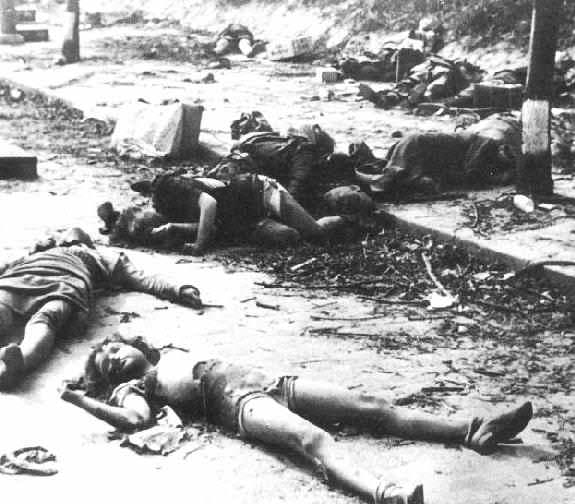
Figure 1.--I know of no disccusion in the German press of the morality of German air assaults on foreign cities during 1939-42. Goebbels spoke passionately on the subject when the bombs started falling on German cities. The German terror bombings were considered attrocities by the British and Americans. There was little sypathy for the Germans when the Allied air campaign intensified in 1943. After the horific Dresden raid, the Allies begab to have second tghoughts. I am unsure, however, to what extent the issue was discussed openly in the American and British press.
|
|
The morality of the air campaign is a still hotly debated question. At the time, none of the major combatant countries with bombing formations (Britain, Germany, Italy, Japan, and the United States) questioned their own use of bombing on moral grounds, although the Allies began to have concerns at the ebd of the War, especially after the Dresden raid. . America and Britain accused NAZI Germany of war crimes when it conducted terror bombing of cities with that explicit goal. The Japanese did the same in China. After the the NAZIs began using this tactic, both America and Britain subsequently launched much more massive assaults on German and later Japanese cities. Although the goal was never described explicity as terror, the differences if you were a German civilian would be difficult to determine. The German foreign minister coming to Washington in November 2002 recalled cowering in a bomb shelter during the Allied bombing. A HBC reader remembers the glow in the night sky from raging fires in a nearby city after Allied bombing runs. Much of the debate over the morality of the aerial campaign really are questions on the morality of war itself. There are questions, however, that pertain uniquely to the World War II aerial campaign itself. HBC does not seek to answer the moral questions. A thorough discussion would be a study in itself. We do believe, however, that it is important to pose some of the major questions.
War-time Attitudes
The morality of the air campaign is a still hotly debated question. A historian argues that the strategic bombing campaign was "the most uncivilized method of warfare the the world has known since the Mongol devesations". [Hart] At the time, however, none of the major combatant countries with bombing formations (Britain, Germany, Italy, Japan, and the United States) questioned their own use of bombing on moral grounds. Only at the end of the War were questions raised in Allied circles. The bombing of Dresden, a city without major war industries and packed with refugees fleeing the retribution of the Red Army and local populations, in particular has been questioned on moral grounds. There was no serious debate at the time in America about the use of the atomic weapons agianst Japan in August 1945.
Bombing Civilians (1930s)
The concerns of statesmen about bombing civiians came to fruition in the 1930s. All of the three major countries that woukd form the AXis (Germany, Italy, and Japan) bombed civilian populations. By far the most egregious use of bombers was committed by the Japanese in China. It was the German attack on the small Basque town of Guernica, which was virtually unknown before the bombing, horrified the European public. Japan reponding to Chinese ptotesting the seizure of Manchuria, bomed Sgahnghai (1932). Thousands of civilianswere killed. All this occurred just outside the International Settlment and thusas widely reported with hear-wrenching photiograophs. The Italians were the next to use air power on civilians. Italian dictator Benito Mussolini auythorized the us of chemical weapons (mustard gas) on Ethiopians (1935). The Japanese bombed Shanghai again, this time as part of their invasion of China proper (1937). The Luftwadffe Condor Squadron brought the aur war to Europe. The Condor Squadron was dispatched by Hitler to aid Franco in the Civil War. They attacked the small Basque town of Guernica (April 26, 1937). The German bombers left over 1,650 people were killed and nearly 900 wounded. Thhese developments are what Chamberlain had in his mind when he flew to Munich to talk Hitler out of a war.
Democratic Responses
The slaughter of civilians was broadly condemned in the Democracies. Leaders made it ckear that bombung civilian populations was a attrocity and terrorism.
Japan's bombing of Shanghai in 1932 was widely condemned. American newspapers reported a 'literal avalanche of denunciation.' [New York Times
American newspapers referred to the Japanese as ‘butchers’ and ‘murderers'. One of the iconic photographs of the World War
era appeared in Amerucan newspapers and magazines. “The single most powerful image from the Shanghai fighting was the picture of a burned baby, arms outstretched, wailing on a stretch of deserted railway track, taken by Paramount News’s H.S. ‘Newsreel’ Wong. It outraged so many Americans that it contributed to the mushrooming of a campaign to pressure the United States government to instigate sanctions against Japan.” [Dong] This helped lay the foundation for the sactions that the RooseveltAdministratuiion would levy against the Japabese.
The international press also sharply citicized the Itakians after they invaded Ethiopia (1935). Emperor Haile Selassie
appealed to the League of Nations (June 1936). He denounced the bombings as “a refinement of barbarism.” He described how “soldiers, women, children, cattle, rivers, lakes and pastures were drenched continually with this deadly rain. .... In tens of thousands, the victims of the Italian mustard gas fell.” The Italian bombing was 'viewed as an atrocity of the most appalling kind.' [McCullough]
American Secretary of State Cordell Hull described the American view. "The League of Nations Advisory Committee, in resolution adopted September 27, (1937) solemnly condemned the bombing of open towns in China by Japanese planes and declared that ‘no excuse can be made for such acts which have aroused horror and indignation throughout the world.’ In a statement the following day we at the State Department supported this finding and said we held ‘the view that any general bombing of an extensive area wherein there resides a large populace engaged in peaceful pursuits is unwarranted and contrary to principles of law and of humanity.’”
Churchill condemed the German attack on Guernica, "Germany in particular used her air power to commit such experimental horrors as the bombing of the defenceless little township of Guernica." Lord Cecil of Chelwood in Parliament declared, "There is no precedent in the history of civilized nations for anything like the bombing of Guernica." Columists in America described Lord Cecil as the leader of "a chorus of protest in the House of Lords" over the German atrocity. Archibald Sinclair, the Liberal leader in the Commons, described the bombing of Guernuca as 'a deliberate effort to use air power as an instrument of terrorism'. Foreign Secretary Anthony Eden said that the British Government 'deeply deplores the bombardment of the civil population in the Spanish Civil War, wherever it may occur and whoever may be responsible.” One historian writes, “In the United States prominent Americans from all walks of life and a large portion of the press joined in a denunciation of ‘the monstrous crime of Guernica,’ while congressional leaders renewed their appeal for the application of the Neutrality Act to (embargo the sale of munitions) to Berlin and Rome.” [Dallek]
Two years later, in his September 1, 1939, appeal at the outbreak of World War II in Europe,
President Roosevelt when Hitler invaded Poland implored the belligerents powers to refrain from the “inhuman barbarism” of attacking civilian centers. He pointed out that attacks on cities had “resulted in the maiming and in the death of thousands of defenseless men, women, and children.” These bombings, the President said, had “sickened the hearts of every civilized man and woman, and has profoundly shocked the conscience of humanity.”
Hiler responsed to President Roosevelt’s appeal and pledged that Germany would confine his air arm to attacking military targets only while at the time Luftwaffe bombers were bombing undefended Polish cities.
British Prime Minister Neville Chamberlain also respinded, pledging that “Britain will never resort to the deliberate attack on women and children, and other civilians for the purpose of mere terrorism.”
The Democracies would soon change their views on bombing enemy cities and OPresident Roosevelt would begin the pricess of developing an atmoic bomb. And Hitler and his LUftwaffe would change their ideas about hiow war should be waged. The German bombing of Poland did not change geur mind. This processbegan with the bombing of Rotterdam (May 1940) and then the Blitz on London (September 1940). The means were not immediately at hand, but both Churchill and Roosevelt set in motion the \creation of massive bomber fleets that woukd target and evebntually level the great industrial cities of the Reich.
America and Britain accused NAZI Germany of war crimes when it conducted terror bombing of cities with that explicit goal. It was the Germans who began bombing civilian populations rather than military targets as a terror tactict calculated to
destroy civilian morale. Visionary military planners in the 1930s built the world's most advanced air force at the time--the Luftwaffe. [Corum] Germany was the first World War II combatant to use bombers to terrorize urban populations. This began even before World War II during the Spanish Civil War. The Luftwaffe experimented with the bombing of Guernica in 1937 and other Spanish cities were targeted. At the onset of World War II began the tactic was used on Warsaw and other Polish cities (September 1939). One historian writes, "The bombing of Warsaw early in the war made it clear to the Allies how Hitler intended to fight his war. It was to be Schrecklichkeit ('frightfulness') with no regard for the civilian population." [Snyder] Actually the avowed purpose was to cause civilian casualties.
Japanese Terror Bombing
The Japanese carried out strikes on undefended Chinese ciities that had no military purpose. The bombing of Sganghai (1932) in particukar was well covered by the international media firmly dixed theJapanese image as a pitiless aggressor nation. The Japanese did mot limit their attacks to cionventuinl ordinace. Tey also used chemical and biolgical weapons against the Chinese.
Tactics
The bombing of civilians is not purely a moral issue. The effectivness of bombing civilian populations has to be considered as well The German use of terror bombing had some impact on their early campaigns, but there is no evidence that it materially changed the outcome of any major campaign in the German favor. In fact Hitler's obsession with mindless destruction and decission to launch the Blitz against London may well have saved the RAF and Britain in the 1940 Battle of Britain. The Allied campaign against German industrial did disrupt German war production, but only at enormous cost--over 100,000 Allied aviators lost. There is reason to believe that if the Allies from the onset of the campaign had targetted German fuel production that it might have been more effective and less costly.
Allied Bombing
After the the NAZIs began using this tactic, both America and Britain subsequently launched much more massive assaults on German and later Japanese cities. Although the goal was never described explicity as terror, the differences if you were a German civilian would be difficult to determine. The German foreign minister coming to Washington in November 2002 recalled cowering in a bomb shelter during the Allied bombing. A HBC reader remembers the glow in the night sky from raging fires in a nearby city after Allied bombing runs.
Christian Theology
Much of the debate over the morality of the aerial campaign really are questions on the morality of war itself. Christianity is not pacifistic, although leading members of te pacifist movement off come from the Church community. Mainstream Christian theology teaches that there are times when wageing war is not only permitted morally, but in fact is required in morale terms for self demense and outrageous agression--the just war doctrine. Christian theologians have found that violence to prevent agressors pursuing unjust, evil purposes can and should be met by violence to prevent innocents from harm.
World War II
There are questions, however, that pertain uniquely to the World War II aerial campaign itself. Of course most wars fought in Europe do not fall under these terms of a Christian "just war". World War II of course does. If ever a war in the course of human history was a fight against evil, it was Wotld War II. The War was nothing less than a struggle to preserve Western civilization from mindless barbarism. Only a minimal consideration of the Holocaust and NAZI plans for the occupied East lead irrevocably to this conclusion.
A key issue here is the bombing of civilians. There can be little question that the NAZI bombing of civilians for the expressed purpose of inspiring terror is morally repugnant. The British air offensive against Germany, with impossible to target night-time raids, comes periously close to an equivalent strategy. The Americans in day-time raids accepted higher casualties in an effort to better target the bombing raids, but in terms of casualties killed civilians in air rades than the Germans and Brtish combined because of the size of the American air campaign. Here a variety of questions rise. Does a country which is attacked and subjected to terror bombing have a right to strike back at the aggressor's civilians. Are their limits on the dimensions of the counterstrikes. And even more basic question is, if a civilian population is committed to an aggresive country's war which include war crimes and even genocide, is that civilian population still morally protected from air strikes. Is the prohibition on civilians changed when the country uses children to man anti-aircraft guns around war plants, inducts children and old men into the army, and uses children to carry out war crimes? What about a country which has used bombers to launch chemical or biological weapons aginst your civilians? Another question is whether the moral issues are relaxed if civilian casualties will result in a faster conclusion of the war and the overall reduction in casualties? Would it have been more moral to refrain from stretegic bombing even though the War would have lasted longer and more soldiers and civilians would have been killed? Here we are unsure just how to make the calculation. Does the level of evil of an agressor nation permit higher levels of violence against it civilians? Does a lower net lss of life permit the bombing of civilians? None of these are questions which permit easy answers, but must be considered in any assessment of the morality of the air camapaign.
Political Correct Thought
Some authors in the modern politically correct world have attempted to suggest that World War II was not a great crusade for freedom, but rather a war fought with a level of moral eqivalency. It is as though some modern American historians are ashamed to find that Some readers site the strategic bombing campaign in Europe as babaity on the part of the Allies. Given the crimes of the NAZIs, however, the argument of mutual equivalency is not often made. Because the war crimes the Japanese war crimes are less well-known and the atomic bomb was such a cataclismic event, that the argument of moral equivalency is sometimes offered in the Pacific War. One author describes American attrocities in previous wars (Indian Wars and the Philippines Insurection). [Bradley] Seeking to draw moral equivalencies selecting wars in different eras is patently faletious that a competent historian would reject it out of hand. The same historian on more solid grounds suggests that the American bombing of Japan (both the fire bombing of Japanese cities and the atomic bombs). [Bradley] HBC does not disagree that bombing Japanese cities was an act of savergy. We do disagree that there was a moral equivalency in the Japanese and American war effort. Here we see some major differences. One, it was Japan which began the war. Two, the sheer scale of the killing. The Japanese killing in China was on a scale only equalled by the NAZIs. Three, the Japanese not only initiated the bombing of civilians, but used chemical and biological weapons. Four, the goals of America were very different. This may well be the most significant difference. Here compare America's occupation of Germany and Japan with the Japanese occupation of China and the German polices in the occupied East.
The use of the atomic bomb in World War II was an act so unique in warfare that it requires a separate discussion. The dropping of the atomic bombs on Japan in August 1945 were horendous events devestaing two entire cities, killing large numbers of civilians, and wreaking horendous pain and suffering on the survivors. In actual casualties they were nt the most destructive air rades. The dropping of the atomic bombs, in fact, not only saved many Allied caulties, but it also save a much larger mumber of Japanese casulaties, including very large number of civilians if it had been necessary to invade the Home Islands. Using the Okinawan invasion as a guide, millions of Japanese civilians would have died in an invasion.
The major moral concern regarding the World War II air war involves the bombing of cities which even if specific targets were ibvolved, inevitably involved civilian casualties. This was not, however, the only moral issue associated with the air war. One of these issues involved fighter pilots and the shooting of pilots and other air crews that had bailed out of damaged planes. This is a topic that we have just begun to assess and our information is still limited. As with the bombing issue, it is not a simple matter. Shooting a pilot who has bailed out sounds like a simple moral issue, it was not, it was also a matter of military importance, at least when the pilot was going to land in areas held by friendly forces. The Battle of Britain is the best example. The British had no shortage of planes to fight the Luftwaffe. They did have a shortage of trained pilots. Thus allowing a pilot to survive aided the British war effort at a critical point in the War. Shooting at bomber crews is also complicated. It is not difficult to see that German pilots seeing the bombed out cities and civilian casuakties could in the heat of combat be less han charitable toward the bomber crews. We do not know what the standing orders were for the different air forces. We do know that many pilots considered aefensless man in a parachute as heinous act. This was tghe case in the Allied air forces and was shared by many, but not all Luftwaffe pilots. Our general imoression is that this practice was most common with he Luftwaffe. We are not yet sure about the Japanese. We do notknow of any pilots procecuted for shooting at downed pilots or for that matter failing to do so. We know that Hitler demanded thatU-boat captains not assist surviving crews. Some U-boat captains actually shot at the survivors after the ship sank. Others attempted to assist. As far as we know, the pilot issue was not addressed by Hitler and this an internal Luftwaffe matter. We believe that the more throughly NAZIfied pilots were the most likely to go after downed pilots.
Personal Experiences
German boy's experiemces
Sources
Bradley, James. Flyboys: A True Story of Courage (Little Bown, 2003), 398p.
Churchill, Winson. The Gathering Storm (Houghton Mifflin).
Corum, James S. Luftwaffe: Creating the Operational Air War, 1918-1940 (University Press of Kansas, 2000).
Dallek, Robert. Franklin D. Roosevelt And American Foreign Policy, 1932-45 (Oxford).
Dong, Stella. Shanghai: the Rise and Fall of a Decadent City (Perrenial).
Hart, B.H. Liddel. The Revolution in Warfare (Faber & Faber: London, 1946).
Hull, Cordell. Memoirs (The Macmillan Co.).
McCullough, David. Truman.
Snyder, Louis L. Historical Guide to World War II (1982).
CIH -- WW II

Navigate the CIH World War II Section:
[Return to Main World War II aerial campaign page]
[Biographies]
[Campaigns]
[Children]
[Countries]
[Deciding factors]
[Diplomacy]
[Geo-political crisis]
[Economics]
[Home front]
[Intelligence]
[POWs]
[Resistance]
[Race]
[Refugees]
[Technology]
[Bibliographies]
[Contributions]
[FAQs]
[Images]
[Links]
[Registration]
[Tools]
[Return to Main World War II page]
[Return to Main war essay page]
Created: November 6, 2002
Last updated: 9:59 PM 2/11/2013