|
The V-1 was essentially a primitive cruise missle, but without a sophisticated targetting mechanism. The Germans begining June 13 used the V-1 to target London and other British cities after the D-Day landings. V stood foer "vengence", retribution for the Allied bombing of Germany. The Germans launched about 13,000 buzz bombs accross the Channel at England. Only about 2,500 of these hit the intended targets, primarily London. The V-1 could not be accurately targeted. They were lucky to hit a city, but even this was difficult because the Luftwaffe at this stage of the War could not even manage air recognisance over Britain. The British were able to deal with the V-1 offensive in a number of ways. In accurate news reports mislead the Germans in how to target the weapns. Anti-aircraft guns were rushed to the Channel coast. The RAF intensified fighter patrols.
The history of flying bombs goes back to World War I. The Americans were working on such a device but it could not be made to fly straight. President Kennedy's brother Joe was killed in such an experimental operation. The German V-1 was revolutionary in that it used a jet engine--a pulse jet.
V stood for Vergeltungswaffe or 'vengence' weapns. This was to be retribution for the Allied bombing of Germany. The Germans had launched the War with the absurd notion as Britush Air Marshal Arthur Harris that the Lufwaffe would be able to bomb other countries, but would not be bombed in return. Luftwaffe Chief Göring garanted it. From the first day if thec War, the Luftwaffe began bombing largedly undefendef Polish cities. Later Rotterdam, London, and Coventry would beome symbols of German attacks on cities. But now that the Germans were being hammered day and night by Allied bombers, Hitler wanted vengence for the situation he had created and for the Allies douing the same yo Germany that his Lufwaffe had done to other countries. The Allies were paying Hermany back Germany in kind and in far larger attacks than the Luftwaffe was acapable of conducting. It is unclear to what extent the Herman people at the time understood this other thanthe steadily increasing levels of Allied attacks. The V-1 was most commonly known as a 'buzz bomb'. The British also called them 'doodlebugs'.
The V-1 was essentially a primitive cruise missle, but without a sophisticated targetting mechanism. The Germans fired it in the direction of the target, primarily London. Calculating the fuel burn rate, the V-1 was fueled with the amount of fuel needed to reach the target.
The Versailles Treaty following World War strictly limited the Germany Army, including limitations on artillery. As a result, Army planners wre drawn to rocketry and other innovative weapons not banned by the Treaty. Although not a rocket, the V-1 emerged from the innovative weapons that came out these reasearch projects. German researchers as early as 1930 were thinking about a 'pilotless plane' or 'robot bomb'.
The V-1 was one of the major research projects persued at Peenemunde along the Baltic coast. Peenemunde located on a peninsula could be easily isolated and could use the Baltic as a test range. The V-1 project was not at first afforded a high priority. After defeating France (1940), many Germans thought they had essentially won the War. Only after failing in the Battle of Britain did the NAZIs begin to give more thought to research projects. It was the reverses on the Eastern Front (December 1941) and then the Allied strategic bombing campaign that changed Hitler's attitude toward these weapons. Both the Luftwaffe and Wehrmacht were involved. The V-1 was a Luftwaffe project and the V-2 a Wehrmacht project. The full story of the Peenem�nde raid has not been writtem.
The NAZIS greatly expanded the research effort at Peenemünde. The staff was sharply increased with many slave laborers. Hitler authorised a crash program to develop the 'pilotless airplane' (June 1942). It had attributes that fit into NAZI priorities.Its construction of plywood and sheet steel mean that aluminium in demand for aircraft construction was not needed. It used low grade petrol instead of aviation fuel. It could be built with only 500-man hours. There were a variety of problems and the first expeimental models crashed. Hanah Reich, a female test pilot finally found that the problem was in the autopilot which reacted inappropriately to cross-winds. The Germans finally had a working model (May 1943).
The Polish underground reported on the work at Peenemünde as did a Danish pilot. RAF reconnaissance also found the site. Kammhuber learned of a major British raid through a RAF intercept, but did not know the target. He prepared a substantial force to oppose the attack. The British carefully prepared the attack--Operation Hydra. It was one of their largest 1943 raids. The sent a decoy Pathfinder group of Mosquitos to drop flares over Berlin. This was normal procedure, the first step of a raid. At this time Kammhuber communication line in the Netherlands was cut, presumably by the Ressistance. German ground controllers cut off from Kammhuber, scrambled the bulk of the nihjt figter force to Berlin. When they arrived the Berlin Flak batteries opened up them. In the meantime the British force of 597 bombers attacked Peenemünde. Some of the Luftwaffe fighters saw the glow from flares and bombs to the north and asked for permission to head north. They were refused permission, but some defied orders and caught the final British wave and succeeded in shooting down many of the 40 British bombers lost in the raid. Mamy facilities at the research facilities survived the raid. The British did hit the housing areas and camps for foreign workers. About 700 staff members were killed, this included Walter Thiel, the head of engine development. The Germans as a result moved the production of the V weapons to secret underground facilities deep into Germany.
The Germans began building elaborate, long launch sites with warehouses and preparation facilities. These were constructed along the French bercause of the V-1s limited range. They were aimed at London and other English sites. The prepared sites could have fired off V-1s iin lsarge numbers in rapid sucession. The Germans planned to launch up to 2,000 V-1s every day using their prepared launch sites. This could have made a major impact on London and the English ports from which the D-Day landings would be assembled. The V-1s could be launched from less elaborate launch sites than originaslly planned, but not in the numbers needed to turn the V-1 into a destating weapon.
The British RAF established a Photographic Reconnaissance unit (1940). The dimensions of the planned German V-weapons attack were so large that the launch sites and facilities, unlike the factories buikding the V-1s and V-2s, could not be hidden. Here the French resistance provided a great deal of useful information. The Germans used slave and forced labor to build the facilities. This meant there were a lot of winesses. The large ramps the Germans began building for the V-1s were easily vissible to air reconnaissance and the British began spotting them (May 1943). The RAF used the fast, agile Spitfires to fly thousands of recionisance missions to spot the launch sites. The missions were dangerous. The Spitfires were unarmed because of the weight of the specially designed sterographic cameras. To achieve the needed 3D effect, images had to be captured in carefully-plotted sequences which would overlap each other by 60 percent. This meant that the pilots had to fly carefully plotted runs. And they often flew at low altuitudes making them vulnerable to ground fire. But it meant that vertical structures would stand up when viewed through the stereoscope. This was part of a larger Allied photo reconisance effort which took tens of millions of photographs, generating 36 million prints. These images were exaustively analysed by a team of specialized photographic interpreters (PIs) at RAF Medmenham in Buckinghamshire. They used stereoscope viewers to interpret the images. (This was a popular Victorian parlor device that appeared with at the same time as the CDV using the albumen process.) This allowed the PIs to assess height that was lost in single images, but not only V-1 launch sites, but V-2 missles into 3D. The PIs could measure the height of unidentified new structures. 【Kelly】 Once spotted the prepared launch sites coud be attacked and destroyed. And because of the Allied strategic bombing campaign and growing Allied air power, the Luftwaffe was being withdrawn back to the Reich. The Americans constructed mock ups in Florida to determine the most effective bombing tactics. Opperation Crossbow involved over 25,000 sorties and destroyed 83 V-1 sites. Bomber Command shifted to supporting Crossbow (July-August). 【Richards, p. 243.】 The Germans as a result had to abandon the prepared sites. The Germans responded by developing a launch system with shorter, easier to hide ramps. But as part of Operation Crossbow, these ramps were also targeted. Operation Crossbow delayed the NAZI V-1 offensive until the Allies had landed at Normandy. It also huge reduced tge number of V1s that were fired at Britain.
The V-1 because it could not be precisely targeted had very little military use. It could be used as a terror weapon to attack civilians, but it could not effectively hit military targets. There was one potential military use if the V-1s could be produced and delivered iin sufficent quantities. The V-1s could target ciies and if the Germans had a sufficent quantity, they could have done considerable damage in the Channel poets from which the D-Day landings were launched. If launched on the days while the invasion force was assembling and embarking, such an attack could have delyed or disrupted the invasion. The Germans did not produce the V-1s in sufficent numbers or didthey have the intelligenced needed to hit the ports at thevmost vulnerable time. I am not sure what the initial NAZI schedule was for beginning the V-1 campaign. We do know that it was planned to commence well before June 1944. It was the intensive Allied bombing of prepared launching sites that delayed the German launch schedule. Hitler after D-Day decided to activate the V-1 launches. It was a desperate attempt to knock Britain out of the war through terror bombing. In addition if the Allies advanced in France they could over run the launch sites and then the V-1 would be of no real utility.
Rommel from the beginning of his work on the Atlantic Wall premised the German strategy on stopping the Allies on the beach. The Germans after the D-Day invasion failed to do this. Rommel was not even in France when the landings began. This was one reason along with Alied air power and Hitler's control over the Panzers that the German reinforcements were slow in reaching Normandy and deployed piece-meal when they did arrive. Allied air power and to a lesser extent the Resistance made it difficult to supply the German troops in France with whatever material was available in the Reich. The Allies not only had vastly superior forces, but the Germans once the Allies were established in Normandy had no way of interdicting the steady flow of supplies from Britain. This meant that the result in France was a forgone conclussion, especially after the Soviets struck in the East with Bagration. Rundstedt and Rommel had disagreed on the initial stragegy, but both understood that their forces could not hold out in Normandy very long. They asked for a meeting with the Führer to explain this. They met with Hitler at Margival to discuss the campaign. Hitler had fantasized on decisively defeating the Allies so that the Wehrmacht could focus its remaining strength on the Red Army in the East. He had even claimed on D-Day that he had lured the Allies to invade so they could be destroyed. This was not, however, how the campaign was developing. Margival was located dear Soissons in northeastern France. The Germans had built a bunker there in 1940 from which Hitler was to oversee the Operation Sea Lion invasion of England. The session began at 9:00 am and lasted until 4:00 pm with a lunch break. The Führer sat pouring over maps with colored pencils in his hand. Rundstedt and Rommel briefed him standing up. Rundstedt explained that Allied air power made it impossible to assemble the forces needed to mount a major offensive. Rommel was less tactful. He had come from the front with little sleep. He suggested disengaging the Panzers from Caen and reorganize a more defsible line on the Orne River. As the brifing continued, he became increasingly blunt, finally telling Hitler that the Wehrmacht could not hold in France, Italy and the East and that the Allies were poised to enter the Reich itself. He told the Führer that Germany would have to end the War. This of course was not what the Führer wanted to hear and other commanders did not dare speak like this to him. He ordered Rommel to attend to his duties in France and not concern himself with the conduct of the War. He then explained that German had wonder weapons that would win the War. Germany did actually have wonder weapns. But they were not war winning wonder weapons. Germany had in fact already begun the V-1 attacks which he assured the two field marshalls would devestate Britain. (In fact one V-1 went off course and landed near the bunker on that very day.) Hitler also claimed the new Me-190s jets would enable the Luftwaffe to regin control of the sky. (The ME-190 could have had a major impact on the War had Hitler not interfered with it.) Nothing had been accomplished at Margival. Hitler was not going to end the War. Rundstedt and Rommel returned to their headquarters. Hitler decided against a planned visit with the troops in Normandy.
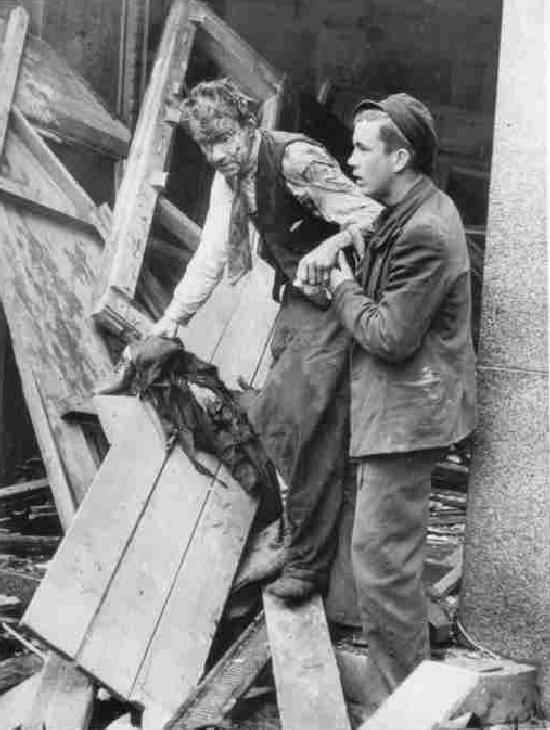
The Führer had great hopes for the V-1. The V-1 was one of the unspecified secret weapons Goebbel's propaganda threatened to use. And there were plans for a massive assault. Left unchecked, the Germans could have devestated London and destroyed the Channel ports from where the D-Day invasion force w asassembling. The Allied Crossbow Opperation both delayed that assault and significantly reduced the German capavility to launch V-1s. The Germans were only able to mount the V-1 offensive after the D-Day landings and with a much smaller number of V-1s than planned. The Germans began to target London and other British cities (June 13). The Germans resorted to prefabricated launch pads that could be hidden in barns and farm houses and then quickly assembled to launch the V-1s. They could then be dissabmled and moved. The process was, however, far slower than the fixed launch facilities they had planned to use. The mobil sides were used from the Pas-de-Calais are which the Germans held for over 2 months after the D-Day invasion. The mobil sites were more cumbersome to use, but fired from the Pas-de-Calis the V-1 was within range of London. The Germans launched about 13,000 buzz bombs accross the Channel, about 9,500 at London. Only about 2,500 of these hit the intended targets, primarily London. The V-1 could not be accurately targeted. They were lucky to hit a city, but even this was difficult because the Luftwaffe at this stage of the War could not even manage air recognisance over Britain. Had the V-1s been launched at the invasion embarcation ports they might have had some impact. The V-1s did cause civilian casualties and suffering to the people of London. Launched at the sprawling metropolis of London, they had no discernable military impact other than forcing the Allies to devote resources to supress it.
A British reader writes about the public reaction, "Noting you piece on the V-1 and V-2 weapons. My father told me that the V-1 was psychologiaclly a more terrifying weapon. Those in the vicinity would hear the engine drone - then it would cut out, gliding to earth, but where? Even if it seemed to be flying out of your harm's way, it could suddenly vere and start coming towards you. One day my father was on Fire Watch, which most civilians had to do. (He had been in the First World War and was too old.) He saw a V1 heading down our street, and he feared it would hit our house. It just missed the church steeple. There must have been wind currents around the steeple, and it suddeny veered away and fell in a local park, causing little harm. Living at the top of hill was a dangerous place when the V1's were flying. London lies in a hollow, but there are hills to the North and South. The V1's would be flying low when they reached London, and often crashed into the hills before their engines cut out. Highgate and Muswell Hills, some five miles north of the centre of the city had this misfortune. They had far more than their fair share of hits. The typical British san froid attitude to the V2 was different. If you heard it go off, you were alive! The explosion was the first and last warning."
The V-1 unlike the other Wunderwaffen was a real threat to the Allies. Fortunately the raid on Penemunde delayed development and production and the British began searching for the tell-tale ramps and zattack them by air. The British were able to deal with the V-1 offensive in a number of ways in addition to destroying the prepared laubch sites. The Germans were able to develop launch methods with less elaborate favilities. They could not fire the numbers they had hoped to, but they were able to begin the campaign while they still held positions along the Channel. Inaccurate news reports mislead the German targetting. Anti-aircraft guns were rushed to the Channel coast. The RAF intensified fighter patrols. The V-1s because of their relatively slow speed were particularly vulnerable to fighter aircraft. Fighters shot down about 2,000. This was a dangerous undertaking, however, because the size of the war head endangered persuing fighters. The fighters to get off a good shot had to get near to the V-1 and the resuilting explosion could destroy the fighter. Some pilots tried to pull up along the V-1s and use their wings to flip it over. This was also a very risky maneuver. Anti-aircraft batteries knocked down a similar number. Barrage baloons brought down about 300. The most effective counter measure proved to be the advance of the Allied armies after the breakout from Normandy. The Allies moved up the French coast, reaching Belgium (September 1944), the NAZIs lost the last V-1 sites within range of London, but the V-2s were still in range.
We are especilly interested in personal experiences. One boy recalls, "My father and I were walking along a road one sunny Saturday in June when we heard the sound of an approaching plane. Out of the corner of my eye I could see that it was a German V-1 'Doodlebug' airplane heading straight for us. My father threw me into a gutter and then jumped on top of me. I could see a flying bomb as its engine stopped running and it spiraled down straight at us. Then (and this is the reason I am here to write this now), the gliding bomb suddenly reared up in a tight stall turn and then spun straight down onto a row of houses that sloped away from where we were. The explosion was ear-splitting and the ground punched me in the chest, but the blast was deflected over our heads. I saw a geyser of earth, bricks, and debris fly over us, hitting a row of houses to our left. There was a long silence, followed by a chorus of shouts and people running. The whole street had been pulverized and was full of smashed bricks and roofing tiles. I learned later than many people were killed; the V-1 hit just as they were sitting down to their Saturday lunch." 【Smith】
Kelly, Jon. "Operation Crossbow: How 3D glasses helped defeat Hitler," BBC News Magazine (May 12, 2011).
Richards, Denis. Hardest Victory: RAF Bomber Command in the Second World War (London: W W Norton & Co Inc, 1994), 393p.
Smith, Roger P. "Spared of destruction," The Washington Post (May 28, 2004), p. W11.

Navigate the CIH World war II Section:
[Return to Main World War II European air campaign page]
[Return to Main German World War II V weapons page]
[Return to Main German secret weapon page]
[Biographies]
[Campaigns]
[Children]
[Countries]
[Deciding factors]
[Diplomacy]
[Geo-political crisis]
[Economics]
[Home front]
[Intelligence]
[POWs]
[Resistance]
[Race]
[Refugees]
[Technology]
[Bibliographies]
[Contributions]
[FAQs]
[Images]
[Links]
[Registration]
[Tools]
[Return to Main World War II page]
[Return to Main war essay page]