|
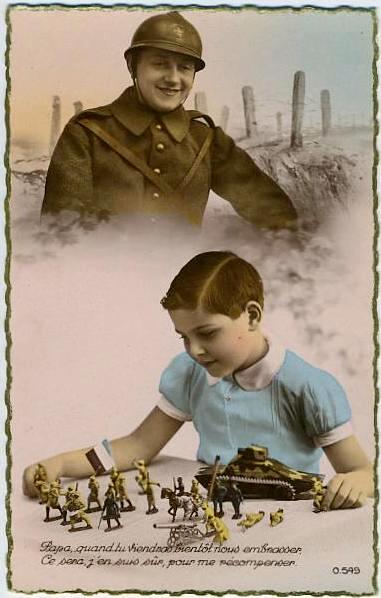
France like Britain declared war on Germany after Hitler invaded Poland (September 1939). The French war strategy seemed to be primarily aimed at limiting casualties rather than winning a war against Germany. This was of course symbolized in concrete and iron by hugely expensive Maginot Line. After several months of quiet on the Western front, the Germans launched the long-awaited Western offensive (May 1940). Within weeks the Germans entered Paris and the French were forced to sign a humiliating armistice (June 1940). Much of the country was occupied and the French Army was interned in German POW camps. The new government in the unoccupied zone was formed at Vichy. Nominally neutral, Vichy assisted the NAZIs in their war effort. Vichy also actively pursued Jews, in many cases without being forced to so by the German occupation officials. Marshall Petain who led the Vichy Government concluded that after the fall of France that Germany was the dominant power in Europe. He naively sought to carve out a place for France in the new NAZI-dominated Europe. He believed that France could form a bridge between NAZI Germany and America and the rest of the world. The German victory had humiliated France, but France had fought. Vichy represented a loss of honor. After the Allied Torch landings (November 1942), the Germans occupied the unoccupied zone. The Resistance became increasingly organized, especially when the NAZIs began conscripting French workers for war work in Germany. The Allied returned to France with the D-Day landings (June 1944). This made possible the liberation of France. The Allies after breaking out from Normandy swept through France (July-August 1944). Free French forces were given the honor of being the first Allied units to enter Paris (August 1944). DeGualle's Free French Movement moved to seize control of the civilian administration.
Famed World War I commander Joseph Joffre conceived of an impregnable defensive line that would make another German invasion impossible. French War Minister Andre Maginot began the construction (1930) and the fortification is named for him. The result was a vast, complex defenses system. It was not the last of the great gun-bearing fortifications--this was Hitler's even more massive Atlantic Wall. France also built defenses along its coasts and in its North Africa possessions. [Kaufmann] It was a massive system of defenses, most of which was built underground. There were three interdependent fortified belts with anti-tank emplacements and pillboxes protecting bomb-proof artillery casements. These concrete and steel emplacements stretched between Luxembourg and Switzerland. Artillery emplacements and interlocking strong points were designed to stop a German invasion. The Maginot Line has gone down in history as a gigantic military failure. In fact it did prevent a German break through, but the Germans simply went around it. While the Maginot forced the Germans to go around it, criticism over the cost is valid. It cost 7,000 million francs and adsorbed a substantial share of French defense spending. French military planners believed that the Ardennes, the heavily wooded and hilly area to the north of the Maginot Line, was impassible to tanks and thus could be lightly defended. Perhaps the greatest weakness of the Maginot Line was the cost. France spent so much money on it that it neglected the air forces and mobile armor and infantry that were needed to support defensive operations behind even strong defensive lines. This of course was particularly important because the Maginot Line was never completed. Plans were in place to continue the Maginot Line to the Channel. The War broke out before this project began. Thus the Maginot Line stopped at the Belgian frontier.
While France emerged victorious in World War I, it was at great cost. The political climate became increasingly divisive. Nationalism, socialist pacifism, anti-Semitism, xenophobia, and other political threads swirled in the post-War political scene. Far Right and fascist parties organized appeared, although they were fractured among many small parties. Leftist parties became increasingly important, achieving considerable electoral success. The Depression of the 1930s further exacerbated political tensions. The left was also not united. Communist revolutionaries and socialist reformers debated issues of doctrine. Leon Blum was able for a time to form a Popular Front government. It began the move toward a welfare state. The inability to form a political consensus was very dangerous at a time that Hitler and the NAZIs were preparing for war.
There was no real coordination between Britain and France after the collapse of the Stresa Front. The British with the Anglo-German Naval treaty had already began a policy of appeasement. They did not even bother to consult with France. The french attempted at first to pursue a strong independent policy of resisting the Germans, but it was doomed to failure. Before German rearmament the French Army could have intervened in Germany. The French Army had been the bulwark on the western front during world war I and in 1935 was the strongest army in Europe. Rearmament rapidly changed this. And the French actions to restrain the Germany quickly evaporated. Anti-Communists in the French Government refused to allow meetings between the Soviet and French General Staffs to coordinate military actions. In the East the Poles and Romanians refused to endorse arrangements for Soviet forces to move west in case of German aggression The German reoccupation of the Rhineland had significant adverse consequences for France. Once the Germans re militarized the Rhineland, there was no way for the French Army to come to the aid of countries like Poland, Czechoslovakia, Romania and Yugoslavia. As a result, the Little Entente would collapsed. Other events such as the Italian invasion of Ethiopia and the Spanish Civil war further weakened the French position. France as Germany rearmed was thus left with no option but to follow Britain and its determination to appease Hitler
The Popular Front was the coalition of Communists, Socialists, and other left-wing political parties which developed emerged in France during the 1930s to achieve political power and social reform in France. It was also in reaction to the threat of Fascism, especially the rise of the NAZIs in Germany. The Popular Front won the elections of 1936 and Léon Blum became France's first socialist premier. The Depression was a major reason for the Popular Front's victory. The Popular Front's economic policy generally failed. They achieved gains for workers such as shorter hours and summer vacations. This was not, however, accompanied by increased productivity. The impact thus was to weaken French industry and production at the same time German labor was prevented from making similar demands and German factories were producing arms and other military equipment at full capacity. The strikes of 1936 affected the Government's image. The Government decided not to intervene in the Spanish Civil War, the first Fascist military exploit in Europe. The Popular Front was not just a political movement, but rather a social and cultural movement as well. The movement's goal was to break down the traditional barriers that separated the highly compartmentalized society of France in the 1930s. As such, the Popular Front was reviled by traditional and right-wing elements in French society. The phrase, "Better Hitler than Blum" began to be heard. After the Germany victory in 1940, Blum and the Popular Front were blamed by Vichy politicians rather than the French military planners. While the Popular Front failed in many of its goals and especially did not prepare France to resist the Germans , the myth of the Popular Front has achieved legendary status in modern France. [Jackson, Popular Front]
The next target after the Austrian Anschluss, was Czechoslovakia which had been created by the Versailles Peace Treaty. Hitler began to escalate his tirades against Czechoslovakia, claiming that the ethnic Germans in the Sudetenland were being mistreated. The NAZI rearmament program, the remilitarization of the Rhineland and the Anschluss with Austria came as a shock to Czechoslovakia. Even more so, the lack of response from Britain and France. The Czechs who had defensive alliance with France were prepared to fight. Even with the Anschluss, many Europeans chose to see the NAZI actions as domestic German matters. This changed with Hitler's next target--Czechoslovakia. Hitler in 1938 demanded the Sudetenland in Czechoslovakia which had a minority German population. Neville Chamberlain, the British Prime -Minister mused how terrible it was that war should be threatened by a "... quarrel in a far away country by people of which we know little." A prominent member of the British parliament displayed even more ignorance when he told the press, "Why should we bother with those gypsies in the Balkans?", meaning the Czechs who were of course not located in the Balkans. In the end, The British and French gave in at talks held in Munich. Chamberlain flew back to London and stepping off the plane waved the agreement signed by Herr Hitler which he assured the waiting reporters guaranteed "Peace in our time." Churchill was appalled. Most British and French people were relieved. One European leader, Soviet Marshall Stalin, who was not at the conference drew the conclusion that the British and French could not be trusted as potential allies against Hitler. Less well recognized is the impact on the United States. There are many unanswered questions about Munich. Some maintain that if the Allies had honored their treaty obligations that the Wehrmacht would have arrested Hitler rather than gone to war. Others argue that if Hitler had gone to war in 1938, he would have not only overrun France, but the Luftwaffe would have defeated the RAF.
In the aftermath of what was to occur, Germany was seen to have better weapons. This would be a serious mistake, France had excellent tanks and effective planes. The artillery was also on a par with the Germans. The French Navy was a competent force with effective ships. The problem with France proved not to be the quality of their weapons weapons, but with how they were used. What separated the French from the Germans was the military and political leadership. Unlike the Germans, the French prepared to refight World War I. After the defeat, Marshall Petain would place the defeat on politicians, especially left-wing politicians. Here he was partly correct, but this obscured the larger fact that the country's senior military leadership refused to embrace new military concepts, especially mobility and communications. The French war strategy seemed to be primarily aimed at limiting casualties rather than winning a war against Germany. This was of course symbolized in concrete and iron by the hugely expensive Maginot Line which consumed a huge portion if the French defense budget.
The NAZI-Soviet Non-Aggression Pact (August 1939) virtually guaranteed the invasion and partition of Poland, even though the secret codicils were not published. The NAZIs invaded Poland (September 1, 1939) and the Soviets attacked from the east (September 17). Hitler finally had what he had always wanted, He could be the great war leader. He no longer had to deal with politicians who he despised, Both Britain and France had commitments to Poland. Both made futile diplomatic efforts to convince the NAZIs to withdraw. Reluctantly when the NAZIs did not respond, France like Britain declared war on Germany (September 3, 1939). Prime-minister Chamberlain's radio address to the nation is one of the most famous radio addresses in history. His was voice was not one of a determined leader prepared to make war, but of a broken-hearted man who had failed in his mission of peace. We are not sure about French Prime-minister Daladier's address. Hopefully our French readers can provide some insight. The primary interest of Britain and France was to avoid casualties, not make war. The Allies made no real attempt to assist Poland. Hitler calculated that they would not attack and thus the full force of the Wehrmacht could be thrown at Poland. The French Army stayed securely behind the Maginot Line. The British did begin to move the British Expeditionary Force (BEF) to northern France and took positions along the Belgian border. Belgium for its part hoped that neutrality would save them from involvement in the War. Rather than aid Poland, both Britain and France sent their children into the countryside and instated a naval blockade of Germany as they had done in World war I. One impact of the declaration of War was to require President Roosevelt to invoke the Neutrality Acts. This mean that arms could no longer be shipped in American flag ships or from American ports.
The NAZI conquest of Poland was followed by inactivity in the West. There was no doubt that the next German step was to strike in the West. Hitler scheduled several Western Offensives, but the General Staff managed to dissuade him for a variety of reasons, primarily the unsuitability of the weather. The inactivity was styled "The Phony War" by the press--a term originally coined by isolationist Senator Borah. The French Army refused to sally beyond the safety of the Maginot Line. In actuality, it was a deadly race with Britain and France attempting to rearm so that they could meat the inevitable German Western Offensive. The Germans had to knock out the Allies before they could rearm with the support of American industry. To the surprise of many, Hitler after Poland did not unleash the Luftwaffe on the Allies--not yet. [Freidel, pp. 328-329.]
The Germans launched the long awaited Western offensive (May 1940). The Germans proceeded to conquer virtually all of Western Europe. After a few months of the "Phony War", France's turn came. The Germans struck on a wide front against the neutral Netherlands, Belgium, and Luxembourg. The terror bombing of Rotterdam convinced the already hard-pressed Dutch Army to surrender. The British Expeditionary Force (BEF) rushed north to aid the Dutch. The Germans then struck in the Belgian Ardennes which allowed them to avoid the formidable Maginot Line. The French and Belgians considered the Ardennes impassable to tanks. The Germans managed to easily penetrate the rough terrain, crossed two substantial rivers, and the XIX Panzer Corps rapidly reached the English Channel--cutting the BEF off from the French and rendering the Maginot Line useless. The French entrenched behind the Maginot Line simply could not cope with the explosive highly mobile style of Blitzkrieg warfare. The Panzers surrounded the Belgian Army which King Leopold III surrendered. The BEF was within Hitler's grasp. Paris soon fell and the French signed a NAZI imposed armistice. The collapse of France after only a few weeks was a disaster of immense proportions. It was the French Army that had provided the bulk of the allied War Western Front in World War I. The German victory was not accomplished with massively superior numbers or weaponry. In fact they had fewer men and tanks. What they had was a
superior tactical doctrine. The Germans were amazed to find, for example, that French tanks were not even equipped with radios, and a more disciplined fighting force. NAZI propaganda began to describe Hitler as " Der Größte Feldherr Allerzeiten " (the greatest field commander of all time). [Davidson, p. 483.] Much of the country was occupied and the French Army was interned in German POW camps.
The Royal Navy began World War II with only 9? battleships, a fraction of the World War I Grand Fleet. Italy's fleet of fast modern battleships and carriers already outnumbered the Royal Navy in the Mediterranean. The French battleships if they had fallen into German hands would have given the Axis the striking power to confront the Royal Navy. Churchill's most difficult decision upon becoming First Lord of the Admiralty was the order he gave to neutralize the French fleet. A British squadron was dispatched to Oran where the French fleet had sought shelter. The French fleet was given the options of joining the British in the fight against the NAZIs, immobilizing their vessels, or destruction. The French rejected the British demands and the British opened fire. Only the French battleship Strasbourg survived. French public opinion was outraged. The attack proved useful to help strengthen the Vichy regime. It was also extensively used in NAZI propaganda. Churchill was to say it was the most difficult decision he ever took. While an agonizing decision, Britain in fact had little choice. If Germany could have gained control over the French battleships, the British command of the seas and ability to maintain its Atlantic lifeline would have been seriously compromised.
The French Army had provided the bulwark against the Germans in the Western Front during World War I. The fall of France was a sweeping reorganization of the world balance of power. Before this many had continued to see the French Army as the most powerful in the world. More immediately, the Germans from France were able to threaten Britain. The Luftwaffe rapidly deployed fighters and bombers to French air fields and began to setting new ones from which to launch an air assault on Britain. Once air superiority was achieved in southeastern England, than Operation Sea Lion, the invasion of Britain could be launched. A command post for Hitler was set up at Margival near Soissons in northeastern France to oversee the invasion. The German Navy quickly moved into French ports like Breast. The U-boat campaign could be waged much more effectively from French ports than German ports. The fall of France also changed the strategic balance in the Mediterranean. The hard pressed Royal Navy forces there were now out gunned by the fast, modern Italian Navy. France was also important in the Pacific. With French prostrate, the Japanese moved into Indochina, threatening the British in Burma and Malaya/Singapore. The United States in responded embargoed strategic material exports to Japan. This would ultimately result in the Pearl Harbor attack.
The French home front is a complicated topic because it concerns three very different periods. Thus topics like war production, rationing, labor, civil unrest, police repression, and a range of other topics varied widely depending on the chronological period because of the German invasion and occupation (May-June 1940). The German occupation was only ended with the Allied invasions (June-August 1944). Children were affected in many ways, including school, scouting, church, rationing, and other areas. After NAZI Germny invaded Poland lunching World WarII, Britin and France declared war (September 1939). The Soviet unioin invaded polabnd a few day later. Britain and france did jot declare war. France mobilized and men were called up to the front. Rationing began. Children were evacuated from Paris, but not at the same extenbt as the British. And gas masks were not issued to all civilians. Most evacuated children did not have gas masks. For an 8-month period noeriod, there was no significant land operations. The French conducted a ineffectual move into the Saar abnd then moved bck behind Maginot Line. The Allied plan was as in World War I to wage economic warfare. The Allies blockadeed Germany in an effort to destoy thegerman economy. The Germans lunched the there own commerce war using u-boats and surfce raiders. the problem for the Allies was that unlike World War I, the Motolktoiv-Ribbentrip Pact signed days before the German invasion of Poland was an alliance and the Soviets provided the NAZIs huge quntities of food, oil, and other strategic materials. The new French government in the unoccupied zone was formed at Vichy. Nominally neutral, Vichy assisted the NAZIs in their war effort. Marshall Petain who led the Vichy Government concluded that after the fall of France that Germany was the dominant power in Europe. He sought to carve out a place for France in the new Europe. He believed that France could form a bridge between NAZI Germany and America and the rest of the world.
The German invasion put the French economy under German control (1940). The Vichy leader, World War I hero Marshall Pétain, believed that Germany had won the War and this adopted collaboration as the only possible policy.
Vichy moved to modernize both small business and industry. Vichy authorities created the General Committee for the Organization of Commerce (CGOC) modernize and professionalize small business. [Jones] The Vichy Government essentially seized control of all production including major industrial concern. Vichy synchronized the French economy with the NAZI war economy was part of the German Großraum. The NAZI economic model was implemented. Free trade unions were dissolved and replaced with state-controlled labor associations run without worker input. The French economy was open for massive German exploitation through adverse exchange rates and imposed reparations. France had the largest economy if all the occupied countries and proved to be a major support for the Germans throughout much of the War. Hitler's strategic vision was to finance and supply the War through conquests in the East. As those conquests did not materialize as envisioned, it was the occupied West, especially France that supported the German war effort.
The Germans maintained a large occupation force in France. The inevitable result was a substantial number of children fathered by German soldiers. One estimate suggests 50,000 through May 1943. Himmler thought that the children of a French woman with a German soldier could produce suitable children for "Eindeutschung". Although not as enthusiastic as with the children fathered by German soldiers in Norway, Himmler still saw the French children as "valuable German blood". The SS opened a Freeborn home near Chantilly called Westward. There were disagreements among the French as to how to deal with these children. Many were hostile. The widow of French General Huntzinger argued that they should be integrated into the French society. Despite the stigma of having a German boy friend, the women involved reportedly avoided the Lebensborn at Westwald because the SS insisted that the babies be given up for adoption in Germany.
France at the time of World War II had the world's second largest colonial empire, second only to Britain. The French Empire included large areas of lightly populated and unproductive area like much of the Sahara Desert and Sahel. Thius it was not narly the support that the Empire provided Britain. Not did it have any imprtant largely French support like the British Dominions. Colonial troops played an imprtant role in supporting the Western Front during World War I. The Germans were outraged cwhen the frenbch nbused colonial troops in the occupation of the Rhineland. France mobilized colonial troops during World War II as well, but their ability to aid France ended with the collapse of the Freanch Army (June 1940). The German summarily shot many of the African soldiers they captured. The Armistice imposed on the French by the Gerrmans allowed Vichy (basiucally under German control) to keep their empire, undobtedly to enduce Britain to come to terms. The French colonies declared their loyalty to Vichy. Once Britaion held, defeting the Luftwaffe in the Nattle of Brtitain, the colonis behan to come over to the Free French. Some had to be liberated by military action, but most came over without Allied intervention. The French Pacific islands were strategically important in arresting Japanese expamsion before the ouput of the American Arsenal of Democracy turned the tide in the Paciufuc. After the Allied Torch invasion of North Africa, most of the Emppire was in Free French hands and sipporting the Allies (November 1942). The exceotion was Indoichuna in Japanerse hands. French North Africa, especially Morocco, provided troops for the Italian campaign and the the liberation of France.
Vichy also actively assisted the NAZIs isolated and roundup Jews. France is unique among all the countries which experienced the Holocaust. France was the only defeated Allied country whose government actively assisted the NAZIs. After the French surrender. The Vichy authorities actively assisted the NAZIs track down and deport Jews. [Eizenstat] The first action taken against French Jews after the 1940
invasion was the expulsion from Alsace. To my knowledge, this was one of the very few non-lethal expulsions conducted by the NAZIs. Presumably the master plan for killing the Jews had not yet been fully worked out. Another early action involving German Jews was deporting Jews in Western Landen (Baden, the Saar, and the Palatinate), including some of the oldest German Jewish families, in October 1940 to camps in the French Pyrenees (Gurs, Noé, Récébédou, and Rivesaltes). Gurs was the largest. The death rate was very high because there were not even the most basic facilities. The camps were run by Vichy authorities. The killing of Dutch, Belgian and French Jews began in July 1942 when the death camps in Poland became operational. Vivian Fry, before American entered the War, worked tirelessly in Vichy to build up a rescue network working with the Emergency Rescue Committee, a private relief organization. The NAZIs had inserted a "surrender on demand clause" in Article 5 of the Franco German Armistice of 1940. Fry succeeded in rescuing more than 1,500 artists, musicians, politicians, scientists, and writers, many but not all Jewish. The Germans make life a nightmare for French Jew, both in Vichy as well as the occupied area. Many French people risked their lives to protect Jews, including French people that were anti-Semitic. One French girl recalls a priest who helped save her and her family describe how he disliked Jews, but saving them from the Germans was the "Christian thing" to do. [Cohn] Others assisted the Germans.
With the rise of the NAZIs in Germany France did not dare confront Germany alone (1933). France was forced to follow Britain's strategy of appeasement. And the desire to avoid another war meant that was domestic support for this approch. Hitler's racist NAZI police state caused people to flee the country. Many but not all were Jews. Many sought safety in France. The outbrek of the Spanish Civil War (1936) resulted in a refugee flow from the south. The NAZI Kristallnacht pogrom created a flood of more desperate Jewish refugees. France did not have the resourcs to take care of foreign refugees. The Brtish who still clung on to the idea of appeasing Hitler, accepted almost no refugees. The only exception was the Kindertansport children. Most went to Britain because the Netherlands, Belgium, and France were already overflowing with refugeees. The Germns and Soviets invaded Poland, launching World War II (September 1939). Britain and France declared war on Germany. The French moved people out of likely battle areas in the north. Strassburg was evacuated. When the Germans launched their Western offensive (May 1940), people in Belgium and northern France as in World war I flooded the roads heading south. Luftwaffe plances straffed them to disrupt French units moving toward the front. This time the Germans moved faster and had a different tactical doctrine. After the Allied Dunkirk evacuation, the Germans turned south. Refugees streamed out of Paris. And the French asked for an Armitice and formed a new goverment in Vichy (June 1940).
A substantial number of French parents in Paris and other big cities during World War II and the immediate post-war (baby-boom era) sent children to live with family or family friends in the country. Only a few children were cared for in
orphanages. This topic has not been adequately analyzed. As soon the war began, many children were displaced in the country for their security, far from the more dangerous cities. The British and Germans (later in the War) had Government run programs to coordinate the evacuation. We have less information on this in France. The children were often raised by relative and sometimes did not return to their families for several years. They were thus sometimes raised differently than had they stayed in their parent's home. It often meant that the clothes and education were those of their grandparents or uncles and aunts. Many children left for only some months other were away for years. Some never returned home. For a child, even a short period seemed like a major part of his life. Some children were anxious to return home. Other children were not happy to come home at all. Sometimes the
relatives did not want for the children to return home. Those children who lost their Parents were called "Les pupilles de la nation" (pupils of the nation) and were looked after as much as possible after the War. The French Government granted many advantages for their current life and career. Despite all the assistance, those children were traumatized. A classic movie telling one of these cases Les jeux interdits. Virtually every French person has seen this film and the music is known through the world. A French reader tells HBC that it is not possible to see this picture without some emotion.
After Dunkirk, the Wehrmacht drove south for Paris. Churchill offered a union with France, but the French by this time were dispirited. Many of the French troops rescued at great cost at Dunkirk returned to France where they soon became POWs. Some units fought. Others surrendered in large numbers without putting up a fight. General Charles De Gaulle was a tank commander who had been added to the cabinet after the disasters in the West. De Gaulle emerged as a leader of the faction who were opposed to surrender. Premier Paul Reynaud who also wanted to fight on, sent DeGualle to London too obtain more British support. De Gaulle was thus in London when the Reynaud's government fell. The French turned to World War II hero, Marshal Henri-Philippe Pétain. He immediately asked the Germans for an armistice (June 16). DeGaulle with Churchill's support broadcast from London insisting on continued resistance (June 18, 1940). De Gualle asked French soldiers, sailors and airmen to continue the fight against NAZI Germany. Because of the chaos in France, many French people did not hear it.
His emotional speech , "Appeal of June the 18th" (Appel du 18 juin), is now considered one of the great French orations. P�tain who had been one of the heroes of World War I was convinced that continued resistance was futile. He signed the armistice ending the fighting (June 22). It was in fact a surrender. Pétain became the leader of a regime set up at Vichy in the unoccupied zone.
De Gualle was not at the time widely known in France. Most French people looked on Pétain as a savior. Gradually NAZI brutality and exploitation of France and particularly the conscription of workers for war work in the Reich increased resentment i France. NAZI reverses in the War also meant that there was hope of liberation. During this time De Gualle spoke repeatedly by radio to the French people who came to see him as the real hope of France. There were divisions among the anti-Vichy French, but De Gualle emerged as the most popular figure in occupied France and the non-Communist opposition to Vichy coalesced around him.
American President Franklin D. Roosevelt and British Prime Minister Winston Churchill decided that the Allies needed to open a Second Front to take pressure off the hard-pressed Red Army reeling under the German summer offensive driving toward Stalingrad and the oil-rich Caucuses (July 1942). Joseph Stalin demanded an invasion of Europe. Wisely Roosevelt and Churchill targeted French North Africa. American General George Marshall, in many ways the architect of the American victory, was opposed to Torch, considering it a diversion. Roosevelt insisted. While Montgomery's victory at El Alamein often receives more attention, it was the Torch landings that were the decisive action. The American and British landings in North Africa sealed the fate of the Axis desert campaign. Even if Rommel had broken through to Suez, he would have been forced to turn west to deal with the Allied landings in French North Africa. General Dwight D. Eisenhower was appointed Allied commander to oversee the Torch Landings. The Allies driving east from their Moroccan and Algerian beachheads linked up with the British advancing west (November 1942). Although Hitler rushed reinforcements to Tunisia, the end result was the first major defeat of a German Army by the Western Allies.
The NAZIs also occupied the formerly unoccupied zone in France.
Resistance groups in France played an important tole in the success of the D-day invasion. France surrendered to the German Army on June 22, 1940. The terms of the armistice divided France into an occupied and unoccupied zone, with a rigid demarcation or boundary line between the two. Provisions of the armistice, the "surrender on demand clause", was an obligation to arrest and turn over anyone requested by the Germans. French soldiers escaped to England in the Dunkirk evacuation. Other French soldiers, including General Charles DeGaulle, also reached England. DeGualle when he arrived in England made an inspiring radio
speech where he proclaimed that "whatever happens, the flame of French Resistance must not and will not be extinguished." This was in fact the beginning of the French Resistance. Most French people thought that the Germans had won the War and that resistance was futile. It looked at first like Britain, the only country still resisting the Germans, would also soon fall. The Germans banned political activity. They were most concerned about the Communists and Socialists which had been the most critical of then. The Gestapo in the occupied zone began arresting members of the Communist Party and Socialist Party. The Gestapo also
demanded that Vichy authorities make similar arrests. As a result, many Communists and Socialists went into hiding. The safest place was the rugged forests of the unoccupied zones. Some soldiers who refused to surrender to the Germans also hid in the forests. The men and women involved gradually formed into small units. Often the units were based on common political beliefs such as Communists or Free French. The groups also formed on geographic lines as the Germans made communications difficult. These groups, despite their political differences joined together to organize the Maquis. The success of the RAF in the Battle of Britain (July-October 1940) proved that the Germans could be defeated. Then the German invasion of the Soviet Union (June 1941) meant that Britain no longer fought alone. The German losses before Moscow and the entry of the United States into the War (December 1941), changed the whole power balance. The Germans no longer looked unbeatable and resistance futile. Winston Churchill was a strong believer in unconventional forces. Thus when he became prime-minister he ordered
that resistance movements in occupied countries be promoted and supported. The Resistance gradually movement grew in strength and began to organize small-scale attacks on German forces. These attacks were answered savagely with German reprisals on civilians. The Allies did not have the strength to engage the Germans militarily in 1941, but British Bomber Command carried out limited air attacks in 1941 which they escalated in 1942 as the Lancaster long-range bomber became available. The Resistance assisted Allied airman, still mostly British in 1942, shot down over France to get back to Britain. When the American 8th Air Force joined the strategic bombing campaign in 1943, the Resistance also helped the American aviators. Usually they helped get the airmen to Spain which allowed them to return to England. General Dwight D. Eisenhower wrote: "Throughout France the Resistance had been of inestimable value in the campaign. Without their great assistance the liberation of France would have consumed a much longer time and meant greater losses to ourselves."
The invasion of Normandy, code named D-Day, was the single most important battle fought by the Western Allies in World War II. On the outcome of the battle hinged no less than the future of democracy and Western civilization in Europe. Failure at Normandy would have meant that the future of Europe would have been settled by the titanic struggle in the East between Hitler and Stalin, certainly the two most evil men in European history. An invasion of France had been the primary goal of American military planners and President Roosevelt since the entry of America into the War in December 1941. Churchill was less convinced. And largely
at urging, the first joint Allied offensive was n the Mediterranean. The invasion was an enormous risk. All Allied victories in Europe were achieved by the weight of overwhelming superiority of men and material to badly over stretched German forces. In France, the Allies faced some of the strongest units in the Germany Army who would until several weeks into the battle be able to amass far superior forces. The Allies had to plan on naval and air superiority to protect the initial beach
lodgements until powerful land forces could be landed and deployed. For over two years the Allies had been building a massive force in England which on June 6 was unleashed on Hitler's Fortress Europe. The Allies struck with the largest armada ever assembled. First paratroop landings inland and then at after dawn came British, Canadian, and American landings on five Normandy beaches. It was a complete surprise, an incredible accomplishment for an operation of this size
The American capture of Cherbourg placed the first important French port in Allied control (June 27). While the Germans held in Normandy, a huge logistical enterprise was building up a huge army with immense capabilities. The Allies in the first 100 days after D-Day landed an incredible 2.2 million men, 450,000 vehicles, and 4 million tons of supplies. This was a force that the Germans could not begin to match and their situation was rendered untenable by the virtual complete lack of air support. The Allied offensive broke the badly over-stretched Germans in July. British and Canadian troops under Montgomery finally captured
Caen (July 9). The major break through came further south. Patton's Third Army after a concentrated bombing pierced the German lines with armored thrusts near St. Lô and rapidly fanned out behind German lines. While American Sherman tanks were inferior to the German tanks, they were faster and more numerous. Allied air power made it impossible for the Germans to contain the American offensive. German units were forced to abandon their tanks and flee east. Efforts to surround an entire German army failed when SS units held an escape route open at Falaise, allowing a substantial part of the Germany forces to escape. American
air power, however, wreaked havoc on the retreating Germans. The Americans landed another force on the French Mediterranean coast between Marseilles and Nice (August 15). The German hold on France was broken. The Paris Resistance rose up against the German occupation forces as Allied armor divisions raced toward the capital and crossed the Seine. French Forces of the Interior (FFI) attacked Germans retreating through the city. Hitler ordered the city to be destroyed. The German commander refused to carry out the orders. Allied forces entered the city (August 25). The Allies pressed north into Belgium and liberated Brussels (September 2).
The Free French forces by the time that the liberation of France had been achieved totaled about 0.6 million men. They were equipped by the United States. De Gualle and the new Government rapidly mobilized additional men and by the end of the year the Free French totaled about 1 million men. The Free French were active in Alsace, the Alps and Brittany.
Mobilization continued and by the end of the year exceeded 1.2 million men. The Free French at the time of the invasion of Germany were deployed in the southern sector when the Allies crossed the Rhine (March 1945). The Free French entered Germany with 7 infantry and 3 armored divisions.
We have some informatioin on individual French children.
"When World War II broke out, I was living in Paris with my parents and two older sisters. I was 7. I distinctly remember the exodus to the south of France, when Parisians fled the German arrival. On our way south, Italian aircraft bombarded us. It took me several decades to let go of my prejudice toward Italians. When we returned several weeks later, the city and suburbs (where we lived) had calmed down. The German occupation had begun. For me, it did not mean too much except that my best friend, who was Jewish, had to wear a yellow Star of David and could not attend class trips to museums with us. It was almost natural for me to march daily with the rest of the school to the shelter, where we ate pink vitamin cookies while the battles raged above between the British Air Force and the German guns. At night, we went to the cellar with the other tenants when we heard the sirens. When the bombardment was over, we ran outside to pick up pieces of the artillery shells to add to our collections! I vividly remember the sharp edges of the fragments I kept in a box on my desk. One day, the Gestapo came to our apartment, looking for my father. My father had been in the U.S. cavalry in France during World War I and, having married my mother, remained in France. Additionally, he was of Jewish descent. Our name was West, not exactly a common name in France. Fortunately, he was away when the Gestapo came and my sister spoke German quite well. She was about 19 and could charm anyone, including the two Germans, telling them that we did not know our father's whereabouts. Meanwhile, I was told to go quietly and wait for father's return to tell him not to come home. I went outside with my doll and when I saw him arriving on his bicycle, I told him the story. Apparently, the Gestapo believed my sister because they never came back. Toward the end of the war, I was sent to my grandmother's house in the east near Belfort, France. My family felt it would be more calm, but it was one of the routes back to Germany for the defeated army, with daily battles between the French resistance and the Germans. I saw such inhumanity, such a display of cruelty and revenge that I became convinced at age 12 of the stupidity of war. To this day, I remain profoundly certain that war is never a viable option. I saw that man, regardless of the color of a uniform, is not made to kill his brother but to extend the laurel of peace that will heal all nations so that children of 12 will not have to witness man's inhumanity to man." [Bogert] [HBC note: Genevieve's plea for peace surely are sincere and heart felt. She does not seem to understand that these sentiments are part of the reason France was unprepared for war and unable to effectively resist the Germans. No does she seem to understand that France made peace with the Germans (June 1940). Hitler offered the same peace to the British. France making peace with the Germans put Britain (a country essential for the eventual liberation of France) in terrible peril. And during the resulting peace that she so highly values, the Germans took her father away and killed him. She and the rest if her family were lucky to survive herself, but only because the British and Americans did not make peace with the Germans. And what many French people did not understand at the time (and many still do not) is the plans the Germans had in store for France after they won the War. And peace would have helped the Germans win the war in the East so they could execute Generalplan Ost--surely the most evil crime plan in human history.]
|
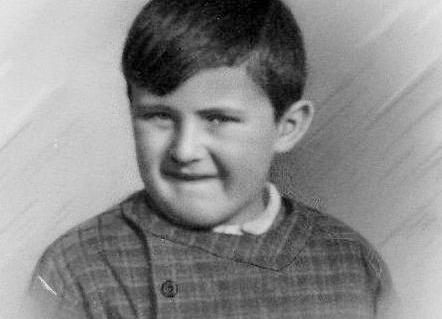
Marcel Pinte was born in 1938 a year before World War II. His father was Eugene Pinte who was possibly a clerical worker in the town of Aixe-sur-Vienne. His mother was Paule Pinte. His parents had five children. After the German invasion and occupation of France (1940), his parents formed a local resistance group, a vaey dangerous step, especuially for a familky with five children. They operated around Limogen in central France. Many Jews from Alsace were evacuated to and around Limoges. His father became an important commander. His code nme was Athos. He would build up a unit of 1,200 fighters. The Pinte’s rented a farm near the village of Gaubertie. This was an isolated location and it was from this farm that the resistance operated. In the beginning his office work enabled him to forge fake identities and the necessary documents, including identitification cards. He also had access to official documents. From their Gaubertie center they made contact with the wider resistance in the Limogen.
The farm was a good location to be a resistance meeting place. It was liked because the farm was hidden and very difficult to get to and enabled the resistance members to meet cladentintely. Their family life and resistance work became intertwined. There were constant coming and goings, particularly at night, commonly after his bed time. It would have been very difficult for the children to sleep without being disturbed by what was going on. There were many meetings and sometime there were even British airmen hiding in the farm’s loft. To the resistance fighters Marcel was known as Quinquin. Many resistance fighters were quite surprised how Quinquin got involved. He did little tasks about the farm which grew into more dangerous missions. These tasks were suitable for the boy’s abilitiesa and age, tasks he could successfully carry out. He was entrusted to deliver important message to other resistance groups. Quinquin was a very akert little boy with an amazing memory. He was entrusted with taking written messages, even to other resistance chiefs. He hid the messages under his shirt. Little Quinquin was an ideal courier. He was quick to understand what he had to do and remembered his father’s spoken instructions which he followed. He had age on his side for who would suspect such a small child of working for the resistance. He went about his missions unnoticed and without any one being suspicious of a very young boy activities. The Allies landed in Normandy (June 6) and were bottled up there fir nearly 2 months. Finally the break out began (July 25). Rapidly the Allies began apporoxhing Limogen. Marcel was with his father and other resistance fighters preparing to bgetvweaopms from a large night parachute drop (August 19). They were preoaring for a battle around Aixe.
There was an accidental discharge of a sten gun in which Marcel was hit and killed by the stay bullets. Marcel was buried (August 21). Other resistance battalions attended his funeral. His father was aged 49 when he died (1951). He was buried next to his son. Marcel Pinte’s name is inscribed on the Aixe-sur-Vienne war memorial as the youngest hero of the French resistance to have died a hero of France.
The great hardships of the German occupation continued into the immediate post-War era. One of the principal problems confronting France after World War II was rebuilding the country's shattered economy. Unlike Germany and the German occupied East, however, war damage was relatively limited. The quick collapse of the French Army (June 1940) and the German Army (August 1944) meant that a wide swath of the country was untouched physically by the War. That is not to say there was not significant damage. The Allies had targeted industrial plants supporting the German war effort such as Renault truck plants. Port cities supporting the U-boat effort were also targeted. A major dislocation was the agricultural economy. The most serious damage came from the Allied Transportation Plan designed to cut off German troops manning the Atlantic Wall in preparation for D-Day, bridges and railway infrastructures were a shamble. Another report suggests that 1.2 million buildings were destroyed or damaged. [Asselain, p. 108.] Repairing the damage took several years. Because of of price and marketing controls as well as German seizures, many farmers withdrew from the market, choosing to reduce planting and acreage tilled. This meant serious harvest shortfalls in 1943-45. [Mouré, pp. 272-73.] This was something easily rectified. Farm infrastructure and farmers were not damaged and killed. Once farmers were able to obtain reasonable prices for their harvests. The industrial recovery was more difficult. France negotiated a treaty with the United States cancelled a large part of its still unpaid World War I debt, a sum amounting to some $2 billion. The arrangement was known as the Blum-Byrnes agreement (accord Blum-Byrnes) (1946). The agreement was negotiated by Secretary of State James F. Byrnes and representatives of the French government Léon Blum and Jean Monet. Industrial reconstruction began even before the war ended (1945).
French economic recovery was promoted by a baby boom which began even during the German occupation (1942). We are not sure just why it began during the German occupation, I don't think this was the case for most other countries. The Provisional Government (PG) led by Charles de Gaulle and composed of communists, socialists and Gaullists, took many bold steps. We are not sure about the economic consequences of many of these actions. The PG nationalized key economic sectors (energy, air transport, savings banks, insurance companies ) and large corporations (such as Renault). They also created a Social Security system and works councils and set up a welfare system. The Commissariat général du Plan was created to begin national economic planning (1946). Jean Monet is put in charge. The First Plan was the Plan de modernization et d'équipement (1947-52). This focused on key economic activities (energy, steel, cement, transport, and agriculture equipment). Up to this time, French agriculture was largely unmechanized. The Second Plan had broader aims, dealing with housing construction, urban development, scientific research, manufacturing industries (1954-57). [Asselain, p. 112.] The Communist Party had gained great prestige during the War as a result of their role in the Resistance. The economic plight of the people created more support for the Party which in national multiparty elections garnered as much as 23 percent of the vote, making it one of the country's principal political parties and participated in various governments.
The Cold War at its heart was a struggle for the soul of Germany. Here Stalin had undercut Soviet Cold War prosopects by the Red Army orgy of rape at the end of the War and reparations imposed in its eastern occupation zone and culminated by a brazen effort to seize western Berlin leading go the Allied Airlift. There were, however, two countries which might have voted in the Communists--France and Italy. This would have undercut American efforts to defend Western Europe. France was saved from going Communist by General deGualle and the Free French Movement. The Cold War is often seen as a bi-polar struggle between East and West. The reality was much more complicated. France had been humbled by the Germans in World War II. After the War, France attempted resurrect its colonial empire. This led to two failed colonial wars (Vietnam and Algeria). In search of an independent defense capability, France under General De Gaulle built an atomic bomb--the Force de Frappe. France also pulled out the NATO combined command. French leaders as cornerstone of its foreign policy sought to develop a new relationship with Germany and out of that effort the European Union has grown helping to fashion a new Europe. The collapse of the Soviet threat has resulted in major shifts in the European-American relationship.
Asselain, Jean-Charles. Histoire économique de la France du XVIIIe siècle à nos jours.
Bogert, Genevieve. "Planting seeds of peace," The Washington Post (May 28, 2004), p. W11.
Brinkley, Douglas, et. al. Jean Monet: The Path to European Unity (1992).
Cohn, Marthe with Windy Cohn. Behind Enemy Lines: The True Story of a French Jewish Spy in Nazi Germany (Harmony), 282p.
Davidson, Eugene. The Unmaking of Adolf Hitler (Univesity of Missouri: Columbia, 1996), 519p.
Eizenstat, Stuart. Imperfect Justice.
Freidel, Frank. Franklin D. Roosevelt: Rendezvous with Destiny (Little Brown: Boston, 1990), 710p.
Harrison, Mark. "The economics of World War II: An overview," in "The Economics of World War II: Six Great Powers" in Mark Harrison, ed. International Comparison (Cambridge: Cambridge University Press, 1998), (University of Warwick). We have used Table 1-3. The dollar figures are in 1999 dollars.
Jackson, Julin. The Popular Front in France: Defending Democracy, 1934-38 (1990), 369p.
Jones, Joseph. "Vichy France and postwar economic modernization: The case of the shopkeepers," French Historical Studies (1982) Vol. 12, No. 4, pp. 541-63.
Kaufmann, J.E. Fortress France: The Maginot Line and French Defenses in World War II (Stackpole Military History).
Mouré, Kenneth. "Food rationing and the black market in France (1940-1944)," French History (2010) Vol. 24, No. 2.
Roberts, Andrew. A History of the English Speaking People Since 1900 (Harper Collins: New York, 2007), 736p.
Rossiter, Adrian, "Popular Front economic policy and the Matignon negotiations," Historical Journal Vol.30, No. 3 (1987), pp. 663-84.
Speer, Albert. Richard and Clara Winston, trans. Inside the Third Reich (Avon Books: New York, 1970), 734p.
Thomas, Martin."French economic affairs and rearmament: The first crucial months, June-September 1936, Journal of Contemporary History Vol. 27, no. 4 (1992), pp. 659-70.

Navigate the CIh World War II Pages:
[Return to Main World War II country page]
[Return to Main French history page]
[Biographies]
[Campaigns]
[Children]
[Countries]
[Deciding factors]
[Diplomacy]
[Geo-political crisis]
[Economics]
[Home front]
[Intelligence]
[POWs]
[Resistance]
[Race]
[Refugees]
[Technology]
[Bibliographies]
[Contributions]
[FAQs]
[Images]
[Links]
[Registration]
[Tools]
[Return to Main World War II page]
[Return to Main war essay page]