|
The Versailles Peace Treary ending World War I shocked the German people, both the punative measures and the loss of territory. German Governments even before Hitler seized power worked to undo the restrictions of the Treaty. The German and Soviet Governments signed the Rapollo Treary wjhich provofed for trade and military coopertation (1922).
NAZI diplomacy played an important role in preparing the way for the stunning military successes early in the War. NAZI diplomatic successes went through several destinct stages in which Hitler made radical shits depending on the circumstances. The basic strategy of NAZI diplomsacy was to divide their enemies and then conuer them one by one.
Hitler used diplomacy to lull world opinion with a modernate initial foreign policy.
Adolf Hitler after his appointment as Chancellpr (January 1933) intially pursued a moderate foreign policy. Germany at this point was militarily weak and Hitler did not want to cause an Allied intervention. And he needed time to defeat his domestic opposition. Thus he at first presented a rational image as a responsible statesman on the world stage while pursuing a radical domestic policy of crushing his opponents. Thus his first few years in power were focused on gaining absolute control of Germany, secretly launching a massive rearmament program, and projecting a moderate internatiinal image. This enabled him to consolidated power and began to rearm Germany in secret. Hitler also began developing the Axis alliance system, first with Italy and then with Japan. As Germany rearmned, Hitler's foreign policy shifted. And he dramatically morphed into an agressive German warlord. German diplomacy began using its growing economic and military power to force concessions from neigboring countries. Hitler's invasion of Czechoslovakia (1939) ended the Hitler's ability to deal diplomatically with the West. The War was only made possible by Hitler's diplomatic coup, the Non-Agression Pact with the Soviet Union (1939). Neither side was under any illusion, the Non-Agression Pact was an armed truce, putting off war until the two continental powers partitioned Europe. After launching the War, diplomacy was no longer of interest to Hitler as he launched on a massive effort to reorder Europe by force of arms. With his military rearmament underway, he had a poweful advantage over Britain and France. They were willing to do just about anything to avoid another war while Hitler not only did not have a fear of war. He actually wanted a war so he could become a great German military commander. And to achieve this goal he made a dramatic diplomatic move, signing a military pact with his arch ememy--Stalin. While this looked like a dramatic shift, it was essentially his basic tactic--divide and conquer. Hitler also wanted to keep the United States out if the war. Here he was powefully aided by the Isolationists. The German Embassy in America quite passed money to Isolationists. Hitler wanted to complete his conquest of Europe before America entered the War and swung its immense industrial power into the conflict. Hitler once defeating France and in control of most of Western Europe, encountered his first diplomatic failure, he failed to bring the British to the peace table. Stimied by the failure of the Luftwaffe to break Britin, he decided on his greatest adventure--an anti-Bolshevick crusade against the Soviet Union. One in possession of the resources of the East, he believed that German dominance of the continent could not be challenged, even by the United States. Hitler esentially acted alone despite his Axis allies. One he decided to attack the Soviet Union. Then he began working on a coalition. This proved another diplomatic failure. Not only could he not convince the British to make peace, he was unable to bring Franco's Spain and Vichy France into his anti-Bolshevick crusade. The Axis alliance proved to be a diplomatic fiasco for Hitler. It required Hitler to divert forces to save his blundering Italian ally. Even worse, it encouraged Japan to attack the United States, bringing Americaninto the war months or even a year before what might have otherwise occurred.
NAZI diplomacy played an important role in preparing the way for the stunning military successes early in the War. NAZI diplomatic successes went through several destinct stages in which Hitler made radical shits depending on the circumstances. The basic strategy of NAZI diplomsacy was to divide their enemies and then conuer them one by one.
The Versailles Peace Treary ending Workd War I shocked the German people, both the punative measures and the loss of territory. German Governments even before Hitler seized power worked to undo the restrictions of the Treaty and subsequent Allied actions. The German and Soviet Governments signed the Rapollo Treary which provided for trade and military coopertation (1922). And the Germany military pursued a range of policies evading the Versailles Treary restrictions. We are unsure to what extent the German Government was aware of these actions, but could not have been totally unaware and did nothing to prevdent them.
After seizing power, Hitler's first priority was to eliminate or silence his domestic opposition. It was important to avoid any kind of foreign intervention. His intemperate policy statements during the campaign certainly warned the Allies what was in store for Europe. Thus it was vitally important to presented a rational image as a responsible European statesman while he established the NAZI F�hrer state and launched a secret rearmament orogram. . One in full control of Germany, he dramatically changed to a more aggressive German warlord. At the time that Hitler and the NAZIs seized power in Germany, they were vulnerable. They had many domestic political opponents, a free press, and an independent judiciary. In addition, the German military was militarily weak. It could not have effectively resisted an Allied intervention. Thus the Allies could have intervened in Germany and reestanlished democratic rule. Hitler needed to play a careful political and diplomatic game. His tactics were to divide and conquer. First he disposed of the Communits and then went after the Socialists while for a while tolerating the Catholics. Use of the police and opening of concentratioin camps soon silenced press opposition and brought the courts under NAZI control. All thre while he courted the military with a secret rearmament program. To allow him time to gain mastery of Germany, he projected a new moderate image. The Reichskonkordat was negotiated with the Vatican and guaranteed the religious, but not the political, rights of the Catholic Church in Germany (1933). Much of Hitler's venem as he rose to power was directed at Poland which becaise of the Polish Corridor phyically divided Germany. Thus the signing of a Non-aggression Treaty with Poland relieved many Europeans (1934). This was seen as aihn that once in power, Hitler was becoming more moderate. This was followed by a Naval Arms Treaty with Britain (1935). A major factor in Britain's growing animosity with Germany had been the Kaiser's decesion to build a Highseas Fleet. The British-German Naval Treaty seemed to defuse tensiins between the two countries. Hitler also assured France that he had no designs on French territory. The Berlin Olympics provided the NAIZs the opportunity to show case NAZI successes (1936). After the games there was a substantial change in NAZI diplomacy.
Hitler and the NAZIs planned from the beginning for a massive rearmament program. NAZI propaganda promoted the idea that Germany must rearm. [Riegler] The NAZI objectives could in fact only be achieved by war. The NAZIs did not, however, begin a massive rearmament program immediately upon seizing power in 1933. Hitler's first objective was to secure control of Germany abd he did not want to preciptate foreign intervention before he was ready. The German military itself has already sponsored secret armanents programs during the Weimar era in violation of the Versailles Treaty. The NAZIs thus had a solid foundation upon which to base a revived military. The NAZIs sharply expand weapon reseearch. The German military expanded in secret during 1933-34. Hitler by March 1935, felt suffucently secure to publicize his military. The NAZIs announced that they expansion - which broke the terms of the Versailles Treaty. Europe learned that the Nazis had a modern 2,500 plane Luftwaffe and a Wehrmacht with 300,000 men. Hitler publicly announced that he was insituting a compulsory military conscription and planned to expand the Wehrmacht to 550,000 men. Actual araments production began in earnest in 1936. The NAZIs in 1936 doubled armamets spending over 1935 levels. It was in 1936 that NAZI arms spending first exceeeded the combined total for transportation and construction spending. The nature of arms spending also increased. NAZI arms spending initially focused on research, development, and capital investment. The NAZIs in 1936 began concentrating on producing actual military equipment. This is one of the least economically beneficial types of government spending.
Large number of Germans citizens and people of German ancestry living in foreign countries. This had a range of implications for the NAZIs, primarily diplomatic concerns and intelligence gathering. This included countries in Europe as well as North Anerica, Latin America, and Africa. Some of these Germans proved useful to the NAZIs. Others were more of a complication. And there were significant differences in the appeal of NAZIism. The largest number of overseas German, in fact the majority lived in the United States and had largely assimilated. Although the German-American Bund nade headlines, the NAZIs had little appeal to the vast majority of German-Americans who like most other Americans saw the NAZIs as repungnant when they began to appear in movie newsreels. And Hitler's primary concern with German Americans was to keep them quiet so as not to incite American public policy. His primary goal was to keep America out of the War as long as possible. The Germans in areas of the former German Empire that had been lost to new or neigboring countries were a fifferent matter. They tended to be very pro-NAZI as the NAZIs provided the possibility of reunion with the Reich. NAZI diplomacy used them to stir up trouble and to provide an excuse to persude Allied politicans like Primeminister Chanberlain to accept NAZI expansionism. Other German populations in Europe varied with some support for the NAZIs as well as other group such as the Folkdeutsch were mpre apolitical. There were Germans in several Latin American countries. Germans there resisted asimilation and NAZI influence was widespread. This varied from country to country. The largest population was in Brazil, but the greatest influence was in Argentina. Even small numbers, however, became a security threat when Hitler launched World War II and information such as ship sailings became important. Germany before World War I had several African colonies. The only one where any substantial number of Germans settled was Southwest Africa (Naminia) which became a BRitish-South African mandate after the War. Some Germans stayed in Southwest Africa and they tended to be pro-MAZI.
Hitler, with his military rearmament underway, had a poweful advantage over Britain and France. They were swilling to do just about anything to avoid another war while Hitler not only did not have a fear of war, he actually wanted a war so he could become a great German military commander. And he was careful to set his demands within the frame of reuniniting Germans and the unfair Versailles Treaty. Thus remilitarizing the Rhineland, the Anchluss with Austria, and the demands for the Sudetenland all involved German populations. Hitler was careful at Munich to assure Primeminister Chamberlain that he "wanted no Czechs". This proved very effective because there were many Europeans who desired fervently to navoid another warm convinced themselves that the Treary of Versailles has been unfair and the cause of the problem, not the increasing NAZI demands.
German diplomacy was of course orimaeily focused on Europe. Germany dud, however, have diplimatic rekatiins with Asian countries and the focus ar first was not on Japan which had joined the Allies in World War I and unlike China ebgaged in conbat operations. German foreign policy during the Weimar era was to break out of the diplomatic isolation resulting from defeat in World War I. Germany's initial Asian partner was China. A separate German-Chinese Peace Treaty was concluded (1921). This was an extension of the Rapallo Treaty (1922), cooperation with the Soviet Union. The Soviet Union was oposed to Britain abd France and thus thus willing to help Germany evade provisions of the Versailles Treaty. The same was true of China and the Kuomintang (KMT). China after rhe collapse of the Manchu Imperial Dynasty and World War I was divied by warlordism and civil war as well as suffering from foreign intrusions. The KMT was in the process of unifying China and ending the foreign concessionscfor Treaty Ports which meant primarily actions against Britain and France. And the KMT was at first Allies with the Communists. It was seen in the 1920s as a revolutionary movement akin to the Communists. But as Germany no longer had colonies, cooperation berwee the two countries was possible. And there was interest among German industrialists. German-educated Chu Chia-hua (朱家驊) began arranging Sino-German contacts. The Chimese focus was increaingly on an ggresuve China and there was real minterest in industrial and mikitary modrnization. A bloody civil war broke out between the KMT and the Communists (1927). The KMT Northern Expedition nominally unified China (1928). The Chinese urgency for modernising its military and industry and Germany's need for raw materials made for a close relationship. A german milirary mission played an important role in miderbizing the Chinese military. It was not on a part of the Japanese, but the impact og the German mission helped create an army that the Jaoanese could not overwhelm. The Battle for Shabghai adter Japam seized Manchuria showed a Chinese Army that performed well and the German rekatiinshio was one reason why (1931). And the relationship continued ever after Hitler seized power (1933). Chiang Wei-kuo, Generalissimo Chiang Kai-shek's adopted son, received military training in Germany. After Japan invaded China (1937), Hitler had to make a choice. An alliance woth Japan was not possibke as long as Gernany was aiding the KMT. And Hutler chose Japan because it posed moee of a threat to the Soviet Union. This ebded significant military ooperation. The German effort, however, had been sugnificanr. And while the Hapanese won battles, they were unable to defeat China. Eventually the Japanese decided they would have to defeat the United States to end the war in China. Hitler continued to maintain relationd with the KMR. Germany signed the Tripartite Pact with Japan and Italy (September 1940). The final srraw for Chiang was Hitler officially recognised Wang Jingwei's and jis Japanese controlled puppet government in Nanking (July 1941). Two days after the Japanese attack on Pearl Harbour, China formally declared war on Germany (December 9, 1941).
Germany even after World War I had the largest industrial economy in Europe. This gave it enormous influence, especially in the Balkans. After the NAZIs seized power (1933), Germany began a carefully orchestrated campaign to bring the Balkan countries within the German orbit. This included both the countries that fought wiyh the Central Powers in World War and the countries which fought with the Allies. Germany used both economic means as well as promoting Fascistg political parties. Hitler's objective was obtain access to needed natural resources as well as to secure Germany's southern flank for the eventual attack on the Soviet Union.
The turning point in NAZI diplomacy was Czechoslovakia. Hitler invaded and occupied what was left of Czechoslovakia (March 1939). This was in complete violation of the Munich accords. There was no resistance to the NAZI action, but it completely changed British policy toward the NAZIs. The Munich Accord had left the possibility of further border changes open as long as they be cobducted diplomatically. Here the major renaining issue was the Polish corridor. The NAZI annexation of Czechoslovakia changed this. Even Primeminister Chamberlain could no longer claim that Hitler could be reasoned with. It meant that that his word could no longer of any value. He could not be trusted to honor treaties. And it meant that his territorial asperations were no limited to German populations. Thus the next NAZI aggression would mean war. Hitler convimced himself that the British and French were spineless and would not fight. But even a man so fundamentally devoted to peace as Chamberlain now saw that there was no option to NAZI aggression except military force
And to achieve this goal he made a dramatic move, signing a military pact with his arch enemy--Stalin. While this looked like a dramatic shift, it was essentially hois basic tactic--divide and conquer. The War in Europe began in 1939 when the German blitzkrieg smashed Poland in only a few weeks. The invasion was made possible the preceeding week when Stalin signed a non-aggression pact with Hitler. NAZI Foreign Minister Ribbentrop and newly appointed Soviet Commissar for Foreign Affairs Molotov on August 23, 1939, signed the Nazi-Soviet Non-Aggression Pact. At the time of the signing, British and French delegations were in Moscow trying to reach an understanding with Stalin. He was convinced, however, that they were tring to draw him into a war with Hitler. The two countries which until that time had been bitter foes, pledged not attack each other. Any problems developing between the two countries were to be delt with amicably. It was last for 10 years. The Pact shocked the world and the purpose was immedietly apparent. It meant that Germany could attack Poland without fear of Soviet intervention. Thus after defeating Poland, Germany did not have to fear a full-scale European war on two fronts. What was not known at the time was that there was a secret protocol to the pact which in effect divided Eastern Europe betwen the two countries. This protocol was discovered after the end of the World War II in 1945. The Soviets continued to deny this protocol until 1989. The NAZIs 8 days after signing the Pact invade Poland on September 1, 1939, launching World War II. Although the Soviet's did not enter the War against Britain and France, the Soviets were virtual NAZI allies as they provided large quantaies of strategic materials, especially oil. Communist parties in Britain and France opposed the war effort. The Communist Party in America opposed President Roosevelt's efforts to expand defense spending and assist Britain and France.
Hitler's view of America seems to have changed over time. Before seizing power he seems to have had a generally faorable impression. He commented on the immigrants that brought energy to America and the many inventions and industrial sachievements of America. After seizing power he seems to changed his assment. He begins to talk of Jewish control of American finance and desparage the black population. G�ring made his famous comment that all the Americans know how to do was make razor blades, We are not sure why Hitler changed his mind, but suspect that it has to do with President Roosevelt's unrelenting hostility. The two men assumed power within weeks of each other. And unlike the British and French, there was no attempt on Roosevelt's part to reach an understanding with Hitler. For his part, Hitler's primary goal was to keep America neutral. While he and the other NAZIs might desparage America, Hitler appears to have had an understanding of the potential importance of American industry. (An understanding the Japanese lacked.) So the principal approach to America was to avoid any repetition of the Kaisrs disatrous diplomacy (attacking merican ships nd the Zimmermann telegram) and encouraging the isolationist movement, courting men like Lindberg and Ford. The policy was all too effective. Many Americans like the British and French wanted no part of another wae, especially a war with Germany. Hitler in the end, however, confrnted perhaps the most astute politican in American history. And NAZI military victories in Europe resylted in Roosevelt being elected for a third term. And by 1941 American industry was supplying Britain through Lend Lease the American Navy was engaged in an undeclared naval war against NAZI U-boats. Even so Hitler ordered Admiral Doneitz to avoid confrontatuiins with American ships if at all posdsible.
Once in control of Western Europe Hitler encountered his first diplomatic failure, he failed to bring the British to the peace table. Hitler after the Fall of France had achieved his objectives in the West. Now he wanted peace with Britain so he could focus on the East. He knew that Britain could never be a truly independent country when confronted with a NAZI-dominated Europe. In a speech he offered the British peace (July 19, 1940). He thus took on the mantel of a peace maker and made a major address, again to the Reichstag with the huge NAZI eagle as a backdrop. He offered peace to Britain and the retention of the Empire. Britain would have to recognize German control of the occupied countries. Hitler issued an "appeal to common sence". He also threatened Britain with annilation if they did not comply--hardly the words of a peace maker. [Black, p. 575.] This was no iddle threat as the Luftwaffe had already begun the initial phase of its air campaign with Britain. Churchill reportedly listened to the speech. There were those in Britain who wanted to make peace. Churchill was a persuasive speaker, but he did not control public opinion. The British public, however, were not persuaded. They vividly remembered Prime Minister Chamberlain returning from Munich and waving the pledge from Hitler of 'peace in our time'. Hitler had crossed a line, there would be no more easy victories. The British were prepared to fight and they were more prepared than the NAZIs and the Luftwaffe understood.
Hitler assured the military and his intimates as he prepared with Stalin to launch the invasion of Poland that the Allies (British and Frenh) would never fight. He was wrong, but only half wrong. The Allies after Germany invaded Poland (September 1939), declared war, They refused, however, to come out from bhind the protrection of the Masginot Line to aid Poland. They even declind to bomb Germany, largely becuse the French were concerned that the Luftwaffe would bomb France. The initial German diplomatic effort was to convince the Allies to rescind the declaration of War. This was useless given how Hitler had showed after Munch that his word had no value. Thus diplomacy languished as it was clear that the issue would be resolved on the battlefield in a showdown on the World War I Western Front. Both the Allies and Hitler realized this. Hitler quickly realized that he would not be able to duple the Btritish again. So his inclination was to used his military might displyed in Poland to threaten and cajole other countries. This was on display when Hitler staged military victory parade through the streets of a destroyed Warsaw and told the press and diplomats that ge could ravage any capital in Europe just as he ds Warsaw (October 5). It had some impact. It undercut Allies diplomacy in the Balkans. It was a factor with the strength of the osolationiss in America who wanted no part of another war with Germany. He accepted Soviet aggressions in the East even against Finland and against Romania which threatened the critically important Ploesti oil fields. This changed with his momentou victories in the West and fall of France (May-June 1940). Hitler's Panzers were stopped at the Channel so he went on a peace offensive, trying to convince. Britain to make peace. Churchill was having none of it. And a combination of the Royal Air Force and American Lend Lease meant that there would be no British Vichy. So German diplomacy shifted to support what from the very beginning was his primary goal. This involved several diplomatic efforts which went on until Hitler launched the invasion of the Soviet Union (June 1941). It would be the last important German diplmatic effort, after this German's fate was entirely in the hands of Hitler the war lord and the success or failure of the Wehrmacht. The German diplomtic effort was quite active and involved and achievd comsiderable success. First, signing up alles for Barbarossa. Second, convining the Soviets that its military movements were not threatening and obtaining large quantities of critical material from them. Third, working with Germany's primary ally--Italy. Fourth, expanding the Axis, especially by obtaining Japanese adhesion. Fifth, keeping America out of the War. Sixth, securing the Wehrmacht's southern flank (the Balkans). Seventh, pursung prepation for the Holocaust in occupied countries. Eighth, working with neutral countries to obtain raw materials and military support. Ninth, attempting to garner influence and spy rings in Latin America.
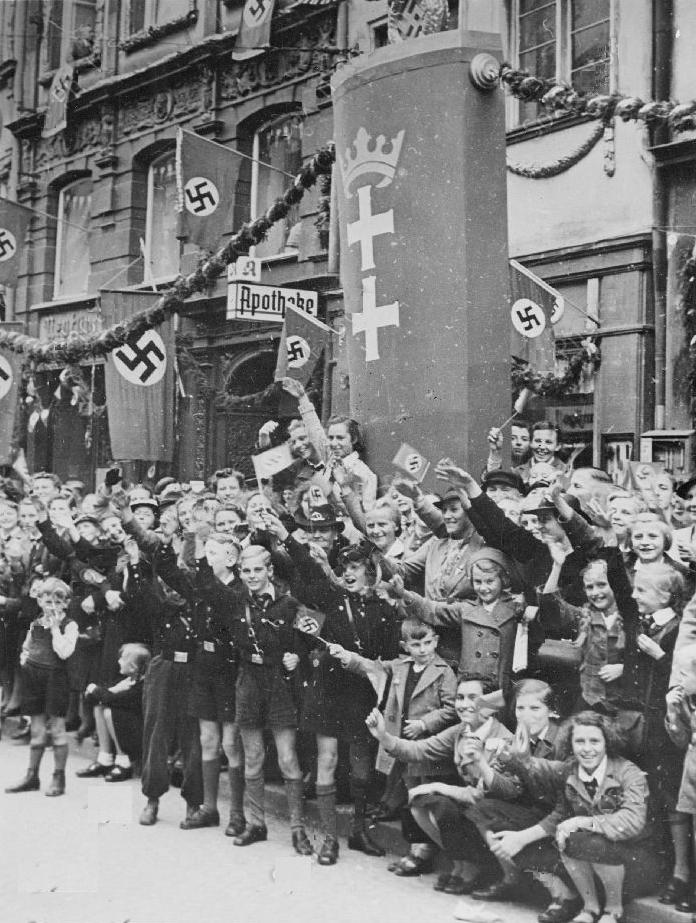
Many countries at the time Hitler and stalin launched World Wwar II desired to stay out of the war and declared their neureality. In World war I some of these countries (the Netherlands and Sweden) had been sympathetic to the Germans), this was not the case in World War II. Hitler and his NAZIs had throughly revolted much of Europe. Many of the neutral countries were eventually invaded by either the Germans or Soviet Union. A few countries managed to remain neutral (Portugal, Sweden, Switerzland, and Turkey). Spain also managed to remain neutral, although they were sympathetic , but not overly enthusiastic about the NAZIs. German policy toward the neutrals varied. Almouth there were no open threates, it waslargelky understood that only colaboration would prevent an invasion. Here Sweden was especially important s it was Germany's principal source of iron ore. King Gustaf V wa sympathetic to Germany in World war I, and there were social cotacts before World War II. King Gustaf paid a state visit to Germany before the War (February 1939). We believe the Berlin children here are cheering the king. One historian claims that the King reportedly tried to convince Hitler during a stat to soften his persecution of the country's Jews. [Weibull, pp. 94-95.] The King would later cable isaproval of the ijnvasion of the Soviet Union. Turkey was wooed byboth the Germans and the Allies. There were elements in Turkey that had dsires to add the Turkic people of the Caucauses and Cenbtral Asia. Wiser heads remenbering the tragedyof Worls Wat I kept Turkey out of the War.
The Arabs played a role in the War, but much of the Arab Middle East was in some kind of dependencu to European countries, mostly the Allies (Btitain and France). The status included colonies, protectorates, and trusteeships. The only Axis colony was Libya. Iraq and Egypt were largely independent, but with the British had a range of treaty rights. Thus diplomacy is not the best term to describe Allied and Axis activities in the area. The Arabs were, however, a major target of Axis propaganda. Here a major component was anti-Semitic propaganda broadcasts. The Grand Mufti was a important Axis ally even before the War began. After stirring up trouble in the Middle East (plestine, Iraq, and Iran), he spent th War un Berlin, making propaganda brocasts for the Germans and urging Hitler and Himmler to kill more Jews.
The World War II diplomatic history of Latin America is complicated because there were so many different countries. There were Allied colonies in the Caribbean, but most of Central anbd South America were independent. German had a number of interests in the regiin,including military missions and air transport ventures. There were akso German ethnic communities in many of the countries. These communities prpved useful in World war I, providing informstion on mercjsnt shipping which could be used by the U-boats. There were alsi right wing militaries with afinities to the NAZIs. One South Ameican leader, Juan Peron, was particularly impressed with Benito Mussolini. Few Latin Americns were aware of NAZI racial doctine, exept a hatred for Jews. Virtually unknown was how Latin Americans fell into the NAZI racial heirarchy, especially mestizos. The NAZIs were a little more subtle than Kaiser Wihelm's Imperial Germany. This time there was no clumsyattemps like the Zimmermann Telegram.
Germany, Italy, and Japan signed the Tripartite Pact September 27, 1940. The agreement allied Germany and Italy (which were at war with Britain) and Japan (which was at war with China). Germany and Italy has since 1939-40 been at war with Britain. Japan since 1937 had been at war with China. The alliance did not require the partners to join these wars, but it did require them to come to each other's aid if attacked by any country. The alliance became known as the Berlin-Rome-Tokyo Axis alliance, or commonly the Axis. The three Axis partners recognized German hegemony over most of Europe; Italian hegemony in the Mediterranean, and Japanese hegemony in East Asia. After the Axis agreement was signed, several German allies joined the Axis, notably Vichy France and Fascist Spain refused to do so. Japan had no Asian allies, except for the puppet state of Manchukuo. The Axis alliance proved to be a diplomatic fiasco for Hitler. It required Hitler to divert forces to save his blundering Italiann ally. Even worse, it encouraged Japan to attack the United States, bringing Americaninto the war months or even a year before what might have otherwise occurred.
Hitler's next diplomatic initiative was to create an anti-Bolshevick crusade against the Soviet Union. Before the NAZIs could strike at the Soviet Union the Reich's southern flank would have to be secured. He also wanted to secure the support of allies. This meant Spain, Vichy, France, and Italy in the west and as well as the Balkan countries. One might have thought the NAZI battle field victories and dominant position could have compeled the remaining independent countries to join him in his anti-Bolshevick campaign. NAZI diplomacy had already laid the groundwork in the Balkans. Hitler assumed that Franco who he had helped install in power would join him. Hitler also believed that the defeat of France and Petain's anti-Communist views would enable him to get Vichy's support for the war with the Siviets. He also did not anticipate that his ally Mussolini would complicate his plans. What followed was a diplomatic failure of staggering proportions which would cobntribute to the failure of the NAZI invasion of the Soviet Union. This proved another failure. Not only could he not convince the British to make peace, he was unable to bring Franco's Spain and Vichy France into his anti-Bolshevick crusade.
Hitler's most glaring diplomaric blunder was with Axis-ally Japan. The Axis held in 1941 a dominant military possition. A combined Axis assault on the Soviet Unin almost certainly would have succeeded. Hitler did not consult the Japanese about Barbarossa. It is unclear why he did not given the Axis Alliance. Presumably he did not think their help would be needed and if the Japanese paticipated would have to be rewarded with a share of the spoils. This proved to be a disatrous mistake. The Soviets proved to be a much harder nut to crack than Hitler anticipated. And before Moscow with was hardened Siberian troops rushed from the Manchurian border that launched an offensive before The end of any real NAZI diplomacy occurred after Pear Harbor when Hitler declared war on America (December 11, 1941). A Japanese carrier taskforce executed a surprise attack on the American Pacific Fleet at Pearl Harbor (December 7, 1941). The Axis Alliance was a defensive alliance. It required the three countries to come to the other's aid in case of attack, but did not require any action if one of the three attacked another country. Thus Hitler was not required to come to Japan's assistance, Foreign Minister Von Ribontrop stressed this in meetings with Hitler. Up to this time Hitler had avoided attacking the United States, even when President Roosevelt launched was in effect an undeclared naval war in the North Atlantic. Thus Hitler's decession to declare war on America (December 11) is largely unexplained. Speaking before an audience of NAZI luminaries, Hitler announced his decession, explaining that America with its mixture of races would not be an important factor in the War. America was in fact the only country on which Hitler declared war. It was like the other important war decessions, a decession he made personally without any kind of staff discussion. He never explained his desission to his inner circle and historians today can only speculate concerning the decession. Even more unfathomable, he made the decession just as the Soviets launched their offensive before Moscow, clearly demonstrationg that Operation Barbarossa had failed to knock the Soviets out of the War in a quick summer campaign. America was unprepared for war against either Germany or Japan. Hitler's declaration solved a problen for President Rooseveltof how after a Japanese attack to enter the European against NAZI Germany The Japanese and NAZIs were unaware of the dangers of war with an industrial potential of the United States. They were convinced that America's war profuction could not be accelerated or a national will to wage war coalese in time to make an effective contribution.
There were Soviet and NAZI peace feelers during the World War II fighting on the Eastern Front. Nost of the impetus seems to have come from Stalin. They never came to anything, primarily because the battlefield developments appeared to have affected what the two dictaors were willing to offer and accept. Historians debate as to how serious these feelers were, in part becuse Stalin attempted to suppress all evidence of these contacts after the War. Much of the evidence, however, was located outside the soviet Union and stellite countries. Since the disollution of the Soviet Union more details have become available, both from Soviet archives and Russians that were finally able to talk. There is no doubt that the Soviets semt peace feelers to the Germans (1941-43). There is, however, considerable debate among historians about the details and circumstances. What we do not know is what Stalin's motivations were. We have collcted some basic information on these pece feelers, almost all originted with the Soviets. U.S. intelligence was aware of some of these contacts. In fact the Soviets may have leaked some of the detils. This would explain President Roosevelt's well-documented concern about keeping the Soviets in the War. One of the most knowlgeable experts on the Soviet Union insists that the key to assessing the wartime policies of the Americans and the British 'will be found ... in the soundness and accuracy of their fears with relation to the possibility of a separate German-Soviet peace."
With the invasion of the Soviet Union, German foreign policy shifted. There was very little diplomacy. This was because, most of Europe was either at war with Germany or occupied. NAZI allies were essentially occupied and those that tried to defect had to deal with Hitler's ire. The foreign policy that was conducted was decidedly one sided a largely anounted to Germany squeesing allies and occupied countries for more resources. Hitler demand more men from allies and more workrs from occupied coyuntries. He demanded more resources from both. The Axis alliance was not like the Anglo-American alliance with diplomatic discussions over strategy and tactics and combined staffs. The North African campaign was somewhat of an excption, but only to a degree. And the delivery of workers, food, and ,aterial was also not a matter of diplomcy. The Germans issued requirements and the Allies and occupied countries wre expected to comply. Finland was a bit of an exception. Germany ammassed a Grossraum with a huge economic potential, unfortuntely for the NAZI war effort, they opperted it at only a fraction of its potential. The NAZI preference was to bring workers into the Reich to work at factories there. NAZI security forces prived brutally efficent in dlivering workers, but often not the healthiest or most skilled. Again there was no diolomacy involve, only commands from German authorities. Here both security and the declining economic productivity in the allied and occupied countries. Hitler had expected his conquests in the East to provide the food and raw material needed by the German war effort. When an ally was no longer dependable, the NAZIs simply sized control as it had done in the occupid countriies. The NAZIs also issued orders about the Jews. First on NAZI-like Nurembrg Laws and then on killing or transport to the death camps. There were meetings with allied leaders, primarily Italy, but also others (Bulgaria, Finland, Hungary, and Romania).
Black, Conrad. Franklin Roosevelt: Champion of Freedom (Public Affairs: New York, 2003), 1280p.
Eribull, Jörgen. Bernadotterna på Sveriges tron (Bonniers förlag Stockholm 1971).
Navigate the CIH World War II Section:
The End of Diplomacy (December 11, 1941)
NAZI-Soviet Peace Feelers
War Time Foreign Affairs (1941-45)
Sources
CIH -- WW II

[Return to Main World War II country diplomacy page]
[Return to Main World War II diplomacy page]
[Return to Main German World War II page]
[Return to Main Great Patriotic War page]
[Biographies]
[Campaigns]
[Children]
[Countries]
[Deciding factors]
[Diplomacy]
[Geo-political crisis]
[Economics]
[Home front]
[Intelligence]
[Resistance]
[Race]
[Refugees]
[Technology]
[Bibliographies]
[Contributions]
[FAQs]
[Images]
[Links]
[Registration]
[Tools]
[Return to Main World War II page]
[Return to Main war essay page]
Created: 4:02 AM 4/28/2007
Last updated: 4:20 AM 8/4/2019