|
Lend Lease if not the most important measure, is surely one of the most important laws ever passed by Congress. The NAZI Blitz on London, reported nightly on the radio by Edward R. Murrow had a profound impact on American public opinion. President Roosevelt with the fall of France committed the United States to assisting the countries fighting the NAZIs (June 1940). U.S. law at the time reuired that Britain pay for equipmet and supplies. Public opinion polls by December, 1940, indicated that 60 of Americans favored helping Britain, the only country still resisting the NAZIs, even if it meant war. This and the President's overwealming reelection, strengthened his hand in Congress. Passage, however, was by no means certain. Here Republican presidetial candidate Wendel Wilkie plasyed a major role in winning Congressional approval. The U.S. Congress's in March, 1941, passed the Lend-Lease Act proposed by the Administration. It proved to be one of the most important pieces of legislation in history. The Lend-Lease Act empowered the president to "lend, lease, or exchange" war materials with nations whose struggle against aggression was considered necessary to American security. It made the United States the "arsenal of democracy," not only for the United States, but for a vast coalition of allied nations forming around Britain and the United States.
The 1940 presidential election is arguably the most important election in American history. The first American President, George Washington, retired after two 4-year terms. This set a precedent that every other president had followed. FDR because of the international crisis decided to run for a third term which became a campaign issue. The national debate over neutrality and isolationism that had been raging since the mid-1930s reached its height. There were powerful spokesmen on both sides. Isolationist groups, such as the American Fist Committee, opposed any risks that could lead to war and shaply attacked the President's policies. International groups and an increasing number of average citizens demanded more active aid to Britain. His Republican opponent was a surprise choice, Wendell Willkie, a wealty busniessman who had swept the Republican primaries. Willkie did not crticise FDR's support for the democracies, by the time of the camapign only England. His nomination was an indication of the shift in public opinion toward intervention. Willkie instead pledged "all aid to the Democracies short of war". He attacked the New Deal on domestic issues, what he referred to as the socialistic policies of the Administration. Roosevelt's foreign policy was, however, an issue in the campaign. The isolationists led by the American First Committee accused FDR of trying to drag America into the war. Speaking in Boston on October 30, the President assured his audinence, "I have said this before, but I shall say it again, and again and again: Your boys are not going to be sent into any foreign wars." Usually the phrase was "foreign wars" and usually the President added, "unless we are attacked". The election was another victory for FDR, but not the landslide of previous camapigns. Still FDR carried 39 of the 48 states. The election, however, was much closer than suggested by the results. FDR saw his re-election as strong pupblic support for a program of military preparedness and aid to Britain. The victory gave him the ability to launch Lend Lease.
The RAF managed to defeat the Luftwaffe and stave off invasion in 1940. But now NAZI Germany dominated virtually all of Western and Central Europe. It seemed that Britain in the long run had little chance of holding out against the economic and industrial resources at Hitler's command. Worse still, Britain was rapidly reaching the point that it could not afford to continue purchasing military equipment and supplies in the United States. Churchill wrote to Roosevelt in a letter he described as the most important he had ever written (Decemnber 1940). Churchill described in stark terms Britain's position and the substantial losses as a result of the Blitz and U-boat attacks. He warned the President, "Unless we can establish our ability to feed this Island, to import the munitions of all kinds which we need, we may fall by the way, and the time needed by the U.S. to complete her defgensive preparations may not be fortcoming." Then Churchill came to the cruxof the
matter,"The moment approiacheswhere we shall no longer be able to pay cash for shipping and other supplies. While we shall do our upmost and shrink from no proper sacrifices to make payments across the exchange, I believe you will agree that it would be wrong in principle and mutually disadvantageous in effect if, at the eight of this struggle Great Britain would be divested of all saleable assetts othat after the victory was won with our blood, civilization saved and the time gained for the United States to be fully armed against all eventualities, we hould stand strpped to the bone. Such a course would not be in the moral or economic interests of either if our countries. .... You may be assured that we shall prove ourselves ready to suffer and sacrifice to the utmost to the Cause, and that we shall glory in being its champions. The rest we leave with confidence to you and to your people, being sure that ways and means will be foundwhich future generations on both sides of
the Alantic will approve and admire."
The NAZI Blitz on London, reprted nightly on the radio by Edward R. Murrow and other American correspondents in London had a profound impact on American public opinion. Public opinion polls by December 1940, indicated that 60 of Americans favored helping Britain, the only country still resisting the NAZIs, even if it meant war. This and the President's overwealming reelection, strengthened his hand in Congress. -Lend Lease was not an easy sell. Isolationism was still strong in America even in 1941.
President Roosevelt was deeply mooved by Churchill's letter (December 1940). After much thought he announced his concept--Lend Lease to Harry Hopkins and other close advisers. It was not a concept developed by his staff, but rather a concept he developed himself. Hopkins writes that he was unsure as to the details and the legalities, but he was clear on the basic concept. [Goodwin, p. 193.] Francis Perkins described the concept as a "flash of almost clairvoyant knowledge and understanding". The brilliance of the concept was that it could be sold to a an American public that still wanted no part of war. This was Roosevelt genius. Throughout his presidency he had an instinctive sence for what could be accomplished and how to sell it to the Ametican people. Lend Lease sounded much less beligerant than other ways of describing aid to Britain which was little short of an act of war against NAZI Germany. While the terminology sounded reasonable, it ws of course nonsenceical. One does not lend or lease military equioment and supplies because equipment used in war is unlikely to be returned in useable condition and supplies are consumed.
President Roosevelt first presented his concept to the public in a press conference (December 16, 1940). He talked about having a length of garden hose and not dickering over the price if a neighbor's house was on fire. A week later he delivered one of his finest Fire Side Chats . He explained it in a common sence way that made sence to most Americans. He exolained that there was no way of negotiating with Hitler and the NAZIs. "No man can tame a tiger into a kitten by stroaking it. There can be no appeasement with ruthlessness." He pointed ut that if Britain fell, "all of us in all the Americas would be living at the point of a gun". THe thrust of his message was, "We must be the great arsenal of democracy. For us this is an emergency as serious as war itself. We must apply ourselves to our task with the same resolution, the same sense of urgency, the same spirit of patriotism and sacrifice as we would show were we at war."
Hitler knew that Lend Lease would be a turning point in the War. Britain alone without Lend Lease simply did not have the economic and industrial potential of resisting a NAZI-dominated Europe or even contining the War. Adding the industrial power of France and other occupied counties to that of Germany represented a potential powerbase that Britain alone could not resist. This was especilly true s long as Stalin was providing Hitler vst quantities of
petroleum and other vital raw materials. The problem for Hitler was this made him depebdent on Stalin's largess. And Hitler did not go to war to become a Soviet dependency. This also, however, created a problem for Stlain as well. Stalin's generosity made Hitler acutely aware of how important tne Soviet East was for Germany. With Soviet resources, Hitler could wage war indefintely, evan against the developing Anglo-American power block. American Lend Lease would provide the British the ability to continue the war. Both Hitler in World war II and the Kaiser in world War II had gambled that they could defeat Britain and France before America intervented. Both nearly won the gamble--almost. The night of Roosevelt's Fire Side Chat, the Luftwaffe was ordered to stage the largest bombing raid of the War on London, suposedly to dispell any hope that President Roosevelt might offer. The bombers wreaked severe damage on the city, but Londoners tuned into the President's broadcast just as Americans did. [Goodwin, p. 195-196.] Although sufferng Londoners did not know it at the time, the attack was in fact cover for the massive German preparations associated with Operation Barbarossa. [Galland] After the raid, German air attacks on Britain were scaled back as the Luftwaffe units were shifted east. Hitler before the War had argued that Germany's great mistake in World War I was to wage a two-front war. Now he decided to do just that. And a centrat par of his calculation was in soving his strategic dilemma. He needed the resouces of the East before America could bring its phemomenl industrial power to bear on Germany. And Britain by sucessfully resisting the NAZIs in 1940 provided a way of doing just that. The phenomenal German successes in the West set in motion what Hitler saw as the tuure War of Continents.
A fundamental principle of geopolitics is the principle of theGroßraum (Great Area). [Schmitt] The idea was formulated by a strategic German thinker in the 19th century. He saw the Großraum as the foundation of the science of international law and international relations. A Grossraum is an area dominated by a central power representing a distinct political idea. This idea appears to have always been formulated with a specific opponent in mind. Hitler had several enemies in mind, some of which had not yet formulated, a Großraum m. Hitler like President Putin today was heavily influenced by the idea of a Großraum . Hitler knew very well that the Germany he comtrolled in 1939 was not an over-powering Großraum. That is why he pressed for an early militay action while Germany still had the advantage achieved by his rapid rermamet program. The victory in the West provided Hitler what he had longed for in Mein Kampf, a strategic base approaching a Großraum m. As a result of his victory in the West, Hitler not only conquered France along with the Netherlands and Belgium, but now was able to force much of the rest of Europe to throw in their lot with him. The Finns out of fear of the Soviets made common cause. The Swedes and Swiss remained neutral, but guaranteed to the Germans that they would maintain trade contacs and were esentially absorbed within the economic sphere of the German Großraum . Swedish iron ore was vital. The Romanians uderstanding the Germans were now the masters of Europe reoritened their trade with Germany, especially their vital oil exports. The Großraum which Hiter had constucted by 1941 was one of the great powers, in sharp contrast to the Germany he seized controlof in 1933. It had a larger population than Britain (even with the Dominions), the United States, Japan, or the Soviet Union and it now had a larger econony with which to conduct the War. [Tooze, p.384.] There were, however, serios weaknesses in Hitler's new Großraum m. It was not self-sufficient in iron ore and mamy other strategic raw materials including cobalt, copper, titanium and other metals. By far, however, the most serious problem was energy (oil and coal). And while seizing French stocks brought a temoprary respite, German sucesses actually worsened the German energy situation (coal and oil) It might be thought that the Germans could just seize the energy from the occupied countrues, which they did to an extent. But this was woyld have brought the occupied economies to a standstill which would have meant there would have been been nothing to exploit. The problem for the Germans as that the occupied and associated countries (Italy, Sweden, and Switzerland) were net energy importers (both coal and oil). Coal at the time was the primary industrial and home heating fuel. Sweden wihout the coal which had been obtained from Britain would have no way of transporing iron ore to Germany unless the Germans furnished the coal. France produced coal, but 40 percent of its coal supply had to be imported, mostly from Britain before the war. And we are not talking about small amounts. Austria, Denmark, Italy, Normay, Sweden, and Switzerland all imported over half of their coal, in some cases 100 percent. [Lewis, p. 116.] And most of that imported coal came from Britain. So if the economies of these nations were to function, the Germans had to supply coal from their already tight supplies. Limited energy supplies meant that the ecinomies of the occupied countries declined preciptously. As a result, the Germans could not exploit the productive potential of the occupied countries as they had hoped. Hitler used the French to support his war effort, but to so so, he had to supply the French with coal. His policies and attitudes toward Vichy and the French as well as limited energy supplies prevented the NAZIs from fully harnessing the French economy.) There was an even more serious defecit in oil. So rather than solving the Reich's serious enrgy probelm, the great successes in the West actully made the situation worse. The Germans were forced to actually increase energy exports. This is in sharp contrast to the Anglo-American situation which some authors describe as sailing to victory on a sea of oil. And while the economy of the NAZI Großraum declined, the Anglo-American economies boomed. And Hitler's energy it explains why Hitler was so dependent on Soviet shipments and why he decided to take the momentous step of invading the Soviet Union. There is considerable evidence that Hitler assumed that the campaign in the East would be another short summer campaign after which he could begin what he called the 'War against continents'. It would be the German Großraum bustressed by the resources of the East against the Anglo-American Großraum.
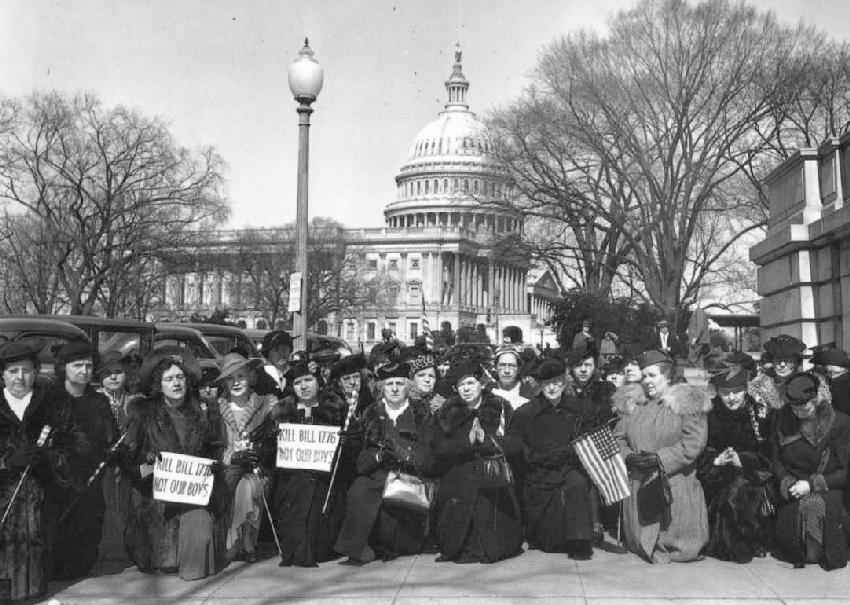
President Roosevelt formally presented Lend Lease to Congress in the State of the Union (January 6, 1941). Lend Lease was introduced as HR 1776, with obvious symbolism. The President's proposal ignited a fire fight on Capitol Hill. The debate was fierce, bitter, and partisan. The American Firsters were determined to defeat the bill and accussed the President of attempting to drag America into the European war. The President was accused of treason. The opposition was based on two objections. First, Republican leader Senator Rober Taft charged that the bill gave Roosevelt dictatoirial powers to "wage an "undeclared war all over the world". This was in fact essentially correct, The Ameriuca Firsters argued that Lead Lease would eventually led to war. They too were basically correct as far as they went. President Roosevelt argued correctly that British survival was critical to American security. At the time the Administration argued that saving Britain would keep America out of the War. [Goodwin, p. 210.] This argument was disengenous, but the larger contention that Britain's fall would be a disaster for American security was patently obvious. Defeated Republican presidential candidate Wendel Wilkie was no isolationist. He played a key role in winning some Republican support for the bill. After his defeat in the election (November 1940), Wilkie reached the conclusion that he would do whatever he could to save Britain. He decided to go to Britain and Roosevelt asked him to carry a message to Churchill which included the Lonfellow poem, "Sail on ship of state ..." Churchill replied with the injunction, "Gice us the tools and we will finish the job." President Roosevelt persuasion and NAZI barbarity was swinging America opinion to the need to aid Britain. Still there was still isolationist objections who had substantial Republican and some Democratic support. The vote was so close that Secretary of tate Cordel Hull asked Wilkie to return to America and testify to Congress. Wilkie strongly stated the case for saving Btitain. He argued privately to Republican insiders that if the Repubulican Party was seen as an isolationist party it would destroy the party. Many historians believed that Wilkie's influence was critical in winning Congressional passage. The U.S. Congress finally passed the Lend-Lease Act proposed by the Administration. The vote in the Senate was for a time in question, but in the end the Senate voted 60 to 31 for Lend Lease (March 1941). It proved to be one of the most important pieces of legislation in history. Churchill rose in Parliament to describe Lend Lease as "the most unsordid act in the history of any nation". here are many ways of describing the critical importance of Lend Lease, but a down to earth Londoner put it right when he excalimed, "Thank God! The tanks are coming." [Goodwin, p.214.]
Goebbels wote in diary after Lend Lease was passed, "... the Führer finally gave his propagandists permission to attack America. It was high time. Now we shall let rip. Mrs. Roosevelt is shooting her mouth off around the country. If she was my wife, it would be a different story." [Goodwin, p. 215.] (Actually Goebbels had a hard time controlling his wife. There was considerable marital friction. Hitler had to step in to keep them together.) Goebbels was being disengenous here. NAZI propaganda often ran items critical of America. NAZI newreels often picturedAmerican in an unflatering light, featuring gangsters and pictuing American Blacks and Jews in an unflatering light. What Hitler did not permit was for NAZI U-boats to engage American destroyers that President Roosevelt had ordered to protect convoys to Britain. He did not want war with America at this time.
President Roosevelt now had the authority to provide war materials in vast quantities to any country he deemed essential to the security of America. The United States had come a long way from 1939 when it was severely constrained by the Neutrality Acts. The Lend-Lease Act empowered the president to "lend, lease, or exchange" war materials with nations whose struggle against aggression was considered necessary to American security. It made the United States the "arsenal of democracy," not only for the United States, but for a vast coalition of allied nations forming around Britain and the United States. Lend Lease was essentially the mechanism for transferring military equipment and supplies as well as food, machinery, and services, to nations whose defense was considered vital to the defense of the United States. This meant any nation fighting NAZI Germany and Fascist Italy, and Imperial Japan. The President was given the responsibility to set the terms for the assistance provided. Repayment for Lend Lease aid was to be in kind or property or any other direct or indirect benefit which the President determined was acceptable.
The administration of Lend Lease varied as the War progressed. President Roosevlt appointed Harry L. Hopkins as Lend Lease Administrator (March 1941). Hopkins after his trip to Britain was primarily concerned with getting arms to that beleaguered country as rapidly as possible. [McJimsey, p. 151.] There were huge administrative complications getting Lend Lease up and running. Hopkins was criticised for them, but he in fact did an impressive job working with the many different Departments and Congress as well as ballancing the conflictuing demands of the British and U.S. military which needed arms for its new draftees. To allay conflicts between thevAmerican and British military, Hopkins cleverly encouraged the formation of joint committess that were to begin the key relationship between the American and British militaryin World War II. Hopkins also forged a relationship with General Marshall that was vital for the syccess of the Lend Lease program. [McJimsey, pp. 152-57.] Kopkins was replaced by Edward R. Stettinius, Jr. (July 1941). He was appointed to lead the Office of Lend-Lease Administration which was established (October 1941). The Offiuce of Lend Lease Administraion was merged into the Foreign Economic Administration headed by Leo T. Crowley (September 1943). Finally at the end of the War, responsibility for Lend Lease was transferred to the State Department (September 1945).
Of course Lend Lease would mean little if the American industry was not geared up to produce the needed materials. With all the war orders, times were good in America. Many important industrial companies were making money for the first time in years. General Motors, Chrysler, and Ford for example were reporting fantastic profits making cars. There was little interest among many industrialist to make the costly investment in retooling for war production when they were making profits selling consumer products. This would be a major problem throughout 1941 and continued even affter Pearl Harbor.
Both military and civilan planners in 1940 had no idea of the enormity of the enterprise that America was undertsaking and the material demands that would be required to wage global war. Many official assumed that the production needs could be met by simmply employing the shur down plants and unemployed workers of a depression era economy. It soon became clear that this could not begin to meet the demands of the U.S. military and America's allies--even before the NAZI invasion of Rusia added the Red Army to the list of demands. Production short falls ans shortages quickly appeared, Especially serious were shortages in machine tools and raw material (aluminium, copper, magnesium, nickel, and rubber), as wll semifinish steel. Initially it seemed that it would be difficult even to reach parity with Axis war production. Germany's war production was forbidable and now most of Wurope was under NAZI control. One analyst pointed out that the U.S. Army's $7 billion ordinance program for 1941 and 42 would not even supply a 2 million man army at a time that Germany had a fully equipped army of 8 million. The demands were staggering. NAZI U-boats were sinking merchant ships faster than they were being built. Analysts estimated that it would take 3-4 years for the American economy to reach peak production. [McJimsey, pp. 193-94.] Nor did Hopkins and other Federal Governmnt planners yey appreciate the quality of Axis weapns or the extent of Japanese naval superority in the Pacific.
Lead Lease ws primarily designed to assist Britain in its fight with NAZI Germany, but Nationalist China also received shipments to assist with its defense against Japan. Eventually 38 different countries received Lend Lease assistance. The Soviet Union had been essentially a parter with the NAZIs until Hitler ordered an invasion (June 1941). The Soviet Union was subsequently added to the list of Lend Lease recipients (November 1941). Aid to the Soviets was more contencious than to other countries, but had a stron advocate in Hopkins. [McJimsey, pp. 293-294] Eventually almost all the allied nations were declared eligible for lend-lease aid. A series of Lend Lease agreements were signed with the participating countries. Reciprocal aid agreements with Britain, Australia, New Zealand, and the Free French were negotiated (942). These agreements provided for "reverse Lend Lease" involving goods, services, shipping, and military installations provided American forces stationed overseas. Other Allied nations in which U.S. forces were stationed adhered to the same provisions.
Also important was when Lend Lease aid arrived. Lend Lease was not passed by Congress until the War was well underway (March 1941). This meant that it was too late for France and oyher occupied counties on the Continent, alothiough Free French and free Polish units received Lend Kease aid. The major recipients were thde British abd Sovits. Also important in ggregste were the British Dominions. While Lend Lease was passed in March 1941, that did not mean that bast quntities of war material immediteky begsan to flow. Negotiations with recepirnt nations were needed, meaning at first the Britih. This was hsndeled expeditiuously by Harry Hopkins, tghe first Aneriucan Kend Lease Administrator. And at the time the Soviet Union was still a German ally and trying to join the Axis. This of course chgnged with Hitler invaded the SDiviet Union (June 1941). Congression approval was needed to authorize shipments to the Soviet Unions and negotiations were needed. British aid reached the Soviets earlier--during the critical winter of 1941-42. It was helpul in stopping the NAZIs before Moscow, but not in the massive quantities required for the scale of cannasge of the Ostkrieg and to eventully defeat the Deutchde Ostheer. For this only the massive industrial power of the United States would suffice. There were major constraints such as the success of German U-boats in the Atlantic and the limitations imposed by the inadequate and falling tonnnage of available merchant shipping. And then the Japanese struck in the Pacific. Despite these contrints, Ameican Lend Lease shipments increased substantially in 1942, albeit from the low base in 1941. The quntities were not yet massive -- especially of war mateial (arms and munitions) as opposded to food and raw mazterial. Here the primary constraint was the necessary retooling of American industry--the Arsenal of Democracy. The United States was the largest industrial power in the world with an economy greater than that of all the Axis countries combined. And unlike the German war economy there weere no major constraints such as shortges of oil and other raw materials. But as of December 1941, American factories were mostly producing cars, refrigerators, washing machines and other goods for the domestic civilian economy. There was no magical way of thriowing a switvh and automatically producing tanks and aircraft. War material in many cases had yet to be designed and American industry had to be retooled. And that transition would takee about a year to be fully implented. Some transitions were easier than others. The transition to military trucks was relatively easy. The transition to tanks and aircraft much more innvolved. In some cases whole nbew factiries had tio be built. So 1942 was a transition year, but by 1943 the really huge quantiruies began to arrive in Britain, the Siviet Union, the Dominions, and other coiuntries cooperating with the llies. And during that yearof transition the other contraints were resolved. The Liberty Ship program began producing the cargo vessels needed to vasrtru Lend Lease goods and the the foundation was laid foir the victory over the U-Boats in the North Atlantic (early-1943). Production increased in 1994, but not like the huge 1943 increase. The Americn military by the end of the year began to scale back orders. And with the defeat of Germany (May 1945) and Japan (August 1945), Lend Lease shipments fell in 1945.
President Truman terminated Lend-Lease for all countries after the Japanese surrendered (August 21, 1945). suddenly after victory in Europe was declared. There were no consulations with the or the other allies. Truman was required to do this by the original Lend Lease legislation passed by Congress (1941). A factor here was that Britain had never paid off its World War I debt which is still outstanding and will never be paid off. Britain halted payments during the Depression and world-wide financial collapse (1932). Britain at the time owed the United States over $0.8 billion.
President Roosevelt while trying tp push the Lend Lease Bill through Congress to support Britain agreed to make Lend Lease a war measure. It was never intended as a general foreign aid program and would have not passed Congress. The United States after cutting off Lend Lease negotiated arrangements with Britin and China to continue shipments on a cash or credit basis of goods that had been earmarked for them under Lend Lease appropriations. Arrangements could have been worked outwith the Soviets, but they were already creating problems in occupied Germany so there was little incentive to do so. Shipments to the Soviet Union were ended. The British Treasury at the time Lend Lease was terminated was virtually empty. The British economy was in shambles. Large areas of London and other cities were in fruin. Britain wanted an American recovery grant. Eventually a long-term loan was negotiated--the Anglo-American Loan. America provided very generous terms--2 percent interest with repayment over a 60-year period.
Lend Lease shipments exceeded $50 billion. The two major recipients were the British Commonwealth ($31 billion) and the Soviet Union ($11 billion). The numbers probbly sound small to modern reasers, byr renber tgese are bot inly 1945 dollars, but that Wirkd war II weapons cost a small fraction of modern weapons. A P-51 Mustang cost about $50,000. A F-16 was projected to cost $3 million and was going at aboyt $20 million around 2000. By 1960 Leand Lease debts had been settleled with most of the recipient countries. There were some deferments, but Britain finally paid off the debt (2006). Settlement with the Soviet Union was not reached until several years later at pennies on the dollar (1972).
The Germans were by far the most important Axis country. Japan and Italy would not have gone to war against America and Britain without Germany. The Germans had the industrial power to build a powerful military and because the democracies when Hitler seized power (1933) were at first focused on ending the Depression, not building powerful military forces. As a result, by 1939 the Germans had a military advantage over the Allies. Even more frightening, the German generals had invented modern warfare--Blitzkrieg. The results were stunning German military successes in the first 2 years of the War. As a result, even before America entered the War, there was an agreement on Europe First, of course meaning Germany First. The British were revealed that even after Pearl Harbor the Americans continued to believe in Europe First. The nightmare scenario was that the Soviets might join the Axis. That would have passed the world balance of power to the Axis. Stalin wanted to join, but Hitler blocked that, at the core of NAZI ideology was seizing th vast land and resources of the East, meaning the Soviet Union, for Lebensraum. As a result, Hitler ordered the invasion of the Soviet Union (June 1941), leading to the largest largest military campaign in human history. There would be two major campaigns, the War in the West and the Ostkrieg. The outcome of the Ostkrieg would decided World War II. And because the Soviets prevailed, many in Russia today believe that the Red Amy single-handedly won the War, viewing the War in the West as a. side show. In terms of manpower this is certainly the case. It was in the East that the Red Army tore the heart out of the Wehrmacht. Some 80 percent of the Herman casualties were sustained in Ostkrieg. An one has studied war, however knows that manpower is not the only element of combat power. If it was, China would have won the War. World War II was an industrial war. And while the German since most of their men East, German industrial output mostly went west. This disconnect meant that the Ostheer was poorly equipped and supplied. Mist of the Deutsche Ostheer invaded the Soviet Union on foot with horse-drawn supply carts. In the final analysis, this is why Operation Barbarossa failed.
Galland.
Goodin, Dorris Kearns. No Ordinary Time. Franklin and Eleanor Roosevelt: The Home Front in World War II (Simon & Schuster: New York, 1994), 759p.
Kimball, W.F. The Most Unsordid Act (1969).
Lewsis, C. Nazi Europe and World Trade (Washington: 1941).
McJimsey, George. Harry Hopkins: Ally of the Poor and Defender of Liberty (Harvard University Press: Cambridge, 1987), 474p.
Schmitt, Carl. Völkerrechtlishe Grossraumordnung mit Interventionsverbot für Raumfremde Mächte.
Tooze, Adam. The Wages if Destruction: The Making and Breaking of th Nai Economy (Penguin Group: New York, 2007), 800p. Tooze provis a detiled table compiled fro various sources.

Navigate the Boys' Historical Clothing Web Site:
[Return to Main Arsenal of Democracy--inter-war page]
[Return to Main World War II American isolation page]
[Return to Main World War II page]
[About Us]
[Biographies]
[Campaigns]
[Children]
[Countries]
[Deciding factors]
[Diplomacy]
[Geo-political crisis]
[Economics]
[Home front]
[Intelligence]
[POWs]
[Resistance]
[Race]
[Refugees]
[Technology]
[Totalitarian powers]
[Bibliographies]
[Contributions]
[FAQs]
[Images]
[Links]
[Registration]
[Tools]
[Return to Main World War II page]
[Return to Main war essay page]
[Return to CIH Home page]