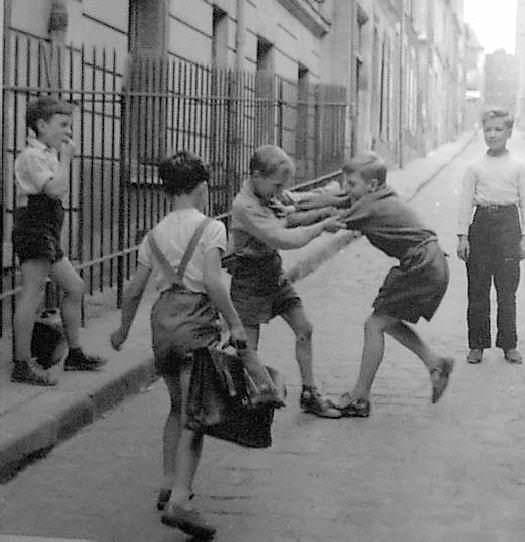
The work of some photographers are particularly noteworthy. Readers should exercise some caution in comparing the work of early photographers with their modern counterpart. Photography in the mid-19th century was still a highly experimental medium. The early photographers faced an ardous process every time they wanted to create an image. He had to mix their own chemicals, treat and print their copper, paper or glass, and handle large bulky equipment. The early pioneers, however, managed to create very powerful, emotionally charged and technically good images of considerable historical importance. Here we will not catalog all great photographers. We will exclude landscape photrraphers (such as Ansel Adams) and war photography (Mathew Brady) and rather concentrate on portrait, people, and everyday life. Such photography can provide important fashion information. We know of a few such photraphers of special interest and will gradually add to the list as we learn of more such photographers. We are focusing here on 19th century photographers, but will add 20th century photographers as well if there work includes useful child studies.
HBC has noted the work of these photographers whose worls includes many wonderful images of children over the ages, providing an enormous amount of information about contemprary fashions.
Everyday Scenes
Portraits and informal personal studies
Early record of Paris life. He has provided some wonderful family scenes. See for example The Vicomte de Lesseps was one of the most famous Frenchman of the mid-19th Century because of his role in building the Suez Canal.
Gaspard-Felix Nadar is one of the photographic giants of the 19th century. He is of some interest to HBC because of the many portarits he took, including family prtraits. His life, however, cuts a wondeful swaith through the 19th century and the extent and diversity of his activities and talents is breath taking. Photography was probably his most financially rewarding enterprise, but it was in fact only one part of his many varied life works.
William Notman set up a photographic studio in Montreal, Canada only a few years after photography was developed, about 1845. It was one of the principal photograohic studios in Canada. Both English and French speaking Canadians were photographed there. As Notman and his sons opperated their studio until about 1935, it provides a wonderful pictorial history of the Canadian people. The whole collection comprises about 450,000 negatives and is archived in the Musée McCord. The Museum explains, "Portraits comprise a major part of the Notman collection. Prominent Montrealers and visitors from abroad sought out William Notman's studio to have their likenesses committed to silver for posterity."
Felix Bonfils (1831-1885) was active as a photographer (1860-1880). He moved from France to Lebanon (1867) and established a studio in Beirut which at the time was part of the Ottoman Empire. Bonfils photographed extensively in Egypt, Palestine, Syria, Lebanon and Greece. His photographs were used to sell to tourists and to Europeans desiring photographs of exotic places (especially the Levant) to put into scrapbooks. He reported a stock of 600 negatives (1871). His son Adrian began operating the studio (1878). He also signed his negatives with the signature "BONFILS" that his father used. So older Bonfils photographs up to #600 are from Felix Bonfils. The higher numbers are from Adrian. The company Bonfils existed until to the end of the 19th century. The provide some of the earliest photographic records of the Levant. One of the noticeable observations from their work is the pverty and backwardnesses of Ottoman provinces like Palestine.
Jacob Riis was born in Ribe, Denmark during 1849. His parents had 15 children. He was the third oldest. I know nothing about his childhood and education, but know he became a carpenter in Copenhagen. He emmigrated to America after the Civil War in 1870. After coming to America, Riis had trouble finding work and for a while was homeless. Apparently the Police provided lodging houses for the indigent. I had never heard of this before.
Riis worked as a menial labor, but eventually became a journalist. This is of course quite impressive, because journalism requiring effective English-language skills is a difficult profession for foreigners to enter. He began working for a New York bureau (1873). He began working for the South Brooklyn News (1874). Then he became a police reporter for the New York Tribune (1877), one of the most influntial newspapers in America. As a result of his experiences, Riis became a crusader for the ppor. Riis argued against the prevailing attitude in America. He saw the poor as "victims" rather than the indolent who were responsible for their plight. Riis became one of the first photo journalists when he was hired by the New York Evening Sun. Riis began using flash powder which allowed him to photograph interiors as well as exteriors, providing images of slum live never before available. His images of children are especially poignent. He was one of the first muckraking journalist.
Lwis Carroll is of course not best known for his photography, but rather as a writer, especially his book Alice's Adventures in Wonderland. He was, however, an avid amateur photographer. One of his favorite subjects was children. He has left us a wonderful record of late 19th century children's clothing. Most of his photogrph were of girls, but he also left some interesting images of boys showing interesting outfits.
I know very little about these two Greek photographers. Very little biographical detail is available for George and Constantine Zangaki, beyond the fact that they were Greek brothers who were originally associated with the French photographer Hippolyte Arnoux. Even their dates are unknown. They were active from the 1860s to the 1880s, principally in Egypt and Palestine, and they appear to have been based in Cairo, possibly with a branch in Port Said. They seem to have taken photograpgs of the region for sale to Europeans interested in the Holy Land and Africa. Some of the images are staged studio portraits.
An important American photographer was Cicero C. Simmons (1857-1939). Simmons was a very talented Georgia photographer. He specialized In portraits, documenting special events and portraying everyday rural life. He was a talented artist and photojournalist of his day. Simmons created many wonderful images in his 45 year career that spanned from 1880-1925. His special gift for composition, use of lighting and capturing the moment make his images something to treasure.
Urban Paris
Kasebier 's photography was primarily portraiture. Although she photographed many important people, her favorite theme was motherhood. During her later years, she began taking landscapes, but her coincentration was still on portraits. She was born in Iowa during 1852, but also lived in Colorado and New York as a girl. Gertrude did not begin with a desire to be a photographer. Her initial desire was to be a portrait painter. Her marriage ws unhappy, but she had hree children. As a marriefd woman and mother she studied at the Pratt Institute (1889-1893). She studied drawing and painting, but grdually became more interested in photography. The force of her portraits attracted considerable critical acclaim.
No list of American photographers would be complete without Solomon D. Butcher. His work is an important source of information on families on the Western frontier, specifically the Great Planes. He worked for ocer 40 years and is best known for his work in Custer Country, Nebraska. Butcher was born in 1856 in what was at the time Virginia, but during the Civil War became West Virginia. Butcher's family moved west to Nebraska in the 1880s. It was at this time that homesteaders were carving family farms out of the Great Planes. He decided that he was not capable of that, but was impressed with the men and women who were. He conceived of the idea of creating a photographic history of thus effort (1886). He also found this was a good selling point to get Nebraska's thrifty homesteaders to buy a portrait of thehir family and homesteads. He took more than 3,000 between 1886 and 1912 leaving an ireplaceable historical records. He recorded a great deal, but probably nothing was more important than the record of the families and homestead. Not many Americans recognize his name, but many recognize his photographs.
People and Places
W.J. Byrne operated a popular Richmond (London suburb) photographic studio during the late 19th century. He specialized in photographing children and produced thousands of such portraits, both CDVs and cabinent cards. He was a highly regarded photographer and phoographed not only the English royal children, bit the Queen, Prince of Wales, anf Kaiser Wilhelm II as well. We note a fascinating article that he wrote for The Harmsworth Magazine (1898-99) in which he describes his career as a child photographer including the technique he used to photograph thousands of children in his studio. He produced both CDVs and Cabinet cards. His portraits include many traditional shots as well as a variety of more artistic portaits.
For around 70 years, 800 rolls of early nitrate film sat in sealed barrels in the basement of a shop. Now miraculously rediscovered and restored, the Mitchell & Kenyon Collection is an amazing visual record of everyday life in Britain at the beginning of the 20th century. It is the most exciting film discovery of recent times and promises to radically transform British film history
John Boyd (1865-1941) was an amateur photographer and railway employee in Toronto and Sarnia during the late-19th century and early 20th centuries. Boyd was born in Emyvale, County Monaghan, Ireland and immigrated along with his family to
Toronto. He became interested in photographs as a young man in the 1890s. Boyd was a keen amateur naturalist and thus he spcialized in nature photography. Interestingly he was also interested in urban photograph and is noted for is photographs of Toronto buildings and city street scenes. He won numerous awards. Here we have a photograph of Boy Scouts got "caught" swimming near Point Edward, Ontario, 1911.
Lewis Hine is one of the most notable photographers to use the medium to promote social reform. He was not the first photographer to exploit the medium for social causes. He was, however, one of the photograohers to use it most effectively. Some of his most powerful images are of immigrants taken on Ellis Island. It is interesting to note how they were dressed on entering America from Europe at the turn of the century. The sailor suit was a prominent garment. Perhaps even more importantly, Hine's documentation of child workers were instrumental in effecting the labor reforms. His captions for his photographs provide a wealth of information about the working conditions, incomes, ages, sizes, and lives of the children that he photographed. Most of the images of the child workers show them wearing either kneepants or overalls. Hine worked as an investigative photographer for the National Child Labor Committee (NCLC), documenting working and living conditions of children in the United States during 1908-21.
Heinrich Hoffmann was born in Fürth (1885). The family business was ophotograohy and was known for portraits of royaly. We know nothing about his childhood. Hoffman open a studio in Munich before the World war I (1910). During the War he was a photograher with the Bac=varian Army. He was an early recruit to the NAZI Party (1920). Hitler chose him to be the Party's official photographer. Hoffman took an estimated 2.5 million photographs of Hitler. Propaganda Minister Josef Goebbels is most associated with propagating the public image of Hitler and the NAZIs. Hoffman may have played an even more important role in creating Hitler's public image. He was more than a photographer, but became a personal friend of Hitler. Once Hitler seized control of Germany (1933), Hoffman's photographs became wideky distributed. They were used for postage stamps, postcards, posters and picture books, like the image here (figure 1). Hoffmann's suggested to Hitler that they both hould receive royalties. As the images were used for postage stamps as well as widely dustributed publications, the royalty payments were substantial. Hoffmann married Therese "Nelly" Baumann (1911). They had two children. Henriette ("Henny") was born (1913). Heinrich ("Heini") was born (1916). Henriette married Reichsjugendführer (Hitler Youth Leader) Baldur von Schirach. Hoffman photographed many HJ events and activities. Von Schirach wrote the introductions to many of Hoffmann's photographic books. Therese Hoffmann died suddenly (1932). Hoffman during the Third Reich wrote several richly illustrted books on Hitler. Two of the best known are: The Hitler Nobody Knows (1933) and Jugend um Hitler (1934). He was especially productive in 1938: Hitler in Italy, Hitler befreit Sudetenland, and Hitler in seiner Heimat. He wrote his last book in 1939, shortly before World War II broke out: Das Antlitz des Führers. I am not sure why he did not continue his works on Hitler during the War. He married Erna. It was he abnd Erna who introduced Eva Braun to Hitler. She was working in hos Munich studio. TheCAllies arrested Hoffman after the War. He was tried and found guilty for NAZI profiteering. He was senteced to a 4 year prison term. He was released and returned to Munich (1950). He died at the age of 72 (1957). The United Statesseized an archive of his photographs which are now in the collection of the National Archives.
Martin Chambi was born in a small village in the Andes and is Peru's most important photographer from Peru. He is especially noted for his classic images of the ndes and the Andean people. Manu of his photographs are from Cuzco. This of course was the ancient Incan capital. We do not have many examples of his work, but we note a 1935 portrait of some children in a courtyard.
André Kertesz was American of of Hungarian ancestry. He was born in 1895, but we have no details on his childhood at this time or the clothes that he wore as a boy. He is one of the most prolific photographers of the 20th century. Like Cartier-Bresson (??) or Doisneau (French), he is one of the great masters of humanistic photography, which sympathetically focuses on the life of common people. Kertesz during the 1930s lived and worked in Paris and published several collections of his photographs. One of his best known is Enfants published in 1933. Some of the photographs were taken in the ckassroom and wonderfully record French school life.
G. Lekegian, an Armenian, moved to Cairo from Istabul. He set up a studio in Cairo (1887). Armenians dominated the early photographic industry in Egypt. Few Arabs new anything about photography. He rapidly acquired a reputation for the quality of his work. Lekegian ususlly signed his photographs "Photographic Artistique G. Lekegian & Co". This was French based company. He won the Gold Medal at the International Photography Exhibition in Paris in 1892, and the Grand Prize at the International Exhibition in Chicago (1893). His work is an important record of Arab life in Egypt and other North African countries. Some of the best 19th century imsges of Egypt were produced by Lekegian. His work is found in many major photographic collections. He located his studio, near the legendary Shepheard's Hotel. As his reputsation grew, he turned the area between Qasr al-Nil Street and Opera Square into a golden triangle of Cairo photography.
Voula Papaioannou is a very significant Greek photographer. She was one of the pioneer women photographers in Greece and a contemprary of Nelly's. She began working as a photographer during the 1930s, concentrating at first on studies of landscapes, monuments and archaeological exhibits. She photographed the Greek-Italian War (1940-41) and after the end of World War II, the Greek Civil War (1948). Her most important work is the hand made-4 copies only "To lefkoma tis peinas" (The album of starvation) with photographs of emanciated children in Axis (German and Italian) occupied Greece during World War II. The images of children in Axis occupied Greece (along with those of the concentration camps) are among the most shocking we have ever seen. She later portrayed a realist view of the post war Greece. Voula Papaioannou's work represents the trend towards "humane photography" that arose as a result of the abuse of human rights during the war. Her camera captured her compatriots' struggle for survival with respect. She is often compared to Lewis Hine and his work of working children. All her unpublished photographes were donated by her to Benaki Museum in Athens.
Elli Seraidari (known as Nelly's) is by far the most famous Greek photographer of all time. She was born in Aidini of Asia Minor Asia (link here) and after 1922 she went to study photography in Germany. Her teachers were the most famous German photographers of the era. In 1924 she came to Greece where she opened her studio. From 1927 until the outbreak of World War II Nelly's travelled throughout Greece, documenting the entire panorama of Greek life. Nelly's went to the opening of the 1939 World exposition of New York where the Greek pavillion hosted a big collage of her photographs and stayed there as a self exiled artist when the NAZIs invaded and occupied Greece in 1941. She returned to Athens 27 years later. Nelly's received numerous international awards (in Brussels, Canada, Stockholm, Paris etc). Perhaps her most famous work are the nude photographs of the Russian ballet dancer Nicolska in Parthenon of Acropolis (1920s) and the cover of Life Magazine (December 16, 1940). Nelly's also took a lot of childrens portraits in her studios in Athens and New York. She also photographed a lot of boys working as shepherds in rural Greece. One of her most important album is the one with the life of refugees (mainly the children) of Asia Minor in Greece (1925). Nelly's left a body of work which remains exemplary from both an artistic and a technical viewpoint and which represents a valuable legacy to the photographers of today.
Merl La Voy took all over the world over a period of at least 20 years, beginning at the close of World War I. We have few details at this time. From what we can gather, La Voy provided images to Eastman, Keystone, and National Geographic, along with various newspapers. The photos show costumes, landscapes, artifacts, and customs from places as varied as Greece, Hungary, Serbia, Turkey, India, China, New Zealand, naval ships, and the American West. The World War I era images are aerial reconnaissance views with official markings. A number of the images are stereographic, including those of the U.S.S Omaha.
Henri Cartier-Bresson out on the streets of France and snapped people and every day life as really were. I know he took a few photos in Ireland as well, but I don't know about England. He hd a long career including work in the 1970s. We know very little about him at this time, but a reader has sent an example of his work. Hopefully our French readers ill provide some information about him and his photographic work.
George Rodger was a British photojournalist. He is best known for his work in Africa and for the World War II photographs of NAZI Bergen-Belsen concentration camp. They were some of the first images from the NAZI camps to reach America and Britain. George's parents were Scottish, but he was born in England (Hale, Cheshire) near Manchester. He attended St. Bede's College in Manchester. He joined the British Merchant Navy after World war I and visted many different countries in his voyages around the world. He began writing travelogues and started taking photographs to illustrate him. He had no success in publishing his travel accounts. He tried to find work in America, but was unsucessful because of the Depression. He returned to Britain (1936) and was able to find work as aphotographer. He worked for the BBC's The Listener magazine in London. He also worked briefly for the Black Star Agency (1938). After Britain declared War on Germany, Rodger wanted to photograph the War. And it was not long before the War and the NAZIs arrived on his doorstep with the Blitz on London (1940). Time-Life hired him as a war correspondent. His work appeared in Life Magazine articles such as "Life spends a wartime weekend on the Thames". His photograohs also were published in the British Picture Post. After the Blitz, the situation settled down in Britain as the big Anglo-American build-up for D-Day began. Rodger worked in West Africa and Southeast Asia. He seems to have been the only British war reporter/photographer to travel and photograph the Burma Road--a area of considerable sensitivity at the time (1941). He covered the chatic British retreat from Burma (1942). After D-Day he photographed the liberation of France and the Low Countries (1944). Rodger was a Life stringer, so although some of his material was published by other magazines such as Picture Post, his work went for first refusal to Life. During the war, much of his work would have been published without an individual credit to him, hence the frustration that he and Robert Capa felt, that influenced the formation of Magnum.
After the Allies crossed the Rhine he was one of the first correspondants to photograph the NAZI concentration camps. His photographs from Bergen-Belsen shocked American and Britain (1945). Rodger later reported that afterv hecstarted taking photographs thsat he was appalled to realise that he was looking for graphically pleasing compositions of the piles of bodies. The experience was so traumatic that he could not bear to continue working as awar corespondant. His subsequent work was after leaving Time-Life wa in Africa and the Middle East with a focus on wildlife and people. He became a founder member of Magnum Photos (1947). His work appeared in and other magazines and newspapers.
The Imperial War NMuseum had a George Rodger exhibition (2008). The best book of his work is a book called Humanity and Inhumanity: The photgraphic journey of George Rodger published by Phaidon PRess.
Robert Doisneau (France, 1912-94)
Robert Doisneau is one of France's most noted photographers. He is noted for the many playful and unsuposing images chronicling everyday French life. His prolific outbook over the course of several decades provides us a marvelous record of French life. His images don't seek to overcome the viewer. They are often modest in scope and playful. He is at his best with people. His images of French childhood are especially helpful for HBC. He was influenced by the work of Kertesz, Atget, and Cartier-Bresson who also provided wonderful images of childhood. He published ober 20 books providing realistic, but charming images of quiet, often personal moments in the lives of individuals. He wrote: "The marvels of daily life are exciting; no movie director can arrange the unexpected that you find in the street."
Dimitris Charisiadis is one of the most important photographers of the 1940-60s era in Greece. He used to work as a chemist but quit his work for the profession of photographer. Throughout his professional career, Charissiadis maintained a personal interest in photographing Greek towns and landscapes and everyday life in agricultural and
urban surroundings, believing that mankind was "the most interesting subject
in the world". The predominantly American influences that can be detected in his work, are the result of his association with foreign photographic agencies and his familiarity with international trends in photography. His photographs were highly acclaimed abroad and took part in many international expositions like "The family of man" in The Museum of Modern Art, New York (1955) and also "Greece by eleven photographers" (Chicago, 1957) and "The face of the European" (Munich, 1959). Like Nelly's, he also worked for Life Magazine. Charisiadis was laterawarded with the bronze medal of FIAP. In the photographs of Charisiadis we can see a lot of children almast always wearing their ordinary play or working clothes, rather than dressed up for a formal portrait.
Portraits/Fashion
Helen Penn photographed the peple of New York producing many beautiful. evocative images. She phototgraphed New York much as Robert Doisneau, a contemporary did Paris. Levitt's and Doisneau's photographs are similar in many ways, but Levitt did not persue the whimscal staged momments that Doisneau sometimes did. Her photographhs are little spontaneous glimses of New York City street life. Beginning in the late 1930s her black and white and color photographs chronicle life in New York. She concentrated on children and a large number of her lively photographs show them at play and at more contemplative moments. She collabotated with writer James Agee to make films that have won wide acclaim.
One of the most acclaimed Dutch photographers is Ed van Wijk. We do not know a great deal about his work yet, but we have noted some charming street scenes from the post-World War II period. For an example of his work see, Dutch 1950s page.
Shin Rakedahas works with the Suporting Self-sufficency (AjA) Project. He and other instructors work with refugee children from Afghanistan, Burma, Colombia, Iraq, Somalia, and Sudan. He provides inexpensive cameras to children and lets them tell their stories.
Omer Beaudoin is noted for his photographs of Québec. His images focus on children of French Canadian farm families. He worked as a photographer at the Office du film du Québec" (Quebec Film Board). The Board reports that he created many pictures of "smiling children from the four corners of Quebec. .... Beyond pretty faces, mischievous looks, and farming landscapes, we find naivety, carefree, curiosity and wondering, so much a characteristic of childhood which crosses decades of years ...."
Canadian educator Michel Coron is also an accomplished photographer. During the 1970s he took photographs at a French Canadian school as part of a reserach program. The photos are a wonderful record of school activities and teaching methods at a school using progressive methods, a lot of projects and group work rather than teacher centered kearming.
HBC has noted a wonderful site, "Master of Photography" with useful information about their photography and samples of their work. HBC readers may want to begin research on a specifiv photographer at his site.

Navigate the Boys' Historical Clothing Web Site:
[Return to:Main photography page page]
[Return to:Main photo/publishing page]
[Introduction]
[Activities]
[Biographies]
[Chronology]
[Clothing styles]
[Countries]
[Bibliographies]
[Contributions]
[FAQs]
[Glossaries]
[Images]
[Links]
[Registration]
[Tools]
[Boys' Clothing Home]
Navigate the Boys' Historical Clothing Web Site:
[Sailor suits]
[Sailor hats]
[Buster Brown suits]
[Eton suits]
[Rompers]
[Tunics]
[Smocks]
[Pinafores]