|
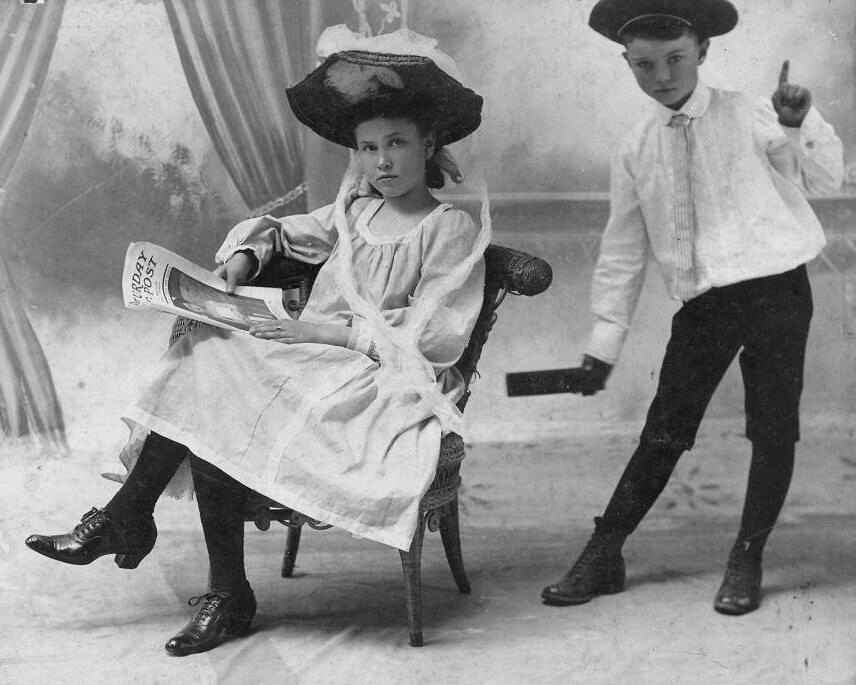
A number of American literary, photo-journalist, and other magazines offer helpful infotmation about contemprary boys clothing. The 19th century magzines were primarily literary magazines with fascinating drawings. Jourmalitic magazines began to appear in the 19th century when the technologu for publihing photographs helped add drama to the magaines. Some like the Saturday Evening Post combined literature and a journalism. Eventually Time, Life, and Look became mainstays of the American household.
Liberty magazine was an American weekly, general-interest magazine. It wa price along with its competitors at 5cents and styled itelf as A Weekly for Everybody." McCormick-Patterson launched the magazine (1924) and published it for 7 years (1931). The mnagazine proved popular, but not profitable. They reoorted huge losses --$12 million, asubtantial sum in 1920s dollars. They had to sell it during the Depression. Bernarr Macfadden took over the magaxzune and ooerated it for 10 years (until 1941). It was regarded as 'the second greatest magazine in America' based on curculatiion, ranking omly behind its orimaru cimpetioor--The Saturday Evening Post. It was noted for some of the most imprtant politicians, celebrities, authors, and artists of the mid-20th century. The contents provide a wondrful vew of popular culture, politics, and world events during the Roaring 20s, Great Depression, World War II, and early post-War America. It finally ceased publication (1950) with a brief revival (1971). The publishers were strong supporters of President Roosevelt. Many of the nost important leaders of the era, expressed their ideas, including Churchill, Mussolini, Roosevelt, and Stalin. There were also wonderful ilistation by some of tyhe mst imptant illutators from th Golden Age of iustrations. Leslie Trasher did many covers. There was also important literary contributions..
Life Magazine is one of the iconic American periodical publications. It was a weekly news magazine founded in Henry Luce (1936). There was an earlier Life, but the only connection between the two magazines is that Luce wanted the name of the magazine. The magazine was primarily a vehicle for photojournalism. There were of course arrtiles, but they were illustrated with photographs. In the days before television, people wanted to see pictures to go with the news they were hearing about over the radio. Life was the first all-photographic American news magazine. It was emensely popular and dominated the market American market for over 40 years. The publication run peaked at 13.5 million copies a week. President Harry S. Truman, Sir Winston Churchill and General Douglas MacArthur serialized their memoirs in Life. Some of the most famous phiotographs of the 20th century appeared in Life, including the Marines raising the flag on Mt. Suibachi and the sailor kissing the girl on VJ Day. Life was published weekly until until (1972). Interest began to decline as Americans could now see the news on television. Special appeared intermittent until (1978). The magazine was revived as a monthly (1978-2000). Even after regular publication ended, photo issues on special themes continue to appear.
Look was a biweekly, general-interest magazine published in Des Moines, Iowa (1937 - 71). It primarily competed with Life. The emphasis was photographs and photojournalism along with human interest and lifestyle articles.
Roswell Smith conceived of the idea for St. Nicholas in 1870 when he consulted the famous
children's author Mary Mapes Dodge on her ideas about what a magazine for children should be.
That same year Smith had co-founded Scribner's with Charles Scribner and Dr. Josiah Gilbert
Holland as a rival publication to the popular adult periodicals Harper's Monthly and Atlantic
Monthly and was already considering the publication of a magazine for younger readers. The
success of Scribner's made it possible for Smith to offer the editorship of this new magazine to
Dodge three years later, and the first issue of St. Nicholas appeared in November of 1873. Aiding
Mrs. Dodge was Frank R. Stockton, an established Scribner's writer, as associate editor. In 1874
William Fayal Clarke joined the staff as assistant editor. Success followed rapidly in the early years
of the magazine, enabling Roswell Smith to buy out four competitor publications in the first two years
of St. Nicholas' existence. The magazine doubled in size from forty-eight to ninety-six pages per
issue, and circulation rose quickly and stabilized at about seventy thousand.
The Saturday Evening Post was the most popular American magazine in the first half of the 20th century. There was something in The Post for everyone in the family. The Post included political cartoons, artwork, literary works, and much more. Although mundane at the time, even the advertisements ,ake issues of the Post fascinating to modern readers. No publication is so closely linked with the traditions of 20th century America.
Through fiction, articles, humor and incredible illustrations, "America's magazine" informed, entertained, and encouraged millions of readers. It became the looking glass in which Americans saw their lives and their nation reflected. In 1897, Cyrus Curtis happened upon a 16-page, un-illustrated weekly with a readership of less than 2,000 and virtually no paid advertising. The paper's lineage indicated it was descended from Ben Franklin's Pennsylvania Gazette, which held enourmous appeal for the publisher. He paid $1,000 for the name, the Franklin tradition, and a bucketful of printer's type.

Navigate the Boys' Historical Clothing Web Site:
[Return to the Main photo, printing, and publishing pages]
[Return tp the Main U.S. fashion publishing page]
[Introduction]
[Activities]
[Biographies]
[Chronology]
[Cloth and textiles]
[Clothing styles]
[Countries]
[Topics]
[Bibliographies]
[Contributions]
[FAQs]
[Glossaries]
[Images]
[Links]
[Registration]
[Tools]
[Boys' Clothing Home]
Navigate the Boys' Historical Clothing Web Site:
[Sailor suits]
[Sailor hats]
[Buster Brown suits]
[Eton suits]
[Rompers]
[Tunics]
[Smocks]
[Pinafores]