School Uniform: Gender Trends
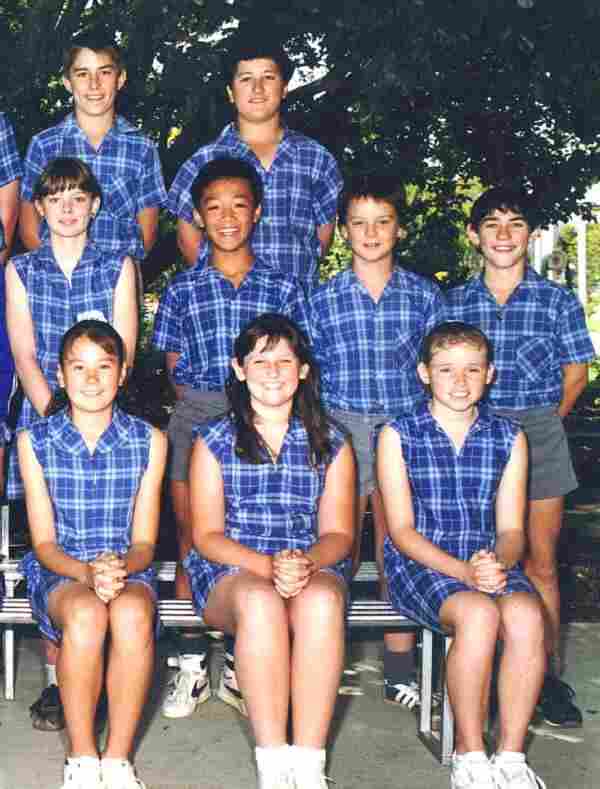
Figure 1.--School uniforms following British styles had very destinctive uniforms for boys and girls like the students at this Australian school in the 1980s. The boys wore pants and the girls dresses, often gym frocks, or skirts. This is the convention in most schools that we know of with uniforms.
|
|
School uniforms and uniform gender trends vary arond the world and they have changed over time. While we began with a focus on boys' uniforms and schoolwear, we have since begun to give more attention to girl's uniforms and schoolwear. There were at first very destinctive styles for boys and girls, both uniforms and general schoolwear.
The most influential styles have been those developed in Britain. The school uniforms in many countries followed British styles had very destinctive uniforms for boys and girls. Many countries did not have uniforms. The children thus wear their own clothes to school. Other countries have destinctive unforms, such as Russia during the Soviet era and Japan where boys wear cadet uniforms and girls wear sailor outfits. After World War II les formal styles became popular and in America both boys and girls were wearing jeans ans sneakers to school.
Our primary focus has been on boys' school uniform. Readers have inquired about girls school uniform and sent along information to us on girls' uniforms and school wear. As a resuklt we have begun working on a girl's school uniform section as well. As with the boy's section, we also address regular clothing worn to school. Children in most countries do not wear uniforms and this it is important to include this in our discussions. Thus our main school uniform page is largely a discussion of boys schoolwear. We now have a page specifically addressing girls' schoolwear. Most school uniform garments are gender destinctive, but an number are worn by both boys and girls. Here it is almost always the girls adopting boy items and not boys adopting girl items. This was begun at an early stage when girls public schools ere founded in England and were heavily influenced by the traditions at the boys' public schools, including the uniform traditions. Thus from an early stage girls began wearing boy items like ties and boaters.
Chronology
There were at first very destinctive styles for boys and girls, both uniforms and general schoolwear. School age boys wore pants in the 19th century and girls wore dresses. There were virtually no exceptions. School uniforms developed in Britain at private schools, but were not common elsewhere with the exception of miltary uniforms in some countries, but not for girls. A rare exception was Japan which introduced sailor dresses for girls ar the end of the century. Smocks were mandated in French schools after the rise of the Third Republic (1871). Both boys and girls wore them. Schoolwear became much more varied in the 20th century. English school uniform styles became very influential, both boys' and girls' uniforms. Schoolwar continued to be very formal in the early-20th century. A factor here was economics. As oublic education became more extensive, many children in poor countries could not fford go dress very well. America has been more important in influencing casual styles after World war II which are increasingly worn to school in many countries. Especially important are the pan-European styles which developed in the 1970s and are widely worn to school throughout Europe.
Approach
There have been major changes over time concerning educational approaches and gender. For most of recorded history, schools if they existed at all were primarily, often exclusively, for boys. Girls if educated at all were taught at home by parents or if in the elite groups by tutors. There were some exceotions, but this was the dominsnt approsch. This only began to change in the West during modern times. The cental event affecting modern education was the Protestnt Reformation. Luther and other Protestant luminaries had vast differences, but one universal element of the Reformation was individual Bible study. This required that the ordinary person learn to read. The Reformation was strongest in northern Germany and it was here that Prussia founded free public schools, understanding that an educated citizenry was a element of natiinal power. And it did not make sence to only educate boys. It was at first thought that fathers and husbands could instruct girlsand women concerning thrir souls. But mothers play an imjportanht role in the education of younger children. Boys were the primary concern of early educators. Overtime more and more people came to realize that it was important to teach girls as well as boys. Like the idea of public education, this first occurred in the West.
Most schools were single gender schools, although very young children might be taught together. This was also the case in village schools where there were not enough children to support two separate schools. America led the way in coeducation. Other countries after World war II tended to adopt coeducation. The Muslim Middle East also has many single gender schools, although this vafries from coyntry to country. Some Islamicists do not want girls taught at all. While coeducation is dominant in most other areas, there are exceptions. Japan has mostly coed primary schools abnd single gender secondary schools. And even countries with mostly coeducational schools there are single gender schools (Australia, Britain, New Zealand, South Africa, and other countries). Some educators believe that there is evidence that many boys and girls do better in single gender schools. This research has often fiocused on the girls, but there is some evidence suggesting that there are also advantages for the boys.
We have begun to collect information on gender trends in various countries. England is particularly important as so many important styles developed there, both for boys and girls. America has been more important in influencing casual styles which are increasingly worn to school in many countries. Especially important are the pan-European styles which developed in the 1970s and are widely worn to school throughout Europe. We only have country gender pages on a few countries at this gtime. some information on America, England, German, and Russian gender trends. We have only limited information on gender trends for most countries, but we are gradually expanding our coverage. Here we should point out that in many countries, schools are coeducational and thus even in the boys' sections, there is information about girls' schoolwear. This is particuilarly the case in the country sections like individual schools.
Some school uniform garments are worn by both boys and girls, including both uniform items and regular garments. Such common garments include boaters, sweaters, ties, and blazers. Other garments are gender specific. These gender conventions have varied over time. There are destinctive headwear styles for boys and girls. The boys wore pants and the girls dresses, often gym frocks, or skirts. This is the convention in all schools that we know of with uniforms. The colors vary. Blue and gray are the most common. The girls dresses are both solid colors and patterns--almost always plaid. Many schools have the girls wear white socks, both ankle and knee length. Few schools use white socks for boys uniforms, although we note one school in Australia (Brisbane) where the boys wear white kneesocks. Some have shoe requirements such as strap shoes or sandals, but this varies. At non-uniform schools in recent years girls have begun wearing pants, both jeans and shorts. Some schools with unforms allow the girls to wear shorts and long pants, but this is not very common.
HBC-SU

Related Chronolgy Pages in the Boys' Historical Web Site
[Main Chronology Page]
[The 1930s]
[The 1940s/a>]
[The 1950s]
[The 1960s]
[The 1970s]
[The 1980s]
[The 1990s]
[The 2000s]
Related Style Pages in the Boys' Historical Web Site
[Main country page]
[Long pants suits]
[Short pants suits]
[Socks]
[Eton suits]
[Jacket and trousers]
[Blazer
[School sandals]
Navigate the Boys' Historical Clothing School Uniform Pages
[Main school uniform page]
[Main school uniform page]
[Australia]
[England]
[France]
[Germany]
[Italy]
[Japan]
[New Zealand]
[Scotland]
[United States]
Navigate the HBC School Section
[About Us]
[Activities]
[Chronology]
[Clothing styles]
[Countries]
[Debate]
[Economics]
[Garment]
[Gender]
[Hair]
[History]
[Home trends]
[Literary characters]
[School types]
[Significance]
[Transport and travel
[Uniform regulations]
[Year level]
[Other topics]
[Images]
[Links]
[Registration]
[Tools]
[Return to the Historic Boys' School Home]
Created: March 12, 2004
Last updated: 1:19 AM 8/16/2011