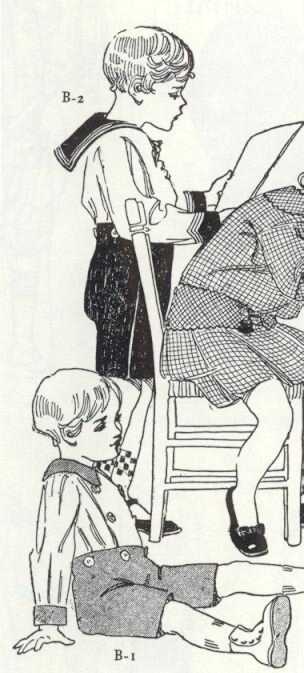
Figure 1.--The A. Schuman catalog in 1914 offered these button-on outfits for boys from 3-8 years. The prive was $6. |

|
HBC does not yet have a complete chronology of button-on styling. We have noted button-on shirt waists in the 1890s, but am not sure when it first appeared. We note button-on styles for younger boys in the 1910s with large white buttons as a prominent styling device. They were made in many different styles. Sailor suits were popular, but there were many other styles such as the Oliver Twist suit. Button-on styles were popular for boys up to about 10 years of age as playwear and school clothes. Shorts suits with coordinated shirts and shorts were especially popular. In the late 20th century, button-on clothes were mostly dressy outfits for younger boys. This styling has continued to be used in the early 21st century.
Skeleton suits were very popular for boys in the early 19th century. The skeleton-suit employed button on styling.
We notice boys in Daguerreotype portraits wearing button-on pants. We are not yet able to destinguish between 1840s and 50 s dags, but clear button-on pants were being worn in the 1850s. We have relatively few images from the 1850s, but this probably represents the relative small number of images rather than the popularity of the style. A good exanple is an unidentified American boy about 1850.
Button-on styling was very common for school-age boys in the 1860s to about age 8-10 years, althoough that is just an estimate at this time. We note button-on pants being worn in the mid-19 century with blouses, cut-away jackets. and other suit styles. Here the development of negative based photographic formatc (CDVs and cabinent cards) and the resulting fall in prices resulted in the explosive growth of the industry, leaving us with large numbers of images. Some of these outfits were obsiously button on outfits because you can see the buttons. Quite a few examples are archived in HBC. A good example is the two-piece outfit worn by two Detroit brothers, we think in the late-1860s. Notice the waist-band covering or flap that hides the buttons. Some outfits are less obvious because you can not see the buttons. There seem to be two reasons for this. One was boys fore a kind of waist flap or cumberbinf-type harment which covered the buttons. The other reason was that the buttons did not go through to the outside of the waistline.
Button-on styling seems to have declined in the 1870s, but we still see some examples. We are not yet sure about his. More boys were photographed wearing jackets making button-on styling mote difficult to assess. One example here is an American boy, Elmer Dayton in 1870.
The 1880s is very difficult to assess because boys generally were phoographed wearing their jackets. This mean we can not see their waistlines so we can detemine if they were wearing buttob-on outfits. We think button-on garments may have been fairly common, despite our inability to confirm it with the photographic record. A good example is an unidentifed boy in Richmond, Virginoa during 1885. He looks to be about 10 years old. .
HBC have noted button-on shirt waists in the 1890s, but am not sure when it first appeared. The shirt waists had detachable collars and buttoned waistbands for holding up both trousers and stockings. They were for boys 5-12 years of age. A HBC reader comments on the 1890s, My wife's uncle, now deceased, was born in 1889, and in telling us about those times, which he called the "not-so-gay nineties", he once wrote: "At that time boys between the ages of 4 and 10-12 years wore knee pants and long black stockings held up by fasteners to a shirtwaist much as women's stockings are held up by a girdle. The shirtwaist had buttons onto which buttonholes around the top of the knee pants could be buttoned. Younger boys wore knee-length skirts that were buttoned to a band around the bottom of the blouse." An 1892 photo shows two boys in buttoned-on knee pants in New York City. You can
tell that the pants had side openings.
We see a lot of boys wearing button-on outfits in the 20th century, especially the first-half of the 20th century. This seems to have been amn especially popular style and method trouser suspension in America. It was not an exclusively American style, but it was certainly most popular in America. Another type was the styles for younger boys like Oliver Twist suits in which large buttons were part of the styling. This was very popular in the 1910s and 20s with the disappearance of Fauntleroy suit. We see more European boys wearing suspenders to hold pants up. One reason button-on outfits were more common in america is that many American boys wore long stockings with formal stocking supporters. These were commonly used to hold up pants. They were developed in the late-19th cenbtury and standard items for boys during the early-20 century into the 1930s. Europeans often used more informal arrangmnts like safety pins. There were different kinds of button-on outfits. Some were fairly standard outfits in which the buttons were not part of the styling. And we see sets of shorts and pants done with button styling, iften with self-belts to civer the buttoins in the 1930s and 40s, but not with the large white buttons. Actually they often had self-belts to cober the buttons. This was very common n America. We are less sure with Europe. . Button-on clothing declined in popularity after world War II. Several factors were involved. Long stockings and the supporters worn with them declined in popularity. Informal styles became more important. Boxer shorts with elastiized waists appeared that solved the suspsiom problem and wre easier for little ones dressing themselves. Button-on outfits declined in popularity, but have not disappeared. After world war II they gradullu became akind of boti
This styling has continued to be used in the early 21st cenbtury.

Navigate the Boys' Historical Clothing Web Site:
[Return to the Main button-on style page]
[Introduction]
[Activities]
[Biographies]
[Chronology]
[Clothing styles]
[Countries]
[Literary]
[Bibliographies]
[Contributions]
[FAQs]
[Glossary]
[Images]
[Links]
[Registration]
[Tools]
[Boys' Clothing Home]