|
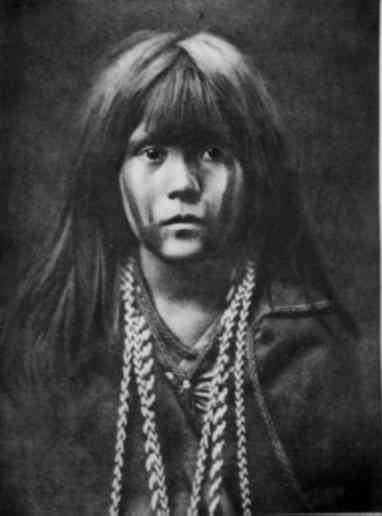
America of course is a country of immigrants. The exception is native Americans. There have been several waves of immigrants from many different countries. Even Native Americans cane in waves. There is as a result a wide diversity of ethnic clothes. The most Well known is the clothing of native Americans. Although the native American costumes are now not widely worn daily, they are worn at the native American pow-wows and other events held around the country. Boys once wanted to dress up in Native American garb for play, but this declined in popularity after World War II. I'm not sure just why. Other ethnic costumes are mostly worn for ethnic events based on the ethnic costumes of the various costumes from which emmigrants came. There are a few exceptions such as the Amish who do wear their destimctive dress for every day wear. Interestingly the immigrant children were the first to want Americam-styled clothing. This was a sign that they were assimilating. Also it is the children that were subsequently most likely to be dressed up for ethnic events. Some religious groups retained their destinctive clothing. We note that some modern immigrants from Asian and African countries choose to wear their destivtive national clothing. Here the children were less likely to do so.
Native Americans, in part because of the horendous treatment by white Americans as well as the exposure to European diseases, now comprise only a small part of the Americam mosaic. It is a rich, colorful traition, no matter how small. Native American dress is showcased at pow-wows and other gatherings held annually throughout America. Boys once wanted to dress up in Native American garb for play, but this declined in popularity after World War II. I'm not sure just why.
No assessment of America would be complete without considering the immigrants that played such an important role in the American saga. All American except for Native Americans have immigrated from other countries. Most of the early immigrants came from the British Isles. Immigrants followed from every European country. Immigrants from Germany, Ireland, Italy, Svandinavia, and Africa played key roles. Blacks brought from Africa as slaves also played an important role. Important immigration also came from China and Japan. While these immigrants played a major role in the building of modern America, we think that their influence on fashion was relatively limited. Most of the children wanted to wear American clothes and learn Englisg so that they could fit in as quickly as possible. Often their parents hung on to clothing styles from their native lands.
As a result of the waves of immigration, Ameica is a very racially diverse country, the most diverse country in world. The original settlers were English with smallers numbers of Scotts, Dutch, and Swedes. Early in the colonial area Africans began to be imported as first endentured laborors and then actual slaves. Germans came in eapecially large numbers. The Irish arriced as a result of the Potato Famine. Chinese and Japanese arrived after the dicovery of gold in California. After the Civil War a very diverse wave of Europeans arrived. Most Jews came with this European wave. Italians became an especially important part of these immigrants. Immigreation was sharply curtailed after World war I and northern Europe was favored for the limited immigration permitted. Immigration laws were changed in the 1960s to be racially neutral. Large numbers of Hispanics began to enter the United States illegally in the 1960s.
Afro-Americans for the most part do not fit into the the discussion of our ethnicity which is largely based on immigration and nationl origins. Some Afro-Americans have immigrated from modern African countries. Most have, however, have descended from peoples brought to America by force as part of the Atlantic slave trade. The great majority thus came from West Africa. Slaves from southern Africa largely went to Brazil, in part becuse of geography and also because Angola and Mozambique were Portuguese colonies. Slaves frm East Africa were mostly involved with the Arab slave trade network. Most Afro-Americans are descended from people who were brought to America in te 17th, 18th, and very early 19th century. The United States outlawed the African slave trade (1807). This did not immediately end the slave trade, but it substatially reduced it. This significantly affects ethnicity as it affects Afro-Americans. There are seral reasons for this. First, slave masters sought to elinate vestiages of African culture which they saw as barbaros. Here they were successful to a degree. They did eliminate African languages and to a largecdegree religion. Music was adifferent matter and the African music tradition was te core of the only fully American music--jazz. Also African agriculturl technology proved useful such as the South Carolina rice culture. Second, most African were brought to America before nation states were established in Africa. Thus very few Afro-Americans have conttact with their countries of origin.
Ethnicity in America is commonly associated with Europen national origins. Many Americans are not, however, of European origins. There is a substatial population of African origins as well as smaller populations of Native Americans and Asians. There is also a growing Hispanic popultion. The largest Hispanic group is Mexican who are a mixture of Europan-Native American peoples. And there are a range of mixture among these peopes and Americans of European origins.
Immigration has made America as diverse in terns of religion as it is in ethnic terms. This had only limited impact on clothing. There were some exceptions such as the strict Protestant groups like the Amish and the Mennoites.
One interesting question is at what stage did Americans began to look back with nostalgia at their country of origin. I am not sure this happned at all in the 17th and 18th century. The vast majority of colonisys were of English origins. They tended to view England as the mother country and in fact saw themselves as English. Thus when they came to America, it was not like going to a foreign country, but rather another part of England, if a somewhat primitive part. Even as late as the Revolutionary War (1777-83), many colonists saw themselves as English rather than American. There were some foreign groups: the Scotts-Irish in the back woods, the Dutch in the Hudson Valley, and the Germans in various locations. For them the break with England was less traumatic than with colonists of English ancestry. We are unsure to what extent these communities sponsored events that might today be called ethnic festivals. The 19th century brought large numbers of European immigrants as to a lesser extent Asian immigrants. They came into an American that was culturally English and Protestant. The first big group was the Irish, but mny other groups followed. Most were very anxious to ecome American, especially the children. We do not have information on major ethnic events and cotuming in the 19th century, but there certainly religious celebrations which various ethnic communities celebrated. Here it should be remembered that many immigrant groups came from portions of the Austrian-Hungarian or Russian Empires as well as Ireland at the time part of Britain and not viable nation states. An exception here was Italy which was a very new European state. We do begin to see ethnic events becoming important in the 20th century and children dressing up in ethnic costumes.

Navigate the Boys' Historical Clothing Web Site:
[Return to the Main race page]
[Return to the Main ethnic page]
[Introduction]
[Activities]
[Biographies]
[Chronology]
[Cloth and textiles]
[Clothing styles]
[Countries]
[Topics]
[Bibliographies]
[Contributions]
[FAQs]
[Glossaries]
[Images]
[Links]
[Registration]
[Tools]
[Boys' Clothing Home]