|
HBC does not yet kmow where the fashion of tunics for boys originated, probably England or France. We also do not have full details on tunic styles in different countries. They appear to have been widely worn by American and European boys in the early 19th Century. The tunic suits that appeared at the 20th Century appear to have been very popular in America, France and Italy. I am less clear about the popularity in other countries. Tunics along with skeleton suits were some of the most popular boys outfits in the early 19th Century. I have no infornmation at this time on the relative popularity and
stylistic differences in various countries. Tunics declined in popularity at mid-century, but they never entirely disappeared. I have no infornmation at this time on the relative popularity and stylistic differences in various countries. Tunic suits appeared at the turn of the century. They may have been worn in Europe during the late 1890s, but were most popular from about 1900 to about 1915. The style was little seen after the Firsrt World War (1914-18) in the 1920s. It appears to have been a particularly popular style in America and France, but was worn throughout Europe.
The tunic was a garment outside oif Russia genrally worn by fasionally middle- or upper-class boys (19th century). They beiefly became very popular (ealy-20th century). Latin Amnerica had a relatively small middle-class. We have a relatively small Latin American photographic archive. This is in part because Latin American countries did not develop economically like Europe and North America (19th century). Thus there is a smaller photogrsphic record. The size of the photographic record is substantially affected by ecomomic affluence and the Latin Americans were generally poor countries. We have not yet found many photograohs and paintings of Latin Anerican boys wearing tunics. The Lastin ASmdrican elite nd prosperous middle class generally foillowed Europeam fashions. (The United States until the 20th century had limited contact with most of Latin Anerica.) We believes that tunics were woirn, but the upper-class and even the middle-class was a relstively small portion of the population. So far the onmly tunic image we hgave found is the Argentine Sarmiento boys (1855). The family was part of the Argentine elite.
We see boys wearing tunic suits in two of the major North American countries (America and Canada). We do not see them being commonly worn in Mexico, but our Mexican archive is very limited. Although Mexico is in Noryth america, we cover the country in our Latin American section because of the cultural similarities. Tunics suits seem to have been particularly popular in America. Much of the information in the tunic section is about tunics in America. I am not sure how common they were in the early-20th century, but they are much more common at the mid-19th centuty, and even more sp at the turn-of-the20th century. They were very widely worn in America at this time. Three styles were generally worn, but there were other styles as well. The sailor style was the most popular, but the Russian blouse and Buster Brown styles were also popular. These tunic were mostly worn with above-the-knee knickers and short pants. A related style, the Russian blouse suit was occasionally worn with long pants--mostly in the long pants variant. Some information is available on individual boys. Note an Ohio boy during the 1900s. We also note a New York boy in 1904. We note Canadian boys wearing tunic suits in the early 20th century. They seem rather similar to the suits worn in America, commonly with belts. The tunic seemed less popular in Britain at the time. We notice Canadian boys wearing tunic suits done inthe sailor style. One example is a sailor tunic done with polka dot material. But this was unusual. Most were done with more of a nautical look. One image shows Canadian children dressed up, but playing in a park in 1912. The boy wears a white tunic suit. Another unidentified Canadian boy wears a white tunic at about the same time. It is done in the sailor style, but with lace rather than stripped detailing.
We primarily discuss tunics in connection to European and Ametrican fashions. The simplicity of the tunic, however, means that it was used by both ancient civilization as well as many more modern countries. Tunics were wotk by Turkmen boys as well as boys in other Central Asian countries.
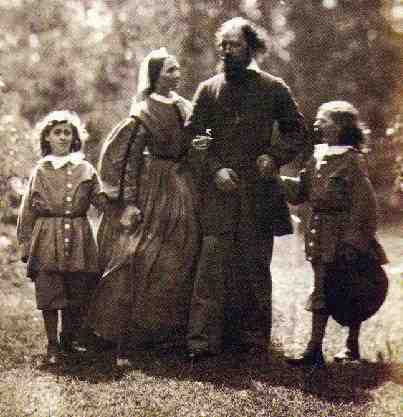
We see quite a number of European boys wearing tunics. This seems to have been a fashionable style and most common with boys from affluent families. We do not see working-class boys wearing tunics to any extent. We do not see tunics in the 18th century, although without photography this is difficult to assess. We do see them being worn throughout Europe in the 19th century, although as photographyas only invnted in 1839 so we have very little information on the fist half of the 19th century. We do see a few painted prtraits in the 1800s decade. Country trends are difficult to assess at the time because we have such small archives for many countrie. We note quite a few English and French images. We also see some German images as well as many othrr countries, although often only a few images. Of course the larger photographic record for these counties is a factor. We do see them throughout the 19th century. And there was a notable burst of popularity and styles for some reason at the turn-of-the 19th century throughout the 1900s-10s, alyhough not as great as in America at the time. Because of the similarity with Russian peasant dress, they became known as Russian blouses. At this time we seem many examples in America and France. We notice the German princes wearing tunics, but the style seems les popular for their subjects.
HBC has only begun to assess tunics in Australia. British immigration to Australia began to reach significant levels in the mid-19th century. Thus the tunics worn in England during the early 20th century had little imapct on Australia as there was not yey any substantial English population. This was different by the turn of the 20th century. We note some boys wearing tunic suits at this time. The style follows English styles. We do not know how common these suits were in Australia.

Navigate the Historic Boys' Clothing Web Site:
[Return to the Main tunic page]
[Introduction]
[Activities]
[Biographies]
[Chronology]
[Clothing styles]
[Countries]
[Bibliographies]
[Contributions]
[FAQs]
[Glossaries]
[Images]
[Links]
[Registration]
[Tools]
[Boys' Clothing Home]