
Sailor Suit Dickies: Types
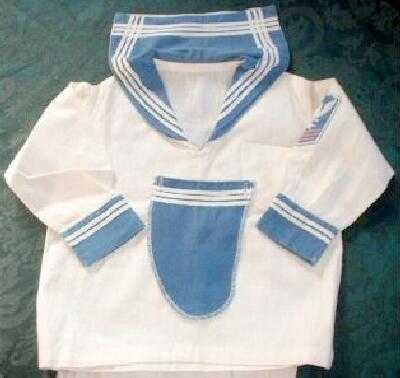
Figure 1.--Here we see an Americam child's middy blouse which probably dates to the 1940s. Note the dickie which could be sewn into the "V" collar if desired. Some mothers sewed in in during cool weather, but took it out for summer wear when the weather turned hot.
|
|
The dickies or shields worn with sailor suits varied. There were not only different tyles, but different types of dickies. This is difficulkt to assess with the photographic record because very different types of dickies look identical in a portrait because only the portion between the "V" collar shows. We have, however, collected some information from various sources explaining the types of dickies worn. The dickies also assumed a variety of forms. There were vest-like under garments, "T"-shirt like garmenrs, detachable dickies, and sewn-in dickies. We are not sure about the proper names for these different tyoes of dickies. We also note garments like T-shorts and blouses being worn in place of dickies.
This dickey was similar to a vest. In fact we are not sure if it was called a dickey at the time. It was made to be worn with sailor blouses or jackets that were worn open. Many early sailor blouses buttoned up the front or had ornamental front buttons. These were designed to be worn somewhat like a Fauntleroy suit so as to show off a garment worn under the blouse or jacket. These vest-like garments for sailor suits common had an embroidered nautical device. They were commonly worn as a suit abnd made in the same material as the blouse/jacket and pants. It differed from a vest as it was not done with a "V" front, but had a crculasr form around the neck, similar to a dickey.
Vest-like Undergarment
Many early dickies were an undergarment rather like a vest. While similar to the "vest-like garment" above, this dicky was made to show only between the "V" collar. This is a little difficult to assess because most of these garments are covered by the sailor blouse or jacket in available portraits. Somme appear to be side or back buttoning garments. we have very few images of actual dickies and most of the available images just show the area between the "V" sailor collar. An American portrait of William Dougherty shows what the dickey looked kike as his jacket was worn open.
T-Shirts
Others dicckies were "T" shirt like garments. We think that many of the Russian and French stripped dickies were actuall T-shirt like garments. We have noted French sailors wearing stripped T-shirts.
We note one boy wearing a Russian blouse under his sailor jacket. This of course is not a dickey, but is is worn for the same purpose as a dickey. Russian blouses could be won as the side buttoning mean hat tere was unobstructed coverage around the neck lick a dickey. These presumably did not have embroidered designs. We are not sure how common this was as a way of covering the area between the "V" sailor collar. In most instances a boy in aformal portrait would have buttoned his sailor jacket, leaving no clue that he is wearing a Russian blouse underneah. We only found out about this concentioin when wee found a boy who had unbuttoned his sailor jacket in an infoirmal monment captured in a family snapshot. We suspect that it must have been most common with the jacket-type sailor jacket rather than middy blouses. Wearng it with a middy blouse would have meant wearing two vlouses. These sailor jackets seem most common in he 1900s. And we do note boys wearing Russian blouse-like colors with sailor jackets.
Beginning in the 1920s, one piece middy blouses appear with the area between the "V" collar having material sewn in rather than a separate dickey. This had virtually entirely replaced the dickey in American sailor suits by the mid-1920s. It is another example of the greater simplicity of dress after World War I. HBC is less sure of other countries, but believes a similar trend was occuring in Eurpe. These sewn in style dickies were usually very simple, often repaeting the three-strip detailing. They usually did not have the embroidered designs like anchors and stars. They were worn without any other garment showing at the collar line.
Detachabe
Some sailor suits came with detachable dickies. American clothes catalogs advertised detachable dickies in the 1910s. We do not know, however, just when the detachabe dickies first appeared. The detachable versions came with sailor suits for summer wear. HBC notes that middy sailor suits were available that could be worn with or without dickies (shield). One HBC reader reports that underwaists, unionsuits etc. were mostly high neck (which can be seen in contemprary catalogs). These high necks were reffered to as Dutch neck seven in a early 1920s catalog. Thus a dickie was needed to cover the underwear which would not have been cosidered proper especially for formal photographs. By the 1930s undershirts were more often low cut without sleeves and low necks. We call them sleeveless vests or athletic shirts today. Prior to the 1930s I have not seen any. Maybe this is the reason detachable dickies were made. I am not positive at this time jut how these detachable dickies were attached. Perhaps they were actually sewn-in dickies.
Military Style
I recall in the Army that some special units had a kind of dickie with bands that connected behind the neck. These small military style of dickey does not appear to have neen common with boys' sailor suits, although our information is still limited.
HBC

Navigate the Boys' Historical Clothing Web Site:
[Return to the Main sailor suit dickey page]
[Introduction]
[Activities]
[Biographies]
[Chronology]
[Clothing styles]
[Countries]
[Bibliographies]
[Contributions]
[FAQs]
[Glossaries]
[Images]
[Links]
[Registration]
[Tools]
[Boys' Clothing Home]
Navigate the Historic Boys' Clothing Web sailor pages:
[Middy blouse]
[Reefer jackets]
[Sailor dresses]
[Other sailor styles]
[Sailor hats]
[Middy suits]
[National sailor suits]
[The Royals]
[Ring bearer/page costumes]
Created: 9:51 PM 6/5/2005
Last updated: 2:30 AM 1/12/2010