
Sailor Suits: Colors
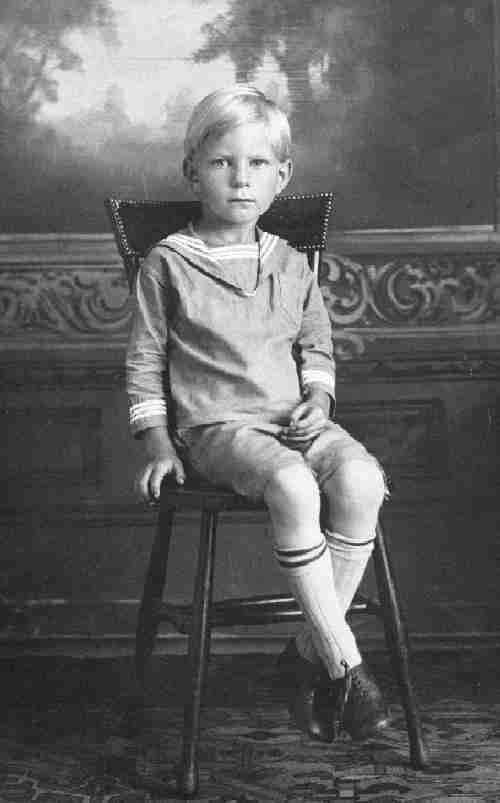
Figure 1.--This Americam boy was probably photographed in the early 1920s. HBC is not sure about the color. It has too much of a dark tinge to be pure white. A pale blue is possible, but a wide range of other colors were worn. After World War I, boys increasingly began wearing their sailor suits without the once common scarves.
|
|
Sailor suits were worn by both sailors and children. The blue and white uniforms worn by sailors became the standard worn by children. The children's sailor suits were, however, not limited to blue and white. We see many different colors, especially in the late-19th and early-20th centuries. The blue and white suits acquired a seasonal connotation. At this time we do not know how colors for sailor suits varied from country to country, As far as we can determine, blue and white were the principal colors for these suits in every color. Some of the other colors, however, may have varied in popularity from country to country. We are not sure yet to what extent gender affected the colors used for sailor suits. As best we can tell, the dominant colors for both boys and girls were blue and white. HBC relies heavily on the photographic record for its fashion assessments. This causes a difficulty in dealing with color. Until the 1970s, mosdt photographs were black and white. There were some color photographs, but they were a very small part of the overall number of photographs taken. There are several other sources of color informastion, but each have limitaions. None have the same validity as an actual color photograph.
Naval Uniforms
Naval uniforms around the world are always blue and white, often worn alternatively on a seasonal basis. It is not know with certaintly why blue was adopted a suitable color for naval uniforms and classic sailor suits for boys. The
conection with blue water is obvious. Naval uniforms did not, however, become standardized until the 18th Century. The British were not the first to adopt a standard uniform. One account reports that British naval officers meeting at their favorite watering hole, "Will's Coffee House", Scotland Yard, decided in 1745 that they would petition the Admiralty for an official uniform in order to standardize as in other navies of the day. As a result, the Admiralty asked certain officers to appear in what they considered a good design. Some liked gray with red facings. Captain Philip Saumerez is reported, by tradition, to have worn a blue uniform with while facings. Blue and white was chosen by the Admiralty. The story goes that since George II had to make the final decision, he selected the colors from the riding habit of the First Lord's wife, the Duchess of Bedford, who was riding in the park. But it is said that to gain his Majesty's consent, the Duchess wore the
colors already selected by her husband.
Boys sailor suits have always primarily followed the standard naval styles of blue and white. The great majority of sailor suits were either blue or white. There were many different shades Mothers being mothers, however, many did not share the dedication to naval tradition. Suits appeared in many different colors, some quite a deaprture from naval tradition. We note suits done in brown, frey, pink, and red, and there were probably other colors as well. Unfortunately the black and hite photography of the day often makes it difficult to determine what the colors were. There are some sources of information, however, that provide us some clues as to the variety of colors. Clothing catalogs are the best source of information, but post cards and other color lithographs also provide some information.
Chronology
HBC is not yet sure how color popularity varied over time.
Country Trends
At this time we do not know how colors for sailor suits varied from country to country, As far as we can determine, blue and white were the principal colors for these suits in every color. Some of the other colors, however, may have varied in popularity from country to country. We have begun to build some pages on color in the various country sailor suit pages. We noe have information on American, England, France, Germany, Italy and Russia. We know much less about other countries. We hope to add additional pages as HBC develops.
Gender
We are not sure yet to what extent gender affected the colors used for sailor suits. As best we can tell, the dominant colors for both boys and girls were blue and white.
HBC relies heavily on the photographic record for its fashion assessments. This causes a difficulty in dealing with color. Until the 1970s, mosdt photographs were black and white. There were some color photographs, but they were a very small part of the overall number of photographs taken. There are several other sources of color informastion, but each have limitaions. None have the same validity as an actual color photograph. Color information can be found in: paintings, advertising, catalogs, postcards, tinted and colorized potraits, and other sources. Paintings are good if not perfect sources, but relatively rare. While color photographs are rare, color lithography was possible by the 1890s. It was at first mostly used in advertising. The colors chosen were often for eye appeal raher than acurate depiction. Post cards were commonly colorized, but the color depictions are very unreliable. Catalaogs often list colors. Because money was involved, the colors listed are reliable, but usually do not mebntion shade. Color tining and colorization of black and white photigrapohs is useful, but leaves questions as to accuracy.
HBC

Navigate the Boys' Historical Clothing Web Site:
[Return to the Main sailor suit page]
[Introduction]
[Activities]
[Biographies]
[Chronology]
[Cloth and textiles]
[Clothing styles]
[Countries]
[Topics]
[Bibliographies]
[Contributions]
[FAQs]
[Glossaries]
[Images]
[Registration]
[Tools]
[Boys' Clothing Home]
Navigate the Historic Boys' Clothing Web sailor pages:
[Middy blouse]
[Reefer jackets]
[Sailor dresses]
[Other sailor styles]
[Sailor hats]
[Middy suits]
[National sailor suits]
[The Royals]
[Ring bearer/page costumes]
Created: June 20, 2000, 1998
Last updated: 4:39 PM 7/30/2009