
Buster Brown Movies
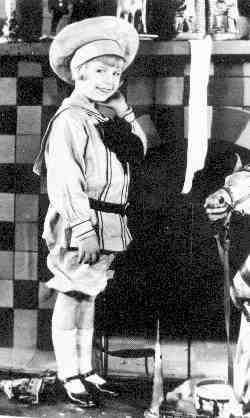
Figure 1.-- Buster Brown suits with bloomer style, above the knee pants were popular for boys at the turn of the century. They were generally worn with long stockings or three quarter-length socks. Note this boy has the classic Dutch Boy bangs often associated with Buster Brown suits.
|
|
Buster Brown was the subject of a popular series of films, the Buster Brown Commedies during 1925-29. They were all silent films. Later talkies were also made. Buster was played by Arthur Trimble, he is a child actor I know very little about. The series of 'Buster Brown' comedies were sort-of a prelude to the 'Our Gang' films. The only maintay was that Buster was costumed like the Outcault character. These fashions, however, were no longer in fshion when the Buster films were made. The 'Our Gang' films used contmprry fashions. Snapily attired Buster found himself in innocuous misadventures along side his faithful canine companion, Tige was no longer a bulldog. Tige. (Petey to Our Gang/Little Rascals fans.) Unlike Our Gang, the series was obviously aimed at very young audiences and offered very little for adults. I have no doubt that youngsters of the day were thoroughly entertained by Buster Brown. I'm not sure how our modern generaton would take to it, certainly they wouldn't be to impressed with his outfit. One sample plot line is "Look Out Buster" in which Tige is being hunted by dog catchers for quarantine, and ends up foiling a gang of robbers in the process. There were apparently other Buster Brown movies. Images exist of Jimy Marln who was another child star who played Buster Brown. Unfortunately we have little information about these films. They were something along the lines of wht film goers would subsequently see in the 'Our Gang' films. But they adhered to the costuming and hair styls established in Outcault's Buster Brown comics.
Filmography
The Buster Brown series of silent two-reel films ran from 1925-29. They were all silent films. The films were produced by Sten Brothers, for Universal. Gus Meins, who one source ironeoudsly identifies as the creator of the
popular comic-strip character, directed a number of the two-reelers. There may have been other silent films based on the cartoon character, but I don't know of any. I do not know of any talkies.
Actor
Buster was played by Arthur Trimble. Unfortunalely I have been able to find
out very little about the boy. He did not go on to adult roles. He
was usually accompanied by his dog Tige which in the
film was the same dog that appeared in Our Gang as Pertty. Doreen Turner was the
girl that appeared with him in the series.
Costuming
Buster's costuming in the Buster Brown Commedies series was very close to the original costume character. The movie was in black and white, but his tunic suit was presumably red. He wore the knickers above the knee, although the cartoon character wore them below the knee. His short socks and strap shoes were just like the cartoon, except he sometimes wore long stockings and when the cartoon character was drawn with short socks, they were often red like his tunic. His cap was not the wide-brimmed sailor cap depicted in the cartoon, but rather a rather floppy large sailor cap. It was not a style that was widely worn with Buster Brown suits or other styles.
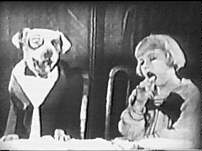
Figure 2.--Arthur had the classic Dutch boy bangs for the part. Here he is picture with Tige.
|
|
Hair Styles
Arthur wears a classic Dutch boys bangs hair cut. His bangs were cut straight across his forehead and the hair on the sides covered his ears. Most boys at the time wanted short hair and did not like bangs and longer hairstyles.
Although now known mostly as a coroprate symbol for a shoe company, Buster Brown was the best known boy character in 20th-Century America. He was an emensly popular cartoon chracter created by R.F. Outcault who had earlier created the Yellow Kid. He was also the subject of popular films. Buster was a charmingly mischievous boy, always carefully dressed and with nangs and long blond hair. He was often accompanied by his sister, Mary Jane, as well as his faithful bulldog--Tige. His antics while sometimes naughty were never meam-spirited and always ended with a little motal homily to have a moral influence on the youthful readers of the Sundau comics. He was normally the well dressed younger boy with friends that were rougher and not as well dressed. Buster was also made into the subject of popular films. He was also used to market a wide range of clothing. Because of his charateristic clothing, his include a range of clothing items. Buster Brown shoes was the jost enduring. Buster's girl friend was Mary Jane which became the American term for strap shoes even though Buster also wore them. Buster gave his name to his trade-mark bangs, collar, and suit. Curiously Mary Jane gave her name to the strap shoes, although both Buster and Mary Jane wore them.
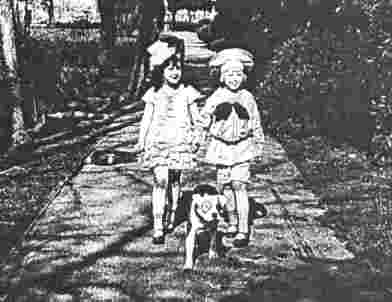
Figure 3.--Arthur is pictuted here with his two c-stars, Tige and Mary Jane who
always appeared with him. The one strap shoes both children wore became known as Mary Janes after Buster's friend.
|
|
The cartoonist, R.F.Outcault, picked up on prevailing styles in turn of the Century America. In doing so, however, he must have helped popularize the tunic suits, floppy bows, and Dutch boy haircuts. He also gave the style its name, the
Buster Brown suit. Buster Brown suits were popular for younger children in the early 20th Century. I'm not sure who introduced the style or precisely when. I'm not sure if it was a style picked up by the Buster Brown comic strip or an entirely new style created by the cartoonist. It does appear, however, to have been most popular after the turn of the century. Toddlers at that time often wore dresses or smocks. One of a boy's first suits was often a Buster Brown suit. Buster Brown suits were worn by boys from about 5 to 8 years of age, but some mothers dressed older boys in them for a few additional years.
Individual Films
The Buster movies were film shorts, show like newsreels and cartoons befire feature films. They were bout 8 minutes long. A reader reports viewing 'Knockout Buster' (1929). The plot was similar to an 'Our Gang' film.
HBC

Navigate the Boys' Historical Clothing Web Site:
[Return to the Main Buster Brown page]
[Return to the Main A-C movie page]
[Return to the Main movie page]
[Return to the Main Fauntleroy movie page]
[About Us]
[Introduction]
[Activities]
[Biographies]
[Chronology]
[Clothing styles]
[Countries]
[Theatricals]
[Topics]
[Bibliographies]
[Contributions]
[FAQs]
[Glossaries]
[Images]
[Links]
[Registration]
[Tools]
[Boys' Clothing Home]
Created: July 15, 1998
Last updated: 8:11 PM 3/7/2015