|
Switzerland was another country not conquered by the NAZIs. It was in fact the only country which bordered on Germany that the NAZIs did not annex or invade. After the fall of France, however, the Swiss were certainly vulnerable to the NAZIs and possible German invasion. There is no doubt that had the NAZIs prevailed in the War that Switzerland would have been subgegated. The Swiss never turned over their Jews to the NAZIs. The Swiss did, however, participate in the Hlocaust in a number of ways. They did turn over thousands of Jews fleeing the NAZIs that sought refuge in Switzerland and closed their border to thousands more. The Swiss can argue with some validity that they had to placate the NAZIs because of the danger of a German invasion. This possibility began to decline, however, by 1942 after the MAZI disasters in Russia. Some othere threatened neutrals (Spain and Sweden) did stand up to the NAZIs as well as Finland which fought with them for 3 years. The Swiss also accepted about $5 billion (2002 value) in NAZI gold which as early a 1942 they knew to be looted or victim gold. This continued into 1945, even after the Swiss were provided information from the Allies. These fund were used by the NAZIs to purchase critical war materials from other neutral countries. Swiss banks kept Jewish accounts out of the hands of the NAZIs, they also refused to provide the assetts to survivors after the War. [Gumble] Americans will be confused because in America banks are required to turn inactive accounts over to state governments. Inactive bank accounts in Europe, however, generally become the property of the banks. Thus there was a major vested interested on the part of the Swis banks to make it difficult for survivors and their descendents to access these accounts. Swiss companies in Germany also used slave laborers. [Eizenstat]
Little is know about Jews in what is modern Switzerland during the Roman era. A Jew is presence is not known until the late medievakl er. Records exiss of Jews in Basle (1213). It is believed thsat Jewish merchants from France and Germany traveled along river trade routes to Bern, Zurich, Geneva, St Gallen, Lucerne, Vevey, Neuch�tel, Fribourg and other cities. Thus Jews are known before the Swiss Confederation was founded (1291). Authorities banished the Jews (15th cetury). Jews managed, however, obtained protection and the right to live in two villages in the Aargau canton (Lengnau and Oberendingen). The Surb Valley Jews were Switzerland's primary Jewosh community. The Swiss in the 1874 Constitution granted equal rights to all religious communities. Article 49 recognizes that the freedom of conscience and belief is inviolable. The Jews in the Surb Valley migrated to the larger Swiss cities. Jews from Alsace, Germany and Eastern Europe emigrated to Switzerland during the 19th and early 20th centyry. The 1920 census indicated a Jewish populsation of 21,000 people and that populatin is little changed today. Switzerland refused to hand ver its Jews to the NAZIs in World War II, but did turn over mny non-Swiss Jews attempting to fkleet the NAZIs. After the War, many Swiss banks refused to honor insurance policies and bank deposits owed Holocaust survivors. Ruth Dreifuss was elected president of the Swiss Confederation.
Switzerland like the Netherlands was committed to neutrality. Unlike the Netherlands they were able to maintain their neutrality. Historians have asked why Switzeland suceeded. The central reason is probably that they had a creditable military force. The Swiss were prepared to fight and by withdrawing into their Alpine national redoubt could have put up a substantial resistance. The Panzers would have been lkess effective than on the flat terraine of Poland France, and Russia. There is no doubt that the NAZIs would have succeeded, but it would have been at considerable cost. There is also no doubt that if they had prevailed in the War that Switzerland would have disappeared. Switzerland has a large German population, part of which was pro-NAZI. NAZI forbarance also reflected the fact that Switzerland was useful to the NAZI war effort. Swiss raw materials and industrial production could be imported. In addition, the Swiss played a role in finanzing the German war effort. Gold looted from the occupied countries could be used in Switzerland. Switzerland was another country not conquered by the NAZIs. It was in fact the only country which bordered on Germany that the NAZIs did not annex or invade. After the fall of France the Swiss were certainly vulnerable to the NAZIs and possible German invasion. Many observers believe that Swiss cooperation with the NAZIs continued long after the fortunes of war changed and the danger of NAZI invasion passed. There is no doubt that had the NAZIs prevailed in the War that Switzerland would have been subgegated. Unlike Sweden, the Swiss returned Jewish refugees who managed to reach Switzeland to the Germans. This continued even after D-Day.
A German invasion of Switzerland was a real danger, especially after the dall of France (June 1940). The Wehrmacht drew up detailed invasion plans. The most detailed was Operation Tannenbaum. The Gerans never invaded, but it was s real possibility. And the Goivernment and swiss peopkle were well aware of it.
The Swiss never turned over their Jews to the NAZIs. There were diplomatic representations, but by the time that the killing began in the NAZI death camps and the deportations from Western Europe began, german military fortunes had begun to recede.
Most Jews were expelled from Switzerland in the (17th century). For the few that removed there were restrictive regulations affecting finance and marriage. As part of the Enlightement other European countries began to move toward toleration and emancipation. Here the Netherlnds, Germany, Austria-Hungry, Britain, and France were leaders. And America was another leader. Switzerland lagged, but gradually made the same concessions. The granted of full rights was part of the constituion (1874). One issue arose the Kosher slaughter of animals--Sh'chitah. An organization oppoed to cruelty to animals demanded the Government prohibit the slaughter of animals in keeping with the Kewish religion. Their campign met with success and the Governmnt outlawed Kosher alaughter (1893). This prohibition continued during World war II and is still in plce today. It isdifficult to assess to what degree anti-Semtism was involved in the prohibition. As far as we know, no anti-Semetic regulations were imposed after the rise of the NAZIs or during the World War II era.
The Swiss while they did not turn over their Jews to the Germans, did participate in the Holocaust in a number of ways. The Swiss did turn over thousands of Jews fleeing the NAZIs that sought refuge in Switzerland. And they closed their border to thousands more. The number of Jewish refugees are estimated at about 20,000-25,000 people. Government policy was aimed at limiting the refugees and serving primarily as aransit point. This was rendered impossible after the fall of France when Switzerland was completely surrounded by Azis countries and German occupied France (JUne 1940).
The Swiss can argue with some validity that they had to placate the NAZIs because of the danger of a German invasion. After the Germans seized control of Italy (September 1943), they began rounding up Italian Jews and transporting them to the death camps in Poland. The Swiss allowed Some of these transports to go through Switzerland via the St. Gotthard mountain passage. The Swiss also accepted about $5 billion (2002 value) in NAZI gold which as early a 1942 they knew to be looted or victim gold. This continued into 1945, even after the Swiss were provided information from the Allies. These fund were used by the NAZIs to purchase critical war materials from other neutral countries. Swiss banks kept Jewish accounts out of the hands of the NAZIs, they also refused to provide the assetts to survivors after the War. [Gumble] Americans will be confused because in America banks are required to turn inactive accounts over to state governments. Inactive bank accounts in Europe, however, generally become the property of the banks. Thus there was a major vested interested on the part of the Swiss banks to make it difficult for survivors and their descendents to access these accounts. Swiss insurance companies also refused to pay premiums. Swiss companies in Germany also used slave laborers. [Eizenstat] Swiss diplomats in Germany and German occupied countries have been acused of not actively defending the rights of Swiss citizens living in those countries. This was particularly the case of Jewish Swiss citizens.
The Swiss by the time of World War II had a long history of offering sanctuary to religious and political refugees. The largest such group which found refuge in Switzerland were the French Huguenots (16th and 17th centuries). A diverse range of liberals, socialists and anarchists sought refuge in Switzerland from all over Europe (19th century). The repressive anti-Semeric policies of NAZI Germany
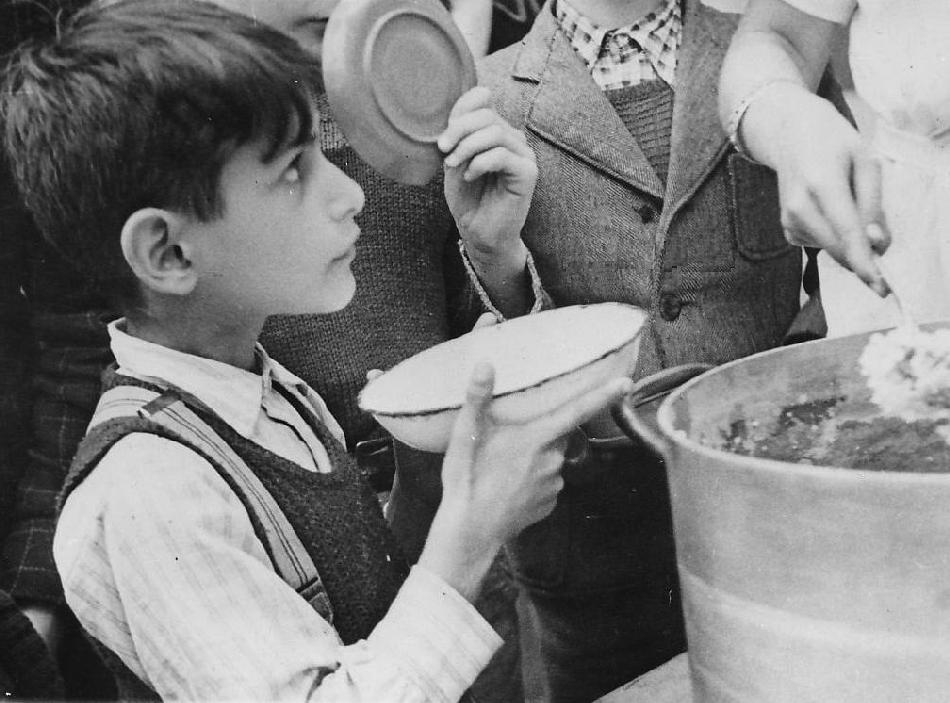
before World War II created a fefugee problem unlike any that Switzerland had ever fsced before. The number of refugees was enormoos, both Jews and political refuges. And this only increased after the War begun, especially after the fall of France and Switzeland found itself surounded by Axis powers and NAZI-controlled Vichy. The Swiss with a population of 4 million people had only a limited ability to accomomodate refugees. There are costs to sheltering refugeess and food became a major problem during the War. The Swiss did take in refugees, both Jews and anti-MAZI intelectuals. The Swiss took in about 2,000 German refugees through 1937. The character of NAZI persecultions changed in 1938 with both the Anchluss (March 1938) and Kristallnachy (November 1938). Jews desperately tried to escape and Switzerland bordered on both Germany and Austria. The Swiss report having 10,000 refugees by the time the War broke out (September 1939). By the end of the War the Swiss has over 55,000 refugees in addition to over 103,000 sodiers, mostly Allied Polish and French soldiers seeking refuge from the German armies invading France (June 1940). There were also smaller numbers of Allied airmen as well as German troops. Many of the French soldiers returned to Vichy (southern) France (1940-41) and liberated Frane (1944-45). As a result, by the end of the War, the number of interned soldiers had declined to about 60,000 men. The Swiss also has a program to give children from neighboring countries a few weeks or months of convalescence where they received good food ad fresh air. Nearly 60,000 children particupated in the program. Refugees also used Switzerland aa a transit point to escape the NAZIs. More than 66,000 refugees reached safety through Switzerland. [Chronik, p. 544.]
The Swiss did turn over thousands of Jews fleeing the NAZIs that sought refuge in Switzerland and closed their border to thousands more. Estimates range from about 20,000-25,000 people. The Swiss can argue with some validity that they had to placate the NAZIs because of the danger of a German invasion. And in fairness, American critics seldom point out that as a percentage of population, the Swiss took in more refugees than the Americans. But it is also true that when the Swiss turned back Jews at the border or repatriated Jews to the NAZIs and Vichy authorities, they did so with the full knowledge or a very good idea of what there fate would be. The possibility of a NAZI invasion began to decline, however, by 1942 after the MAZI disasters in Russia. And the number of Jews tuned over to the NAZIs were not so large that they threatened the Swiss food supply. The really klarge number oif Jews in the East had no way of reaching Switzerland. Some othere threatened neutrals (Spain and Sweden) did stand up to the NAZIs as well as Finland which fought with them for 3 years. I'm not sure when the Swiss changed their policy toward repatriating Jewish refugees. We note a German boy, Peter Feigl who esccaped from German occupied France (May 1944). He was lucky enough to have been baptised and was taken in by a business associate of hid father.
After the Germans seized control of Italy (September 1943), they began rounding up Italian Jews and transporting them to the death camps in Poland. The Swiss allowed Some of these transports to go through Switzerland via the St. Gotthard mountain passage. Swiss sources maintain this did not, occur, or rather there is no evidence. But of coure the Swis also accepted Jewish bank deposits anf sold life insurance, but thn refused to pay off saying that there was bo evidence. A BBC Frontline investigtion has found evidence ofslave labor transports, [Marks] Specific evidence on Jewish transports is less availabe, largly because unlike slave labor, most of the Jews were directed to death camps maning few survived the war. One study denies that the transports of Jews occurred. [Forster] German railway passage through Switzerland was based on the German-Italian-Swiss treaty of 1909, which established use of the Gotthard Tunnel. The Germans used the Treaty to gain access to the Swiss rail system until the end of the War. American iteligence estimates reported an enormous amount of German rail traffic, in part because of Allied bombing of the Brenner Pass in Austria and heavy snowfall. Soldiers and weapons were forbidden by the Treaty and the Germans thus used the Brenner pass for the majority of military transports.
The Swiss also accepted about $5 billion (2002 value) in NAZI gold which as early a 1942 they knew to be looted or victim gold. This continued into 1945, even after the Swiss were provided information from the Allies. These fund were used by the NAZIs to purchase critical war materials from other neutral countries.
Swiss banks kept Jewish accounts out of the hands of the NAZIs, they also refused to provide the assetts to survivors after the War. [Gumble] Americans will be confused because in America banks are required to turn inactive accounts over to state governments. Inactive bank accounts in Europe, however, generally become the property of the banks. Thus there was a major vested interested on the part of the Swiss banks to make it difficult for survivors and their descendents to access these accounts. Swiss insurance companies also refused to pay premiums.
Swiss companies in Germany also used slave laborers. [Eizenstat]
Swiss diplomats in Germany and German occupied countries have been acused of not actively defending the rights of Swiss citizens living in those countries. This was particularly the case of Jewish Swiss citizens.
As the Germans did not invade Switzerland, the American-based Jewish Joint Distribution Committee could operate in the country. The JDC supported Jewish refugee facilities and children's homes in Switzerland, and provided relief funds. JDC efforts were until the outbreak of World War II focused on the Netherlands, Belgium, and France. These countries allowed are tolerated large numbers of Jewish refugees. The Germans launched their Western Offensive which changed the refugee situation (May 10, 1940). JDC official Morris Troper ordered Alice Emanuel to leave Belgium even before the German Panzers crossed the border. Troper and another JDC worker, Jodseph Swartz, arrived in Paris (May 14). They began a continental tour in Switzerland where they met with Sally Mayer who led the Swiss Jewish organization. They wanted her to become the local JDC representing thinking that if the JDC was forced out of Western Europe by the Germans, at least they could operate in neutral Switzerland. Mayer immidately accepted. [Bauer, pp. 41-43.] By the time the Troper and Swartz got back to Paris (June 10), their worst fears had come about. Most of the JDC had been evacuated to Algiers. The JDC bcame the last Jewish rganization toleave Paris. One staff member was sent to Bordeaux. So the JDC in Switerland would become the only office able to aid Westernn European refugee Jews unless they could get to Spain and Portugal. And their efforts in Switzerland were limited by Swiss policies restricting the entry of Jewish refugees. Obtaining funds was difficult. Only when the the United States entered the War (December 1941) did only limited funds become available. Mayer devised a way to sidestep American restrictions on
sending funds to occupied Europe. He obtained $0.2 million from the United States (early 1942). But Swiss officils apparently bowing to German complaints, cut off further aid for ayear and a half. Then as German firrtunes receeded, some and $1.6 million got through (late 1943). Some $11 million from America became available in 1944 and early 1945). [SHOAH Resource Center]
There were not a lot of books published in Hebrew in Europe during World War II. We note a small 46-page volume Orah V�simcha for beginning readers. It is a Hebrew textbook for children published in Basel during 1944, presumably for Swiss Jewish children learning Hebrew. It was written by Chaim Mandelbaum. It includes many illustrations by Klonymous Rothschild. We are unable to read the text. The illustrations seem unrelated to the War or Holocaust. It includes a cardboard playing board, within a unique envelope on the binding verso. In addition: Before the title page, an original photograph of four unidentified Jewish girls. We are not sure just who they are. There is also a dedication � Gift to the Immigrant-Kids from Stella Schepss?�. I am not sure just what Stella Schepss was. The Swiss turned over many refugees, including children to the NAZIs. Some refugees managed to hide. Perhaps copies of this little book were provided children who who succeeded in fleeing from the NAZIs and hiding in Switzerland.
Hitler ordered an invasion of Hungary after learming that the Hungarian Government, an Axis Ally, was making peace feelers. This put the country's large Jewish population in danger an SS Col. Adolf Eichmannquickly appeared in Budapest to organize transports to Auscwitz where most of thevHungarian Jews were murdered. Swedish and Swiss diplomats set up safe houses in Budapest. The effort here was led by Swedish diplomat Raoul Wallenberg and Swiss Diplomat Carl Lutz. Diplomats at these safe houses would take in Jews who had nationality documents issued by foreign countries, even spuprious documents. One inside the Jews were safe from deportment. Germany was desperate to retain diplomatic relations ith both countries. A Salvadorian diplomat probably saved about 30,000 Jews by issuing certificates to Jews with no connection to his country. The Swiss themselves did not issue obviously fictious documents, but Lutz accepted the Salvadoran and other spurious documentation. The Swiss safe house was known as the Glass House because it was set up in an old glass factory. Eichmann was furious about these efforts, but was constrained because the NAZI Government was so desperate as more and more countrieswere vbreaking diplomatic relations with Germany. Sweden and Switzerland were especially important because they were neighbiring countries.
Bauer, Yehuda. American Jewry and the Holocaust: The American Jewish Joint Distribution Committee, 1939-1945 (Wayne State University Press: 1981), 522p.
Chronik der Schweiz, red. Christian Sch�tt / Bernhard Pollmann, Dortmund: Chronik-Verlag / Z�rich: 1987.
Eizenstat, Stuart. Imperfect Justice.
Forster, Gilles. "Transit ferroviaire � travers la Suisse (1939�1945)" ICE Publication Vol. IV. Forster \'s findings claim that trnsports of Jews did not occur through Switerland, but the assssment relied hevily on Swiss sources and based in the banking scandal, have to be taken with considrable skepticsm.
Gumble, Peter.
Marks, David. "THe Train: Were Jews transported through Switweland to Nazi death camps," BBC Frontline
[SHOAH Resource Center. "Mayer, Saly".

Navigate the CIH Holocaust Section:
{Return to the M-Z country Holocaust pages]
[Allies]
[Biographies]
[Children]
[Concentration camps]
[Countries]
[Decision]
[Denyers/Apologists]
[Displaced persons]
[Economics]
[Eisatzgruppen]
[Eugenics]
[German Jews]
[Ghettoes]
[Impact]
[Justice]
[Literature]
[Movies]
[NAZIs]
[Occupied Poland]
[Process]
[Propagada]
[Resistance]
[Restitution]
[Questions]
[SA]
[SS]
[Special situations]
[Targets]
[Wansee Conference]
[Return to the World War II]
[Return to Main Holocaust page]
[Return to the Main mass killing page]
[Return to CIH Home page]