|
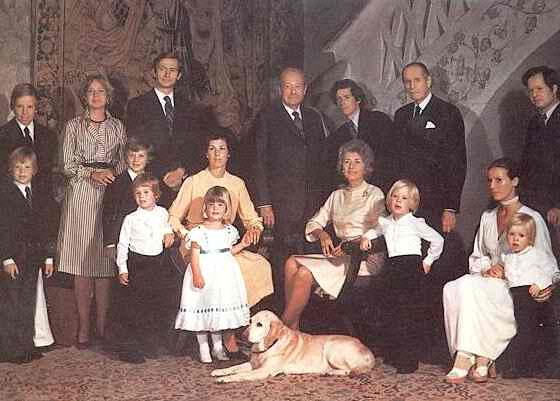
Liechtenstein is the last independent remnant of the Holy Roman Empire. This small independent monarchy is bounded by Austria and Switzerland. The history of the principality dates from 1342 and acquired its present boundaries in 1712. At this time the House of Liechtenstein combined with Vaduz and Schelleberg which had previously been direct fiefdoms of the Holy Roman Empire. The line of succession has nor since been broken. Liechtenstein is a largely German speaking principality, but became independent of the German Confedration in 1868. The Principality then proceeded to demobilized its army and declare paermanent neutrality. A constutution providing for universal sufferage and proportianal representation was adopted in 1921.
Liechtenstein is a small independent principality bounded by Austria and Switzerland. Miunarins rise to naely 3,000 meters.
The economy of Liechtenstein has been largely agicultural. After World War II, began to shift from agroculture to industry. It has since become increasingly important as a financial centre and in 1998 had a very low unemployment rate. The European Union is concerned about problems associated with tax evasion. The country is united with Switzerland in a Customs Union and now has joined the European Union.
Liechtenstein is largely German speaking. Its peoples have many German and Swiss traditions, values, social courtesies and behaviour, but remain proud of their independent status.
Liechtenstein is the last independent remnant of the Holy Roman Empire. Liechtenstein was settled since the Neolithic age. The Romans conquered the region in 15 BC. The area was seized by a Germanic tribe, the Aleamanni in the 5thbcentury AD. During the Middle Ages it was ruled by different Houses. The history of the principality dates from 1342 when a Count Hartmann became ruler of the principality of Vaduz. The former County of Vaduz in 1396 obtained the Bestowal of Imperial Immediacy. Liechtenstein acquired its present boundaries in 1712. The House of Liechtenstein combined with Vaduz (1699) and Schelleberg (1712) which had previously been direct fiefdoms of the Holy Roman Empire. A few years later in 1719, Liechtenstein became an independent principality within the Holy Roman Empire. The line of succession has nor since been broken. French forces occupied Liechtenstein during the Napoleonic Wars. After the defeat of Napoleon, Liechtenstein regained its independence within the German Confederation in 1815 as part of the post-war peace settlement. Liechtenstein is a largely German speaking principality, but became independent of the German Conferation in 1868 after the Confederation as a result of the Austro-Prussian War. One of the Principality's first steps was to demobilized its 80-man army and declare permanent neutrality. Liechtenstein in 1919 entrusted its external relations to neutral Switzerland. A constutution providing for universal sufferage and proportianal representation was adopted in 1921. Liechtenstein neutrality was respected by the Germans during World War I and II. Russia in 1996 returned the Liechtenstein family's archives, ending a long-running dispute between the two countries.
Karl I (1569–1627) was the first member of the House of Liechtenstein to become a Prince of the Holy Roman Empire Atfirst thisb was an honorary title because the Liechtenstein family did not t possess any territory with semi-sovereignty (Landeshoheit) within the Holy Roman Empire. Karl played an imprtant role in imperial politics, helping to depose Rudolf II (1612). He also played a role in the early phase of the Thirty Year War. Karl aqcuired scveral small territories, but the family would not acquire what is now known as Liechtenstein until 1699. The family purchased the territory of Liechtenstein (1699 and 1712) and it was declared a principality (1719). The princes became the monarchs of Liechtenstein. Information is available on the complete line. And unlike other German princialities, the Liechtenstein and Luxembourg dynnasties contines to be the ruling family.

Navigate the Boys' Historical Clothing Web Site royal pages:
[Main Germann States Royal pages]
[Main royal pages]
[Austria]
[Bavaria]
[Belgium]
[Denmark]
[France]
[German Empire]
[German states]
[Italy]
[Luxenburg]
[Monaco]
[Netherlands]
[Norway]
[Romania]
[Russia]
[Spain]
[United Kingdom]