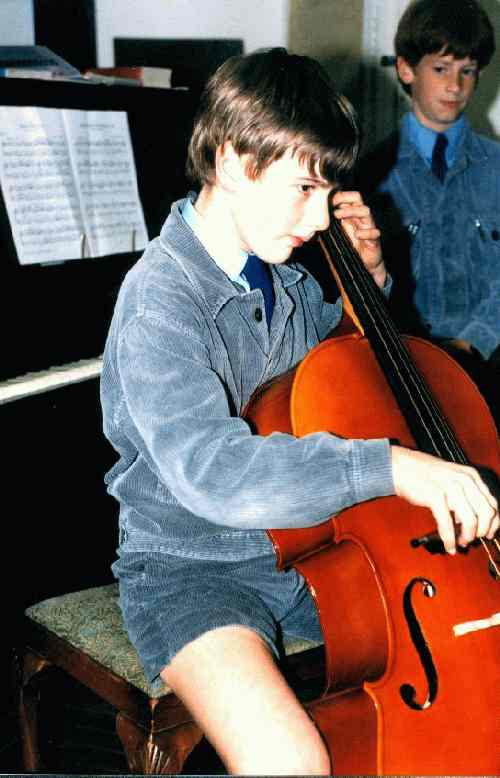
Figure 1.--Many British preparatory schools adopted corduroy shorts as part of the uniform, in part because of their durability. A few also adopted cord jackets as the everday uniform. This steel grey was a common color.

|
Figure 1.--Many British preparatory schools adopted corduroy shorts as part of the uniform, in part because of their durability. A few also adopted cord jackets as the everday uniform. This steel grey was a common color. |
According to the Oxford English Dictionary - its definitions buttressed by millions of quotations to show a word's evolution through the centuries -- corduroy is "a name apparently of English invention: either originally intended , or soon after assumed, to represent a supposed French 'corde du roi' (the King's cord), it being a kind of corded fustian." [Which was a thick, twilled, cotton cloth with a short pile or nap, usually dyed of an olive, leaden, or other dark colour" -- so, a kind of short plush.]
The name Corduroy has never been used in French: "on the contrary, among a list of articles manufactured at Sens in 1807, Millin de Grandmaison in his Voyage de départ du Midi enumerates 'étoffes de coton, futaines, King's-cordes', the latter evidently from the English." A patent of 1776 mentions nearly everything of the fustian kind except corduroy, though it was well known by 1790.
"Duroy occurs as a coarse woolen fabric manufactured in Somersetshire in the 18th century, but it has no apparent connection with corduroy. A possible source was the English surname Corderoy." [Which duly produced variants, such as Cordroy, Cowderoy, or, indeed Corduroy.]
The OED goes on to describe corduroy as "a kind of coarse, thick-ribbed cotton stuff, worn by labourers or persons engaged in rough work". Example from 1795: "The manufacture comprehends the various cotton stuffs known by the names of corduroy, velverett, velveteen, thicksett, etc. The French called it 'velours côtéle' (ribbed velvet), or simply 'velours', though this led to obvious confusions, as with the composer Erik Satie, a famous collector of 'complets de velours': no-one seems sure now whether his suits were of velvet or corduroy, or some of both. Around 1970 the term 'cordelet' was also
in use.
Many countries inaccurately called corduroy 'velvet', but others had their own names. In Spain it was pana, in Italy frustagno, in Denmark, charmingly, jernbanefløjl (railroad velvet). Esperanto, you'll be glad to hear, plumped for kordurojo.
Its manufacture was so concentrated in South Lancashire that the Germans called the cloth Manchesterstoff (Manchester fabric), later abbreviated to simple Manchester (a term also found in Dutch and Serbo-Croat). In due course this was replaced by 'Kordsamt' (corded velvet again) and finally plain 'Kord'. It was used mainly for working trousers and jackets, and the traditional black cord Zimmermannshosen (carpenters' trousers, with a flap front, as in Lederhosen), were particularly splendid.
During a trade recession In 1820, the English clergyman Sydney Smith complained (in verse): "No distant climes demand our corduroy, Unmatched habiliment for man and boy". Corduroy soon became popular for boys' clothing, at least among the lower orders. (Posh families cottoned on later.) Rural boys are shown in cord trousers, sometimes jackets and waistcoats, in the popular paintings of Thomas Webster, William Frith, Octavius Oakley and others. Frith's famous 'Derby Day' (1858) has a corduroyed urchin swaggering in the
foreground, and a fine pair of rustic cords is worn by the over-clean subject of
John Brett's 'Stone-Breaker' (also 1858).
There are plenty of examples in Dickens: a schoolroom in David
Copperfield (1850) smells of 'mildewed corduroy,' and the cheeky Master
Bailey in Martin Chuzzlewit (1844) decorates his cords with charcoal
scribbles. In the 1840s the Scottish poet Thomas Aird describes a country boy
who practices swimming on dry land, "unmindful how the grass/Or clover-leaves
green-stain his corduroys". (A problem, later, for cricketers' white flannels.)
Henry Mayhew in his London Labour and the London Poor of 1851 found the coster-lads extremely fashion-conscious. "They try to dress like the men, with large pockets in their cord jackets, and plenty of them. Their waistcoats, which are of a broad-ribbed corduroy, are made as long as a groom's, and buttoned up nearly to the throat. If the corduroy be of a light sandy colour, plain brass or sporting buttons decorate the front; but if the cord be of a dark rat-skin hue, mother-of-pearl buttons are preferred. The fashionable stuff for trousers, at the present, is a dark-coloured 'cable-cord,' and they are made to fit tightly at the knee and swell gradually until they reach the boot, which they nearly cover."
An 1884 fashion article in London's Evening Standard declared "Corduroy is the coming material .... The new Corde du Roy will be a dainty silken fabric, as indeed it was in the beginning." ("A baseless assertion," adds the OED sternly.) The new 'silken cord' never caught on, presumably because it reminded dainty ladies too much of rough workmen -- though this might have excited some.
The explorer E.E. Napier wrote in 1849, after a trip to Southern Africa, of 'Antigropelos [waterproof] boots, and everlasting corduroy breeches'. As late as the 1960s, incidentally, trousers of stout Lancashire corduroy were standard wear for South African coal-miners.
With time, the practical but attractive clothing of grooms and game-keepers
was adopted by the aristocrats themselves; first jackets, then trousers, but only
occasionally whole suits, which were more the wear of artists and intellectuals.
'Bohemians' were particularly drawn to corduroy, thus proclaiming their love of
the country, or their liberation from dreary bourgeois suitings. More than a
century later, when corduroy is little used for working clothes, it is still favoured
by artistic types and country gentlemen -- and, naturally, their children, though at
present it is considered desperately 'uncool'.
In days of draughty hovels and underheated houses, literal uncoolness was a
definite plus. Gradually better insulation encouraged bare legs, but manufactured shorts for children (as opposed to improvised ones, where legs of
long trousers had parted company with uppers) were seldom seen before the turn
of the century. They were given a boost by the foundation of the Boy
Scout movement in 1908 by the hero of Mafeking, General Robert
Baden-Powell. Scouting always put much emphasis on fresh air and cleanliness.
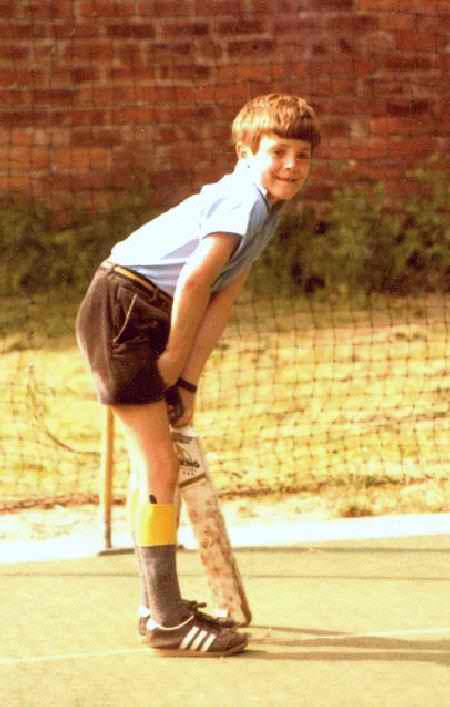
Figure 2.--Hard-wearing corduroy in many ways was ideal for schoolwear. It looked smart in the classroom and stood up to the active life-style of the typical schoolboy. |
Corduroy shorts -- being comfortable, hard-wearing and easily washable -- were popular for British boys of all classes throughout the first half of the 20th century, though the fashion soon died out after World War Two and survived only in the uniform of a few very grand boarding schools, such as Cheam (where the young Prince Charles was educated for a time), the Dragon School, Oxford, and the wondrously old-fashioned Hill House, Knightsbridge, London, which still sports, in winter weather, knickerbockers in its own pleasing shade of apricot-russet. (During World War Two, incidentally, with the exigencies of clothes rationing, several public schools temporarily relaxed their code of dress and allowed long cords, often worn at home in school holidays, instead of the usual grey flannels.)
A few of the more 'progressive' public schools ('public' meaning decidedly
private in England for ages 13-18) actually had corduroy trousers or shorts as
part of their basic uniform: notably Abbotsholme, Ardingly and Bryanston. The
most popular colour for school cords was grey, but navy, fawn and chocolate
were also seen. The muddier shades of brown -- olive-drab or khaki -- were
preferred for holiday wear, usually with tweed jackets.
It should be noted that the 'shorts' worn by servants and footmen in the late
18th and early 19th century -- as mentioned by Dickens and Thackeray -- were
not 'knee-pants', but knee-breeches or 'small-clothes'.
Knickerbockers (or plain 'knickers' in the US, though to an English reader
this suggests only ladies' dead-pink elasticated bloomers) died out in Britain after
World War One, whereas in America they had a great vogue, often in corduroy, for
most of the Twenties and Thirties.
For a long time the scout uniform in certain countries, such as Norway,
Belgium, Holland and Switzerland, featured corduroy shorts, but these were
uncommon in Britain, and in France were worn only by the ultra-butch Catholic
'Raider Scouts', prominent for a couple of decades after 1945. It must be added that
shorts of black cord, in a narrowish wale, and of fine quality, were sometimes
worn by the Hitler Youth.
'Wales' (or ribs, on cloth like corduroy) would provide a subject in
themselves. The ribbage per inch could vary from 4 to 18, with the traditional 'standard' falling somewhere between 10 and 12. Less than four wales to the inch would shade into the shaggy 'jumbo cord' popular around 1970, and more than 18 would not support a sufficiently solid, boy-proof base.
In former times, the rank smell of new corduroys divided opinion sharply. It was a ripe mixture of vegetable dyes with a gluey 'dressing', derived from powdered mutton-bones, to add 'body' to the cloth and prevent it getting crumpled before sale. You either loved it or loathed it. ("The torture of that smell!" -- Emlyn Williams.) By the 1950's, though, the rankness had disappeared and the fragrance, particularly in France, was more that of a fine tobacco.
In addition to wale-width, there have been endless attempts to vary the appearance of cords, either through shearing or printing. The surface nap, for instance, has been cut horizontally as well as vertically -- resulting in a rather unpleasing 'pebbled' texture -- or sheared into plaid-like patterns. One of the subtlest cuts, though, a gentle undulation within the wale, gave a very rich finish.
Plaids, fashionable from time to time, have also been printed on to
corduroy, mainly for use in jackets and caps. Cross-printing, often in black on a plain background, gives a velvety shine, and contrast-colouring of alternate wales (such as black/red
or green/brown) sometimes work very well. Of the printing on cord of
cartoon characters, or hideous 'Bermuda' patterns, the less said the better.
An American speciality in the mid-20th century was the 'speckled' cord, on a narrow-wale cloth, with flecks of red, gold or blue on usually a grey or brown background. This was widely used for US schoolboy trousers, but has now almost disappeared.
The quality of the basic corduroy, of course, depends on what's put into it. You need a fine-quality cotton (synthetic mixtures add to the life-expectancy but detract from the look and feel) and a sufficient density of weave. Illusory weight can be given by heavy 'dressing' -- beware an over-crisp feel in new cloth -- but the first wash flushes it out, leaving you with a flimsy garment. Really, you get what you pay for.
For the last few decades, Holland, France and Spain have pronounced the world's finest corduroy. America's tends to lack 'juice' and to have a rather dry, blotting-paper texture. "Velvety toughness", an expert has written, "is the ideal to be striven for. A fine corduroy should have a plum-like bloom and a feel like soft leather. It may even squeak like leather as you stroke it."

Navigate the Boys' Historical Clothing Web Site casual pages:
[Return to the Main corduroy page]
[Return to the Main fabric page page]
[Camp shorts]
[Clam diggers]
[Cord shorts]
[Jeans]
[Jump suits]
[Koveralls]
[Lederhosen]
[Pinafore]
[Shortalls]
[Smocks]
[Soccer shorts]
Navigate the Boys' Historical Clothing Web Site:
[Return to theMain short pants page]
[Introduction]
[Activities]
[Bibliographies]
[Biographies]
[Chronology]
[Clothing styles]
[Contributions]
[Countries]
[FAQs]
[Boys' Clothing Home]