
National Youth Groups: Portugal
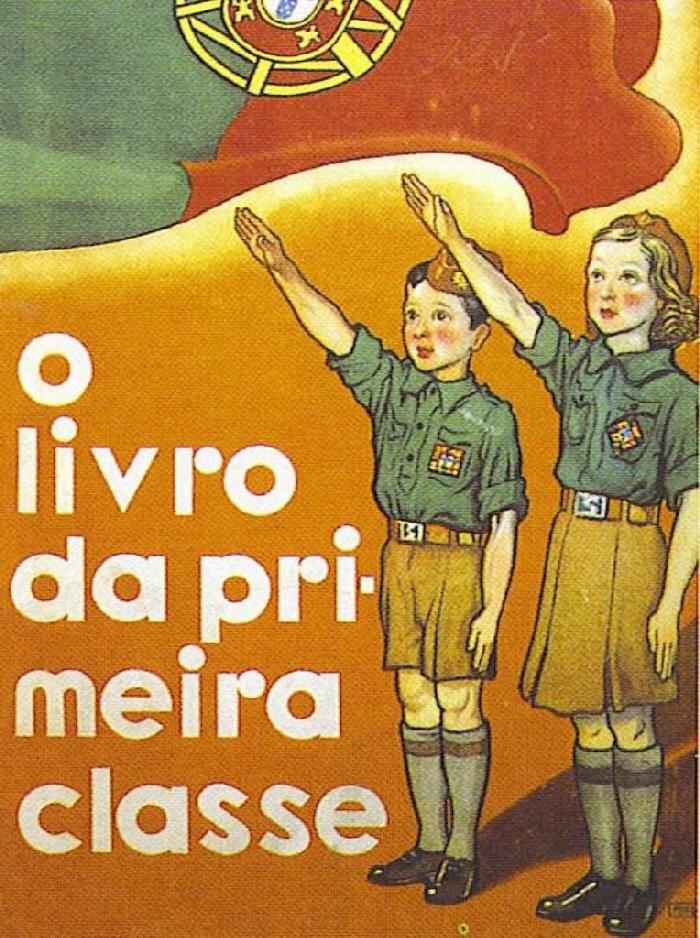
Figure 1.--Modern dictatorships pay great attention to schooling as a way of controlling minds.
This is the cover of a Portuguese school readings book during the Salazar dictatorship with took on Fascist trappings.
It was a 1st grade reading book used in 1942. The image shows a boy and a girl wearing the uniform of "Mocidade Portuguesa".
|
|
Portugal like Spain during the 1930s moved strongly towards Fascism.
António de Oliveira Salazar, seized control of Pprugal (1932). The Salazar regime was aithoritarian which gradually took on Fascist trappings, especially after the advent of the Spanish Civil war (1936). The Goverment issued a decree establishing a nationalist youth group--the Mocidade Portuguesa (Portuguese Youth) (May 1936). We believe the Boys Scouts were banned, but do not have detaols at this time. Prof. Marcelo Caetono was apointed the group's leader (1940).
The regime was officially neutral, but was sympathetic toward the NAZIs and aided the NAZI-war effort during World War II. Somewhat protected by Franco's refusal to allow the Wehrmacht to enter the Ibrerian Peninsula, Portugal was able to maintain a different relationship with the NAZIs. The NAZis had to actually pay for shipments of strategic minerals.
The group's motto was 'Deus, Pátria e Família' [God, Fatherland and Family]. There were four echelons according to age: lusitos ( 7 to 10 years), infantes (10 to 14), vanguardistas (14 to 17) and cadetes (17 up). Their uniform consisted of a green shirt with badges on the left side of the breast, beige shorts and black shoes. A reader writes, "I have never come accross them in Portugal proper but I have seen some boys (black and white) in Angola during 1967 and 1968. They all had short pants, but I believe at the time that in metropolitan Portugal the older boys wore longs." Caetono who led the Mocidade since 1940 who became the acting Portuguese head of state after Salazar was incapacitated by a stroke (1968), The Mocidade were abolished on the very first day of the Socialist Revolution (April 25, 1974). A book Mocidade Portuguesa: Breve história de uma organização salazarista (1976) published after the Revolution seems to give a good account of the history and the activities of the "Mocidade".
HBU

Navigate the Historic Boys' Uniform Chronology Pages:
[Return to the Main chronologies page]
[The 1900s]
[The 1910s]
[The 1920s]
[The 1930s]
[The 1940s]
[The 1950s]
[The 1960s]
[The 1970s]
[The 1980s]
[The 1990s]
[The 2000s]
Navigate the Historic Boys' Uniform Web Site:
[Return to the Main nationalist country page]
[Return to the Main Portuguese youth group page]
[Activities]
[Biographies]
[Chronologies]
[Countries]
[Essays]
[Garments]
[Organizations]
[Religion]
[Other]
[Introduction]
[Bibliographies]
[Contributions]
[FAQs]
[Questions]
[Unknown images]
[Boys' Uniform Home]
Navigate the Historic Boys' Uniform Web organizatiion pages:
[Boys' Brigade]
[Camp Fire]
[Hitler Youth]
[National]
[Pioneers]
[Royal Rangers]
[Scout]
Created: 2:56 AM 6/10/2009
Last updated: 2:56 AM 6/10/2009